New cheap EVs from Fiat and Citroen confirmed for Italian production
Pomigliano d’Arco plant in Italy will manufacture small EVs as Stellantis works on 'E-Cars' and vans to boost Europe’s stagnant car market

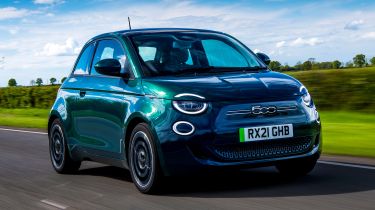
The current Fiat Panda factory will be the epicentre of Stellantis's new wave of small, affordable electric cars, with the first models scheduled to roll off the line in 2028.
The huge car group – home to 14 brands including Citroën, Fiat, Peugeot, Jeep, Opel-Vauxhall and with a controlling stake in Chinese car maker Leapmotor International – has announced its commitment to European-made electric cars costing around €15,000, to make zero emissions motoring more attainable. The 'E-Car' project will unleash "exciting new models for multiple brands," says Stellantis, with the sub-4.2m-long EVs inked in for assembly at the Pomigliano d’Arco plant in Italy. It currently builds the Alfa Romeo Tonale alongside the Panda.
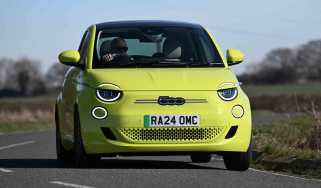
Two Stellantis brands – Fiat and Citroën – are working on E-Cars. Fiat’s small car history dates back to the tiny, two-door Topolino saloon from 1936, and the project is sure to incorporate the successor to the 500e, launched in 2020.
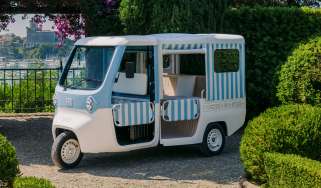
Citroën plans to launch an all-new EV inspired by its iconic 2CV, with the brand's head of design, Pierre Leclercq, telling Auto Express last year: “If [any] brand is legitimate on such a project, then we're going to look at Citroen. That's quite obvious." He continued: “If we talk about a car that is smaller and more essential, [that] means you can bring mobility to people for a much more accessible price, that would be an exciting project to put on the street.”
But it's highly likely more brands will use the dedicated vehicle architecture with "world-class BEV technologies", according to Stellantis. It would make sense for Leapmotor – whose £14k T03 city car is among the cheapest electric cars on the UK market – to be involved on the technical side, and Peugeot has also made noises about joining the E-Car programme.
Stellantis CEO Antonio Filosa said: “The E-Car is a concept that finds its natural match in the small car success that runs deep in our European Stellantis DNA. Our customers are calling for a revival of small, stylish vehicles, proudly produced in Europe, which are also affordable and environmentally friendly. Production is expected to start in 2028 in our Pomigliano plant.”
Lawmakers pushing new 'M1E' class of affordable EVs
Filosa believes ‘E-cars’ will help reignite growth in Europe's stagnant car market, along with tweaks to the regulations around light commercial vehicles.
But progress in both areas requires agreement between the industry and European regulators. A framework to promote affordable, made-in-Europe ‘e-cars’ – the M1E class – is still working its way through the European Commission, while sales of light commercial vehicles are being stifled by ambitious quotas for electric vans running dramatically ahead of the 10 per cent demand.
“Affordability is one of the major causes of the decline of the automotive industry in Europe,” said Filosa, speaking at the Financial Times’ Future of the Car summit 2026. “Cars below 15,000 Euros, they don't exist [any longer].” New vehicle registrations in Europe totalled 13.2m units last year – still below pre-Covid levels.
“[But] clean and affordable is possible, the e-car project is possible,” Filosa said. He called on regulators to make good on discussions to give made-in-Europe e-cars a “special framework” enabling subsidies for their supply chain, particularly batteries, as well as “super credits” towards car groups’ corporate average CO2 obligations.
The E-car regulation is expected to become law towards the end of the year, enabling manufacturers to lock in their vehicle projects and manufacturing plans, with a view to launching cars from 2028.
Filosa also called for action in the van market, where list prices have been increased by electrification and – rightly – legislation to make vans safer. “Light commercial vehicles have been losing volumes since 2019, driven by many factors, one of which is regulation,” he argued. “I truly believe that now there is a common sense that regulation of light commercial vehicles needs to be re-calibrated. Now is the time to work on that.”
Filosa argued that everyone loses out by the LCV parc not being renewed. Small companies suffer higher maintenance bills, customers are penalised by breakdowns hampering deliveries and the industry misses out on new vehicle sales.
Stellantis poised to reveal its new strategy to revive its brands
Filosa took over Stellantis’ leadership a year ago, with the massive US/European car group set to unveil his new strategy on 21 May. Stellantis has been struggling, particularly in the US market, with excessive inventory of unsold pick-ups and SUVs, and having to write off huge investments in electric vehicles.
In Europe, the group’s premium brands – Maserati, Alfa Romeo and DS Automobiles – are hampered by low sales and struggling to make any volume headway, while the rollout of key new Citroen and Fiat cars has been hit by software problems.
Filosa denied that Stellantis was rowing back on electrification. “We will keep investing in electric cars for Europe – and for the US as well. This year we will launch the electric Jeep Recon, and we will launch the first application of range-extenders in the world for large SUVs and pick-up trucks.

“But we are always listening to what our customers want. In Europe, they want a lot of electric cars and in the US, they want hybrids. We’re ready to provide them.”
Filosa also outlined the four parts of his Stellantis turnaround plan. He argued that Stellantis’ scale – producing around six million units a year – gives the group sufficient economies and scope to deliver the leading-edge technologies that will keep it competitive.
That scale plays out in a strong regional market presence, which Filosa called on Stellantis to nurture. “We are number five in North America, number two in Europe, number one in South America, number two in the Middle East and Africa.” But Filosa is not calling on Stellantis to go it alone: partnerships are the third key pillar of his comeback plan, with a recent agreement with Leapmotor International – the group’s Chinese partner – to use Stellantis’ Spanish industrial footprint to assemble cars and collaborate on future products.
And the final piece in the jigsaw? Strong brands, reckons Filosa. “They are our strongest asset, the most authentic bond to the customers.” But given that the premium brands are struggling for scale – Lancia is under-utilised, Fiat starved of new models and Vauxhall fails to make an emotional connection with customers – is Filosa plotting a cull?
“A brand stays because there is a customer that wants it, and if you are too drastic in deciding to quit one or the other, then you're losing the customer base to somebody else,” he argued. “The real point is not to select one, two, three or four brands. The real point is to combine efficient capital allocation with brand specific strategies. And the way we want to do that – we will tell you in nine days’ time…”
Buy a car with Auto Express. Our nationwide dealer network has some fantastic cars on offer right now with new, used and leasing deals to choose from...