New Polestar 3 2026 review: some welcome updates under the skin
The Polestar 3 has been updated for 2026, but the jump in price outweighs the gain in upgrades


Verdict
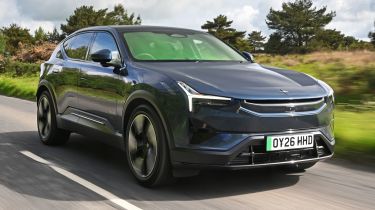
The 2026 updates are typically Polestar, low-key but designed to make life better for owners. Increased charging speeds, small boosts to efficiency and performance and a tech upgrade that will help with future over-the-air updates don’t markedly transform a car with real strengths in practicality, comfort and classy style inside and out. But the price rise – admittedly coming with a stack of premium extra kit – makes it look like a big chunk of money.
Things are the same on the surface with the updated Polestar 3, but there are some very welcome updates under the skin. Although the stylish Swedish SUV may look unchanged, it’s now quicker in more ways than one.
For 2026, the big five-seater is faster accelerating, faster charging and has a faster-processing infotainment system – so it claims – as well as a simpler (and expensive) line-up with options packs rolled into the standard offering.
Let’s start with the power boost. This comes thanks to a “new in-house developed permanent magnet synchronous rear motor” – which certainly sounds impressive – to boost power on all three of the Rear Motor, Dual Motor and Performance alternatives. That means the base car, driven here, goes up by 34bhp to 329bhp, while the middle-child dual motor jumps by 55bhp to 536bhp and the range-topping Performance car now has a whopping 670bhp, up from 510bhp in its previous guise. That chops between 0.3 and 1.2 seconds from the 0-62mph time, depending on model, with the Performance now claiming a 3.8-second 0-62mph time.
Used - available now


For the entry car, the extra 34bhp doesn’t feel like it makes a major difference, although when we get our hands on a Performance model, another 160bhp will likely be more of a step-change. Not that the Polestar 3 was a car that we felt needed more power; even the entry model is rapid enough in all bar the most demanding or heavily loaded scenarios, and its safe and solid handling really doesn't encourage such folly as tipping it rapidly into roundabouts.
But what is rapid is the charging capability, and the new 800V lithium-ion battery tech has made a 25 per cent dent in charging times. The Dual Motor and Performance cars now have a 106kWh battery that will charge at a heady 350kW, which will boost the charge from 10-80 per cent in just 22 minutes, while the entry Rear Motor car still tops up its slightly smaller 92kWh battery at 310kW, a rate far in excess of almost all UK public chargers at the moment.
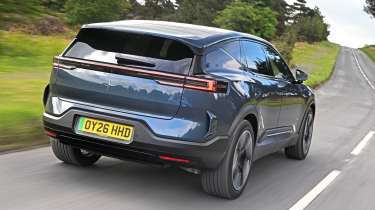
Range figures now sit at a respective 375, 394 and 368 miles from cheapest and least powerful to most expensive and potent model respectively, although more than 400 miles is no longer on offer following the withdrawal of the larger battery/rear-motor combination. Our 3.2 miles per kWh test average indicates around 300 miles should be possible from the entry car in real-world warm-weather use, with Polestar claiming the new tech brings around six per cent in efficiency gains.
That really builds on the car’s long-distance potential, with the impressively comfortable seats and comfort-orientated driving set-up very much preferring a long relaxed cruise. It’s worth noting that air suspension, which has a positive impact on ride quality and comfort, isn’t offered on the rear-motor car, but is standard on the other two trims, and the entry model can struggle a little with low-speed urban bumps and thumps.
We say entry, but with the previously optional Prime Pack now part of the standard equipment offering – and prices rising to match – the range now kicks off at more than £76,000, rising to in excess of £84,000 for the Dual Motor, and topping £92,000 for the Performance. That sounds like a lot of money – more than a BMW iX, but in line with sister company Volvo’s seven-seat EX90 – a car the Polestar shares a platform with.
The Prime pack means all cars now get an absolute truck-load of standard kit, from Bowers & Wilkins audio upgrade and headrest speakers to soft-close doors, a 360-degree camera, heated rear seats and the Pilot Assist driver-assistance system. As we write, Polestar has a seasonal offer running that cuts £5,000 from the price of all three trim levels.
The third thing that Polestar has sped up, along with acceleration and charging, is the 3’s processing speeds. An upgrade to the processor – which is also being offered to existing owners as a retro-fit upgrade – is claimed to increase maximum processing power from 30 to 254 trillion operations per second. Which is great, but doesn’t seem to have solved some of the issues with an infotainment system that doesn't always remember it has a connection with a paired phone.
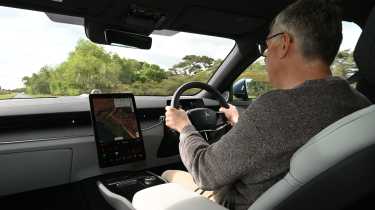
But the 14.5-inch portrait-style screen deploys Google’s tech well, if not quite as seamlessly and cleverly as the newer Polestar 4, which has extra customisation options for certain widgets. And the upgraded processor will enable bigger over-the-air enhancements during the car’s life, which is becoming increasingly important as manufacturers take feedback from owners to correct flaws or frustrations with cars out in the wild.
As mentioned earlier, the driving experience is largely unchanged, save the extra power. Which is always welcome – it’s rare to hear anyone complain about more performance – but the car doesn’t really benefit because it’s another electric car with too much straight-line punch and too little performance tuning to the chassis.
The interior is also unchanged, save the speedier processor for the infotainment. But that’s no bad thing because the quality, design and space are all big plus points for the Polestar 3. It really doubles down on the Scandinavian minimalist style, and feels like a classy place to be.
But the same complaints as before around some of the usability also remain. The big screen is responsive and sensibly laid out, but running everything bar the volume control and door-mounted window switches within it means you’re forever hunting through menus for small adjustments. The clever Google-based voice activation does work well though, if you’re happy to use such things, and doesn’t rely on the driver having to remember key commands, like earlier voice-control systems.
And the key fob – a small square device with no unlock buttons and seemingly the world’s shortest battery life – continues to frustrate, and provide a living example of when manufacturers overstep in efforts to show off how clever their clever tech is. At least the Polestar app works well.
Rear space is plentiful, with four adults carried in complete comfort, and the 440-litre boot is good for all four to bring plenty of luggage on a trip away.
Did you know you can sell your car through Auto Express? We’ll help you get a great price and find a great deal on a new car, too.
| Model: | Polestar 3 MY26 Rear Motor |
| Price: | £76,540 |
| Powertrain: | 92kWh battery, 1x e motor |
| Power/torque: | 329bhp/480Nm |
| Transmission: | Single-speed automatic, rear-wheel drive |
| 0-62mph: | 6.3 seconds |
| Top speed: | 130mph |
| Range: | 375 miles |
| Max. charging: | 310kW (10-80% in 22 minutes) |
| Size (L/W/H): | 4,900/1,968/1,614mm |
| On sale: | Now |