Renault boss: Europe must act on our plan to cut new car prices
Cut regulation, give us realistic electrification targets and lift the threat of billions in fines, urges Renault Group CEO François Provost


Europe’s car makers have agreed an action plan to jump start the continent’s stagnant car market, but the EU must implement it, urges Renault Group CEO François Provost.
Freezing regulation impacting new cars will enable car makers to invest more engineering capability in slashing prices for consumers, argues the boss. It will have the added benefit of protecting Europe’s car industry – and employment levels – from the ravages of Chinese new entrants, who benefit from lower cost bases and deep pockets to conquer market share.
Provost told Auto Express that the car industry – often riven by factions, with Germany seeking advantages for large premium cars and the French defending its compact car market share – was speaking in one voice and calling for urgent action.
The car industry is united in calling for change, vows Renault
“I think the European industry and all automotive makers within [the European car makers' lobbying body] ACEA now have one voice,” he told Auto Express on a media call to discuss the group’s half-year financial results. “I have one voice with my colleagues in Germany, and that is important because how [will] you convince the EU and governments about moving forward to rebound the automotive industry in Europe, if as automakers we are not capable to [agree] a concrete proposal for lawmakers.”
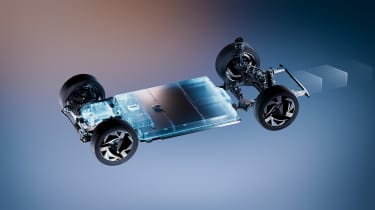
The CEO said car making groups were putting their divisions to one side and supporting each others’ interests, such as Germany wanting dispensation to continue selling plug-in hybrid technology, as Renault switches to a new vehicle architecture powered by range-extender hybrids, while French car makers are embracing the EU’s ‘M1E’ proposal to support investment in small, affordable electric cars.
Industry faces billions in fines unless lawmakers act
Provost argued that Renault and the industry are not reneging on their promise to embrace electrification, just lobbying for a more gradual flightpath to soften the transition’s blow, which calls for combustion-engined new car sales to cease in 2035.
“All automakers want to continue electrification, but we want flexibility on 2035,” urged the CEO. He is acutely concerned about 1 January 2030, the ‘cliff edge’ beyond which the total emissions for a brand’s new car sales must average 49.5g/km of CO2, a huge drop on today’s 95g/km baseline. Provost said car makers were staring down the barrel of “billions of euros” in fines; his solution is to spread out meeting that target over the five-year average from 2028-2032.

Renault is on a tear with its electric sales, but its current growth trajectory won’t be enough, claimed Provost. “We are at 26% EV mix for [the] Renault brand in Europe, up seven points compared with last year. I think we are leading the trend. [But] with all of this, we would have a risk in 2030 because a 100% electric trend is just not realistic. That’s why Renault, together with all the automakers in Europe, say to the EU: we need five years to cope with the minus 46-gramme decrease of the current regulation.”
New car sales will continue to stagnate unless prices come down
Last year, Europeans and Britons bought 13.2-million new cars, still below the 15m retailed before the COVID-19 pandemic. And without convincing consumers to replace older, more polluting cars, the environment will not improve and consumers won’t benefit from improved safety features, the industry argues.
“When will the EU stop the decline of the automotive industry, which is linked to regulation, unrealistic electrification, and also maybe not enough protection of the value chains in Europe?” asked Provost. “As Renault, we recommend the EU works on [some] very simple political decisions: confirm electrification but in a flexible way and freeze all regulation on all cars in Europe for 10 years to help us focus on cost reduction and price reduction for European customers. Today, Europe is a unique place in the world, where, due to regulation, the price of cars is much too high.”
Announcing Renault’s financial results, chief finance officer Duncan Minto said re-homologating its cars to meet the new Euro 6e-bis powertrain regulation contributed to a €425m [around £364m] hit on the sales margin in the last six months. “Euro 6e-bis [put] additional cost into several engines both across Renault brand and Dacia for which it was very difficult to pass on: there was very little gain for consumers as it was just to answer regulatory requirements,” he stated.

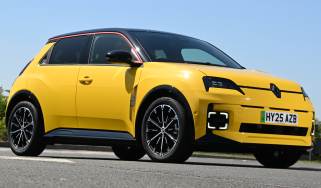
Despite some 25 per cent of all Renault’s engineers being deployed to meet regulatory requirements, the car maker has still managed to rip up its development practices and engineering operation to deliver the new Twingo electric city car at around £17,000. Slashing the number of parts, learning from the Chinese to cut development time to under two years and introducing new, cheaper battery chemistry is critical to cutting prices – and Renault will utilise this know-how in its FutuREady strategy to deliver all upcoming cars at prices competitive with the Chinese.
Announcing its half-year financial results, Renault Group collected €30.3-billion in revenue, up around 10 per cent, with a 5.2 per cent operating margin. Renault and Dacia sales dipped slightly in Europe, offset by growth in international markets – India climbed 61 per cent – and Alpine posting a similar growth rate, from 5,100 to 8,500 cars in the period.
Did you know you can sell your car through Auto Express? We’ll help you get a great price and find a great deal on a new car, too.