Confirmed: VW Group plans to cut half its model range and 100,000 jobs
The cuts keep coming as German giant desperately tries to remain competitive in a rapidly changing automotive landscape
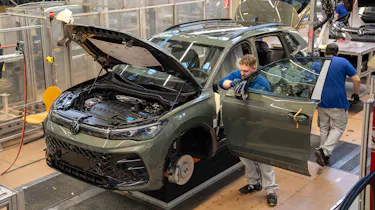
The Volkswagen Group has signed off plans to axe half of its model line-up, slimline model variation by 75 per cent and cut 100,000 jobs.
The measures come as part of the automotive giant’s ‘Future Plan 2030’, which aims to reduce operating costs while subsequently boosting operations in North America and China.
After hinting to Auto Express back in June that seismic business changes were on the way, the firm’s CEO, Oliver Blume, hailed this latest announcement as “a strong signal for the future of the Volkswagen Group”. Blume said: “We are taking responsibility for our entire workforce, for our partners and for industrial jobs worldwide. Over the coming years, we will invest a three-figure billion sum to make our iconic brands even more attractive, stronger and more competitive.”
Targeting operating margins of nine per cent and annual profits of €31 billion (£26.6 billion) by 2030, Volkswagen is planning to restructure its operations across the board. The aforementioned 50 per cent reduction of model variants and 75 per cent cut in complexity – in other words, the consolidation or removal of options and trim levels – is already visible; cars such as the Porsche Taycan Sport Turismo and Volkswagen Golf-based Jetta have been axed from certain markets, while Audi has already killed off the A1 supermini and Q2 SUV.
The company had already spoken about a “realignment to sustainably strengthen its competitiveness”, which will see the cancellation of many current models and future development programmes from across the business, allowing for investment and resources to be focused on the core products that it says will “more acutely benefit the customer”.
The plan also includes an even more intensive harmonisation of the group’s development programmes, further reducing the number of different platforms, electronic architectures and software landscapes. By reducing complexity, VW says it will avoid parallel development programmes, but market diversity will remain, as it will retain two branches of its future development programmes split between the western and eastern hemispheres.
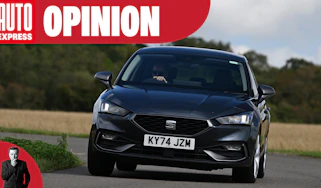
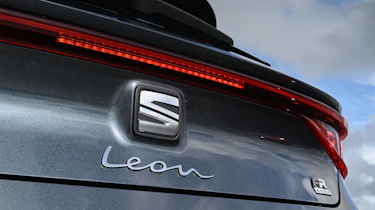
It’s unclear at this stage what other ranges will be cut in the UK. What one can expect, however, is the discontinuation of niche models with low profit margins. And in terms of brands, some look certain to face closer scrutiny than others. The likes of SEAT, for example, could be feeling vulnerable given the lack of new models in recent years and Volkswagen’s focus on the more desirable (and lucrative) Cupra brand.
Perhaps the most contentious part of this plan, however, is a further reduction in global production capacity, with a new target of nine million units per year by 2030, down from a post-Covid figure of 12 million units. VW Group says the capacity of its plants in Germany currently exceeds annual demand by 500,000 units. However, the country’s automotive workers unions hold incredible amounts of power, making any factory closures a difficult and costly process, and a politically problematic one for public officials involved.
Despite this, the group says “competitive future production allocation for the Emden, Zwickau, Hanover and Neckarsulm plants cannot currently be secured on a staggered basis”. As such, the firm is currently investigating means of boosting the productivity of these factories; German publication Handelsblatt, for example, recently reported that VW is considering producing some of its China-only models, such as the ID. ERA 9X, in Europe to fill the gap.
Speaking to Auto Express at the Volkswagen ID. Polo’s Martorell factory in Spain in June, CEO Blume spoke about potential plans to combine with Chinese partners in Europe. “We, as a Volkswagen Group, have unique opportunities with our China footprint to bring them to Europe, but only in segments,” he said.
Blume added that another step could be to “partner with one of our [Chinese] partners. We are working together in China, but there are no talks, no ideas because we are focusing first on other industries and on our own product. And it hasn't changed during the last weeks”.
As for saving money so far this year, Blume explained: “We achieved a cost reduction of over one billion compared to last year. And that's a result of their agreements we made two years ago.
“Then we are making good progress in adapting the number of employees. We decided to reduce in Germany 50,000, and alone in Volkswagen, where we left 18,000 at the end term of this year.”
Now, the firm says a further “workforce adjustment of approximately 50,000 positions – including management roles – will be necessary”, bringing the total cut to 100,000 jobs.
The group says these decisions are being forced upon it by intensifying challenges across global markets, driven largely by extra costs for its American business due to tariffs, as well as heightened competition from new-age Chinese brands and unstable geopolitics.
In 2023, CEO of the Volkswagen brand, Thomas Schaffer, famously said that VW’s roof was on fire, but after years of consolidation and a new product wave later confirmed to Auto Express that while the fire was still smoldering, the worst was past. Now, though, with problems extending beyond VW into other brands, that fire might have been reignited.
Did you know you can sell your car through Auto Express? We’ll help you get a great price and find a great deal on a new car, too.