Luxury electric SUVs aren’t selling, and I know the reason why
Deputy editor Richard Ingram thinks luxury SUVs are better suited to PHEV and range-extender tech than pure electric power

Big, heavy and luxurious electric SUVs: while they’re a solid testbed for tech that’ll no doubt filter down, they feel like the answer to a question nobody is (yet) asking.
Just this week, there’s been two in the news. First up is the Range Rover EV550: a £150,000-plus, 2.8-tonne behemoth that has been drip-fed to us for what feels like years now. It’ll launch properly over the next few months, giving well heeled customers a “real-world” range of 330-odd miles, and the ability to top up the battery to 80 per cent in just over 20 minutes.
Then there’s the Bentley Torcal, which we’ve had the pleasure of riding in for the first time. While specifications are still under wraps, this “urban EV” is expected to be more than five metres long and go from 0-62mph in less than four seconds.
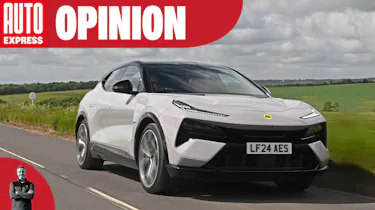
Of course, these aren’t the first cars of their kind. The bulbous Mercedes EQE and EQS, despite their strong on-paper numbers and tech-filled cabins, haven’t been the sales successes their maker hoped. The Lotus Eletre sets a high benchmark for driving dynamics, but when was the last time you saw one on the road? Even the Volvo EX90 has struggled in a market seemingly controlled by the internal-combustion engine.
BMW has never really bothered – apart from the heavy and over-engineered iX, and forthcoming, multi-fuel X5 – and nor has closely related Rolls-Royce. It’s odd, because in theory, nothing is more luxurious than the sound of silence – an EV staple that, without the worry of weight or efficiency, goes hand-in-hand with opulent SUVs.
The problem is, if you’re spending upwards of £100k on a new car, compromise isn’t in your lexicon, especially with a family SUV. You want pace and practicality, plus long-legged luxury – all mated to cutting-edge tech and refinement in spades.
It makes you wonder: instead of forcing these luxury SUVs into the EV mould, would makers do better to focus on the back-up blanket of a petrol powertrain, with PHEV or range-extender tech that lowers emissions without trading usability?
A mixed powertrain approach isn’t a step backward; it remains a necessary bridge to mass-scale decarbonisation. I’m not sure the one-size-fits-all, EV-everything approach works in every segment just yet. However, as a diehard supporter of the automotive industry, as well as a champion of consumers like you, I’ll be very happy to be proved wrong.
Did you know you can sell your car through Auto Express? We’ll help you get a great price and find a great deal on a new car, too.