How to use the hard shoulder
It's the emptiest lane on the UK's motorways, but do you know what you need to do if you stop on the hard shoulder? We explain all…
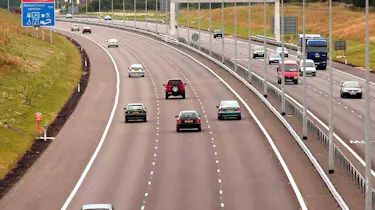
The hard shoulder is a vital part of the motorway network right across the UK, but it's also one of the most misunderstood lanes. While some motorway hard shoulders are being upgraded with the introduction of smart motorways, turning them into running traffic lanes at peak periods, it's handy to have a refresher about the standard hard shoulder on normal motorways, which is what you'll get here.

The idea of the hard shoulder dates back to the establishment of UK motorways in the 1960s. These new-fangled multi-lane highways were given an additional lane for a number of reasons. If needed, the hard shoulder is a safe refuge out of the traffic flow for broken down vehicles, or can be used by the emergency services to bypass jams and get to the scene of an incident quickly.
The hard shoulder is also useful in bad weather. When rain is pouring down, water doesn’t pool on the road; instead, it spreads across the wider area created by the hard shoulder and drains away. This helps reduce the risk of aquaplaning and accidents.
What is the hard shoulder?
In the UK, the motorway hard shoulder is defined by a standard set of regulations, although the introduction of smart motorways has thrown some new standards into the mix. In most cases, the motorway will have a hard shoulder along its whole length, although some carriageway widening schemes have seen the shoulder eliminated in places to create more space for driving lanes. Where there is a hard shoulder, it is set at a standard 3.3-metres wide, so there's enough space for large lorries to pull over without encroaching on lane one.
A solid line, usually painted with white paint that contains reflective material, divides the hard shoulder from the main carriageway. The line is also ridged to cause a rumble through the wheels and steering of vehicles that cross it, to help warn drivers that they have strayed too far left.
In addition, red cats' eyes are set into the outer edge of the white line as another visual indicator of the hard shoulder. These are swapped for green ones when a slip road crosses the hard shoulder, indicating where you should leave or join the main carriageway.
What types of roads have a hard shoulder?
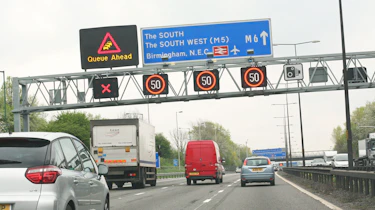
Many people assume hard shoulders only exist on motorways, but that isn’t always the case. Some dual carriageways also have them, while the introduction of smart motorways means that not all motorways now feature a permanent hard shoulder, as some have been converted into extra running lanes.
To clear things up, here are the types of roads that may have a hard shoulder in the UK:
- Traditional motorways: These are the most common motorways in the UK and were constructed in the 1980s, such as the M1 and M6. These feature a permanent hard shoulder for emergencies and for use by emergency vehicles. Although, sections of these traditional motorways have been converted into smart motorways.
- Controlled motorways: A controlled motorway is a type of smart motorway that has a permanent hard shoulder. This type of motorway features variable speed limits displayed on overhead signs.
- Dynamic hard shoulder motorways: On this type of smart motorway, the hard shoulder can be opened as an extra traffic lane when there is severe congestion or an incident. Refuge areas provide places to stop in emergencies.
- Some dual-carriageways: Some dual carriageways include a fixed hard shoulder. When present, it can be used in the event of a breakdown or by emergency vehicles.
When to use a hard shoulder
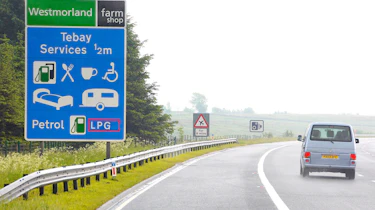
Under no circumstance are you allowed to stop on the hard shoulder, or the emergency refuge areas of a smart motorway, apart from in an emergency. Emergencies include when your car suffers a mechanical breakdown, if you get a puncture, if a trailer or any items you are carrying on your car have worked loose, or if you have a medical emergency.
You can't stop on the hard shoulder if you want to make or receive a phone call, if you're tired or need to go to the toilet. That is what service stations are for and you should plan your rest stops around them when driving on motorways, or simply leave the motorway at the next exit to find somewhere safe for a non-emergency stop.
In addition, you cannot use the hard shoulder as a driving lane, unless you are told to do so by a police traffic officer or a Highways England patrol. Smart Motorways are an exception to this rule and the other exception is in roadworks, where the yellow signs will indicate when a contraflow, that moves lane one over to the hard shoulder, is in force. Once you come to the end of the contraflow you must move back to lane one.
If you are leaving the motorway via a slip road, but there is a tailback on said slip road, you are not allowed to pull over into the hard shoulder to ease traffic flow on the main carriageway. It might seem like a good idea, but you end up covering the road markings, as well as blocking a potential access route for emergency services. Drivers behind you might not be as conscientious and try to push-in further up the queue, causing more delays behind.
How to use a hard shoulder
When you need to stop on the hard shoulder, you should pull over as far to the left as possible and ensure your hazard warning lights are on, especially at night, so that following traffic can see that you are there. Before you get out of the car, it can be useful to turn the steering slightly to the left, so that if the worst should happen and another vehicle collides with your car, it will veer off to the left, rather than back into the carriageway, where it could cause a larger accident.

When you get out of the car, make sure the handbrake is on, and get out via the left-hand doors, away from moving traffic. Find an emergency phone - large orange SOS signs will indicate where the nearest one is - to contact the services to come and rescue you.
If you can, look around to see if there is a motorway marker post nearby. These small white posts have blue and red markings and a number written on them. This number is unique to your location, and makes it easier for emergency services to locate you, as they not only show where you are, but are also marked to let the services know which side of the motorway you're travelling on.
Once you have left the car, it's advisable to stay back from the road. If there is Armco barrier or concrete wall, then stand behind it for added protection. If there's a rising embankment, then move up it a little to get out of harm’s way, but if it's an embankment that drops away from the road, stay level with the road, so that other drivers and the services can see you. If you have one, put on a high-visibility vest to help you to be seen.
Smart Motorway hard shoulders
So-called Smart Motorways have been implemented on many busy motorways across the UK. There are different kinds of smart motorway but the basic premise is that computer controlled gantries over the road inform drivers of variable speed limits and of which lanes they are allowed to drive in. On so-called 'all-lane running' Smart Motorways the overhead signs can instruct drivers to drive on the hard shoulder to ease traffic flow at busy periods.
Refuge areas are provided at intervals along the Smart Motorway and the idea is that cars suffering mechanical problems should be able to reach the safety of these areas. If a car breaks down and stops in a live lane of an all-lane-running Smart Motorway, camera systems should spot the car's location and close the lane, warning other traffic on the over-head gantry signs. The safety implications of this have made Smart Motorways controversial and their roll-out has been paused in the UK. You can read all about them in our Smart Motorways guide.
What is the penalty for incorrect use of the hard shoulder?
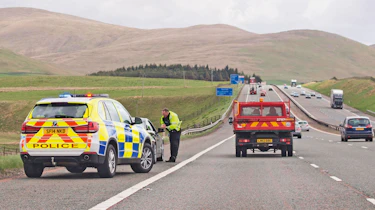
The hard shoulder should only be used in emergencies, such as a breakdown, or when police or overhead signs indicate it is safe to use. Using the hard shoulder illegally can result in fines or penalty points on your licence.
The current penalties are:
- Stopping on the hard shoulder unlawfully can result in a fine of up to £2,500 and no penalty points.
- Driving on the hard shoulder when not permitted can result in a minimum fine of £100 and between three and nine penalty points on your licence. If you already have points, this could lead to a driving ban
Hard shoulder top tips
Only stop on the hard shoulder in an emergency. Taking a phone call or going to the toilet do not count as emergencies.
- Never drive on the hard shoulder unless directed to do so by road signs or a police officer.
- When you stop on a hard shoulder pull over as far to the left as possible and put your hazard lights on.
- Get out of the car and onto the far side of the Armco barrier.
- Find a motorway marker post to confirm your position.
- Find an emergency phone and call for help.
- Wait with your car, staying on the far side of the Armco barrier.
Did you know you can sell your car through Auto Express? We’ll help you get a great price and find a great deal on a new car, too.