New Hyundai Ioniq 6 facelift is £5k cheaper than a Tesla Model 3
Hyundai’s facelifted electric saloon benefits from the full Electric Car Grant and can be had in both single and dual-motor forms

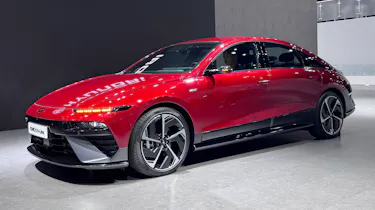
Almost a year-and-a-half after its official reveal at the 2025 Seoul Motor Show, the revised Hyundai Ioniq 6 saloon is now on sale in the UK, with deliveries expected to start in spring of next year. Priced from just £33,240, the svelte Korean electric saloon undercuts its main rival, the Tesla Model 3, by almost £5,000.
That punchy price tag is thanks in part to the facelifted Ioniq 6 benefiting from the Government’s full £3,750 Electric Car Grant. Despite being the cheapest electric saloon you can buy – a Mercedes CLA will set you back around £10,000 more – even the base Hyundai Ioniq 6 offers a competitive range. Entry-level Premium cars get a rear-mounted electric motor that’s mated to an 84kWh battery, resulting in 0-62mph in 7.4 seconds and, if you’re gentle on the accelerator, a maximum range of 422 miles.
Standard kit includes twin 12.3-inch screens with built-in sat nav, plus Apple CarPlay and Android Auto, dual-zone climate control, a heated steering wheel and front seats, wireless phone charging, 18-inch wheels and a heat pump. All Ioniq 6 models also benefit from a full suite of driver-assistance systems, which includes adaptive cruise control with lane centring, blind spot monitoring and a reversing camera.
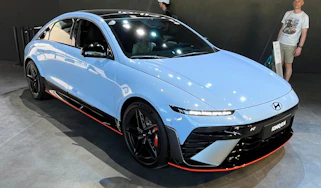
For an extra £3,000, the Ioniq 6 N Line adds sporty styling reminiscent of the full-fat Ioniq 6 N. There’s no swan-necked rear wing, but the visual upgrades do include 20-inch wheels, plus a variety of N-specific interior touches such as kick plates, red stitching, plus cloth and suede upholstery, heated rear seats and lumbar support for the front passenger. Finally, there’s also the option to upgrade to the 321bhp dual-motor version, which is capable of 0-62mph in 5.1 seconds; the catch is that this variant doesn’t get the grant, meaning it starts from a lofty £43,490. Range is also reduced to a still ample 354 miles.
Sitting at the top of the line-up – with the exception of the aforementioned performance-focused Ioniq 6 N – is the N Line Evo. Priced from £43,270 for the rear-wheel-drive model, or £46,770 for the all-wheel drive version, this turns up the wick with leather and suede upholstery, ventilated front seats, a head-up display, a Bose sound system, surround-view cameras, remote parking and, perhaps most interestingly, digital door mirrors.
What does the new Hyundai Ioniq 6 look like?
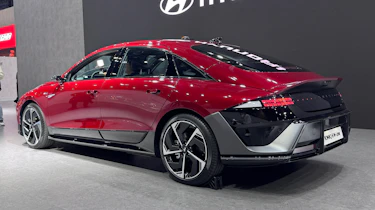
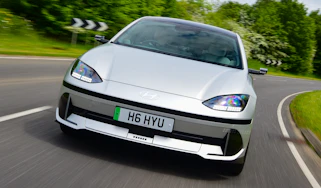
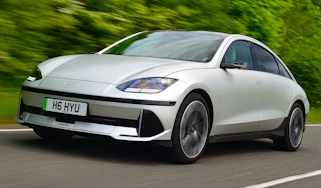
All of the visual updates for this facelift were previewed when the sporty Ioniq 6 N arrived last year; the changes start with a totally new front end that replaces the previously rounded headlamps with a new set-up of slim daytime running lights in their own housing, with the main headlamps hidden away in a gloss-black lower bumper. This doesn’t just make the latest Ioniq 6 look a little sleeker, but gives the bonnet a sharper edge and a more aggressive face.
From here, the base car features a subtle opening that’s much cleaner than the previous model, integrating active aero shutters and a contrasting silver lip. This is matched to fresh wheel designs, which have a more aero-focused design, and new lower skirts in a contrasting grey colour, rather than the high silver of some previous versions.
The N-Line takes a more aggressive approach, with silver pinstriping along the car’s sills and front splitter, plus a set of contrasting upward-angled fins that are similar to those found on the Ioniq 5 N. Hyundai has also fitted gloss-black lower sections on the front and rear doors, plus another new wheel design.
As mentioned, the Ioniq 6’s controversial upper spoiler has been replaced with a larger single ducktail mounted above the rear light bar. Hyundai says this has been done to streamline the car’s design and give it a cleaner look from the rear.
Inside, the former car’s twin 12.3-inch display set-up has been retained but now incorporates updated software. Hyundai hasn’t given up on physical controls for the air-conditioning and heater controls, although cars specified with digital mirrors do get screens neatly integrated below the A-pillars.
There are three new colours to choose from – Transmission Blue Matte, Celadon Grey Matte and Sunset Brown Pearl – and while each of the three trim levels gets unique upholstery configurations, disappointingly all are in black; no lighter options are offered for the UK market.
Click here for our list of the longest-range electric cars...