New Mercedes EQS facelift crowned EV range king with 574 miles per charge
Mercedes’ updated EQS now has a 574-mile range, enough to get you from London to Inverness

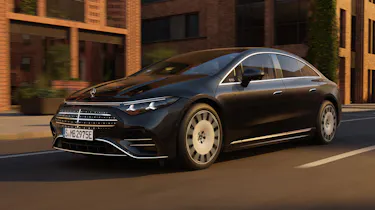
The EQS was Mercedes’ first all-electric limousine, the first car to gain the brand’s ‘Hyperscreen’ dash layout and the first to sit on its EVA platform. Later this year, it’s receiving a mid-life facelift – and yet again it’s introducing some all-new technology, along with delivering some eye-catching headline figures.
The timing of the revamped Mercedes EQS is a story in itself. The new, all-electric GLC and C-Class arrive this year, but in the wake of their respective rivals from BMW, the iX3 and i3, with all four sitting on brand new architecture. Turning the tide somewhat, the covers have come off the new EQS just weeks ahead of the revised BMW i7, one of the electric Mercedes’ main rivals.
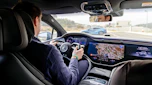
Mercedes has also recently launched the facelifted S-Class, which in its next generation will take over from the EQS with an all-electric variant. The EQS previously received a mild update back in 2024 with a new battery, but this latest model promises even more upgrades to help Mercedes stay at the top of the luxury electric limousine sector.
Pricing for the 2026 EQS hasn’t been announced for the UK, but in Germany it’ll start from 94,403 euros (around £83,000 at the time of writing). However, we expect there to be an uplift over the EQS’ current UK starting price tag of £99,845 to take it over the £100,000 mark – just like the latest S-Class.
Mercedes EQS: range and charging
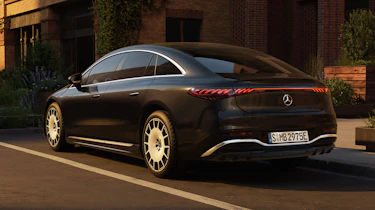
Mercedes says the EQS benefits from “generational leaps forward” when it comes to its powertrain. In terms of range, the previous car saw an impressive jump from 441 miles to 511 miles, which was enough to crown it the longest-range electric car in the world.
Since then, the Lucid Air has arrived with a 596-mile range, although the American car is not available in the UK. BMW has also confirmed that the upcoming i7 will be fitted with its next-generation cylindrical battery cells, courtesy of Rimac Technologies, to improve efficiency and help it get close to the 500-mile range figure now expected of large, high-end electric saloons.
The EQS also has a new battery set-up, with 122kWh capacity instead of the 118kWh of before. However, thanks to changes in the battery’s cell shapes and alterations to the chemistry, the dimensions of the battery pack remain the same. The result is up to 574 miles on a single charge – enough to drive from London to Inverness.
Helping the efficiency of the EQS is its incredibly slippery shape, with a drag coefficient that remains at 0.20. Brake recuperation has been strengthened and refined, too, sending more energy back to the battery than before.
Instead of the old car’s 400-volt limit, it’s 800-volt technology that underpins the EQS’ EVA2 platform, with charging speeds hitting up to 350kW for every version. That’s up from 200kW before, meaning a 10-minute recharge will add up to 198 miles.
Mercedes EQS: powertrains and performance
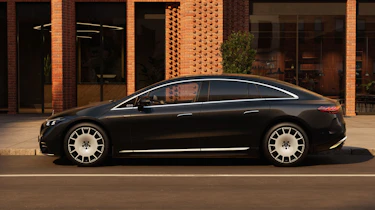
The old EQS 350 has been removed from the electric limo’s line-up, as has its rear-mounted 288bhp electric motor. Instead, the EQS range starts with the single-motor 450+ with 362bhp, followed by the EQS 500 and 580 4Matic, both of which get a dual-motor, all-wheel-drive layout. There’s no word yet on a facelifted variant of the AMG EQS 53.
Performance figures for the new EQS haven’t been revealed, but we expect the single-motor’s 0-62mph time to hover around the 6.2-second mark, with the dual-motor model taking half a second less.
As for the EQS’ driving experience, there’s new optional steer-by-wire technology which we’ve already tested. As the name suggests, it means there’s no physical connection between the steering wheel and the steering rack – just like the set-up offered in the Lexus RZ and even the Tesla Cybertruck. The system is controlled via an aeroplane-style yoke, with a much lower steering ratio meaning you don’t have to cross your arms making a turn. The turning radius stands at just under 11 metres, too, thanks to standard-fit rear-wheel steer.
Elsewhere, there’s a new development of Mercedes’ Airmatic air-suspension. The company says “intelligent damper control ensures noticeably greater comfort on longer, artificial speed bumps”. Almost as an invitation to test out the EQS’ impressive range figures, Mercedes points out that such speed bumps are more common in southern Europe.
Mercedes has also fitted the latest MB.Drive parking assist system. It now detects spaces more efficiently and can park twice as fast as before. The system, which uses up to 27 sensors, can parallel park and even comes with a reversing function that memorises around 150 metres of its previous route, enabling the EQS to reverse back – useful when you’re at a narrow dead-end, for example.
Mercedes EQS: design and technology
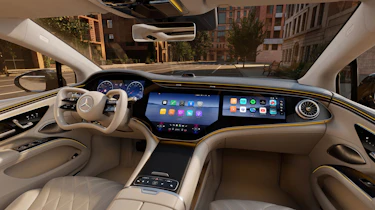
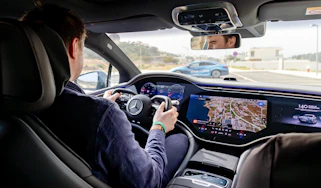
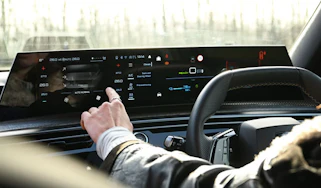
Step inside the EQS and as before the dash is dominated by three screens. The Hyperscreen set-up uses a 12.3-inch driver’s display, a 17.7-inch central display and a 12.3-inch passenger display. The MBUX infotainment has been changed, too. There’s now ‘Zero Layer’ which helps display the most-used functions in the customisable shortcut bar and makes the infotainment “as easy as operating a smartphone” according to Mercedes.
Also new for the 2026 EQS are the heated seatbelts from the latest S-Class. We tested these out on an early preview of the EQS, and found that they started working within seconds of being activated. They conduct heat through tiny metal strands in the belt, and Mercedes says they can get up to 44°C in cold weather.
Inside, the focus isn’t all on the front-seat occupants, though. In the back, there are two new 13-inch displays and new portable remotes to operate functions such as climate and entertainment. The standard rear-seat comfort package also includes electrically adjustable rear seats, luxury padded headrests, wireless smartphone chargers for mobile devices and heated seats.
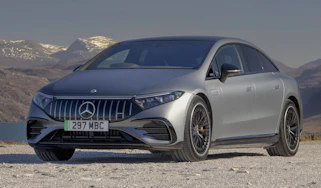
In terms of exterior design, the EQS’ changes are pretty subtle, but look closely and you’ll spot a new grille on the standard car which pays tribute to the S-Class, while there’s also a black radiator grille with chrome slates and a backlit three-pointed star pattern. Sportier AMG Line models get a different look, with a central Mercedes badge within the grille.
The headlights have been tweaked, too, with Mercedes’ three-pointed star lighting signatures. These come with Mercedes’ ‘Digital Light’ technology, upping the field of view at night by up to 40 per cent while consuming half as much energy as before.
The ‘Ultra Range’ high beam, meanwhile, now projects up to 600 metres, roughly the length of six football pitches.
Did you know you can sell your car through Auto Express? We’ll help you get a great price and find a great deal on a new car, too.