Over-the-air car updates are fine, but getting it right first time is better
News reporter Ellis Hyde weighs up the pros and cons of manufacturers using post- launch over-the-air updates to improve your car

You need a lot of patience when buying a new car. For going through reviews and news stories to compile a shortlist. For putting up with salespeople or leasing companies. For doing all the test drives. And then for counting down the weeks – or months – until it finally arrives.
Of course, nowadays you also need to be patient once it’s on your driveway, as brands continue to fine-tune and fettle things via the magic of over-the-air (OTA) updates.
Previously, a manufacturer would have to perform a model-year update or mid-life facelift to improve one of its cars. But many new vehicles are basically smartphones on wheels, and car makers can use OTA updates to tweak their software, improve systems and add new features without you ever having to visit a showroom.
Tesla was the company that pioneered this, and these days pretty much everyone is at it. Recently, Lotus gave its Emeya and Eletre EVs a new ‘performance-inspired’ soundtrack, semi-autonomous driving capabilities and a refined driver-fatigue monitoring system, all via an OTA update.
I’m all for this sort of thing; improving the capabilities of a car is great for buyers. A car that gets better with age is a fantastic prospect. But it feels like some firms are delivering new models before they’re truly ready, just because they can ‘fix things later’.

The short-lived EV start-up Fisker suffered from launching its only car, the Ocean, when it was plagued with serious software bugs that weren’t addressed until it was too late.
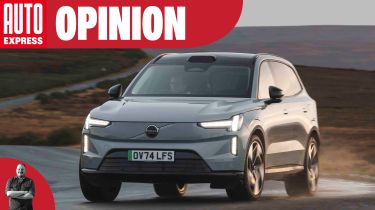
Even Volvo has fallen into this trap, with early examples of its near-£100k EX90 flagship electric SUV arriving without smart charging functions or even some advanced safety systems. Wireless Apple CarPlay wasn’t available at launch either, and the same is true of the new EX60 that has just arrived, although the feature should be coming soon.
I think the best test for anyone who’s looking at a car that a brand says will get OTA updates – and might not have all the features promised from the start – is to ask if they could happily live without them.
Look again at the EX60, for example: its Google infotainment system, with the ability to install various apps directly into the car, is already so excellent that most people wouldn’t need to use CarPlay. If you don’t need the newest car within weeks of its launch, exercise even more patience and you won’t feel like a guinea pig.
Eventually, all the features promised will be rolled out and early customers will have given their feedback, so any software bugs will hopefully have been ironed out.
Don't miss the best of Auto Express on Google! Make us a preferred source. Click here...