New Peugeot 208 electric supermini to get astonishing new tech
New vehicle architecture and cell-to-body battery pack will make the new Peugeot 208 closer to a Tesla than a Volkswagen

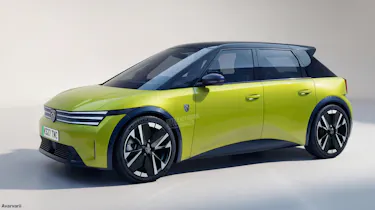
The all-new Peugeot 208 is shaping up to be Europe's most hi-tech supermini, with owner Stellantis confirming details of its all-new 'STLA One' vehicle architecture, electric powertrain and smart technologies, including cutting-edge steering, voice control and 360˚ sensor technology to power next-level driver assistance.
"Peugeot will launch seven brand new models between now and 2030," brand CEO Alain Favey told Stellantis' 2026 investor conference. "Four of these will be based on the new STLA One platform. The first comes next year in the shape of the new E-208, a real game changer for us and for the European market I would say."
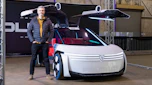
Peugeot has already given a flavour of the technology underpinning the next E-208 with the radical Polygon concept, featuring its novel Hypersquare steering wheel that utilises new steer-by-wire technology. With no mechanical link between the wheels and infinitely variable assistance depending on your driving situation, the new E-208 will need next-level computing power and sensor technology. And it'll get it from the new 'STLA Brain' making the E-208 Stellantis' first true Software Defined Vehicle, and its 'STLA Smart Cockpit' technologies.
"STLA Brain is our new electronics and software platform," said Ned Curic, Stellantis chief technology officer. The car's new 'central nervous system' gets rid of the myriad control units on today's cars masterminding the disparate systems for powertrain, chassis, infotainment and so on, wrapping them up into one connected, high-performance computing platform. This boosts processing power by six times and bandwidth by a multiple of 1,000, unlocking a host of new features with instant, intuitive responses and Over The Air updates frequent upgrades.
It's this platform, with its AI-powered ability to understand the car's surroundings and use case and respond instantly, that should help steer-by-wire offer the right level of assistance, from incredible car park manoeuvrability to incredibly consistent motorway tracking.
The new E-208 will take a step closer to reality with a near-production concept at the 2026 Paris Motor Show this October, before going into production in 2027. With an expected starting price around £26,000, it will rival recently-revealed electric superminis such as the Renault 5, Cupra Raval and Volkswagen ID. Polo.
If you can't wait for the new Peugeot 208 to arrive, you can save more than £11,000 on the current E-208 with the Auto Express Buy a Car service or nearly £8,000 on a petrol-powered model.
What will the new Peugeot 208 look like?
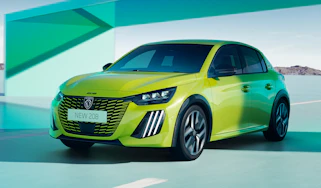
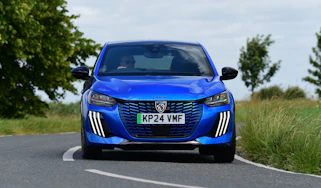
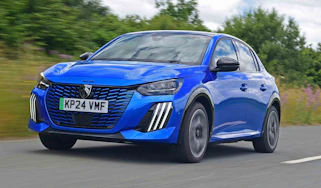
The design of the new Peugeot 208 will cleverly mix details inspired by the eighties 205 supermini with modern clean surfacing and sheer edges. The front and rear light strips will mirror the original 205’s striped grille and rear hatch cover, but execute them in a very contemporary way.
“The horizontal, three-line light signature is something that you’ll find on future Peugeots,” the brand’s CEO Alain Favey revealed in an exclusive interview with Auto Express. “Same for the back. The very prominent red lights, and the fact they are horizontal lines, are a hint at what’s to come in future Peugeots.”
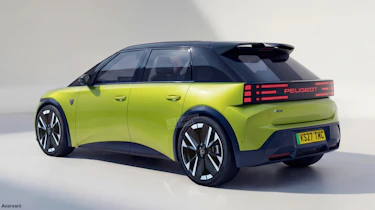
The boss added: “Our designers like to mix modernity and some positive elements of our heritage. We wish to use elements of the past to create the future.”
The new 208 will be the first model on Stellantis' latest ‘STLA’ architecture. “The car is on STLA [One] and it will be launched as a BEV,” Favey said. “We were first with STLA Medium as well [beneath the 3008 SUV]. It’s Peugeot’s role to bring innovation among Europe’s mainstream brands.”
The new chassis incorporates Hypersquare steer-by-wire, where the mechanical link between the steering and wheels is replaced by digital impulses. This will also help unlock two fundamental 208 goals: dynamic handling and maximum space in a compact package.
The CEO explained: “More people live or work in urban areas, where space is becoming more and more constrained and the roads are more and more congested. So you need compact exterior dimensions together with a very spacious interior. That’s what we’re trying to explore with Polygon and the rest.”
The Polygon’s proportions – with the windscreen pushed forward shrinking the nose, and a longer wheelbase – show how electric cars can cram more space into a small footprint. Eliminating the steering column, combined with a new dashboard architecture, will boost roominess, too. And will this focus have a knock-on effect in minimising weight gain, which saps EV range? “Absolutely – that’s what we’re trying to do with the next 208,” Favey said.
And that's not the only way: STLA One has cell-to-body technology, where the battery pack is part of the floor and a structural component in the car. "[This will] cut costs, weight, and complexity," said Davide Mele, Stellantis's product planning chief. "STLA One will also be 800-volt capable, delivering very competitive charging time, and a better real-world BEV experience." Stellantis will be chasing recharging times that are competitive with refuelling a petrol car, in a small battery EV such as the E-208.
“The concept car is a way for us to push our designers and engineers to find solutions. Polygon was sponsored by Ned Curic, our chief engineer; he’s trying to push his engineers to find solutions to make lighter cars and to increase recyclability. Some of this will find its way into the next 208, and later models.”
What will the new Peugeot 208 look like inside?
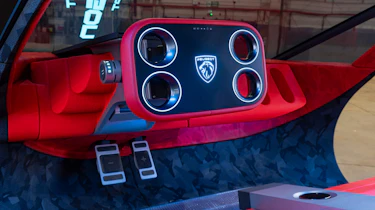
Favey says charismatic design, high-quality cars and customer service plus “driving sensations” will underpin the new Peugeots delivered on his watch. And steer-by-wire will provide a unique supermini driving experience, thanks to the oblong-shaped Hypersquare yoke.
Peugeots have long been known for their direct steering, with small steering wheels as the centrepiece of its ‘i-Cockpit’ set-up. Hypersquare will take things to the next level, with sophisticated software assessing the car’s speed and surroundings to deliver variable and precise levels of steering-motor assistance.
This unique Peugeot cabin experience will be facilitated by STLA Smart Cockpit. "This replaces what's today 12 different separate systems in one unified cockpit platform that works across all brands and regions," said tech boss Curic. "Each of our brands need to deliver a distinct cockpit experience for our customers." Peugeot will be the very first brand to introduce the new cockpit tech, enabling a distinctive AI-powered brand experience with unique graphics, ambience, voice controls and features.
Favey believes this tech leadership will help Peugeot fend off gadget-packed Chinese challengers.
New Peugeot 208 will be electric only, for now
Stellantis planned the next 208 when demand for electric cars looked unstoppable, with STLA One native to EV. But the investor day confirmed that the architecture is hybrid compatible, and "optimised for each configuration so you don't carry the penalties of a traditional multi-energy architecture". Cost is one penalty, weight is another: the STLA Medium platform under the current Peugeot 3008 is known to be excessively heavy, to protect it for off-road usage by Jeep for example.
The next-level 208 will be introduced as a BEV first, with Favey confirming that it would sit alongside the existing 208, suggesting hybrid will arrive later. For how long remains to be seen, because the current hatchback will be positively archaic alongside the new model. Vauxhall is facing the same conundrum with the next Corsa, which is also based on the same underpinnings and twinned with the new Peugeot.
Next-gen Peugeot E-208 to be sold alongside new GTi
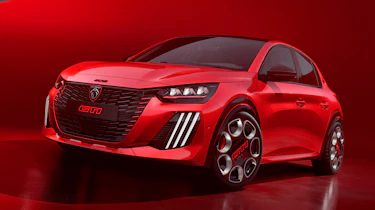
Favey plans to offer the inaugural electric 208 GTi, launching this year as the crowning glory for the current, seven-year-old supermini, alongside the next E-208, but performance levels will be quite different. Favey said: “As long as there’s demand, we will keep the GTi on sale; the new 208 in 2027 will attract a different kind of clientele and that’s fine.”
While the halo GTi will pack 276bhp, the E-208 will start with more modest power outputs. Stellantis is developing a new range of e-motors, producing between 100bhp and 450bhp. E-208 power will need to span from 130bhp to 220bhp to match the Volkswagen ID. Polo and Cupra Raval line-ups.
Those small VW Group EVs will be built in Spain to exploit its lower cost base, and Stellantis is taking the same approach: the Zaragoza plant which makes the current Corsa and E-208 is earmarked for the next-generation cars, with other STLA Small cars also set for the Vigo factory.
The 208’s longer wheelbase will enable bigger battery packs than today’s 51kWh maximum. STLA Small can accommodate up to 82kWh to yield a maximum range of around 300 miles. Smaller packs – potentially just under 40kWh – will be available to create city runabouts. A 400-volt electrical architecture will ensure charging is a bit quicker than today’s E-208, which DC charges from 10 to 80 per cent in around 30 minutes – and that’s with a bigger battery.
Get the latest and best car news and reviews, first! Follow Auto Express on Google today