New Volkswagen ID. Polo takes on the Renault 5 at under £26,000
VW’s electric supermini is arriving with a 281-mile range, classy looks and a pinch of nostalgic charm

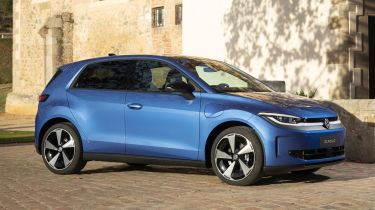
The moment has finally arrived: the long-awaited and critically important new Volkswagen ID. Polo is on sale now, with prices starting from £25,555.
That is considerably more than its chief rival, the Renault 5, which gets under way from £21,495 after the Government’s Electric Car Grant (ECG) has been applied. However, it’s still more affordable than the MINI Cooper Electric, which starts from just under £27k.
At present, only the limited-edition launch models of the ID. Polo are available to order. Regular versions will hit showrooms in September and will cut the all-electric supermini’s starting price to £23,945.
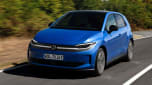
For now, the entry-level ID. Polo Life Launch Edition offers just over 200 miles of range from its 37kWh LFP battery and, with 133bhp on tap, 0-62mph takes 9.5 seconds – putting it within spitting distance of its French nemesis.
But buyers can add a larger, more energy-dense 52kWh NMC battery that ups the ID. Polo’s range to 281 miles – nearly 30 miles further than the equivalent R5 can cover. Meanwhile, a more potent 208bhp e-motor cuts the stylish electric car’s 0-62mph sprint time to just 7.1 seconds.
Importantly, the ID. Polo does qualify for a £1,500 grant as well, but only models fitted with the larger 52kWh battery, as is the case with its Spanish cousin, the Cupra Raval. With that applied, the long-range variants start from £26,830.
Base versions have a 90kW maximum charging speed, which VW says is sufficient for a 10 to 80 per cent top-up in 27 minutes. The equivalent figures for cars with the upgraded battery pack are 105kW and 24 minutes.
Standard kit with Life trim includes a 10-inch digital driver’s display, a 12.9-inch touchscreen with wireless Apple CarPlay and Android Auto, LED headlights, fabric upholstery, a reversing camera, adaptive cruise control and other safety features
Finally, for £31,495 (after the ECG is deducted), the Style Launch Edition comes with the bigger battery set-up and all the bells and whistles that VW can throw at it, including ambient lighting, heated front seats, a heated steering wheel, matrix LED headlights and more.
When the full ID. Polo line-up goes on sale later this year, customers will have the same choice of battery sizes and either Life or Style trim. But while the sub-£24k model should still have a circa-200-mile range, it’s only going to get 114bhp, resulting in 0-62mph in 11 seconds.
How does the ID. Polo compare to the competition?
As we said, the Renault 5 is currently available from £21,495, thanks to the Government’s Electric Car Grant (ECG), as is its re-badged brother, the Nissan Micra.
The Cupra Raval – which was recently anointed as the Auto Express Supermini of the Year for 2026 – costs almost exactly the same as the VW, with prices starting from £23,785. Right now, the award-winning EV is available from just £21,000 through the Auto Express Buy A Car service and we can expect similar discounts to emerge on the ID. Polo in time.
Meanwhile, the Kia EV2 starts from £24,245, but even the cheapest version in the line-up offers up to 281 miles of range. Whereas, similarly priced versions of its key rivals, including the ID. Polo, are all good for around 200 miles at best. Its sibling, the new Hyundai Ioniq 3 - which is set to go on sale in September - is presumably going to cost about the same.
In case you’re wondering, the petrol-powered VW Polo starts from just over £22,000, but it doesn’t have the tech, style or nostalgic charm displayed by its all-electric counterpart. The ID. Polo was a clean-sheet design so the two cars actually aren’t related.
Why is the Volkswagen ID. Polo so important?
“The ID. Polo is the trailblazer for our new ‘True VW’ product strategy,” product strategist Tim Bokker told Auto Express during an exclusive chat at the car’s Hamburg preview.
“You don’t need to explain the car, you can see it’s a Volkswagen. We didn’t have this with the first ID.3/4/5, which were positioned under a sub-brand. With ID. Polo we bring our core values into EV.”
Not that the car was called ID. Polo when Bokker started on the project in 2021; for a long time it was destined to be called ID.2. But the more the car tapped into Volkswagen’s traditional strengths, the more the clamour to call it ID. Polo swelled.
Bokker added, “the ID. Polo is one of Volkswagen Group’s ‘urban electric family’,” referencing the Raval, Skoda Epiq and VW ID. Cross city cars that are spun off this new front-wheel drive ‘MEB+’ architecture. “But 70 per cent of target customers live in the suburbs, so [we offer a] long range with the bigger battery. In France [supermini] is the biggest segment, so ID. Polo is not just a second car.”
What does the Volkswagen ID. Polo look like?
Key to the reasons why the car has taken the Polo nameplate is the electric car’s design language. Conceived by design boss Andy Mindt, the design is closer to traditional Volkswagens than the brand’s previous EVs. “It follows three simple principles: stable, likeable and the magic portion of Volkswagen, our secret sauce,” explained engineering boss Kai Grünitz.
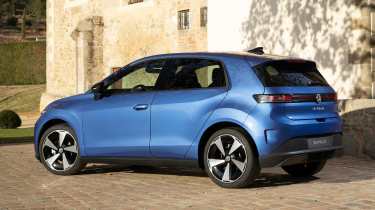
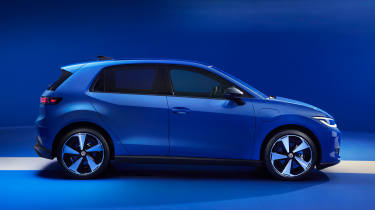
Likeable? The ID. Polo has a friendly face, courtesy of headlights resembling eyes and a smiling lower bumper graphic. All cars get an illuminated VW badge in the centre, and the top Style trim adds front and rear light bars linking the lamps. Its 3D rear lights are inspired by whiskey tumblers.
The stable aspect comes from the proportions: a long wheelbase, short overhangs, wider tracks than the combustion Polo and crisp wheelarches making the car “sit firmly on the road”, according to Grünitz. The rear pillar graphic is an iconic VW design cue, dating back to the Golf Mk1 from the ‘70s, and the smallest wheel size spans 17-inches, the biggest 19. “The battery makes the car higher but big wheels help it look lower again,” added Bokker.
VW ID. Polo's interior features physical buttons and retro display
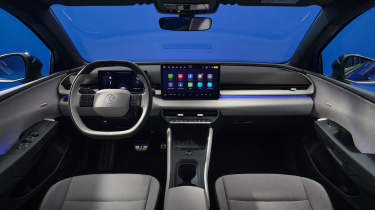
If the exterior design is Volkswagen through and through, the cockpit shows some fresh-thinking. The critical customer and media response to the ID.3 and ID.4 have led Volkswagen to bring back buttons: a bank of physical switches in the centre console consign the hated temperature sliders and haptic steering wheel controls to history. It’s the same for the window winders: the first IDs saved money by having a user-unfriendly toggle to select between front and rear, while the ID. Polo restores four switches. Fabric dashboard inserts and subtle interior lighting also provide a welcoming ambience.
The secret sauce is found in surprise and delight features such as the digital screen’s retro display, inspired by an ‘80s Golf, which nostalgic users can select. The driver gets a 10-inch digital cockpit, while the central touchscreen measures 13-inches across. Their software will benefit from Over The Air upgrades.
How practical is the new Volkswagen ID. Polo?
But the interior packaging will also satisfy target customers, such as a 30-something nurse, whose use cases have been strictly profiled to make the ID. Polo suit their needs. Grünitz, a 30-year Volkswagen veteran, was living in the city and running a Polo when his first child was born. And his flashbacks trying to cram a stroller in its boot clearly influenced the ID. Polo’s trunk.
“We used the advantage of front-wheel drive and created a basement that’s a storage space under the trunk floor, big enough for a stroller or more than two crates of water,” he explained. “And you still have a normal trunk above it that can be used.”
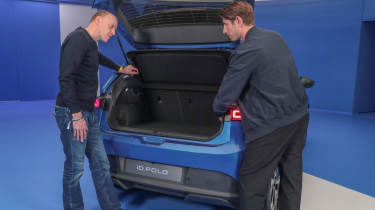
The ID. Polo packs a remarkable 441 litres of boot space, compared with 350 for a combustion Polo and 380 for today’s Golf. The little VW’s compact torsion beam rear suspension design, and not having to package a motor, enables this. “For a regular compact hatchback, no car has more trunk volume than the ID. Polo,” said Bokker.
Measuring 4,053mm, the electric Polo is much the same length as its petrol-powered sibling. Not having to accommodate an engine makes for superior cabin space, more than a Golf Mk4’s, reckons VW – though besting a near 30-year-old car slightly damns it with faint praise.
What safety tech does the new VW ID. Polo have?
And it packs tech from higher segments too. Connected Travel Assist uses a camera to identify red traffic lights and bring the car to a halt, or move off if the car in front pulls away. There’s Park Assist with a memory function enabling the ID. Polo to learn your manoeuvres and even drive out of a tight space. And four digital keys allow multiple family members to access the car from their smartphones.
Blind spot warning and lane assist are standard, the mid-tier Life trim gets a rear view parking camera, adaptive cruise and wireless charging. And the standard metallic paint is python yellow – a colour bespoke to Audi not so long ago.

Options include a big glass roof, Harman Kardon premium sound and massage seats. Those were must-haves for the SUVs in the urban car family, but the VW team decided to tap into them for the ID. Polo too.
“Efficiencies across the electric car family are important, to achieve better battery costs and the low entry price,” explained Bokker. “We have synergies where you don’t see them, differences where you do.” Indeed Volkswagen Group is proud of having 80 per cent commonality across the four cars, which have unlocked a €650m saving in development costs. That helps profitability – as well as keeping customer prices low.
Bokker says the Renault 5 is the ID. Polo’s main competitor. “The R5 is doing well in volume terms. With the right car we can make good volumes – and our strength is value for money.”
With the Renault 5, Kia EV2, Hyundai Ioniq 3, Cupra Raval and now the ID. Polo, customers wanting an electric supermini have never had it so good. The people’s car maker is finding its people’s touch once more.
Don't miss out! See more of Auto Express in your Google Top Stories. Click here...