Cars are like horses: people will soon realise EVs are just better, claims VW boss
VW’s sales and marketing boss reckons people will move to EVs organically, just as they did with ICE cars in the early 20th century

“Do you know when horses were banned?” Volkswagen’s board member for sales, marketing and aftersales asked us with an elongated pause. “When was it forbidden to buy horses?”
Martin Sander, who’s been in his role at VW’s passenger-car division for almost two years, was smiling. It’s a trick question, of course: “You can buy a horse today,” he said. “Somehow, over time, more and more people realised that for actually getting from A to B, a vehicle is much better than a horse.”
He compares the transition from pony power to petrol power with the dilemma many new-car buyers are facing right now – is now the time to go electric, or is it better to stick with what you know?
“[Today] I look out of the window: not many horses – it’s predominantly cars,” Sander joked from our spot inside the lobby of a fancy hotel in central London. “This is why I hate the discussion about the ICE (internal combustion-engine) ban. Everyone is just talking about the ICE ban. How do you convince customers about a new technology if you’re only talking about when there will be a date when you are not allowed to use these vehicles – vehicles you have got used to over the last decades – any more?
“Take all the barriers away. Let’s talk about what we need to do to actually convince customers: the charging infrastructure; talk positively about the advantages of electric vehicles and possibly do something around the energy prices. Over time, more and more customers will be convinced. Then, if by 2035 or whatever, there’s three, four, five per cent of customers who still want to buy a vehicle with a combustion engine…”
Volkswagen is further down the EV path than many legacy manufacturers, but is well aware of the impending threat from China. Yet, as Sander was keen to reiterate, VW’s success in the Far East will help it build more accomplished cars for the UK and Europe.
“Everything we are learning in China will help us to be competitive in all the other markets around the globe where we are competing with the Chinese,” he said. “On our end it's very much about scale, efficiency and cost, and this is what we are working on diligently. We have to be competitive. There's no alternative.”
Yet Sander insisted Volkswagen will not bring its innovative range-extender technology to Europe. Mirroring comments made by Volkswagen CEO, Thomas Schafer, earlier in the year, the sales and marketing boss told us: “[VW has] hybrids, plug-in hybrids, and full battery-electric vehicles. How thin do you want to slice the cake?
“There is a market in China. In Germany or in Europe at the moment? I don't really see that opportunity,” Sander said. “There's a very big overlap from a consumer experience. This is why we believe that the vehicles and drivetrains we have – traditional ICE, mild-hybrid, full-hybrid, plug-in hybrid, plus battery-electric vehicles, small batteries, big batteries – we have the range we need to have a very competitive offering.”
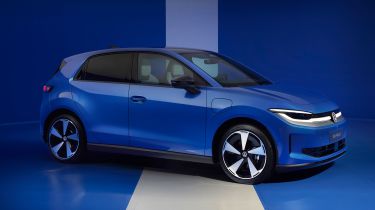
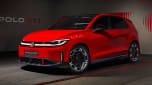
Next up for Volkswagen is the landmark launch of its ID. Polo – the electric alternative to its big-selling petrol supermini – plus a hefty facelift for the much-maligned ID.3. Shortly after, it’ll bring the new ID. Polo GTI to market, while later in the year we’ll see the covers come off the ID. Tiguan – a long-awaited, substantial update for the compromised ID.4 electric SUV.
Deals will soon start flooding in for the latest ID. Polo, but if you can’t wait, there are strong offers available for the long-range ID.3. The 349-mile Match Pro S is currently on Auto Express Buy A Car for just £306 per month…