VW electric cars will soon be as cheap to build as its petrol ones
VW Group CEO Oliver Blume reveals cost-cutting solutions for delayed SSP platform

The end of the 2020s will be a crucial few years for the Volkswagen Group’s electrification strategy as it launches several new platforms, including – finally – SSP (Scalable Systems Platform).
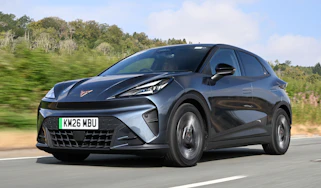
Affordability has been the main reason behind the lengthy delay from the architecture’s scheduled introduction in 2024 - due under Audi’s canned “Project Artemis”. But speaking during the first day of production for the new Cupra Raval and Volkswagen ID. Polo at Cupra’s Martorell factory in Spain, VW Group CEO Oliver Blume revealed to Auto Express that vehicles using the group’s upcoming SSP architecture (which will underpin cars from the ninth-generation Volkswagen Golf to the Touareg and several models from Audi and Porsche) won’t cost any more than petrol cars to produce.
The cost to manufacture electric cars is typically higher than for combustion-engined cars because while there may be fewer moving components, the energy required in production is a lot greater; plus raw materials such as cobalt and zinc for the battery are expensive to source. Then there’s the economies of scale: manufacturers have had a century to hone production lines for combustion-engined cars, whereas EV factories are still being optimised.
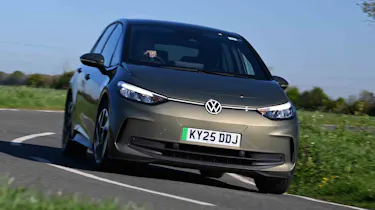
“The main influencer is the battery,” Blume said, “and we are switching now from NMC [nickel, manganese, cobalt] to LFP [lithium ion phosphate] batteries. That is one driver to bring down the cost.” He also revealed the software in upcoming SSP vehicles will be cheaper to produce too. “With a new software strategy, we are able to reduce the software cost of 80 per cent compared with the architecture of today.” This refers to the MEB platform, which is used by the Volkswagen ID.3 and Cupra Born.
With all this, Blume says we should expect SSP-based cars to cost the same as VW’s combustion-engined MQB-based models, which in the case of the next-generation Volkswagen Golf, will live alongside their EV (ID. Golf) counterparts. “When we come to parity, there will be the new platform, called SSP, where we have new software architecture and also new battery generations.”
In VW Group’s endeavour to reduce costs, could the quality of its cars based on the new platform suffer? Blume doesn’t expect this to be the case. “We have different levels of the SSP, right? For example, the software, zonal architecture where we have one central computer and one zonal computer for the first generation [of VW Group to utilise zonal computing], where we will start with the so-called ID. Every1 in 2027.”
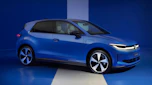
Prototypes of the ID. Every1 have been testing zonal software since summer 2025 and the production version, which is almost certain to be called ID.1, will be the first VW Group car (despite an estimated price tag of under £20,000) to use this technology.
As for more expensive SSP cars, Blume said: “When we go to higher generations, like Q7 e-tron from Audi, or then Scout [in America], or later Porsche, you can add zonal computers.” The idea is that these computers manage more specific regions of the car and will reduce complexity. More zonal computers will also “implement much more functionality than for the ID.1 - where there is only one zonal computer.” according to Blume.
Away from computing costs, Blume also added the hardware such as batteries and e-motors of SSP will be a key differentiator between the many brands under the VW Group.
How else is the VW Group cutting costs?
Optimisation and efficiency have been key to the decision-making of the giant Volkswagen Group in recent years.
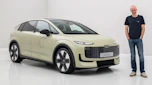
Blume said the VW Group as a whole had “too many options”, thus having a negative impact on production line efficiency and cost. Taking Audi as an example, he said the customer had a choice of “150 steering wheels, and we decided to continue with five. The customer at the end doesn’t care because the steering wheel is a steering wheel, and although we have many, many options, we have opportunities to reduce.”
Not only does the VW Group have too much choice for customisation, but the product line also needs to be thinned out, according to Blume. Acknowledging the wide variety of markets and segments the VW Group competes in, Blume also added, “We are starting to focus our product portfolio. We need too many derivatives to achieve our volume.”
That volume is set to be limited in future too. Over the past five years the average production output for the VW Group has stood at nine million cars, ranging from 8.3 million to 9.3 million. Blume says the Group wants to “bring down the cost structure to nine million cars” to avoid the “overcapacity” he says the company still has to solve in its factories.
According to Blume, closer ties with China could also benefit the VW Group - which already has partnerships with battery manufacturers and electric motors in China as well as Chinese car makers like XPeng and SAIC. “We benefit from our experience in China, and we have our own component business in China, engine plants, and which we are transforming also to other components right now in China”, said Blume.
In the last three years, the VW Group has reduced its production cost level in China by up to 50 per cent and Blume says the company “can carry over as experience to Europe”. He also added: “there's no excuse why we couldn't be able to have the same cost level, like our Chinese competitors.” Blume concluded by stating “the customer, at the end, will benefit and therefore it's a win-win situation for all of us.”
Did you know you can sell your car through Auto Express? We’ll help you get a great price and find a great deal on a new car, too.