Big lesson from Tesla’s Cybertruck saga? Don’t believe the hype
Steve Walker sees the Tesla Cybertruck going down in history as less of a Model T or Mini, and more of a DeLorean.

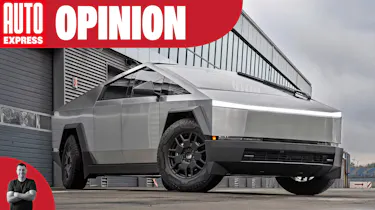
When Tesla CEO Elon Musk unveiled the Cybertruck to the world in 2019 it was already one of the most hyped cars in history. Everyone already knew Tesla had a vehicle in the works designed to shake the huge North American pick-up truck market right down to its all-terrain tyres.
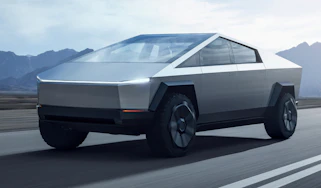
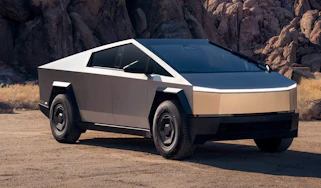
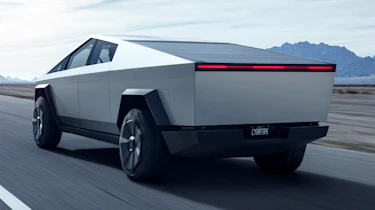
The incredible trapezoidal, stainless steel creation that glided on stage through the strobe lights and flame cannons was even crazier than anyone expected. At that point Cybertruck fever really took hold.
In hindsight, there may even have been a clue to the Cybertruck’s eventual fate at that event. It came when Tesla chief designer, Franz Von Holzhausen, tried to demonstrate the durability of his ‘indestructible’ truck by hurling a steel ball at the window: the glass shattered.
The chorus of whooping Californians in the audience were undeterred. Musk laughed off the mishap with a jovial; “Well, maybe that was a little too hard”. The Cybertruck hype train rumbled on.
Almost 150,000 deposits were taken over the following few days but volunteers to sit behind the wheel and test Musk’s claim that the truck was bulletproof against 9mm handgun rounds were in shorter supply.
Fast forward four years to 2023 and the first deliveries of Elon’s truck eventually began. Three years on from that, it’s dead. We learned this week that production of Cybertruck is being wound down to make way for Tesla’s new flavour of the month; the autonomous Robotaxi or ‘Cybercab’.
It’s estimated that the hugely complex Cybertruck cost some $2billion to bring to market. At the launch, Tesla said it planned to sell 250,000 a year at prices starting from just under $40,000. In reality, total sales numbered around 71,000 for a vehicle costing from $80,000 that was plagued by quality issues.
Even with significant bulk purchases from Musk’s other companies (SpaceX bought $131million worth of them at list price), as many as 10,000 Cybertrucks may remain unsold. Musk has said Tesla will refund deposits for “a lot of people” on the waiting list.
Potentially even more costly to Tesla has been the strategy the Cybertruck seemed to embody. The one of focusing on far-out, headline-grabbing projects like the ill-fated steel pick-up, the even more delayed Roadster ‘flying car’ and the self-driving Robotaxi.
The opportunity cost of fixating on halo vehicles like this at the expense of core revenue-generating ones like the Model 3 and Model Y may ultimately prove to have been more damaging to the company’s bottom line. Rivals have closed the technology gap Tesla once enjoyed and there’s no sign of new volume-sellers – at least from what we know of the product plan. That, of course, is unless the world is going to buy Robotaxis – a two-seat car that may lack a steering wheel in production form – in vast numbers.
The fuss around Cybertruck dwarfed what we've seen recently with Jaguar’s Type 01 and certainly Ferrari’s controversial Luce EV. Those cars took a similarly bold design approach and captured huge public attention, but have dramatically more modest sales ambitions.
To succeed, the Cybertruck needed to coax a chunky slice of the famously conservative (with a big and small C) American pick-up market into an electric vehicle that looked like a prop from Blade Runner. Lurking behind the hype, this commercial reality was always going to be a challenge.
Perhaps not caring too much about building cars that actually turn a profit is a luxury of having the world’s richest man as CEO. Maybe Tesla’s product priorities represent a deliberate focus on causing a stir at the expense of turning a profit for Elon’s own branding and marketing purposes. What we do know is that the Tesla Cybertruck, a vehicle that was never homologated for sale in the UK or Europe for safety, weight and other reasons, is more likely to go down as an ambitious oddity than a visionary piece of automotive design.
It's no modern day Ford Model T or Mini. In fact, it may actually have more in common with its stainless-steel counterpart, DeLorean’s DMC-12. Who knows, if a Back to the Future 4 movie ever gets made, there could even be a role for the Cybertruck to do what it always did best and steal (or steel) the limelight once again.
Don't miss the best of Auto Express on Google! Make us a preferred source. Click here...