Toyota Yaris
Dependable and versatile supermini is often overlooked. But why?

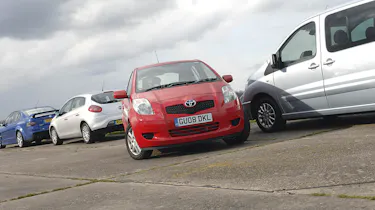
The original Yaris was fresh and vibrant. It arrived in 1999, when superminis were still fairly dull, and not only brought something new to the market, but proved Japanese cars could be good-looking and fun. The little Toyota tempted buyers away from the showrooms of the European establishment, transforming the brand’s image overnight.
So when it came to replacing such a successful model, what was needed was a design that wielded the baton with equal vigour. But while the second generation is undoubtedly more grown-up, it doesn’t stride as boldly as its predecessor – the 2006 launch was something of an anti-climax.
Yet that’s not to say the Yaris is a bad car – far from it. Few superminis can match its build quality or reliability, and running costs are low, too. It’s the perfect choice for nipping in and out of city traffic, and the light controls, sharp brakes and neat gearchange make it easy and fun to drive. While the Toyota is outclassed by rivals at higher speeds, refinement is second to none and it feels safe and composed.
The compact dimensions make parking a breeze, but don’t come at the expense of practicality. Stowage is good, with twin dash-top cubbies, while a two-level floor boosts luggage space. The 60:40 split rear seats slide independently, and passengers in the back have decent head and legroom.
Dependability comes as standard with the Yaris, too. It finished a superb 18th in the Top 100 of our Driver Power 2008 owner survey – way ahead of supermini rivals such as the Renault Clio and VW Polo.
So why is the Yaris often overlooked? The bulbous looks could be to blame. At a time when style is top of many buyers’ agendas, the Toyota is too ungainly. It’s a sluggish performer as well, particularly if you opt for the three-cylinder 1.0-litre petrol engine.
Prices start at £8,935 for the three-door, but the five-door is a better bet if you often carry more than one passenger. The 1.4-litre D-4D diesel is more powerful and frugal than the 1.3 petrol, and emits 119g/km of CO2, which means annual road tax costs £35.
There’s a sporty SR model, featuring a 131bhp 1.8-litre engine, but it’s no match for the likes of the Vauxhall Corsa VXR. We’d stick with the T3 – it gets air-con, steering reach adjustment and alloys, although the price rises to more than £12,000.
Details
Price: £12,145
Model tested: Yaris 1.4 D-4D T3 5dr