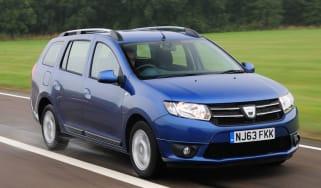
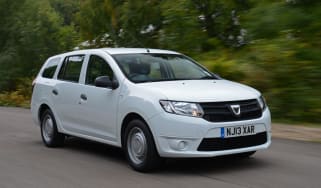
Dacia Logan MCV (2013-2020) review
Want the most space for your money? The Dacia Logan is the cheapest estate car on sale in the UK today
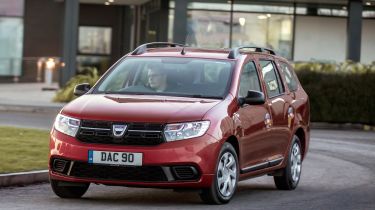

Cars like the Dacia Logan have established Renault's budget division as the no-frills brand that can. This estate car sits slap-bang in the middle of Dacia's range between the Sandero supermini and larger Duster SUV. As a result it's roomier than the Sandero, but is on sale for a lower price than Dacia's 4x4.
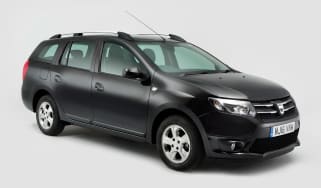
To give it its full name, this car is known as the Logan MCV. MCV stands for Multi Convivial Vehicle, so we'll just leave that there. Lined up next to the Sandero, its obvious that the two cars share a lot of components, as the Logan is identical to the Sandero from the nose to the back doors. That also means it's based on the Renault Clio underneath, which suggests its tried-and-tested running gear should help keep it reliable.
• Dacia cars: the secret of their success
The first Logan that went on sale in the UK in 2013 is actually the second-generation of a car that first went on sale in Europe in 2004. The Logan Mk2 is also sold as a four-door saloon in European markets, although that body style isn't as popular in the UK, which is why we just get the estate.
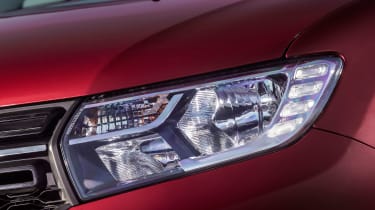
A range update in 2017 saw the Logan get the same mid-life facelift as the Sandero. This subtle set of revisions included a new grille and a redesigned front bumper, while LED running lights were added to top-spec models. Revised tail-lights, improved cabin materials and extra kit was added to the list, but the Logan's bargain price tag remained intact.
Used - available now

2023 Audi
Q4 e-tron
90,000 milesAutomaticElectric
Cash £15,650
2021 Tesla
Model 3
77,000 milesAutomaticElectric
Cash £15,850
2021 Hyundai
Ioniq electric
25,000 milesAutomaticElectric
Cash £11,250
2021 Tesla
Model 3
60,000 milesAutomaticElectric
Cash £14,000These start at around £8,500, so the Logan is around £1,500 more than the Sandero supermini. The range mirrors that of the Sandero, too, with Access, Essential and Comfort trim levels available, along with a Stepway model.
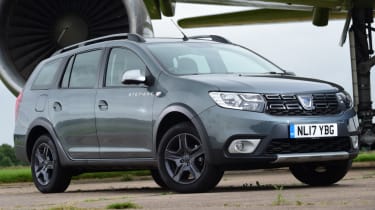
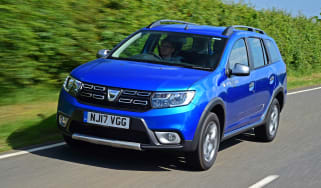
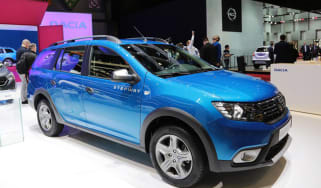
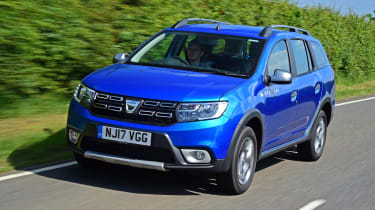
The Logan MCV Stepway is a dressed up mini off-road estate in the style of the Skoda Octavia Scout or Audi A4 Allroad, albeit with zero added off-road ability. It's marked out by black plastic cladding on the bumpers and wheelarches, fake skid plates front and rear, a 174mm ride height rise and roof rails. The Stepway is available in Comfort and SE Twenty equipment levels.
Whichever model you choose, you get a 573-litre boot in five-seat mode, and a maximum capacity of 1,518 litres, which means the Logan offers one of the best space-per-pound ratios of any new car on sale in the UK.
Engine options include two petrol units, a diesel and a petrol/LPG Bi-Fuel variant. The 1.0 SCe 75 four-cylinder is offered in all trims, but not at all in the Stepway range, while the 0.9 TCe 90 three-cylinder turbo petrol isn't offered in Access trim. All cars are front-wheel drive with a five-speed-manual gearbox, with no option of an auto or 4WD on the Stepway.
Access trim is cheap, but it does without some kit that's found as standard on even the cheapest city cars – electric windows, rear headrests and even a radio are all optional. To upgrade to Essential models costs about £1,000 extra, while Comfort versions feel a lot more like small estate cars from a mainstream brand, although prices don't stretch much beyond £12,000.
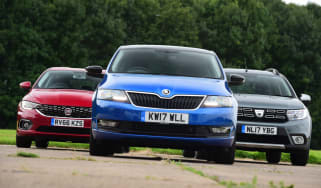
The Dacia Logan has become a bit of a niche choice these days, as small estates are hard to come by, even when you ignore the Logan's price advantage. The Skoda Fabia Estate is similar in size, but it has a starting price that's higher than the most expensive Logan Stepway. Plus it only has a 530-litre boot. Van-based MPVs such as the Vauxhall Combo Life and Citroen Berlingo offer similar space-per-pound value, but again starting prices are in the region of £15,000.
If you want to buy a budget family car, then the Dacia Logan is a great choice. While rival estate cars pretend to be cheap, really they don’t cost much less than a family hatch, and the Logan's bargain-basement price tag helps it to stand apart.
The Logan is practical, economical and comfortable, too, and while the cheapest models are very basic, you don't have to spend much more on higher spec versions to get just as much kit as more expensive rivals. The Logan's back-to-basics nature means it has a certain charm, where rivals are a bit ordinary.
Engines, performance and drive
The engineers at Dacia set up their cars for developing markets and it's a credit to them that the Logan doesn't feel cheap to drive. Its suspension is set up relatively well, so it doesn't crash over poor surfaces, and nor does it transmit every single small bump into the cabin.
While the Dacia Logan tackles smooth surfaces and rough city streets just fine, at higher speeds on country roads, the utilitarian nature of the suspension becomes apparent. The car starts to feel very bouncy an unsettled - a trait that's compounded by heavy rear loads making the front end feel light. On the plus side, though, lateral body roll is more tightly controlled than in the Skoda Fabia Estate.
In terms of refinement, the Logan isn't bad at all. It's worth noting though, that when loaded up with passengers and luggage, the Logan feels pretty sluggish, even with its most powerful engines on board. The brakes (discs at the front, drums at the rear), meanwhile, get a bit spongy with hard use.
While the Logan Stepway gets a raised ride height, the longer suspension doesn't translate into a smoother ride. It's not stiff, but it takes a while for the suspension to settle after hitting a bump. Body roll is amplified by the longer suspension, while there's a lack of grip when compared to some other small estates.
Engines
There are two petrol engines available on the Dacia Logan - a 1.0 SCe four-cylinder and a 0.9 TCe three-cylinder turbo petrol. These are all sourced from parent company Renault. We'd recommend the 0.9-litre petrol as this has punchy performance with a decent amount of torque to make it feel a bit like a diesel, and reasonable running costs, too.
The 1.0-litre petrol is alright as a budget choice but it's slow and inefficient, and you need to rev it hard to make progress, which obviously spoils fuel economy. All cars get a five-speed manual gearbox, which has a slightly notchy action but a short throw.
In addition to the petrol units on offer is a 1.5-litre diesel with 94bhp and a useful 220Nm of torque, while Dacia now includes a petrol/LPG engine - the TCe 100 Bi-Fuel - with 99bhp.
MPG, CO2 and Running Costs
Dacia prides itself on its frugal ethos, so it's important that the Logan scores well here. Things immediately get off to a good start courtesy of the car's low list prices. Ranging from £8,500 to a touch over £13,000, the Logan is the cheapest estate car currently on sale in the UK, with the entire range coming in below the entry price of the next cheapest estate - the Skoda Fabia Estate. What's more, Dacia dealers don't tend to haggle, so the sticker price is genuinely what you pay.
The 64.2mpg dCi diesel provides excellent economy, with emissions of 116g/km in Comfort trim. The SCe petrol motor is rather mediocre in its performance, while claimed maximum fuel economy of 49.6mpg and emissions of 129g/km mean it's not the most efficient unit, either. It's a shame that the cheapest Access model only gets this engine.
The TCe petrol is marginally better on paper, but is likely to offer real world that's closer to the claimed figures. The latest WLTP economy figures for it put combined economy at 47.1mpg and emissions at 134g/km.
Dacia does have a range of finance deals to make the car even more affordable. Spare parts are also cheap, and necessary maintenance can also be carried out in any Renault dealership.
Insurance groups
The Logan MCV falls into insurance groups 2-11, which is reasonable. Dacias should be cheap to repair, but if there was more safety kit included, then the insurance groups would probably fall slightly to reflect this.
Depreciation
The Dacia Logan is cheap to buy, with residual values for the estate still pretty respectable, although not quite as good as its Sandero stablemate. Buyers should expect to see cars retain an average of 43% of their value over 3 years/36,000 miles, while the cheapest Access model keeps hold of 48% of its original list price.
Interior, design and technology
Like the other cars in the Dacia line-up, the Logan looks basic. But its humble utilitarian appearance gives it a certain charm.
While the entry-level Access lives up to its affordable credentials with its steel wheels, black door handles and black door mirrors, the top-spec Comfort doesn't appear overly low-rent thanks to colour-coded bumpers, door handles and mirrors. Satin roof bars are also a nice touch, while the wheels get trim finishers that look a little less like plastic covers than those on the rest of the range.
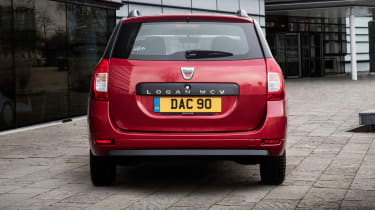
Overall, don't go thinking the Dacia Logan MCV is an estate with Volvo levels of style - the long rear overhang is ungainly, and the brittle exterior plastics mark it out as a bargain basement special.
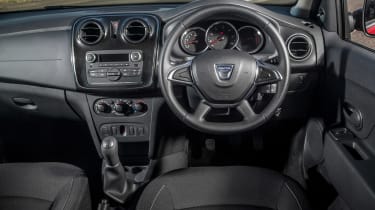
Get behind the wheel of the Logan, and it won't be a surprise that the interior is pretty basic and plain. Consider its price though, and the cabin exceeds expectations, despite using switchgear from parent company Renault - the car’s simple layout is easy to get on with, and everything feels well bolted together.
Dacia fits top-spec Comfort models with electric windows front and rear, as well as Bluetooth phone connectivity, chrome air vent surrounds and some exterior satin trim.
The Logan MCV Stepway version is the most expensive model, but with its raised ride height, tough cladded looks and 16-inch 'Flexwheel' faux alloy wheels it injects a little extra style and desirability into the range. Stepway versions of the Sandero now account for around 60% of that car's sales, and Dacia has similar hopes for the tough looking new Logan variant.
Sat-nav, stereo and infotainment
Comfort models get Renault's MediaNav Evolution infotainment system as standard. It’s on par with the displays in many family hatchbacks, and is impressive in such an inexpensive car. But take it out of that context and the Logan MCV’s set-up isn’t great. The graphics are chunky and use lots of different colours, so there’s not much coherence to the user interface. There’s not much information displayed, either, so you need to dig into sub-menus to find more options. That isn’t easy when the only way to control everything is via the touchscreen.
It’s not very responsive, often doing nothing when you touch it, and it’s hard to use on the move as a result. When we tested it, we found it slow to connect to our phone via Bluetooth, so we had to wait a while before moving off to make sure it was paired up. Once we were on the move, the sat-nav was easy to follow thanks to the size of the screen.
Why are we focusing on the top-spec model? Well, if you buy an Access car, you don't even get a stereo unless you add it as an option. The 2-speaker system is crude at best, but at least has Bluetooth and a USB connection, so you could add your smartphone to give the Logan some semblance of an infotainment system.
Practicality, comfort and boot space
There's no car currently on sale in the UK that offers so much space for so little money as the Dacia Logan. The 573-litre boot is vast, almost as big as you'll find in cars from the class above, while space in the back seats is good, too. Things are rather spartan - manual winders are the only option for the back windows - but as a functional, no-nonsense family car, the Logan should be up to the job.
However, delver a little deeper, and the reality is that the Logan offers space, space, space, and not a lot else. There aren't any novel touches to speak of, just the basics. Access trim does without headrests in the back, a luggage cover or boot light, but it does get 60:40 folding back seats.
Size
The Logan measures 4,501mm long, 1,733mm wide and 1,518mm high. That's pretty compact, although there is a long rear overhang to think about when reversing. Rear parking sensors are only fitted to the top-spec Comfort model.
Leg room, head room & passenger space
Space inside is good, with plenty of head and legroom front and rear, although three across the back might be tight. There are no rear headrests in the Access model, but you do get a pair of Isofix child seat points on the outer seats. Logan Comfort models - the default trim level on the Stepway car - also get grab handles and map pockets.
Up front, the Access model doesn't have height adjustable seatbelts, while air conditioning is only standard on Essential and Comfort cars.
Again, Access models go without electric front windows or a height adjustable steering wheel or driver's seat.
Boot
With the rear seats in place, the 573 litre boot in the Dacia Logan is 68 litres bigger than that in a Skoda Fabia Estate, and only 32 litres short of that found in the Volkswagen Golf Estate. With the rear seats folded and the car loaded to the roofline, the boot capacity expands to 1,518 litres.
There aren't many convenient touches in the boot. A boot light and luggage cover are only available on Essential and Comfort models, and while all cars have 60:40 folding, the seats don't fold completely flat.
Reliability and Safety
Dacia uses engines, gearboxes, suspension and electronics scavenged from the parts bin of parent firm Renault. It's most obvious around the dashboard, where the heating controls, radio and minor switchgear all looks familiar from older Renault models.
The 1.0-litre and 900cc petrol engines can be found in models like the Clio and Captur. This is familiar tech, but then Renault's reputation for being a builder of reliable cars isn't the strongest.
Dacia's marketing angle is to offer a no-frills buying experience, but it seems the brand isn't delivering on customer satisfaction, as it finished in last place out of 30 manufacturers in our 2020 Driver Power poll.
Safety is another area where Dacia could improve. The Logan was tested in 2014 by Euro NCAP, and it earned a three-star rating, which is disappointing. Child occupant protection was rated at 75 per cent, which was well ahead of the 57 per cent rating for adult occupant safety. And as the Logan makes do with the basics for safety kit, it earned a 38 per cent score for Safety Assist.
All cars come with four airbags, tyre pressure monitors, emergency brake assist and electronic stability control, while there are two Isofix mounts in the back seats. A space-saver spare wheel is offered as an option.
Warranty
Should there be any dramas, the Dacia Logan comes with a three-year/60,000-mile warranty, which can be extended to five years/60,000 miles for around £400 or seven years/100,000 miles for about £850. Dacia also provides three years’ breakdown recovery.
Servicing
Service intervals are every year or 12,000 miles, whichever is sooner. Dacia offers service plans ranging from 1-4 years, with prices spanning £150 to £750, although you can combine this cost with any finance you might take out to buy a Logan at £12.50 a month.
For an alternative review of the latest Dacia Logan MCV Estate visit our sister site carbuyer.co.uk