New Dacia Spring 2026 review: a lot of car for a very attractive price
More space, improved comfort, and still an affordable price tag. But does the second generation Dacia Spring finally drive like a real car?

Verdict
The new Dacia Spring takes a major step forward. Extra cabin space, improved ride comfort, and an efficient electric powertrain make it far more usable day to day than its predecessor. While you still have to accept a few compromises when it comes to build quality, kit, and charging speeds, they are easy to forgive given the low projected price tag of less than £18,000. Bottom line: the Spring now offers significantly more car, for what remains remarkably little money.
The first Dacia Spring was, above all else, cheap. To get that low price, buyers had to accept some real compromises, particularly regarding ride comfort, practicality, and fit and finish. With this second-generation model, Dacia aims to put things right.
The new Spring is larger, more comfortable, and substantially more modern under the skin. But is that enough to turn this budget electric car into a genuinely good, everyday car? We’ve finally taken it for a drive to find out.
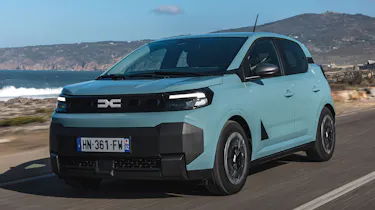
Visually, the new Spring cuts a far more mature figure than the car it replaces. Out go the fussy shapes, replaced by boxy bodywork, sharp lines, and an altogether tougher, more rugged stance. It is an approach likely to appeal to buyers who find the mechanically related Renault Twingo a bit too cutesy with its retro styling. Where its French counterpart plays heavily on charm, the Dacia opts for clean, no-nonsense practicality.
Used - available now

2026 Dacia
Spring
AutomaticElectric
Cash £15,495
2026 Dacia
Spring
252 milesAutomaticElectric
Cash £12,750
2024 Dacia
Spring
2,248 milesAutomaticElectric
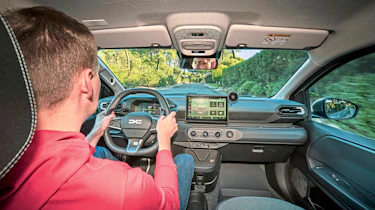
Cash £10,649It is a similarly functional affair inside. Ample hard plastics, basic materials, and a distinctly utilitarian vibe serve as a reminder that low cost remains the Spring’s primary mission. The EV shares a good number of dashboard and centre-console components with the Twingo. That said, overall build quality feels reassuringly robust. Nothing rattles or squeaks, even over rough patches of road.
The UK trim structure won’t be confirmed until early next year, but the European spec sheet remains fairly spartan. On entry-level Expression models, even manual air conditioning is an optional extra; you have to step up to top-spec Journey trim to get it as standard. On the plus side, Dacia now offers several welcome options, including heated front seats and a neat under-bonnet 'frunk' storage box – a handy feature you won't find on the Renault.
To balance that, the Spring goes without a few of its sibling's more clever tricks. There’s no sliding rear bench or flat-folding front passenger seat here; after all, the pricier Twingo needs some way to justify its higher cost.
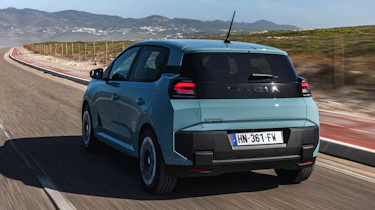
Easily the biggest improvement over the old car is interior space. The cabin is roughly 11cm wider, which broad-shouldered passengers will certainly appreciate. Where the driver and front passenger practically brushed elbows in the original Spring, there is now genuine breathing room.
Boot capacity has grown from 308 litres to 337 litres, serving up plenty of space for the weekly shop or luggage for a weekend getaway. It is still only moderately suited for longer family road trips, mind you; despite the growth spurt, it remains a city runabout rather than some kind of space miracle.
So, how does the new Spring actually drive? Within the first few miles, it’s clear the baby Dacia feels far more grown-up. The engineers have spent real time tweaking the chassis. Bumps and ruts are absorbed with noticeably more composure, and on typical road surfaces, the small EV proves pleasantly comfortable.
It can't entirely disguise its budget roots, of course. Coarse tarmac and sharper imperfections still filter through into the cabin, and speed bumps in particular are met with a noticeable thud from the suspension. Acoustic insulation, however, is a big step on. While wind noise is still present at higher speeds, it never becomes intrusive. Paired with the improved suspension compliance, it makes for a noticeably more relaxed drive.
The steering has improved as well. At motorway speeds, the Spring responds more directly to driver inputs than before, though it remains rather numb right around the straight-ahead. For inner-city weaving, it is more than adequate, and the modest Dacia never harboured any sporting pretensions anyway.
Performance from the powertrain is equally down-to-earth. The electric motor develops 82bhp, providing exactly what you want from an affordable urban EV: ample punch off the line, without chasing headline-grabbing 0-62mph times. It feels lively around town, settling into a more relaxed pace on open country roads. Top speed has increased to 81mph, which is a welcome step forward, even if you’ll rarely come close to that day to day.
Efficiency is far more compelling than outright performance here. Dacia has increased usable battery capacity to 27.5kWh, delivering a claimed WLTP driving range of roughly 160 miles. Out on our test route, the Spring proved remarkably frugal: the trip computer settled at a frugal 5.5 miles/kWh, comfortably beating Dacia’s official claim of 4.9 miles/kWh.
Granted, with dry weather and mild temperatures, conditions were just about ideal for an EV on our first drive; expect that figure to dip in cold winter snaps. Even so, initial impressions suggest the claimed range is genuinely achievable. For daily commutes, errands, and urban hops, it is more than enough.
Charging capability has had a welcome lift, too. AC charging via a wallbox now runs at 6.6kW as standard rather than the previous car's sluggish 3.7kW. European buyers can also specify faster 11kW AC or 50kW DC rapid charging at extra cost, although this feature is expected to be standard on UK cars. While 50kW is some way off the charging speeds of larger electric cars, it is a significant step forward for a city runabout.
So, is the new Dacia Spring finally a proper car? Yes, without question. The second generation feels far more mature behind the wheel, delivers genuinely useful extra space, and impresses with low running costs. In ride comfort, refinement, and steering response, Dacia’s chassis team has taken a giant stride forward.
It is still far from flawless. The suspension can crash over harsher road imperfections, standard kit remains basic, and rapid-charging power is modest. Yet all of this must be weighed against the invoice price. Poised to start under £18,000 – with bosses hoping the car will be eligible for the Government’s Electric Car Grant – the new Spring is only around £1,000 dearer than the car it replaces.
That remains its killer punch: Dacia has delivered substantially more car without pricing the Spring out of reach. If you can live with its few remaining compromises, it is a capable, usable electric city car at an undeniably bargain price.
Did you know you can sell your car through Auto Express? We’ll help you get a great price and find a great deal on a new car, too.
| Model: | Dacia Spring |
| Price: | Sub-£18,000 (est) |
| Powertrain: | 27.5kWh battery, 1x motor |
| Power/torque: | 80bhp/175Nm |
| Transmission: | Single-speed automatic, front-wheel drive |
| 0-62mph/top speed: | 12.1 seconds/81mph |
| Range: | 163 miles |
| Max charging: | 50kW (15-80% in 28 mins) |
| Size (L/W/H): | 3,855/1,790/1,491mm |
| On sale: | Now |