UK 2030 petrol and diesel sales ban: what is it and what cars are affected?
The ban on the sale of new petrol and diesel cars is set to be introduced in 2030, we explain what it means for you and your motor
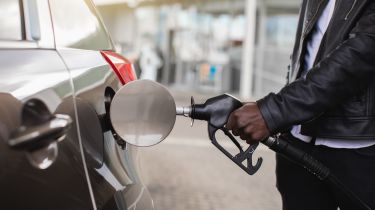
By 2030, the UK is set to have banned the sale of brand new petrol and diesel cars as the Government is determined to fulfill its 2024 manifesto pledge. However, with still a few years to go until the ban takes effect, there’s a lot of confusion of what this actually means. There are different rules for different vehicles and some doubt over whether the ban will come into effect at all.
The previous Conservative administration led by Prime Minister Rishi Sunak had extended the original 2030 deadline, instead promising to end the sale of new petrol and diesel cars in 2035. Labour’s current plan incorporates staggered 2030 and 2035 deadlines, but these only apply for specific vehicles – we’ll get into that in a moment.
Already confused? We don’t blame you! Keep reading for all you need to know about the UK petrol and diesel car sales ban. If you want to know how the government plans to phase out ICE vehicles and force you to buy electric, our guide to the ZEV Mandate outlines all you need to know in that regard.
2030 or 2035, how will the ban work?
In a nutshell, there are two deadlines to worry about when talking about the UK’s transition to zero-emission vehicles: 2030 and 2035.
2030 ban
As things stand, from 2030 brand-new cars which run purely on petrol, diesel or LPG (Liquefied Petroleum Gas) will no longer be allowed to be sold in the UK.
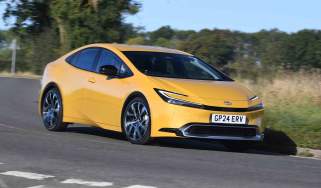
The 2030 ban does not include hybrid cars or plug-in hybrid cars, so these can continue to be sold alongside electric or hydrogen vehicles.
2035 ban
Fast forward to 2035 and the sale of new hybrid and plug-in hybrid cars will be banned.
From 2035 onwards, all new cars sold in the UK will have to emit zero tailpipe emissions. That means you’ll only be able to buy electric and hydrogen cars, provided there are any of the latter on sale and the infrastructure to support them.
How the ban will impact second-hand cars
Before you start to panic, the 2030 ban on petrol and diesel cars will only impact brand new cars which have been built and registered from 2030 onwards. The same logic applies to hybrid and plug-in hybrid cars after 2035.
Second-hand cars will be unaffected by the ICE (internal combustion engine) ban, and may be bought and sold freely just as now. That means that very many older petrol and diesel cars, plus conventional hybrids and plug-in hybrid models, are likely to be in use by motorists long after the 2035 deadline for selling new ones.
2030 petrol and diesel car ban exemptions
Another thing worth mentioning is that small-volume manufacturers, such as sports car makers like Ferrari and Aston Martin, plus bespoke builders such as Morgan and Caterham, will be exempt from the ban’s restrictions, as things stand.
Those registering less than 2,500 vehicles in the UK per year won’t have to conform to the bans, but those registering more than 1,000 will still need to meet some form of emissions regulations.
How the Government is helping the electric car transition
To help facilitate the transition away from fossil-fuel cars in the UK, £1.3billion of investment was announced in 2020 to fund EV chargepoints for homes, streets and motorways across England. A further £582million was then set aside for grants to help people and businesses into EVs and PHEVs.
The Government is also investing in battery development and mass production, while more money was earmarked for nuclear power plants, partly to help meet the growing demand for electricity the growing number of EVs will bring.
Even though car makers will be mandated by law to sell increasing numbers of EVs – under the terms of the current ZEV Mandate, manufacturers have to ensure that these account for 28 per cent of their UK sales, rising to 80 per cent by 2030 – or face financial penalties.
Weakening of the ZEV mandate?
The ZEV mandate target of 80 per cent for new car sales being made up of purely electric vehicles by 2030 could be weakened, though.
A combination of high public charging costs and lower-than-expected demand for electric vehicles, in addition to pressure from trade unions representing concerned UK automotive workers, could see the ZEV mandate target reduced to 50 per cent by 2030. This is just speculation at this point and nothing has been officially announced by the Government.
Subsidies and incentives
To help speed up EV adoption, the Government reintroduced financial incentives for private car buyers in the form of the Electric Car Grant (ECG) back in July 2025.
Set to run until March 2030, the aim of the ECG is to cut the price of qualifying electric cars by up to £3,750. Not every electric car on sale in the UK is eligible for the Government grant as there are stringent emission and sustainability targets for manufacturers. Those which do qualify for the grant have a price cap of £37,000.
Some manufacturers of cars which don’t qualify for the ECG, such as Leapmotor, have gone on to introduce their own discount schemes in a bid to remain competitive with cars that do.
Meanwhile, company car buyers are offered major benefit-in-kind advantages if they choose an EV over a petrol or diesel alternative.
Background to the petrol and diesel ban: how we arrived at 2030
The shifting sands of future policy saw a consultation launched in 2020 to investigate if a ban in 2035, "or earlier if a faster transition appears feasible” should be introduced, with hybrids included in the proposals.
Both 2035 and an earlier date were clearly deemed 'feasible' by the Government following that review and the 2030 date was announced in 2020, with some wiggle room for plug-in hybrids with 'significant' electric range.
Rishi Sunak’s administration, faced by the cost of living crisis and the prospect of a voter backlash, chose to reset the government’s net zero strategy to 2035. Labour made a manifesto pledge to overturn that decision and return to a 2030 ban, albeit now incorporating an exemption for hybrids.

The ban on petrol and diesel cars is part of a wider multi-billion-pound ‘Green Industrial Revolution’ that the Government hopes will create 250,000 jobs as the country invests more in battery technology, carbon capture and green energy.
The UK’s “industrial heartlands, including in the North East, Yorkshire and the Humber, West Midlands, Scotland and Wales”, will be key to the coming changes, with 50,000 jobs, and £1billion of investment in “areas such as the Humber, Teesside, Merseyside, Grangemouth and Port Talbot” alone.
Your petrol and diesel car ban questions answered:
We answer your key questions regarding the ban on petrol and diesel cars...
What should I do about the ban?
It’s a tricky time for consumers to make decisions about their car ownership situation. Not only are there the changes to what cars are going to be available to buy new in the coming years, but other factors – including the cost of living crisis, supply-chain issues and inflated prices – also come into play.
Making the leap to an electric car will certainly make sense for some drivers. If you can afford to pay the premium and don’t travel longer distances on a regular basis, then there is a great range of highly desirable options for you to choose from. While an exemption from road tax ended in April 2025, company car tax rates remain highly favourable for EVs, which has so far been a large part of their appeal.
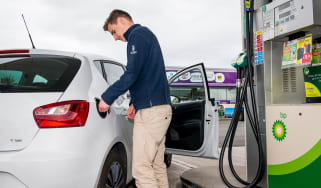
Buying a new petrol or diesel car while you still have the chance to do so will appeal to many. And if you fit into this category, a brand-new ICE car will cost less than its electric equivalent in most cases, plus you won’t have to worry about the charging infrastructure, as you would with an electric vehicle, or clean-air zones as you might with an older car.
There is no prospect of any kind of ban on the use or sale of existing petrol and diesel cars. The ICE ban only applies to the sale of new models.
Of course, many of us don’t have the budget for a new car. It might be that you want to keep your old one going, but are worried about being affected by a clean-air zone. If so, the second-hand market is an option. Used electric cars are in more plentiful supply and modern petrol and diesel models will still avoid Ultra Low Emissions Zone charges.
Can I still drive a petrol and diesel car after 2030?
Yes. The bans on these dates only apply to sales of new cars, and there are no current plans to outlaw the use or sale of second-hand cars based on these criteria.
However, that’s not to say that more and more cities won’t start adopting schemes such as the London Congestion Charge and ULEZ, which penalise drivers for not driving green vehicles.
Electric cars are still too expensive. What’s being done to bring prices down?
Electric cars remain more expensive than conventional petrol and diesel cars at present. The gap is closing, however. There are quite a few models which are now at price parity between petrol and EV models, in a few cases an EV is even cheaper. For example, the all-electric Ford Puma Gen-E is around £900 cheaper than the petrol Puma.
In the case of the Puma and Puma Gen-E, the electric version is helped by its £3,750 discount, courtesy of the Government’s Electric Car Grant. At the time of writing, in excess of 40 different models qualify for the ECG in one form or another.
There are also a number of Chinese EVs which beat their European counterparts on price and are helping to push prices down in general. Not all Chinese cars are created equal though, so we highly recommend doing your research and thoroughly test driving any car which makes your shortlist to ensure it suits your needs beforehand.
I don’t have off-street parking. How will I charge an electric car?
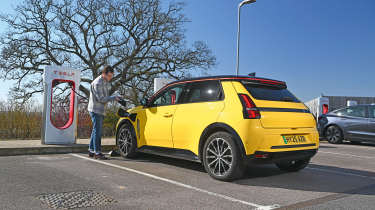
A number of solutions exist or are in development for this. Chargers that pop out from the kerb, lamp post chargers and cross-pavement gulleys are three such options. Furthermore, as the number of electric vehicles in the country increases, so too will charging stations. Expect these to become more commonplace at supermarkets, pubs and restaurants, cinemas, leisure centres and other locations over the next decade.
A change of mindset will also be required, with EV users highlighting the approach people take to charging their smartphones as being similar to topping up EVs: rather than always doing big overnight charges, for example, regular top-ups at ultra-rapid hubs will keep people’s cars moving.
Click here to discover how you can charge an electric car at home without a driveway...
I cover above average mileages. Will my journeys take longer?
The average UK motorist drives around 21 miles a day, but many people do more. EV ranges are commonly increasing, however, with 200-300 miles from a single charge a realistic figure for many modern electric cars.
Journeys of such length would typically bring with them pit-stops at motorway services, where ultra-rapid charging can add a useful amount of range in as little as 15 minutes.
I’m a van driver. How will the ban affect me?
Van drivers not wanting to go electric quite yet can let out a sigh of relief as there will be very little restriction on the sales of petrol and diesel models until 2035. As with cars, manufacturers simply need to meet a specific quota set by the ZEV Mandate (although this is much lower for vans) and ensure that the overall emissions of their output does not exceed what it was back in 2021.
Click here to discover the best electric vans on the market...
What about National Grid? Can the UK’s electricity supply cope with all these extra EVs?
Indications are that this will not be a problem. There are around 30 million petrol and diesel cars in the UK, but these will not be replaced overnight, and the phase-in of EVs will be gradual. Assuming new-car sales figures continue at their current pace of roughly two million a year, it’ll be 15 years before the UK’s petrol and diesel cars are replaced.
National Grid has previously stated that “enough capacity exists” for the transition to EVs, while its modelling predicts that even if all the UK’s cars became electric overnight, demand would only increase by 10 per cent.
Tell us which new car you’re interested in and get the very best offers from our network of over 5,500 UK dealers to compare. Let’s go…