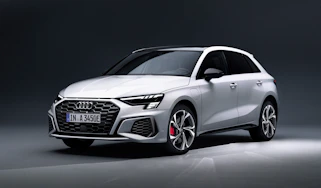
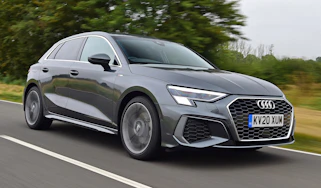
Audi A3 review
The Audi A3 is a tempting premium hatchback choice with a great range of engines and an improved interior


Our opinion on the Audi A3
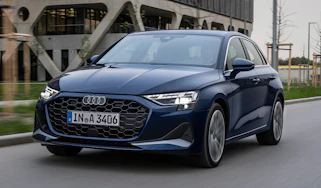
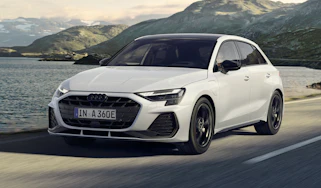
The latest Audi A3 remains as desirable as ever, with its premium appeal evident in its design, advanced technology, and overall driving experience. Its mid-life facelift was mild, but it focused on the key areas of build quality and an enhanced interior that keeps the A3 in line with some of the brand's newer models, ensuring Audi’s family hatchback stays competitive with the likes of the BMW 1 Series and Mercedes A-Class.
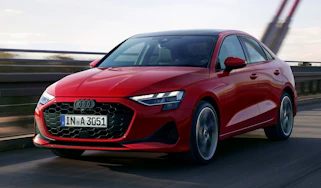
There’s flexibility in the Audi A3’s range, too. It still comes with a strong line-up of petrol, plug-in hybrid and even diesel engines to suit most tastes, plus you can specify between a traditional five-door ‘Sportback’ hatchback or a four-door saloon.
About the Audi A3
The A3 has been around since 1996 and is currently in its fourth generation. It continues to utilise a shared platform, this time based on the Volkswagen Group’s MQB technology found under the SEAT Leon, Skoda Octavia, and Volkswagen Golf. The Audi variant differs from the others by using the same high-class materials as larger Audi models while packing cutting-edge technology into a compact package; it’s a formula rivals still struggle to match.
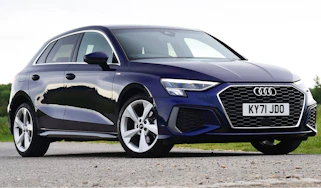
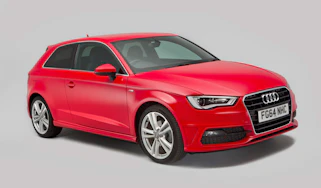
Audi offers the A3 as a five-door Sportback or a four-door Saloon model: the three-door hatch and Cabriolet body styles offered with the previous generation A3 are no longer available. The A3 is getting on in years compared to some of Audi’s other cars, but it continues to be updated to keep it in line with younger models in the brand's line-up.
Used - available now


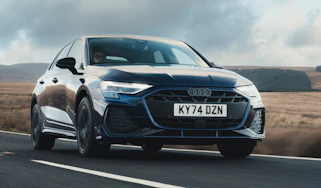
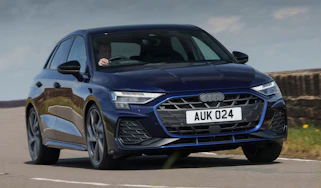
While the regular Audi A3 is an appealing car, those who desire the white-knuckle thrills of a hot hatchback might wish to read our dedicated reviews of the Audi S3 or Audi RS 3 instead.
To get a true insight into what Audi A3 ownership is like, our director of content & publishing, Sarah Perks, lived with an A3 Sportback 35 TFSI as part of the Auto Express long-term fleet.
Performance & driving experience

Pros |
|
Cons |
|
The current A3 range is offered with a choice of several petrol, diesel or plug-in hybrid powertrains. These options take the form of a 1.5-litre TFSI petrol engine, a 2.0-litre TDI diesel, or a TFSI e plug-in hybrid that combines the aforementioned 1.5-litre petrol engine with electric assistance.
There should be an engine option to suit most requirements, and the A3 is good to drive right across the range. While the high-performance S3 and RS 3 deliver serious thrills, most drivers will find the lower-powered petrol, diesel, and hybrid A3 models more than competent for day-to-day driving.
The more powerful 148bhp petrol and diesel models benefit from a more advanced multi-link rear suspension, unlike lower trims that use a basic torsion beam. This helps deliver a better balance of comfort and control in corners, and we’d recommend making the upgrade over the entry-level 114bhp 1.5-litre, if you can afford it.
The S line versions ride a bit firmer on their sports suspension, but it’s not uncomfortable, and Audi has wisely kept the overall driving feel unchanged. The plug-in hybrid models are burdened with a heavy battery pack, resulting in a more unsettled ride than Audi A3 models without a plug-in.
A six-speed manual gearbox is available in both of the 114bhp and 148bhp 1.5-litre petrol models and is easy to use. It can be jerky at low speeds, however, making stop-start city driving less smooth than with the automatic.
Performance, 0-60mph acceleration and top speed
On-paper figures for the 148bhp diesel engine (not available in entry-level Technik trim) are pretty decent, getting from 0-62mph in 8.1 seconds. In our tests, we found it offers plenty of low-end torque for effortless acceleration.
The 201bhp plug-in hybrid might combine petrol and electric power primarily for improved efficiency, but a side effect of this is strong overall performance and a 0-62mph time in a swift 7.4 seconds. Though it’s no hot hatch, the electric boost adds flexibility.
The 1.5-litre petrol comes in various states of tune and uses mild-hybrid assistance to improve fuel economy and emissions while providing a small performance boost. The base 114bhp petrol model gets from 0-62mph in 10.0 seconds with an automatic gearbox, or 9.7 seconds as a manual. Our preferred 148bhp option manages the same sprint in a respectable 8.4 seconds, while the automatic version gets a slight power bump to 158bhp and manages the same sprint in 7.9 seconds.
| Model | Power | 0-62mph | Top speed |
| A3 TFSI 116PS | 114bhp | 9.7 seconds | 127mph |
| A3 TFSI 150PS | 148bhp | 8.4 seconds | 140mph |
| A3 TDI 150PS | 148bhp | 8.1 seconds | 141mph |
| A3 TFSI e 204PS | 201bhp | 7.4 seconds | 140mph |
Town driving, visibility and parking
The entry-level 114bhp petrol engine is perfectly adequate for town driving and the school run, while the plug-in hybrid can run for up to 88 miles on electric power alone, making for quieter low-speed motoring.
You don’t get the high driving position and improved visibility you get with an SUV, but it’s easy to see out of the A3, and its compact footprint makes parking easy.
B-road driving and handling
Switching to Dynamic mode in Audi's Drive Select menu adds weight to the steering, which is otherwise a little too light for faster roads. The versions with multi-link suspension are noticeably more composed on bumpy B roads.
Motorway driving and long-distance comfort
The A3 feels like a classy and comfortable proposition over long distances. The sporty-looking S-line and Black Edition models aren’t the smoothest riding, however, due to firmer suspension and larger wheels.
“When the plug-in hybrid’s petrol engine needs to kick in, it does so with very impressive levels of refinement, slipping into operation without so much as a murmur from under the bonnet. It also does this without a physical jolt, which can sometimes afflict PHEVs without much warning.” - Jordan Katsianis, news editor.
MPG & running costs
Pros |
|
Cons |
|
The entry-level 116PS and our recommended 150PS 1.5-litre petrol both manage 50.4mpg with a manual gearbox. The former, with an automatic gearbox, does a little better at 51.4mpg, while the latter adds mild-hybrid tech and boosts fuel economy to 52.3mpg.
During our long-term test of an A3 TFSI S line with the 148bhp 1.5-litre engine, we averaged 49.3mpg in a mix of town and motorway driving - not far off the official 50.6mpg WLTP test figure. The less powerful 114bhp version of that engine is only fractionally more efficient, which is another reason to stretch your budget.
For the best fuel economy of a non-plug-in hybrid A3, you'll need the diesel. It only comes with an automatic gearbox, but it manages 57.6mpg, and with a 50-litre fuel tank provides enough range for well over 600 miles of driving.
The plug-in hybrid version not only has an impressive electric range, but it has an outstanding combined fuel economy figure of 256.8mpg. In our experience with PHEV cars, you won't get fuel economy quite as high in the real world, but it should provide fuel economy equivalent to or better than a diesel with regular charging.
| Model | MPG | CO2 | Insurance group |
| A3 1.5 TFSI Technik 116PS auto | 51.4mpg | 124g/km | 17 |
| A3 1.5 TFSI Technik 150PS | 50.4mpg | 127g/km | 23 |
| A3 2.0 TDI Sport 150PS | 57.6mpg | 127g/km | 23 |
Electric range, battery life and charge time
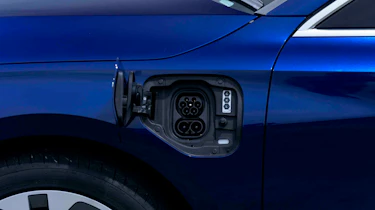
The up to 88-mile electric range of the A3 plug-in hybrid makes it one of the top compact PHEV options on today’s market. Our tests saw us return an efficiency of 3.8 m/kWh in real-world driving, which virtually matches that official WLTP range estimate from the 25.4kWh battery.
DC fast charging with a 50kW charger allows you to top up the battery in just 26 minutes. Many owners will probably utilise cheaper home charging. Audi quotes an 11kW charging time of 2.5 hours or a 2.3kW charging time of 12 hours. Most homes will have a 7.4 kW charger, so expect it to take between four and five hours to charge.
| Model | Battery size | Range | Insurance group |
| A3 1.5 TFSIe Sport | 25.4kWh | 88 miles | 29 |
Insurance groups
The A3 starts in insurance group 17, with diesel starting in group 23. The PHEV is pricier to cover, because it starts in group 25. By comparison, an entry-level Mercedes A 180 petrol in Sport Executive trim starts in group 19, while an A 200 diesel in the same trim begins in group 23.
Tax
Although it’s a premium car, several Audi A3 variants sneak beneath the luxury car tax radar. Only when you move towards the higher end of the line-up do you risk incurring an additional £440 on your annual VED road tax bill between years two and six of ownership.
The TFSI e PHEV is the best Audi A3 for company car drivers, because it carries the lowest Benefit-in-Kind (BiK) rates of the line-up. However, for the very cheapest company car tax costs, you’ll be better off with a fully electric car. The brand's smallest EV, the Audi A2 e-tron, is based on the same platform underpinning the Cupra Born and Volkswagen ID.3, and it offers an extremely efficient electric family car with up to 397 miles of range.
Depreciation
The Audi A3 line-up is broad, and our market data indicates that this model will retain anywhere between 39 and 49 per cent of its original value after three years or 36,000 miles.
In comparison, the Mercedes A-Class should retain between 38 and 44 per cent, while the BMW 1 Series manages 44 to 49 per cent.
To get an accurate valuation for a specific model, check out our free car valuation tool…
Interior, design & technology
Pros |
|
Cons |
|
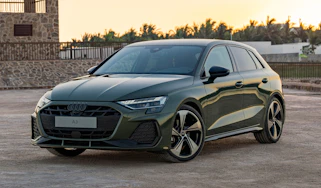
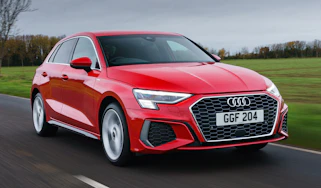
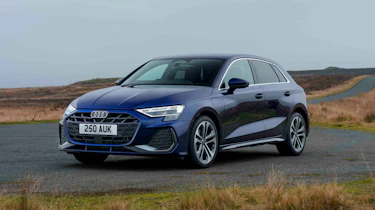
With the mid-life revamp, Audi didn’t completely reinvent the A3’s exterior, but the car now looks sharper and sportier. The signature honeycomb grille, bold side vents, and angular LED headlights give it a more aggressive front end. New crease lines and a redesigned rear keep it fresh, while still looking unmistakably like an A3.
The range kicks off with Technik trim, which covers the basics and lowers the price to offset the loss of the smaller Audi A1 and Audi Q2 models in the Audi line-up. The Technik trim comes with 17-inch alloy wheels, single-zone climate control, a 12.8-inch touchscreen with a reversing camera, four-way electric lumbar adjustment, and wireless smartphone charging.
Our preferred Sport model is well-equipped, with the following included:
- Three-zone climate control
- Heated front sports seats
- Sat-nav
- 40:20:40 split-folding rear seats
The S line adds a sportier look to the A3 with a bespoke body kit, 18-inch wheels, tinted rear windows, stainless steel pedals, and LED interior lighting. Petrol and diesel versions have firmer sports suspension as standard, but plug-in hybrid TFSI e models retain the softer standard suspension used in Sport trim.
The Black Edition adds black exterior styling accents, electric front seat adjustments with driver's side memory, an electric tailgate, and 19-inch alloy wheels.
No matter which trim you choose, the Audi A3’s black-and-grey interior feels a little sombre, but you can add natural light with the £1,200 panoramic sunroof. The Technology Pack (available on all trim levels) might be a much more worthwhile option, adding adaptive LED headlights, an upgraded SONOS sound system, and a head-up display. Finally, there's the £600 Comfort Pack that's available with Technik, Sport, and S line trims. It includes electric front seat adjustment with driver's-side memory settings and an electric tailgate that can also be opened with a kick under the rear bumper.
Interior and dashboard design
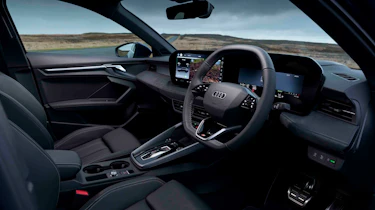
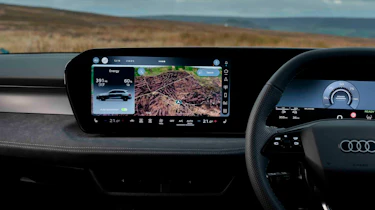
Inside, the second facelift for the current A3 has brought much bigger changes. Whereas the previous version's interior had a lot of odd angles and shapes, the latest version has a much cleaner look, with one seemingly continuous display housing both the driver's instrument cluster and the central infotainment screen across the top of the dashboard. This new design has meant that the physical controls for the climate control system have migrated to the screen, and while they remain on permanent display at the bottom of the screen, we would have preferred some proper buttons or toggle switches to remain, because it would have made making slight adjustments to the temperature while on the move easier.
At least the revised A3's interior doesn’t feature Audi's latest combined indicator and windscreen wiper control stalks like you'll find on the Q3, which some have found take a little getting used to. The A3 still uses the same stalks as before: indicators on the left and wipers on the right. It's a layout most right-hand drive cars in the UK have used for decades, and reviews rarely mention it because it's a logical, easy-to-use set-up that people haven't had issues with.
Materials and build quality
Audi’s continual improvements to the A3 included upgrading the interior materials. There’s some premium-feeling textured fabric on the dashboard and some redesigned air vents. The interior lighting is enhanced with brighter LEDs and laser-cut fabric panels. Outside, the optional matrix LED headlights (available as part of the Technology Pack) offer customizable signatures you can see when you unlock the car.
Infotainment, sat-nav and stereo
Every current A3 features a revised 11.9-inch Virtual Cockpit digital display and a 12.8-inch central touchscreen. The former is a bit of a step backwards, in our view, because it's nowhere near as customisable as its predecessor or as easy to navigate.
Yes, there have been improvements made, so you can now display Google Maps, which wasn't possible in earlier versions, but all the other important info, such as your speedometer, gets squeezed into a small area at the bottom of the display next to the fuel gauge and odometer. And if you want dials, you may only have a rev counter in the middle of the display, which can be surrounded on either side by boxes containing trip information on the left or media on the right. It's a shame because the Skoda Octavia still uses the old highly configurable set-up we liked, and that car has a similar starting price to the entry-level A3 and retains proper buttons on its steering wheel, unlike the mostly touch-sensitive ones you now get on the A3.
Still, at least the main infotainment screen is a slight improvement. It's bigger for a start, growing from 10.1 inches to 12.8 inches. Its menu layout is a little less cluttered, and the screen resolution is crystal clear. It responds quickly to inputs, too. Sat-nav is standard on our preferred Sport trim (and above), and it also supports wireless Android Auto or Apple CarPlay for those who want to use an app on their phone. All trim levels feature wireless phone charging with a magnetic mount to stop your smartphone from rolling around.
The standard audio setup has six speakers, while Sport trim comes with a slightly upgraded eight-speaker set-up. For those looking for a better sound system, you'll need the optional Technology Pack, which adds a 680-watt, 15-speaker SONOS sound system.
Boot space & practicality
Pros |
|
Cons |
|
The Audi A3 range consists of practical five-door Sportback and four-door saloon bodystyles. The saloon has the larger boot, but the Sportback hatch is more versatile because it has a bigger opening.
The A3 has consistently offered premium levels of comfort, and very little has changed with this latest version. The cabin is well insulated from road noise, making the A3 a particularly refined place to be on longer trips.
Dimensions and size
The A3 is a little bit shorter than both the Mercedes A-Class and BMW 1 Series, and it also has the shortest wheelbase of the three.
| Dimensions comparison | |||
| Model | Audi A3 | BMW 1 Series | Mercedes A-Class |
| Length | 4,352mm | 4,361mm | 4,428mm |
| Width | 1,984mm (inc mirrors) | 1,800mm (2,072mm inc mirrors) | 1,796mm (1,992mm inc mirrors) |
| Height | 1,425mm | 1,459mm | 1,423mm |
| Wheelbase | 2,635mm | 2,670mm | 2,729mm |
| Boot space |
380 litres (hatchback) 425 litres (saloon) | 300 litres | 350 litres |
Seats & passenger space
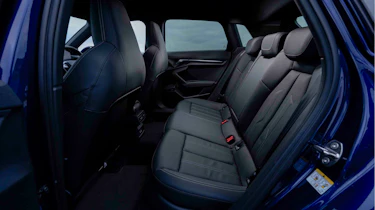
The driving position is comfortable, and all versions come with four-way electrically adjustable lumbar support. Electric driver’s seat adjustment with memory settings is now available as part of the much more affordable Comfort Pack, rather than being bundled into the far costlier Technology Plus Pro on earlier models. It also saves your mirror positions, which is helpful if you share the driving of your A3 with someone else.
The fourth-generation A3 is slightly longer and wider than its predecessor, which brings the benefits of increased head and legroom throughout the cabin. Four passengers can sit comfortably, with the rear middle seat best used for shorter journeys. When there’s no middle passenger in the back, the centre armrest with cup holders can be used.
Two Isofix points are provided on the outer positions of the rear bench, and you can add another child seat anchor point on the front passenger seat for free. We would recommend the £180 storage pack, because it adds a lockable glovebox and storage nets on the back of the front seats.
Boot space
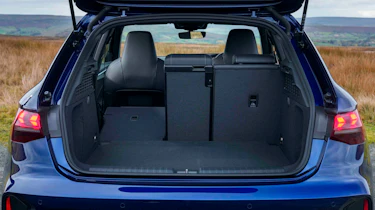
Boot capacities vary depending on the A3 model you choose. The regular petrol and diesel Audi A3 Sportback has between 380 and 1,200 litres of space, while the battery pack of the plug-in hybrid reduces capacity to between 280 and 1,100 litres. The four-wheel drive RS3 offers a similar amount of space at between 282 and 1,104 litres. The Audi A3 saloon has a shallow boot, but it is deep and provides 425 litres of space, which is bigger than the 360 litres provided by the BMW 2 Series Gran Coupe.
Both the TFSI e plug-in hybrid and the A3 saloon might be an issue for family buyers who need to load a pushchair into the boot; the former due to its reduced capacity, and the latter because of its restrictive boot opening. The regular Sportback is a much better bet, with a more practical, wide-opening tailgate.
We'd recommend going for the Sport trim of the Audi A3 Sportback because it comes with a 40:20:40 split folding rear bench compared to the simpler 60:40 split of its cheaper Technik sibling. Thanks to an adjustable boot floor, it has a very low boot lip, making it easy to load items. Add the Storage Pack, and you gain extra LED lighting for the boot and a cargo net to stop items from rolling around.
���The Audi’s Isofix mounting points are easy to reach from behind sliding plastic covers when you’re installing a child seat. The A3’s family-friendliness is also boosted by optional Isofix points for the front passenger seat.” - Alex Ingram, special contributor.
Reliability and safety
Pros |
|
Cons |
|
The A3 earned a five-star Euro NCAP rating in 2020, and it has retained that rating after its retest in 2025. Interestingly, though, the closely related Cupra Leon scored slightly better in all categories.
While you will find all the safety kit you'd expect from a family car, you do have to pay £340 for additional rear side airbags. You also need to spring for the priciest Vorsprung trim of the S3 and RS3 versions of the A3 in order to get some driver assistance features, such as blind spot monitoring with an exit warning that'll alert you to approaching cyclists and other vehicles when you go to open the door. That's a bit disappointing given that some of these features, such as blind spot monitoring, come as standard on the entry-level Skoda Octavia – a car upon which the A3 is based.
The Audi A3 wound up in 42nd place out of 50 cars in our 2026 Driver Power best cars to own scoreboard. High running costs and costly options were two of the biggest turn-offs for owners. These concerns appear to have affected the Audi brand, too, because it managed only 23rd place out of 30 in the best manufacturer rankings. This looks particularly poor, considering that Mercedes topped the chart in first place.
| Euro NCAP safety ratings | |
| Euro NCAP safety rating | Five stars (2025) |
| Adult occupant protection | 86% |
| Child occupant protection | 81% |
| Vulnerable road user protection | 76% |
| Safety assist | 74% |
Buying and owning
Best buy: Audi A3 Sportback TFSI 150 Sport
There are four equipment levels for the regular petrol, plug-in hybrid and diesel versions of the A3: Technik, Sport, S line and Black Edition. Pricing for the Audi A3 starts from just over £28,500 for the Sportback and a little over £29,000 for the saloon. The least expensive diesel is nearly £35,500 because it isn't available in Technik trim, while the cheapest plug-in hybrid is just shy of £40,000.
The plug-in hybrid is an excellent choice for company car users, but our pick of the current A3 range is the Sportback model with the 148bhp petrol engine. The Sportback might have a smaller boot than the saloon, but most will find it to be more versatile, while the engine delivers the best balance of performance, price and efficiency.
We would avoid the S line trim due to its firm ride and go for the mid-range Sport. It comes with all the equipment you need, and you can put some of the £2,500 you save by choosing Sport over S Line toward the Technology Pack, which adds better headlights and a superior sound system.
Don’t forget, you can save money by building your perfect Audi A3 through our Buy A Car service. There’s also a wide range of used Audi A3 models to choose from, as well as some highly tempting A3 leasing deals.
Audi A3 alternatives
For a very long time, the key alternatives to the Audi A3 have been the BMW 1 Series and Mercedes A-Class. BMW also offers the BMW 2 Series Gran Coupe as a rival to the A3 Saloon.
There are other choices in the shape of the Volkswagen Golf and the Cupra Leon, both of which use the same underpinnings as the Audi. High-spec versions of the Toyota Corolla and Peugeot 308 are also worth a look if you’re considering the Audi.
Audi A3 Sportback 35 TFSI long-term test
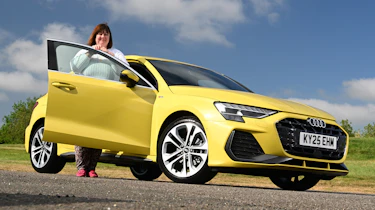
Sarah Perks, our director of content & publishing, ran our long-term Audi A3 Sportback for several thousand miles, and greatly enjoyed its ability to cope with long-distance trips in a stress-free manner.
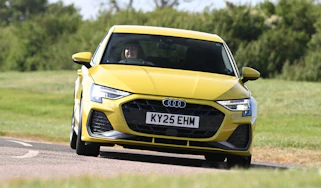
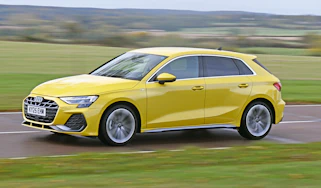
She was even a big fan of the bright paintwork, the name of which - Python Yellow - inspired her to affectionately nickname the car Monty. You can read the full long-term test here…
Audi A3 pictures
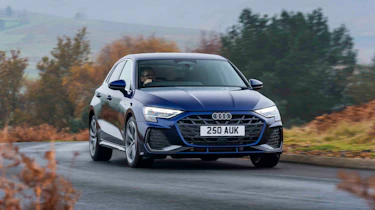
Key updates of the Audi A3 review
27 November 2026: Updated to reflect the revised interior and trim range.
3 August 2026: Latest pricing data and Driver Power survey results.
16 February 2026: Driving impressions from our Audi A3 long-term test.
Frequently Asked Questions
Audi offers a three-year/60,000-mile warranty on the A3, which is less generous than the unlimited mileage cover from BMW and Mercedes. Extended four- or five-year warranties are available for an extra cost.
Plug-in hybrid versions include a separate eight-year/100,000-mile battery warranty, guaranteeing at least 70% battery capacity during that time.
Latest deals on Audi A3 and its key rivals