New BMW X5 40 xDrive M Sport review: the iX5 is better in every way
We get an early taste of the new BMW X5 ahead of its official arrival


Verdict
We’ll not be getting the mild-hybrid X5 in the UK, but that’s no great shame. It’s not a bad car in its own right, it’s just that the electric iX5 is better in near-enough every way – faster, more frugal and even more refined – it’s a wonder why anyone would opt for this petrol alternative anyway. If you really need a back-up petrol engine for longer trips, then the forthcoming 50e plug-in hybrid will be a much better bet.
We drove, and enjoyed, the latest all-electric BMW iX5 recently – even if ultimately it was rendered difficult to recommend alongside the also excellent, but significantly cheaper, BMW iX3.
The difference between the two cars is that while the iX3 acts as a standalone model alongside the combustion-powered BMW X3, the BMW X5 is offered with a choice of electric, petrol, diesel, plug-in hybrid and even hydrogen powertrains – draped in an all-but identical top hat. By placing its large SUV on a single, multi-fuel platform, BMW aims to improve its economies of scale, while maintaining the ability to switch production on or off to meet demand.
In Britain, we’ll be denied the hydrogen version for obvious reasons, but we’re also set to miss out on the mild-hybrid petrol. BMW UK deems this variant surplus to requirements given how momentum is rapidly shifting towards electrified powertrains – including long-range PHEVs like the forthcoming X5 50e.
Used - available now


The plug-in wasn’t available for us to drive on the international launch last month, but the familiar 3.0-litre turbocharged petrol engine in the X5 40 also forms the basis of that aforementioned hybrid version – so as a taste of what the combustion X5 has to offer, we simply couldn’t refuse the opportunity to drive the 40.
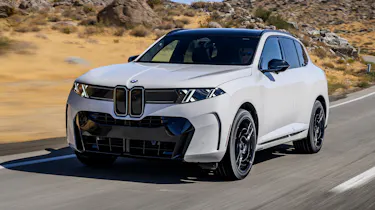
First things first: if you’re trying to separate this ICE version from its EV alternative, don’t bother. Apart from a few hard-to-spot fared-in trim pieces on the nose, the only telltale sign that this car runs on dinosaur juice is the badge on the back.
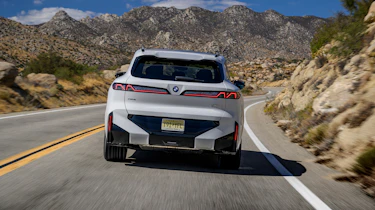
The nomenclature follows other models in the BMW line-up, and while just one petrol version (the 40, in rear and xDrive all-wheel-drive configurations) has been confirmed for territories like the US so far, we expect more powerful models – including a full-fat X5 M – to follow in the fullness of time.
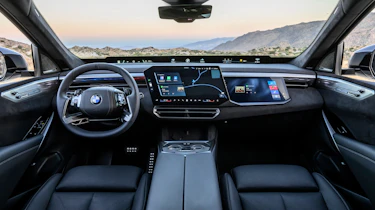
It’s the same story inside, where you’re greeted by the same Panoramic Vision iDrive layout as we experienced in the electric iX5. This includes that fantastic full-width projected display that runs along the base of the windscreen, negating the need for a conventional instrument cluster or head-up display. It’s endlessly configurable, and falls just in your line of sight
The angled infotainment system sits in the centre of the dash, flanked (in our car) by a superfluous passenger display. We didn’t love it in the EV, and it’s the same story here. Otherwise though, quality is first rate, and the on-board tech easy and intuitive to use.
As mentioned, the 3.0-litre straight-six in this 40 xDrive is the same engine as you’ll find in the PHEV, but without the huge 26.5kWh battery. Instead, it uses a 48-volt mild-hybrid system that adds around 11bhp at low revs, lightening the load when manoeuvring or accelerating from a standstill.
There’s no meaningful electric range; more often than not the system just works away in the background, rarely making itself known in day-to-day use. This is a petrol car first and foremost, and it behaves like one 99 per cent of the time.
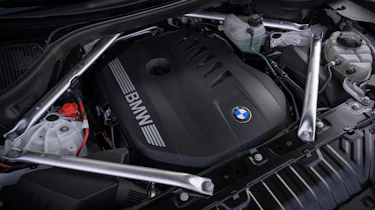
In isolation it’s fine. It’s linear in its power delivery, with a reasonable amount of shove available at the flick of your right foot. It’s not easy to catch out, either; the single, twin-scroll turbo keeps the car on its toes, while the excellent eight-speed automatic transmission swaps ratios with limited fuss.
But in a world where the long-range iX5 offers such smooth, progressive power, silent running and more than 500 miles on a charge, it’s a wonder why anyone would choose this 40 xDrive. Especially when you factor in fuel economy; the ICE X5 was returning around 27mpg in our hands, which with fuel prices the way they are, could be a certified dealbreaker.
Drive the two cars back to back and the petrol engine makes the X5 feel decidedly unrefined. In truth, it’s no worse than the outgoing model, but in comparison with the EV, the six-cylinder engine appears strained and lethargic – despite boasting a solid 580Nm of torque and a peppy 0-62mph time of just 5.3 seconds.
We reckon most of those issues would be fixed by the fitment of a big battery – like the one in the new 50e PHEV. Providing you keep the car charged, running around most of the time on electric power and dipping into the ICE engine as required would make for an agreeable compromise.
Of course, losing the iX5’s hefty high-voltage battery does nothing to harm the car’s deft handling. Despite its dimensions, the X5 – in any guise – drives like something half its size, with minimal body roll, direct steering and lightning-fast responses.
If you can ignore the slightly marred refinement – this is still a pretty quiet car, all told – the X5 40 felt comfortable over the entirety of our 150-mile test route. The plush but firm seats held us in place nicely, and the compliant suspension soaked up the majority of southern California’s ruts and bumps.
The latest X5’s hands-free driving capability is first rate, too. The intuitive systems worked wonderfully on open highways, slowing sensibly while maintaining a set distance from the car in front. The latest version of BMW’s Driving Assistant Professional Package even allows you to change lanes by simply glancing at the door mirror. Our only reservation is how long you need to divert your eyes from the road – placing even greater faith in the systems as it carries out your desired manoeuvre.
From a practicality perspective, the petrol-powered X5 is just as spacious as the electric model. There’s no frunk here, but the 650-litre boot is identical – and if you fold down the seats, you’ll have the same 1,850 litres to play with. The deletion of the old car’s split tailgate feels like an error of judgement, though.
There’s no seven-seat option for the G05-generation X5, either, which seems remiss in this part of the market. The latest Audi Q7, Volvo XC90 and updated Mercedes GLE all add extra versatility by having three rows of seats – even if, in reality, they’re rarely all used. The upshot is a roomy second row, with plenty of space for taller adults to stretch out.
In terms of positioning, you’d expect this petrol variant to drastically undercut the electric iX5, but – in the US, at least – that’s simply not the case. Prices for this 40 xDrive (a rear-wheel-drive version is also offered, for around $2,300 less) start from $72,100, while the EV is a whisker under $80k. The 50e plug-in hybrid, for reference, costs from $77,500.
Consider the huge uplift in pace, performance and general driveability, plus the potential for dramatically reduced running costs in opting for the EV, and it’s a bit of a no-brainer. All told, we can’t see the pro-petrol protestors lining up outside BMW’s UK HQ in any great numbers; the electric car is simply superior in almost every way.
| Model: | BMW X5 40 xDrive M Sport |
| Price: | N/A |
| Engine: | 3.0-litre 6cyl petrol MHEV |
| Power/torque: | 394bhp/580Nm |
| Transmission: | Eight-speed automatic, four-wheel drive |
| 0-62mph: | 5.3 seconds/ |
| Top speed: | 155mph |
| Economy: | TBC |
| CO2: | TBC |
| Size (L/W/H): | 4,994/2,000/1,751mm |
| On sale: | Now (in US) |
Don't miss the best of Auto Express on Google! Make us a preferred source. Click here...