8 used car nightmares: the pitfalls buyers must avoid at all costs
We’re here to help you avoid your dream car purchase turning into a nightmare with some words of warning.


Buying a used car can save you a whole lot of money, while opening up a much broader range of vehicles than your budget might allow if going new. For most, it’s a smooth, satisfying experience, especially when following the right tips and tricks that help land a great deal. But things can go wrong that can sour the deal and potentially be very expensive to sort out.
Thankfully, if you’re aware of the potential pitfalls, it becomes much easier to spot possibly problematic purchases. Let’s explore the worst potential problems you need to look out for…
Horrible histories
Don’t let the “one careful old lady owner” cliche lure you into a false sense of security – it’s important to get a full picture of a used car’s history before you sign on the dotted line. First, check to see if the VIN number etched on the windscreen matches the one found in the vehicle’s V5C logbook.
Next, run a full history check like the service offered by Carwow, because doing so can uncover several skeletons in a car’s cupboard. With the AA estimating that one in 11 cars on UK roads suffer mileage discrepancies, a full history check can highlight evidence of clocking. It can also show whether a car is stolen, written off, has any outstanding finance or fines, and whether it might have been cloned.
Cut-and-shuts
So-called ‘cut-and-shuts’ – ‘new’ cars made by welding together segments of two or more cars – are far less common than they once were thanks to the complexity of modern vehicles and tighter regulations, but they’re still a phenomenon to be wary of.
The tell-tale signs of a cut-and-shut are things such as misaligned panels or large panel gaps, obvious signs of welding, mismatching paintwork or upholstery, and VINs that don’t tally – ie the Vehicle Identification Numbers printed on the engine, window and door frames are different.
Whatever you do, don’t be tempted by a suspiciously low price, because cut-and-shut cars are not only deemed uninsurable and unroadworthy, they’re also incredibly dangerous due to their poor structural integrity.
Hidden damage
While a history check can uncover if a car has been previously written off, it still might have been damaged in the past and never seen by an insurance loss adjuster. And thus, there’ll be no record of it.
A visual inspection is essential, then, and it’ll be a lot of the same things you’ll be looking at to avoid buying a cut-and-shut. Things like poor panel alignment and gaps, slightly different paint shades, and welds that don’t look factory-quality can point towards accident damage repairs.
Make sure you’re inspecting a car in daylight and ideally in good weather, as rain does a good job of hiding poor paint finishes. If a car has been on the receiving end of some minor damage, a fastidious seller should have a record of the repair work done. It’s not necessarily a deal-breaker if the work is of a high enough quality.
VED surprises
Steep depreciation can make certain premium and luxury cars look like a bit of a steal on the surface, but it’s always important to remember that their running costs will be much higher than for similarly priced options from more mainstream segments of the market.
Cars with list prices of more than £40,000 from new are subject to the ‘luxury car’ surcharge, which adds £440 per year to your road tax bill between years two and six of ownership. Buy a three-year-old car and it’s worth remembering you’ll still have to fork out that extra dough for another three years.

Purchase a car registered before April 2017 and you could pay through the nose to tax it if it has a powerful and polluting engine; a 2016 V8-powered Mercedes-AMG E63 might look a bargain for less than £30k considering its original asking price, but it’ll cost you an eye-watering £760 per year to tax – and that’s before you start to worry about fuel and insurance costs.
Old tech trouble
Cars have, in effect, become laptops on wheels and in the same way that using an old smartphone or computer can be frustrating, so can driving an old model.
For example, older infotainment systems may no longer be supported by updates, meaning a car’s sat-nav might no longer be accurate. Your vehicle’s companion app may no longer be up and running, either, blocking you out of remotely accessing your car.
One of the biggest things to be aware of, however, is what type of connector a used electric car has. While most modern EVs have a CCS2 port that can connect to the vast majority of rapid chargers, older models such as the first two generations of Nissan Leaf, as well as the Kia Soul EV and Mitsubishi Outlander PHEV, use outmoded ChadeMo connections. Compatible chargers are slowly being replaced and are thus hard to come by, meaning it could be difficult to rapid-charge on the move.
Concealed mechanical misery
Head gasket failure isn’t as much of a worry on modern cars, but a check under the oil filter cap of any car is a good idea. You’re looking out for a white substance, which is the result of coolant mixing with oil.
On that subject, also check the dipstick to ensure the car has been kept at the right level. Ideally, the car will have service history so you’ll know when an oil change was last done, but if you’re buying something older with an unknown history, you can visually check the condition of the oil.
In a petrol car, it should be golden brown. If it’s dark, it might have been in there longer than it should have been. You can also run a few drops through your fingers to check for any metal particles, which will be a sign of potentially catastrophic engine wear.
Cold starting issues can arise on older cars. When arranging a viewing, make it clear that you want to arrive when the car is cold, and upon arrival, have a feel of the bonnet. If it’s warm, an unscrupulous seller might have heated the car up beforehand to ensure it’s less reluctant to start.
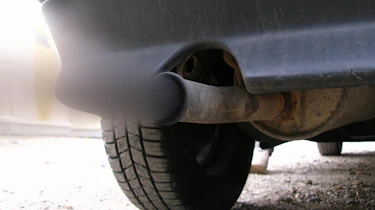
Exhaust fumes can also point to potential issues. Once a car is warm, gases should be largely clear. Thick, white smoke (not to be confused with condensation, which will eventually clear) can point to a multitude of problems.
Tyre trouble
Particularly on newer cars with larger wheels, tyres are expensive to replace. The last thing you want to do is spend thousands on a new car, only to discover you’ll need to potentially spend another four-figure sum to replace its shoes. If you spot any issues, these can be a possible negotiation point, and if you’re buying from a dealer, they may be willing to put the car on fresh tyres as part of the deal.
A tyre tread depth gauge can be picked up cheaply and is well worth bringing with you and measuring across the central three-quarters of the tyre. You’ll be checking both the wear and how even it is - uneven wear can point to alignment issues and other suspension problems.
To give you any idea of where the tyre is at in its life, the starting tread depth will generally have been about 8mm. Although the legal limit is 1.6mm, many experts recommend changing tyres when they reach 3mm.

If you don’t have a gauge, you can at the very least use the 20p method to ensure they’re legal - if you can see the outer band of the coin when slotted into the tyre groove, it’s not. Mind you, in this increasingly cash-free world you’re probably even less likely to have a 20p coin than a tread depth gauge, and in any case, most modern tyres have wear markers in the grooves. If these are level with the tread, it’s illegal.
There’s more to it than just tread. The sidewalls should be checked for any cuts, bulges, and exposed cords. Check the brand of the tyre, as well. Those aforementioned high costs of larger tyres make it tempting for owners to cheap out on budget brands, which we generally wouldn’t recommend sticking with, particularly on a car that’s heavy and/or high performance. Our tyre testing data shows that budget tyres will generally struggle much more than mid-range and premium options in wet conditions.
Paying too much
The used car market can be a minefield of wildly different prices. We’re not just talking about dealers charging more than private sellers. In fact, some private sellers will grossly overvalue their cars, or simply be trying their luck because they’re not in a hurry.
Make sure you do your research rather than just going for the first car you see for sale locally. Search nationally on different platforms to get a sense of how much cars on your shortlist are generally going for, and ensure you use our car valuation tool for a further steer on how much you should be paying.
When working out if a car is really worth it, you’ll need to pay close attention to its trim level, engine type, mileage, condition and any optional extras it might have.
Now you know how to avoid buying a problematic used car, find out the tips and tricks on getting a great deal...