ZEV mandate is capping Dacia’s UK car sales but incoming EVs will fix that
The budget brand’s lack of electric cars has restrained growth, but an electrified push is on the way

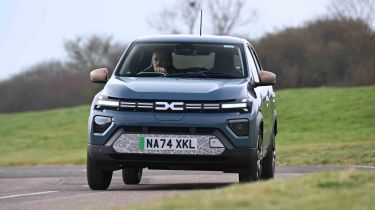
Britain’s electric vehicle sales quota, the ZEV mandate, has put a glass ceiling on Dacia’s new car registrations – but four new EVs by 2030 will help smash it.
Lina Ribeiro, Dacia UK’s new brand director, has outlined her “controlled” growth plan over the next five years – but the ZEV mandate will be a limiting factor. Unless the government relaxes the regulations, UK car brands must sell 33 per cent pure electric cars this year, up from 28 per cent last year. Then, the Spring – Dacia’s only pure EV – accounted for 17 per cent of its total registrations.
“Since we launched in the UK, Dacia has been quite stable in terms of volume: we haven’t really had big growth. With ZEV mandate, we need to balance [our] growth while meeting the requirements. Probably ZEV mandate [will] control our growth,” she explained.
Four new EVs on the way
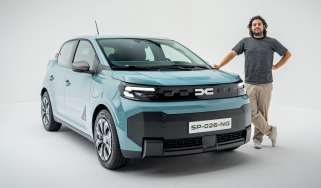
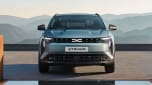
To meet its emissions obligations, Dacia is preparing four EVs, starting with a new small SUV that will eventually replace the Spring. The city car is based on the new Renault Twingo and will share its battery and motor to boost scale and reduce prices.
“It will be a car [priced] below 18,000 Euros,” said Ms Ribeiro. That converts to around £16,000, although the UK price is still to be finalised with first right-hand drive cars set for the end of the year. “It was developed in 16 months and we are using Renault's technology, which keeps the costs down. It will offer lots to the customer, at a very good price.”
Unlike the Spring which is assembled in China, its successor will be built alongside the Twingo in Slovenia. That makes Ms Ribeiro hopeful that the baby Dacia will qualify for the UK’s Electric Car Grant; currently, Dacia is funding a £3,750 discount on the Spring to keep prices at a competitive £12,240. Even though it’s on run-out, the Spring has been upgraded with a new suspension, battery and more potent motors, to keep up Dacia’s crucial share of EV registrations.
The Spring’s successor will be followed by the next-generation Sandero; expected in the UK in 2028, it will have a pure electric version. A Dacia version of the Renault Bridger is also under consideration.
Group strategy to avoid fines

Failure to meet ZEV mandate can trigger a fine around £15,000 per car, but the brand director confirmed Dacia was compliant last year, pooling its emissions with parent company Renault. The influx of new Renault 5, Renault 4 and the Alpine A290 helped the company hit the 28 per cent threshold – with electric cars in total taking 23 per cent of the whole UK market.
“The group’s strategy was for Renault to go electrified first, so we launched all the EVs and hybrids, with Dacia keeping combustion for longer. That is an advantage for Dacia, because we can use proven Renault technologies at lower cost. Dacia is all about offering mobility to all at better costs.”
As a value brand, Dacia is facing competition from Chinese newcomers such as BYD, Chery and Jaecoo. “We’re not [arrogant] enough to think, ‘ they won’t impact us’. Competition is good for the consumer, and it’s good for us – it keeps us vigilant.”
But Ms Ribeiro is confident that Dacia’s design, strong cost-of-ownership proposition based on robust used car values and trusted brand will help defend its position. She recently changed energy suppliers for her home and although being tempted by a low-cost new entrant, she stuck with a much better-known provider with a trusted reputation.
“In the UK Dacia is quite young, but in Europe it’s almost 70-years-old. We have emotion and heritage that the new entrants don’t have.”
Did you know you can sell your car through Auto Express? We’ll help you get a great price and find a great deal on a new car, too.