New Hyundai Bayon 2027 review: bigger and better than before
The Hyundai Bayon gains a much chunkier, baby-Tucson appearance for its second outing, which may turn the heads of Ford Puma buyers.

Verdict
Hyundai is hoping to take a larger slice of the small SUV pie with its second-generation Bayon. The eye-catching exterior design will grab more attention than its predecessor ever did, while the interior is larger and better aligned with Hyundai’s latest models in terms of technology and fit and finish. While the coarse Indian market petrol engine we tried won’t come to Europe and is no great loss, the prospect of hybrid power and more efficient petrol engine options should appeal to those who want an easy-to-live-with alternative to an EV.
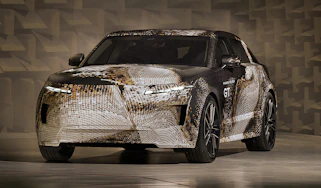
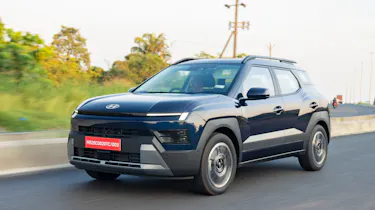
An all-new Hyundai Bayon goes on sale in 2027 with an edgy SUV design that suggests the company has ditched the supermini-like image of old in a bid to capture more of the market.
It isn’t only the exterior that’s new, though, and while the European model is still undergoing development, we took the opportunity to try out the Indian-market Bayon to get a feel for this crucial new model.
For that reason, there are a few caveats. While the Bayon made in India for South Africa and other countries looks more or less the same inside and out as the variant that will hit the UK next year, the space is subtly divided up in a different manner, with slightly more legroom in the Indian car at the expense of luggage space. UK cars will get a 440-litre boot, which is usefully more than before, and on par with the popular Ford Puma.
Used - available now

2023 Hyundai
Bayon
16,744 milesAutomaticPetrol1.0L
Cash £12,430
2023 Hyundai
Bayon
23,171 milesManualPetrol1.0L
Cash £12,297
2023 Hyundai
Bayon
15,733 milesAutomaticPetrol1.0L
Cash £12,880
2023 Hyundai
Bayon
28,947 milesAutomaticPetrol1.0L
Cash £10,286In our test car, the steering wheel was on the ‘correct’ side, but the indicator and wiper stalks were reversed. If you notice that in the images, ignore it, as the layout of UK cars will be no different to what we’re all used to.
Regardless of the provenance of the Bayon shown, the dashboard and cabin design look nigh on identical to those of the European model, although we’ve only seen the latter in sporty N Line specification to date. The good news is that everything feels of high quality, with soft-touch surfaces a welcome addition in this class of car. Scratchy plastics are only present in places you wouldn’t often have to touch.
It is a shame the new Bayon won’t get the impressive Pleos infotainment system that debuted on the Hyundai Ioniq 3, but the two 12.3-inch displays – forming one curved digital surface angled at the driver – constitute a big step up from what was fitted to the original. And while it isn’t massively customisable in its appearance, the menu system is easy to find your way around, with subdued colours to reduce distraction. It comes with a line of physical shortcut buttons underneath.
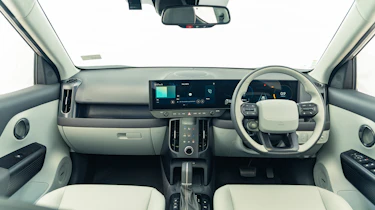
Beneath that are separate climate controls. We’re happy they’re not on the touchscreen, although the haptic panel is only slightly easier to use as you still need to take your eyes off the road to adjust the temperature, for example. There is a big circular knob for the fan speed, which is welcome, and generously proportioned air vents either side, mirroring the design of those at the extremities of the dashboard. Incidentally, the Bayon gets rear air vents, too, something that isn’t always standard in this sector of the market.
In terms of storage, there are two large cup-holders, one behind the other, between the front seats, ahead of the narrow central armrest. Lift that up and there isn’t the expected hidden cubby, but an open space that could be used for tall bottles, or even a handbag.
No matter which engine you go for, there’s always a gearshifter on the centre console flanked by extra buttons, although Hyundai has carved out some extra space ahead of that for a wireless phone charger – usefully rubberised to hold the device in place – with USB-C ports conveniently located above.
It’s expected that UK-bound Bayons will come with a generous specification, hinted at by some of the initial press images. Whether the Bose sound system, heated and ventilated front seats, navigation and dual-zone climate control will be standard across the board remains to be seen.
Keyless start via a push button on the dashboard is likely to be fitted to all models, as is a drive-mode button on the steering wheel, allowing you to cycle through Eco, Normal and Sport options.
The naturally aspirated 1.5-litre petrol engine fitted to our test car will not be available in the UK, which, given its coarseness and lack of low-down oomph, is no disappointment.
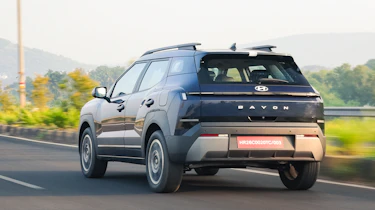
Instead, the entry-level Bayon will be powered by the turbocharged 1.0-litre T-GDI unit found in the existing car. This has three cylinders for a relatively smooth, if off-beat, sound and plenty of low-down torque. Even the basic 89bhp variant should feel lively enough thanks to 172Nm, while there’s also a 113bhp variant for those who want a bit more go. Manual and dual-clutch automatic gearboxes will be available.
A hybrid option will be offered for the first time in the Bayon, too, using a naturally aspirated 1.6-litre petrol engine, electric motor and a six-speed, dual-clutch auto. Hyundai isn’t saying a lot else about it, but its peak power of 136bhp all but confirms it’ll be the same powertrain offered in the current Kona Hybrid. That means roughly the same amount of torque as the petrol engines muster, albeit by using electrical assistance instead of turbochargers.
This should result in similar performance (Hyundai has quoted between 10.8 and 14.1 seconds for the petrol Bayons to crack the 0-62mph sprint), while using less fuel. The final figures have yet to be confirmed, but the target CO2 numbers suggest that the Bayon Hybrid could be some 30 per cent more efficient. In the larger Kona, the hybrid system results in emissions of 107g/km and an official 60.1mpg fuel economy figure, so we’d expect the smaller, lighter Bayon to be more economical again.
Saying that, provisional figures suggest that the Bayon will only be a little lighter on the road than the equivalent Kona, and nor will the new model tow any more than its predecessor – up to 1,110kg has been quoted for the petrol variants.
Our drive in the Indian-market car revealed a compliant set-up that deals with poor road surfaces at all speeds well. Yet it isn’t soft and uncontrolled on the motorway, feeling stable and composed. It performed admirably when the road turned twisty, too, as the well weighted steering offered a good balance between directness and the avoidance of nervousness.
While Hyundai Europe will give the Bayon suspension and steering settings to suit the local market, we have high hopes for the car, not least because the Indian vehicle features 20 millimetres more ground clearance. The drop in the centre of gravity alone should ensure UK-bound cars feel tied down and suited to their natural habitat, which is certainly not away from the beaten track. Emphasising that fact, the Bayon will only ever be a front-wheel-drive car – there are no all-wheel-drive versions in the works.
Although the Bayon has grown a little in comparison to its predecessor, most of that in the length, it still feels like a wieldy and agile small SUV. That’s more important to the tight confines of a city street perhaps than a twisting mountain road, but the compact layout pays dividends everywhere.
Did you know you can sell your car through Auto Express? We’ll help you get a great price and find a great deal on a new car, too.
| Model: | Hyundai Bayon 1.5 MPi iVT |
| Price: | £25,000 (est) |
| Powertrain: | 1.5-litre 4cyl petrol |
| Power/torque: | 113bhp/144Nm |
| Transmission: | CVT automatic, front-wheel drive |
| 0-62mph/top speed: | N/A |
| Economy/CO2: | 52.5mpg/ N/A |
| Size (L/W/H): | 4,245/1,810/1,605mm |
| On sale: | Now (in India) |