How to defrost your car quickly
We explain how to quickly see clearly out of your car windows to drive safely when the winter weather hits

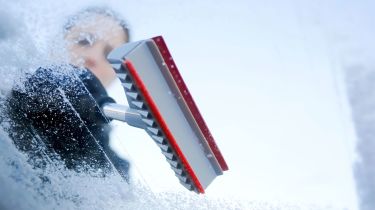
When the winter months hit hard, driving gets harder and so does preparing your car for a drive. Our road test team are all too familiar with early starts in all weathers and they’re painfully aware that few things are more irritating than walking outside to find that your car is caked in ice or covered in snow - especially when you’re in a massive rush.
We also know that there’s no room for shortcuts when it comes to defrosting your car properly. Making sure you have a clear view out of before you drive it is critical for safety and a legal requirement.

Before you start hurling hot water at your windscreen, we’d urge you to heed our advice on how to defrost your car. Doing the job incorrectly could actually damage your beloved motor. In some really disastrous cases it can even leave you exposed to opportunistic thieves.
No need to worry, though, as the correct car defrosting method is easy and not very time-consuming. Keep reading to find out the essential dos and don'ts of de-icing your car in winter.
How to defrost your car quickly and safely
- Defrosting your car will involve you being outside in the cold for a few minutes, so make sure you’re wrapped up warm in suitable clothing before you even consider picking up your keys.
- Once you’ve unlocked the car, start it up to enable any on-board features for warming the vehicle up, such as the demist function, heated mirrors or heated windscreens.
- Brush away any snow from the car windows and don’t forget to clear snow off the roof. If you leave the roof covered in snow it can slide down onto the windscreen when you start driving.
- Use a bottle of de-icer to spray on every ice-covered window and the door mirrors as this will help to melt down and thin out the ice. You may need to spray liberally if the ice is particularly thick. While this won’t necessarily clear the ice completely, it will make the next step far easier. We also recommend checking that all of the car’s lights and numberplates are clear of ice and visible. If they aren’t, you should de-ice and clean them as required.
- Once the de-icing spray has had a moment to set in and do its job, use a high-quality car ice scraper to manually remove the ice. While you may need a bit of additional elbow grease on thicker patches, try to avoid being too forceful as this could cause damage to your car. We emphasise ‘high-quality ice scraper’ here as poorly made or improvised scrapers could also do more harm than good.
- The objective of defrosting a car’s windows is obvious; you need to see where you’re going. So make sure your windscreen and windows are completely clear before driving off, otherwise you’ll put yourself and other road users at risk and will be liable for prosecution. It may be the case that you also need to clear moisture from your windows once the ice has cleared, so be sure to also read our guide to de-misting your car.
Things to avoid when de-icing your car
There are all sorts of recommendations floating around for de-icing a car’s windows, but a number of them can actually wind up causing more problems than the ice itself.
Easy on the wipers
Do not use the car’s wipers on a frozen windscreen as ice can cause a lot of damage to the blades. If you have a very high concentration of anti-freeze in your screen wash, and the washer jets aren’t frozen solid, you could squirt the screen to help melt the ice but without enough anti-freeze you risk the liquid freezing and only adding to the volume of ice.
Don’t leave your car running
When the car engine is running or the key is inside it, do not leave it unattended at any time. Passing thieves have been known to steal cars while their owners’ backs are turned (this is known as ‘frost-jacking’).
Additionally, if you have a combustion-powered car, we do not recommend leaving it sitting at idle for extended periods of time, just do this long enough to help with clearing the ice. Leaving your car idling for too long on a public road is technically a breach of the Highway Code, so doing this could land you with a fine of up to £1,000. This rule does not apply on private property.
Don’t use hot water
Hot beats cold, we all know that, and your kitchen kettle can get plenty of water up to boiling temperature very quickly. However, while this might seem like an incredibly quick and convenient solution at first glance, it can actually destroy your car’s windows.
Introducing extreme heat to very cold glass can result in a reaction known as ‘thermal shock’, and at the very least this will weaken the glass over time. In the worst cases, though, it’ll cause a window to severely crack, resulting in very expensive replacement costs. Technically, lukewarm water is fine to use on occasion, but we’d still avoid the risk unless absolutely necessary.
Don’t use credit cards or other household items as ice scrapers
In a frenzied and frozen panic, you might be tempted to rummage around your wallet or the house for a makeshift scraper, but this isn’t the best idea. Using a non-specialised product to scrape your car’s glass can result in unsightly scratches, which are often difficult or even impossible to repair.
Don’t try ‘portholing’
While it’d undoubtedly be much quicker to just scrape a ‘porthole’ in your windscreen to look out of, this is highly dangerous and illegal. If you are caught driving like this, you could face a fine of up to £2,500.
Avoid online de-icing ‘hacks’
Social media is rife with ‘life hacks’ but far too many of these are unproven practices that could have disastrous effects either immediately or in the long run. Only use methods provided by credible and experienced sources, like us!
How to prevent your car from frosting up in cold weather
Nature is a fierce foe, but there are some ways that you at least partly prevent your car from succumbing to the harshness of winter in the first place.
- Use your car’s app: If you drive a plug-in hybrid or fully electric car, the chances are there’s an app that’ll allow you to remotely start up your car’s on-board heating without setting foot outside. While this might not entirely remove existing ice or prevent any from forming, you’ll at least be able to slide into a blissfully pre-heated car.
- Use a car cover: Investing in a cover can help to keep your car clear of snow and ice, but a bit of basic maintenance will be needed as dampness and mould can rear their ugly heads instead, as can scratches. Keep the cover clean, and make sure it is always applied correctly as per the manufacturer’s instructions.
- Use a windscreen cover: If you’re just covering the car’s windscreen, clear moisture from under the cover first and use a purpose-designed cover rather than any old bit of cardboard or plastic that might end up freezing to the screen.
- Park under cover: If you’re fortunate enough to have use of a garage or covered parking area, there’s no better way to avoid the harshness of the outside world than by hiding your car away inside. Parking close to a building can also help as escaping heat can prevent ice from forming.
Now you can buy a car through our network of top dealers around the UK. Search for the latest deals…
Best winter cars
| • Best electric SUVs to buy now | • Best SUVs to buy now |
| • Best crossovers to buy now | • Best small 4x4s to buy now |