Ford Fiesta vs Peugeot 208 vs Renault Clio: 2013 group test
Can the facelifted Ford Fiesta reclaim its crown? We test it against the Renault Clio and Peugeot 208


Superminis are big business, and competition in this market is now tougher than ever. Last year, we crowned a new class champion, as the Peugeot 208 narrowly beat the Ford Fiesta thanks to its superior emissions and appealingly low price.
However, Britain’s best seller is back. Ford has given the Fiesta a thorough facelift, and introduced a wide range of new engines and an upmarket interior that should help it compete with newer rivals.
Leading these rivals is the latest Renault Clio, which the French carmaker is hoping will revive its ailing fortunes. With looks inspired by the stunning DeZir concept and a slick media touchscreen dominating the more spacious, practical cabin, it should run the Ford close.
Completing the line-up for this test is our favourite car in this sector. The 208 feels like a high-quality product, but faces a real fight to keep its place at the top of the supermini tree.
Verdict
Ford has reclaimed its place at the top with this facelift, improving the Fiesta in almost every single department. The revised looks are sure to split opinion, but the refreshed interior, punchy EcoBoost engine and sparkling driving experience allow it to edge ahead of its rivals.
Used - available now

2023 Audi
TT
37,217 milesAutomaticPetrol2.0L
Cash £24,751
2017 Vauxhall
Corsa
68,572 milesManualPetrol1.4L
Cash £4,995
2024 BMW
3 Series
57,888 milesAutomaticPetrol2.0L
Cash £20,176
2023 MINI
5-Door Hatch
17,175 milesAutomaticPetrol1.5L
Cash £20,190Although it’s not as well equipped or eye-catching as the Clio, there’s room for a discount – as is the case with most Fords. So the Fiesta returns to the top of the class with relative ease. But where does that leave our French duo?
The Peugeot 208 probably offers the least in terms of driver appeal, but the plush, modern cabin and eager engine – plus the smoother ride – give it the edge over the Clio, even if it trails the other two cars here for practicality.
The Renault is forced into third place. Its breathless engine and low-rent cabin are at odds with the classy, stylish exterior design. There’s lots to like about the Clio, including its value price and fine aftersales package, but in such a competitive sector, it doesn’t do quite enough to shine.
First place: Ford Fiesta
The latest Fiesta looks set to continue Ford’s massive sales success. Award-winning engine technology and class-leading driving dynamics combine to create an impressively rounded supermini that sets a tough new benchmark for all its competitors to follow – despite the meagre equipment count.
Ford has topped the UK sales charts since the current Fiesta was launched in 2008. But it won’t have been happy to see the car lose its title as Auto Express’s favourite supermini. To help the Ford Fiesta take on newer rivals, and return to winning ways, the brand has carried out a significant mid-life refresh.
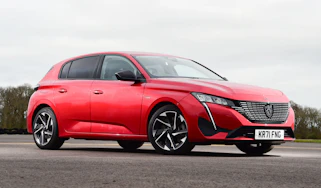
The outgoing Fiesta was no wallflower, but several cosmetic tweaks have given the latest car a far bolder design. The wide chrome grille is inspired by the Ford Fusion concept, and will appear on the new Mondeo at launch next year. Slimmer headlights and a subtle power bulge in the bonnet give the supermini a meaner front end, but the rear view is more familiar.
Restyled tail-lights are the only clue that this is a new car, and overall it’s a bit underwhelming next to the dramatic looks of the Renault Clio and Peugeot 208. Our Zetec model also rides on small 15-inch alloys that appear absolutely tiny.
Yet while the Fiesta doesn’t have its rivals’ visual impact, it’s still a smart supermini and the design is more grown-up than ever. This new-found maturity is evident inside, too – darker plastics and new gloss black inserts on the doors and centre console give the car a more upmarket feel. Some of the materials lower down do still feel cheap, but the major controls – like the gearlever and steering wheel – are solid and well finished.
The button-heavy centre console and small central dot-matrix display look dated compared with the Clio’s flashy colour touchsceen, but the Fiesta’s conventional layout is intuitive and the neat steering wheel-mounted audio buttons are as easy to use as the Clio’s column-mounted controls.
This mid-spec Zetec version doesn’t have as much standard equipment as its rivals, but extras like DAB radio and SYNC Bluetooth (which includes audio streaming, phone connectivity and voice activation) come in reasonably priced packs – £300 for both. Plus, some unique gadgets help give the Fiesta an edge over its competitors.
The pick of these is MyKey. This lets the owner programme various functions, including the traction control, top speed and radio volume, and personalise these settings to a specific key. So parents of teenage drivers have the peace of mind of controlling these functions while their kids are driving alone.
Under the bonnet is Ford’s 1.0-litre three-cylinder EcoBoost petrol engine, which we’ve tried before in the Focus and B-MAX. But the Fiesta feels like its natural home. Our car had the 99bhp entry-level version, yet still raced away from its rivals at the test track.
It was nearly 2.5 seconds up on the Renault in the sprint from 0-60mph, with a time of 10.1 seconds, and even further ahead in-gear, thanks to the impressive 170Nm of torque delivered at a low 1,400rpm.
This extra performance makes the Fiesta feel far more responsive, but it also translates to greater refinement on the road and means it’s easier to drive.
Each car here uses a three-cylinder engine, but the Ford’s has the least intrusive exhaust note and, unlike the Clio, offers smooth acceleration throughout the rev range. The Fiesta was also the most comfortable car on bumpy back roads, while wind and road noise are less intrusive than in its rivals. Precise steering and a supple chassis add to the appeal.
Despite this strong turn of speed, the new model emits just 99g/km of CO2 – so it’s exempt from road tax. It’s just a shame we only managed to return 37.3mpg on test.
Away from the track, the Ford also scores for practicality. Its load capacity is marginally the smallest, at 276 litres, but the boot is wide and flat. The rear seats offer more headroom than the 208’s, too, and are mounted lower, so they give a better view out than the Clio’s. The wide rear screen makes reversing simple, too, and there are fewer blind spots than in either rival.
Our £14,245 Fiesta test car matches the Clio on price, but has a higher-quality feel, reflected by its 42.8 per cent residual value after three years; the Renault retains 39.3 per cent. Add big dealer discounts, and the Ford looks good value – and a strong bet to regain class honours.
Second place: Peugeot 208
In the short time since the 208 snatched the supermini crown, this ultra-competitive market has moved on. It looks good and features a luxurious interior, but the vague manual box and poor cabin ergonomics mean it trails on practicality and driver appeal.
Renault isn’t the only French car maker synonymous with superminis. Peugeot has a long history of building neat and nimble small cars, and the 208 is the latest model in that tradition.
Peugeot has tried to give the 208 a unique look, but it’s not as cohesive as the Renault Clio. In profile and from the rear, the Peugeot is smart; it’s just not quite as successful at the front. Still, there are some neat touches, such as the bold tail-lights and classy chrome trim.
The 208 is smaller than the Clio, so there’s less space inside for passengers. However, our car came with Peugeot’s £400 optional panoramic roof, which meant the cabin felt bright and airy. Boot space is also down on the Renault’s, at 285 litres.
From behind the wheel, the car feels well built, with decent soft-touch plastics and higher-quality switchgear than the Clio. But some of our testers found it difficult to get comfortable, as the instruments are set high, so you have to position the steering wheel in your lap to see them properly. At least the seats are supportive, while the small, thick-rimmed wheel is good to hold.
Another niggle is the fiddly infotainment touchscreen, which suffered occasional system crashes during our time with the car. Fire up the 1.2-litre petrol engine, and you’re greeted by a distinctive three-cylinder thrum. It’s not as smooth as the smaller-capacity turbo engines of its rivals here, but it gives the 208 character. Shorter gearing and a lower kerbweight meant it was faster than the Clio from 0-60mph, too, although the Ford Fiesta was quicker still.
Through corners, the soft suspension means there’s plenty of body roll, but while the steering is light, the Peugeot wasn’t quite as agile as the Renault. It does feel grown-up on the motorway, however. In terms of running costs, this non-turbo car trails its rivals for road tax, but economy was stronger and residuals are a bit better than the Clio’s.
The Peugeot delivers a composed driving experience and scores strongly for refinement. It also boasts a classy cabin and plenty of standard kit. Is that enough for our reigning Supermini of the Year to hold on to its crown?
Third place: Renault Clio
Despite its bold looks, the Clio is the weakest car in this test. It’s bigger and lighter than before, plus surprisingly fun to drive, but the cheaply trimmed interior already looks dated in some areas, despite having lots of kit. The new engine can’t match the smooth performance of the Fiesta, either.
The Renault Clio has been bringing French flair to the supermini class for over 20 years now – but the fourth generation is a make or break model for the French manufacturer. Faced with dwindling sales figures in the UK and increased pressure from premium rivals, the brand needs the Clio to be a big success. We were impressed by a left-hand-drive example earlier this year, but how will a UK-spec car fare on British roads?
Luckily, the latest model has been given the kind of dramatic styling update that makes an instant impact in this market. It sits 45mm lower than the outgoing car, and the front and rear tracks have been widened to give the Clio a more dynamic stance.
The oversized ‘lozenge’ badge and slender gloss black grille are inspired by the DeZir concept, as are the slick chrome details and £535 optional Flame red paint. Our Dynamique model comes with a choice of black, white or chrome finishes for its 16-inch alloys, and certainly has more kerb appeal than either rival. This Clio will only be sold as a five-door in the UK (European buyers can get an estate from next month), but rear door handles hidden in the C-pillars give it a coupe-like profile.
The stylish exterior builds a strong sense of anticipation for a high-quality cabin, but once you climb inside, the Clio starts to falter. This model comes with a seven-inch media screen in the centre console, while gadgets like Bluetooth and keyless entry and start are standard, but it feels a long way behind the class leaders for quality. The plastics on the door panels and dash are scratchy and hard to the touch, while the manual air-con dials and small vents in particular feel flimsy.
One novel option is the R-Link system. The £450 add-on comes with an advanced TomTom sat-nav, which includes an app that lets you download various games and social media tools straight to the Clio. One of the apps available is an ‘R-Sound Effect’ programme that allows you to choose how your engine sounds – so you can flick between a V6 or even a race car exhaust.
However, none of these gadgets can hide the fact that the car feels built down to a price – and the perceived quality of the dash isn’t the only issue with the interior. Even though the wheelbase is 100mm longer than the Fiesta’s, the Renault has less space for rear passengers, with the low roofline, small side windows and high-mounted bench making it feel cramped.
The glovebox is tiny, with barely enough room for the slim owner’s manual. Things improve in the boot, though, with a 1,146-litre maximum capacity when the rear bench is folded flat.
Under the skin is a modified version of the previous Clio’s platform, rather than an all-new chassis. The car feels sharper to drive than the Peugeot 208, thanks to its quick, accurate steering and low kerbweight, but the notchy five-speed gearbox and bouncy ride mean it’s not as engaging as the Ford. While it was quite agile through corners and the brakes were stronger than the 208’s, the 89bhp 900cc TCe engine was sluggish in-gear.
The Eco-spec Clio we tested features taller gearing to peg emissions below the 100g/km CO2 barrier, and as a result was 5.5 seconds slower than the Fiesta from 50-70mph in fifth gear. It posted a time of 18.7 seconds, and this lack of pace means you have to plan overtaking manoeuvres carefully.
The engine also sounds strained at higher revs, and as a result the Renault isn’t as refined as its rivals on the motorway.
This lacklustre performance wouldn’t be such an issue if the car was much more efficient than the Ford Fiesta, but their official economy figures are identical, and although Renault offers cheaper servicing and a four-year warranty, the car won’t retain its value as well as the other models in this close test.
On this evidence, the new Clio may struggle to challenge for class honours.
Facts and figures
| Ford Fiesta 1.0 Zetec EcoBoost | Renault Clio 0.9 TCe Dynamique | Peugeot 208 1.2 VTi Allure | |
| On the road price/total as tested | £14,245/£15,190 | £14,245/£14,780 | £14,095/£15,260 |
| Residual value (after 3yrs/36,000) | £6,097/42.8% | £5,598/39.3% | £5,920/42.0% |
| Depreciation | £8,148 | £8,647 | £8,175 |
| Annual tax liability std/higher rate | £284/£568 | £284/£568 | £309/£618 |
| Annual fuel cost (12k/20k miles) | £2,004/£3,339 | £2,336/£3,893 | £1,921/£3,202 |
| Ins. group/quote/road tax band/cost | 11/£359/A/£0 | 9/£343/A/£0 | 8/£310/B/£20 |
| Cost of 1st/2nd/3rd service | £695 (3yrs/30,000) | Free (4yrs/48k) | £16.99 a month** |
| Length/wheelbase | 3,969/2,489mm | 4,063/2,589mm | 3,962/2,538mm |
| Height/width | 1,495/1,722mm | 1,448/1,731mm | 1,460/1,739mm |
| Engine | 3cyl in-line/999cc | 3cyl in-line/898cc | 3cyl in-line/1,199cc |
| Peak power/revs | 99/6,000 bhp/rpm | 89/5,000 bhp/rpm | 82/5,750 bhp/rpm |
| Peak torque/revs | 170/1,400 Nm/rpm | 135/2,500 Nm/rpm | 118/2,750 Nm/rpm |
| Transmission | 5-spd man/fwd | 5-spd man/fwd | 5-spd man/fwd |
| Fuel tank capacity/spare wheel | 42 litres/sealant | 45 litres/sealant | 50 litres/full-size |
| Boot capacity (seats up/down) | 276/960 litres | 300/1,146 litres | 285/1,152 litres |
| Kerbweight/payload/towing weight | 1,101/454/900kg | 1,009/425/900kg | 975/555/1,150kg |
| Turning circle/drag coefficient | 10.1 metres/0.33Cd | 10.6 metres/N/A | 10.6 metres/0.29Cd |
| Basic warranty (miles)/recovery | 3yrs (60,000)/1yr | 4yrs (100,000)/4yrs | 3yrs (60,000)/1yr |
| Service intervals/UK dealers | 12,500 miles (1yr)/781 | 18,000 miles (1yr)/248 | 20,000 (1yr)/300 |
| Driver Power manufacturer/dealer pos. | 25th/26th | 27th/23rd | 28th/19th |
| Euro NCAP: Adult/child/ped./stars | 91/86/65/5 stars | 88/89/66/5 stars | 88/78/61/5 stars |
| 0-60/30-70mph | 10.1/11.1 secs | 12.5/12.8 secs | 13.0/13.1 secs |
| 30-50mph in 3rd/4th | 6.3/8.3 secs | 7.0/10.5 secs | 7.2/10.4 secs |
| 50-70mph in 5th | 13.2 secs | 18.7 secs | 15.4 secs |
| Top speed/rpm at 70mph | 112mph/2,500rpm | 115mph/2,750rpm | 109mph/3,400rpm |
| Braking 70-0/60-0/30-0mph | 48.0/35.2/9.7m | 48.5/35.5/9.8m | 56.0/40.5/10.7m |
| Noise outside/idle/30/70mph | 66/45/64/70dB | 63/44/65/69dB | 64/44/60/68dB |
| Auto Express econ (mpg/mpl)/range | 37.3/8.3/345 miles | 32.0/7.0/218 miles 53.3/76.4/65.7mpg | 38.9/8.7/428 miles |
| Govt urban/extra-urban/combined | 53.3/76.4/65.7mpg | 11.7/16.8/14.5mpl | 51.4/72.4/62.8mpg |
| Govt urban/extra-urban/combined | 11.7/16.8/14.5mpl | 204/99g/km/10% | 11.3/15.9/13.8mpl |
| Actual/claimed CO2/tax bracket | 175/99g/km/10% | 168/104g/km/11% | |
| Airbags/Isofix/rear parking sensors | Seven/yes/£300* | Six/yes/£315 | Six/yes/£270 |
| Automatic box/stability/cruise control | No/yes/no | No/yes/yes | No/yes/yes |
| Climate control/leather/heated seats | No/no/no | £410/no/no | Y/£1,110^/£1,110^ |
| Metallic paint/xenon lights/keyless go | £495/no/no | £495/no/yes | £495/no/no |
| Sat-nav/USB connection/Bluetooth | £700/yes/£200 | Yes/yes/yes | £400/yes/yes |