New Volkswagen ID. Golf: why the electric future of VW’s icon is delayed
Volkswagen has put the brakes on the new ID. Golf, but there’s more to this story than just funding

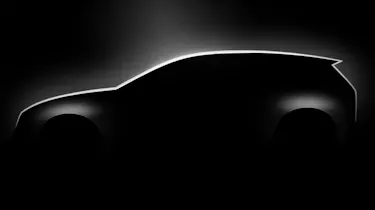
Volkswagen has paused development of the electric ID. Golf, saying that it is unable to generate the required investment to continue with the project after yet another challenging financial quarter. A brutal reckoning, perhaps, but it’s all more complicated than a short statement from the executive board can describe.
It’s clear that Volkswagen is in something of a pickle with its next Golf, one that feels especially destructive given the company’s current financial hardships. Problems are coming in from all sides, everything from a shrinking Chinese market to US tariffs and a hit on general profitability back at home is making life difficult for the German brand.
So is the next ID. Golf’s delay the start of a death spiral for the German giant, or is it something less terminal? Here’s what we know.
Why is it so difficult to electrify the Golf?
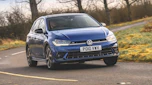
What was once a golden goose is now slowly becoming a poisoned chalice, as the brand faces reinventing the Golf as an electric car, it’s not a project VW can afford to screw up.
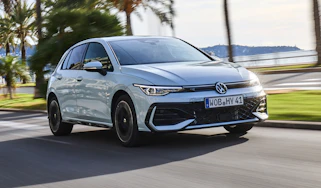
In many ways, the existing ID.3 Neo already is an ‘electric Golf’, but there’s so much cachet to the Golf name – and an expectation of general technical brilliance – that the marque has been cautious not to use it until there’s absolute confidence in the product it will be attached to.
Despite the delays, there will be a new ID. Golf, and it will be a direct successor of the ID.3. The issue is that VW is in a quandary of how to profitably build this next-generation model within the constraints of its current development plans.
What are the technical roadblocks in the development of the ID. Golf?
As previously confirmed, the ID. Golf will be based around the manufacturer’s groundbreaking new Scalable Systems Platform (SSP) architecture. Martin Sander, Volkswagen’s former board member for sales, marketing and aftersales, and in the same position at Audi told us: “Most likely, [Golf] has to be SSP.
“It’s going to be on the next platform, with cutting-edge technology. It can’t be on the current platform”, he explained. “[Golf is] going to live until well into the next decade”.
However, this plan to shift onto the VW Group’s SSP platform has complications, largely around cost. During its Q3 2026 earnings call, it was clear that while SSP is still an ongoing project, the development team is under strict guidance to bring the cost of every element of the new architecture to a point that’s comparable with cars from its Chinese operations.
Volkswagen’s CTO Thomas Ulbrich said: “This is a very important topic for us. It’s even more important to consider prices. Our target is to reach cost parity. There are a lot of measures which I just described, including internal benchmarking from our Chinese facilities.”
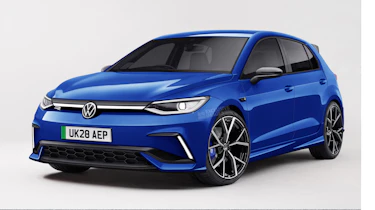
“When setting up our new SSP toolkit for 2030, we take benchmarks from our factory in China, which is wholly owned by Volkswagen, and compare them with how we stand in China, what the potential costs are in Europe, and do a sort of cost walk, to consider localisation and have stringent cost targets for each component. The teams in Europe use this as a target for cost, and we won’t give approval for that component until we’re on par with that target.”
The sheer breadth of the SSP platform only makes this harder. It will need to service everything from the ID. Golf to much larger and more expensive models, including those from Audi, Porsche and even Bentley.
Volkswagen will use SSP to its fullest, including on an all-electric replacement for the expensive Touareg SUV. While the Touareg is expected to feature technology such as in-wheel motors, active suspension and rear-wheel steering, none of this high-end hardware is relevant to the ID. Golf. The provision to include this high-level technology has left the manufacturer with a platform that is proving to be too expensive to profitably build a mainstream family hatch on.
Why not build it on the cheaper MEB or MEB+ platform? This is where VW’s desire to protect the Golf name comes into it. High-end Golf models such as GTIs and Rs demand the latest technology from the brand, and Volkswagen wants to ensure that the future Golf remains a high-tech offering beyond what is possible with its existing platforms.
This is the pressure point that VW is facing with its new Golf. The decision to run a new ID. Golf on its future-proofed SSP architecture is simply making the car too expensive to build in the short-term. While the delay is problematic, the time will be used to help bring the costs of SSP under control, creating a more profitable product at the end of it.
Is Volkswagen running out of time?
The lack of an ID. Golf in VW’s line-up is becoming a more visible problem, though. The ID. Polo and ID. Tiguan’s market introduction will have customers asking when an electric Golf of a similar vein will be available. Until then, the ID.3 Neo will have to fill that niche.
There’s even more complexity when you consider VW needs to develop a new generation of internal-combustion-powered Golf, too. This car is expected to continue on the MQB architecture of the current Golf but adopt the Mk9 moniker. It will eventually sit alongside an ID. Golf, much in the same way the current ICE-powered Polo and Tiguan do with their ID alter egos.
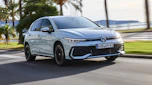
Asked whether the ID. Golf will be joined by a petrol or hybrid version to satisfy continued demand for internal-combustion engines, Sander said: “Combustion Golf will continue as long as there are customers who want a combustion Golf. At the moment, looking at the demand, I assume it’s going to be a long period of time.
“It’s very likely, almost certainly, Golf [with a] combustion engine, and ID. Golf will be sitting next to each other – like ID. Polo will be running next to conventional Polo – for many years.”
Sander clarified that, at least to begin with, the ID. Golf would be sold “alongside” the existing petrol and hybrid-powered Golf Mk8.5, before an all-new combustion-engined Mk9 model arrives later. “It’s a global car,” Sander added “Globally, I see a long runway for Golf with combustion engines”.
Golf naming strategy
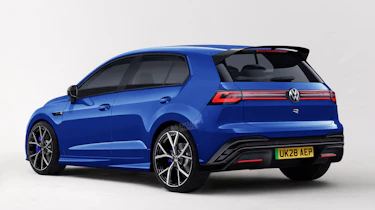
The company won’t give up on its electric ‘ID.’ branding. Sander said the company wanted to build on its electric car brand, rather than simply returning to household names for future models like Polo and Golf.
“ID. is a really strong brand,” Sander told us. “There is an ID. community; ID. drivers meet up once a year at Lake Como. This shows that ID. in itself is becoming a strong brand – we need to think very, very carefully about whether we want to ditch that.
“The future of individual mobility will be electric. So if we want to be market leaders in the future, we will have to have a strong name that reflects this ambition of us being number one,” he said.
But Sander hinted that as well as building on its ID. brand, the firm wouldn’t ignore the fact that electric car demand was softening across Europe – suggesting that it’ll continue to develop its range of petrol and hybrid cars towards the end of the decade and beyond.
“As long as we see customers demanding vehicles with a combustion engine – we are one of the largest car companies in the world, we will offer that,” he told us. “Sooner or later there will be an end date, but right now it is too soon to say.”
Get the latest and best car news and reviews, first! Follow Auto Express on Google today