New Fiat fastback SUV spotted for the first time: chunky Panda design goes large
The coupe-SUV was previewed back in 2024 but is finally due to be revealed this year, along with a more traditional mid-size SUV

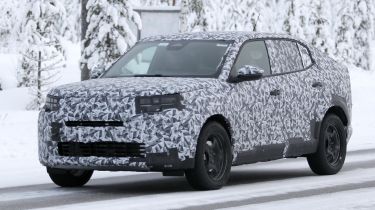
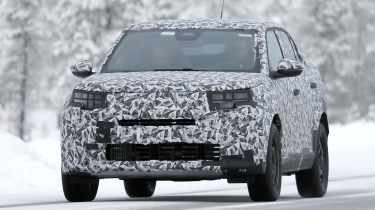
Fiat’s dream of a family of Panda-inspired models is starting to take shape. The rakish new, and as yet unnamed, fastback the company previewed nearly two years ago has finally been spotted testing in the wild. As promised, it combines a swooping coupe-inspired roofline with the chunky charm of the Grande Panda.
This fastback is one of two new mid-size SUVs Fiat is hoping to launch this year, which CEO Olivier François previously told Auto Express will be “affordable, spacious and desirable”. The brand will use these to mount an assault on best-selling family cars such as the Nissan Qashqai, Kia Sportage and Dacia Bigster.

Each will offer a fresh take on the charismatic design language that was introduced by the Fiat Grande Panda but they’re larger cars destined to sit in the class above. The Grande Panda is not only the reigning Auto Express Supermini of the Year, but it is also now available from less than £19,000 with a choice of hybrid or electric power through the Auto Express Buy A Car service.
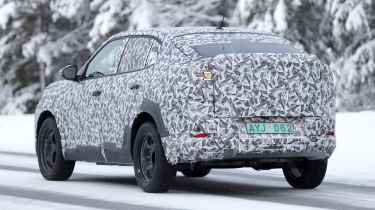
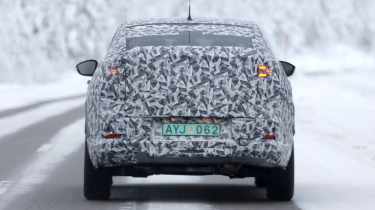
We expect that the new car’s upright but slightly rounded front end will feature an evolution of the ‘pixel’ lights we saw on the Grande Panda, as well as more pixel-like details in the grille and bumper. The rear has slim rectangular tail-lights like its boxier baby brother too, plus what appears to be a ducktail spoiler at the base of that rakish sloped roofline.
From the side, we can not only see the sleek side glass and appreciate the distinctive silhouette, but also realise how much longer the fastback’s wheelbase is than the Grande Panda’s. There's more length added by the extended rear overhang, which should help provide more luggage capacity.
Compared with the more traditional mid-size SUV (nicknamed GigaPanda) we know Fiat is also working on, the fastback is likely to have less black plastic cladding, instead using more body-coloured or contrast-coloured painted elements for a sleeker look. That should emphasise to customers that this model is more design-led and less focused on practicality.
We still expect to see playful uses of the Fiat logo and other graphics, which will help Fiat’s new twins stand out in the crowded family SUV class and inject a bit more fun at the same time.
We’re expecting the fastback to be revealed very early this year, leaving time for the SUV to go on sale before the end of 2026. In the meantime, our exclusive images preview what the pair might look like, drawing inspiration from the 2024 concept versions, with the designs toned down to a more production-ready level.
Speaking to Auto Express in 2024 about the way the two cars will look, François said: “They are not Pandas, but ‘Panda inspired’. They’re not going to be called Panda, but they will be inspired by its DNA and feeling: boxy and charming. It’s generally not easy to make boxy charming, but in smaller sizes the Panda of the 1980s captured this, and this is what we’re basing it on.”
The SUV will feature the usual off-road design cues that are so popular with buyers. These will include the use of contrast-coloured plastic wheelarch surrounds, roof rails and chunky, rugged front and rear bumpers. One striking element already seen on both the concept and production Grande Panda is the combination of round wheelarches with squared-off surrounds; this is something we expect to see applied to the production SUV too.
Interior and practicality
As you’d hope for with family SUVs, the cars’ interiors will focus on spaciousness and versatility, with rugged finishes designed to be practical and hard-wearing. Fiat will attempt, however, to set its offerings apart from the likes of the value-focused Dacia Duster (another key rival) by emphasising its heritage and having a greater sense of fun, not just usability.
Fiat will continue to reference its famous Lingotto factory in the interior’s design elements and detailing. As such, the oval-shaped elements that are found in the Grande Panda will probably be carried across, with a similarly varied use of different soft and hard-touch materials. Both cars will also probably feature the same technology package, including a 10-inch driver’s information display and a 10.25-inch touchscreen. Fans of separate climate controls will also be glad to see Fiat retaining fixed buttons.
As with the Grande Panda, Fiat’s colour and trim department will focus on using as many recycled materials as possible, including bamboo-fibre mixes and a combination of bright, high-contrast stitching. Small item storage has also been a focus, so there will be plenty of interior oddment space, and the Panda’s clever integrated charging cable, which is coiled away and accessible via the front bumper, should also be retained.
The key for both models, though, will be offering enough space for families – something that the new supermini-sized Grande Panda is a little short on. In order to ensure there’s enough space in the second row, Fiat will extend the wheelbase, opening up more rear legroom.
Hybrid and electric power options
The two new cars won’t only share their design language with the Grande Panda, they will also use the Stellantis Group’s Smart Car platform that underpins the smaller model, plus the Citroen C3, C3 Aircross and Vauxhall Frontera.
We’ve already seen the Smart Car architecture can accommodate a wide selection of pure-petrol, hybrid and electric powertrains, and it’s flexible enough to allow Fiat to lengthen the wheelbase and widen the track to produce these C-segment models.
All petrol-powered models will use a 1.2-litre three-cylinder engine, which hybrid versions will pair with a six-speed automatic gearbox that has an integrated e-motor - as we’ve seen in all the Smart Car-based models.
Meanwhile, the electric models will be offered with a choice of a 44kWh or 54kWh battery, as in the e-C3 Aircross and Frontera Electric. These should provide close to 180 miles and 250 miles of range, respectively.
A 100kW maximum charging speed will allow for a 10 to 80 per cent top-up in about half an hour, and driving the front wheels is likely to be a 111bhp front-mounted electric motor. However, Fiat may choose to fit a beefed-up e-motor to give these bigger cars a bit more oomph than the little Grande Panda.
Fiat’s slow rate of new product launches and updates to existing models over the last few years has been a worrying sign for such an iconic brand – one that’s so important not just to the Italian car industry, but also to the country’s manufacturing base in general. However, this is about to change, as Fiat exploits the Smart Car platform and access to synergies across Stellantis. The Grande Panda was a bold first step, but the SUVs have the potential to re-establish Fiat as a true volume player across most European countries.
Q&A with Olivier Francois
Fiat CEO and Stellantis CMO

Fiat boss is reaping benefits of Stellantis Group; we spoke with him to find out about the Panda family.
Q: So far, there have been no four-wheel-drive models on the Smart Car platform. Does that mean there is no new Panda 4x4 in the plan?
A: “People only seemed to notice we built a Panda 4x4 when we stopped building it. It’s only three to four per cent of sales, so it’s very small. It is an important part of the image of Panda, and people love it – but there’s a difference between people loving it and buying it.
“The [new] Panda is designed for a particular purpose: practicality, functionality and roominess, with a contained price point and relevant tech. This said, [a Panda 4x4] is something we’re looking into. Will we do it for sure? No, but we are trying to find a solution. The question still remains of ‘will we actually sell any?’, which is key.”
Q: Can you fit a bigger battery in the new Panda?
A: “Not really, no. But what we are working on is the performance of our battery. Not bigger, but better. Obviously there will be new generations of batteries, and these will come with longer ranges and faster charging.”
Q: What else can you do with the Smart Car platform, then? Could you build the next 500 on it?
A: “We can go larger and wider, but we cannot go significantly smaller. The Italians would be vocal if we built 500 on Smart Car, but 600? Who knows?”
Q: What is the future of the 500, then?
A: “For me, the 500 is electric; we have a perfect car with the EV powertrain. Like everyone else, there was an idea that the world would go electric faster. We couldn’t imagine that Covid would happen, there would be a shortage of parts and that European buyers would turn their back on sustainable solutions.
“Not all markets have the same mandates, our DNA has an element of social relevance, so we have to fit and react to wherever we go. Which is why we made this decision to make the new 500 with a hybrid engine. But this is the final petrol-powered 500.”
Don't miss out! See more of Auto Express in your Google Top Stories. Click here...