How green are electric cars? The truth about EV environmental impact and carbon footprints
New figures from Polestar cast light on the big questions around EV sustainability and environmental impact compared to petrol cars

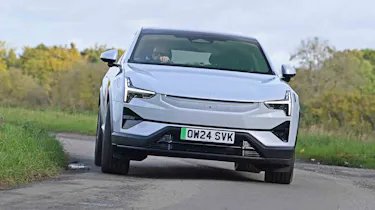
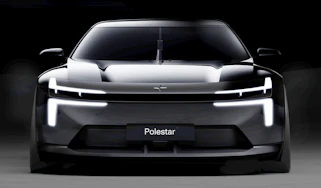
The true environmental impact of electric cars is hotly debated and riddled with misinformation. So electric car maker Polestar is opening up to reveal the individual carbon impact for its three models: the Polestar 2 saloon and Polestar 3 and Polestar 4 SUVs.
Publishing its 2024 sustainability report audited by Deloitte AB, Polestar is revealing the equivalent carbon emissions of sourcing, manufacturing and shipping every car it builds, as well as scrutinising the origin of some materials it uses.
The headline news is that, since it began auditing its sourcing and manufacturing process in 2020, Polestar has driven down the greenhouse gas emissions per vehicle sold by 24.7 per cent. How?
Polestar head of sustainability Fredrika Klarén says it all began by doing a thorough assessment of the initial Polestar 2’s production, which back then totalled the equivalent of 26.1 tonnes of CO2 in its ‘cradle-to-factory gate’ figure.
“We learned where the emissions were coming from, and the bulk of it obviously came from the car’s production and the steel, aluminium and the batteries,” she told Auto Express.
“So we’ve been working annually to secure aluminium from green smelters, renewable electricity into [manufacturing] the battery, anode and cathode production, and securing renewable electricity in our plants. All of this has led us to the point where we could deliver the Polestar 4 with our lowest carbon footprint to date.”
The Polestar 4’s cradle-to-gate figure is 21.4 tonnes of CO2-equivalent (tCO2e). And refining the Polestar 2’s manufacturing process has reduced its carbon impact by exactly three tonnes compared with the original’s, cutting it to 23.1 tCO2e.
How do an electric car’s carbon emissions compare with a petrol's?
Polestar doesn’t produce any combustion cars, but back in 2020, working with sister company Volvo, it calculated that manufacturing a petrol XC40 emitted 14 tonnes of CO2-equivalent. That figure – some 7.4 tonnes lower than the 1.6m-longer Polestar 2’s – includes recycling the car at the end of its life, something also factored into the EV figures.
However, combustion cars keep adding significant carbon to the atmosphere during their use phase: Volvo/Polestar calculated that the XC40 would emit a further 44 tonnes of carbon equivalent from sourcing and burning petrol, making a total life cycle impact of 58 tCO2e.
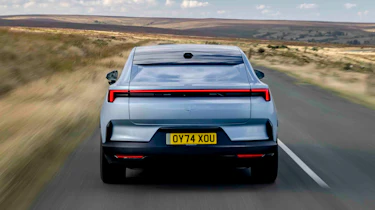
Naturally the means of electricity generation massively impacts the carbon footprint of an electric car. Back in 2020 using a calculation for the typical electricity mix globally, Polestar reckoned a long-range, single motor 2’s equivalent driving figure would be about 14 tCO2e, and 46 tCO2e for the entire life cycle of the car. This would drop to just 26 tCO2e in total if electricity generated by wind turbines was strictly used to charge the 2.
“The production-related emissions are something that we can get down to net zero, while the use phase emissions of a fossil fuel car can never become net zero,” said Fredrika Klarén.
The key message for EV owners is to charge their cars using as much sustainable electricity as possible, to minimise their carbon footprint.
What is the environmental impact of making a Polestar?
Polestar is also taking responsibility to trace the origin of raw materials, in case the mining or production includes human rights abuses such as child labour or unsafe practices. It has joined the Initiative for Responsible Mining Assurance, which independently assesses social and environmental performance at mine sites.
Polestar has begun tracing the origin of materials including nickel, cobalt, lithium, tantalum and tungsten, with the percentage of audited suppliers climbing every year to reach 39 per cent for the Polestar 2 and 33 per cent for the Polestar 3.

The newest model, the Polestar 4, has added manganese, Rare Earth Elements, aluminium (can and foil) and copper (foil) to its investigation list, with the percentage of audited suppliers hitting 51 per cent.
Polestar is owned by Chinese car company Geely and manufactures cars in China, a country with a vast array of fossil fuel power generation as well as the world’s biggest renewables parc. How does Polestar know it uses green electricity in its Chengdu plant?
“It's so important [to have] guarantees of origin and to get certificates; we have built up systems so we know we’re getting what we're paying for,” said the head of sustainability. “Regardless of where we produce – and we’re now diversifying our manufacturing in the US, in Korea and we’re coming to Europe with Polestar 7 – we now have our sustainability standard and it’s my challenge to [ensure] we can meet that standard [everywhere].”
Should Polestar cap battery sizes like it does vehicle top speeds?
Polestar’s biggest emitter is unsurprisingly its largest SUV, the Polestar 3, which harbours a huge 111kWh battery in its 4,900mm-long body. Naturally the battery size and SUV mass contribute to a bigger, 24.9 tCO2e figure for the long-range, dual-motor model.
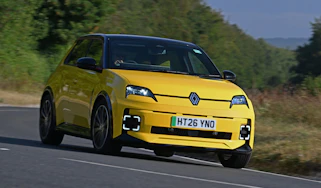
Lacking faith in the public charging network, EV buyers typically gravitate to variants with the biggest battery: for example Renault has just dropped the Scenic E-Tech’s smaller 60kWh (usable) battery, leaving the 87kWh pack now the sole option in the UK. And Mazda, which limited the MX-30’s battery to 35.5kWh to reduce its environmental impact, lost that argument with British buyers and removed the underperforming EV from the market.

Nonetheless shouldn’t Polestar lead by example and reduce the size of its batteries, and therefore their drain on the earth’s resources?
“We're very happy about our 600km-plus range now and so are our customers,” responds Fredrika Klarén. “I would like to separate the question of sustainability from size, because that is where we’ve gone wrong in the past, thinking a sustainable product needs to be smaller, more boring, a bit itchy, probably beige!
“There needs to be sustainable products of all shapes and sizes. We need to have electric SUVs being able to replace fossil-fuel ones, because the [voice] of consumers that want an SUV is a relevant cry. With Polestar’s 25 per cent reduction [in emissions per vehicle sold]… we have shown you need to focus on how it was produced rather than if it's just smaller.”
Our dealer network has 1,000s of great value new cars in stock and available now right across the UK. Find your new car…