The ugliest cars ever made
A sight to behold for all the wrong reasons: these are the ugliest cars ever made.

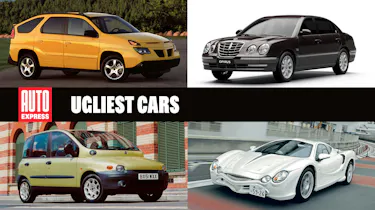
Is beauty really in the eye of the beholder, or are some cars just irredeemably ugly? We’d argue the latter. Whether the designer was trying hard to stand out or clung on to a styling concept that just didn’t work away from a sheet of paper, the result is usually the same - looks only a manufacturer could love.
But are any of these cars truly ‘ugly’? A quick whip around the Auto Express office to canvas staff member’s opinions on design stinkers tended to favour older models more than new, including some ‘classics’ of this unsightly genre. Maybe ugly cars take a while to bed-in to the public consciousness and be truly appreciated or maybe some design themes just don’t age as well as others.
Take a look through our ugly car choices and decide for yourself how they compare to the modern slew of angular, in-your-face motors. Perhaps, in comparison, the newer stuff isn’t so bad…
Chrysler PT Cruiser
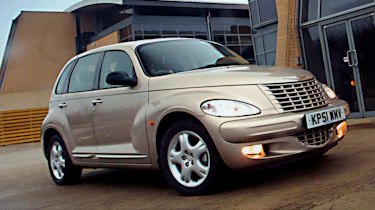
In contrast to a lot of the cars here, the Chrysler PT Cruiser wasn’t roundly mocked upon release. In fact, reception to the Bryan Nesbitt-designed car (his name will come up again later) was very favourable, with several - including US outlet Motor Trend - naming it their car of the year. Chrysler sold plenty of them in the US, and a reasonable number in the UK, considering how uncompetitive a package it was over here.
A big problem for the Cruiser, however, was its failure to snare the younger, cooler buyers Chrysler was after. We can see why - the PT Cruiser took elements of the striking Chrysler Pronto Cruizer concept and grafted them onto a lofty, blob-like bodyshell. The tall grille and bulbous wheel arches recall customs of the fifties, but only very vaguely. Worse still is the convertible version, which looks ungainly roof up or down. And the less said about the driving experience, the better.
Chevrolet HHR
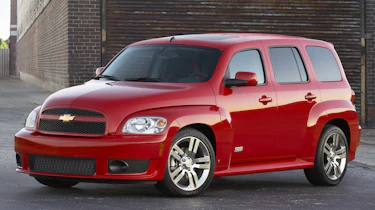
Not content with inflicting the PT Cruiser upon the world, Bryan Nesbitt switched to General Motors and designed the Chevrolet HHR. It wasn’t actually that bad a car, and it isn’t quite as objectionable as the PT Cruiser, but it is further proof that retro design doesn’t always work.
The HHR attempted to encapsulate the same motoring era as the PT Cruiser, in its case taking inspiration from the Chevrolet Suburban of the 1940s. Commercially, it actually did pretty well.
Honda Civic (10th generation)
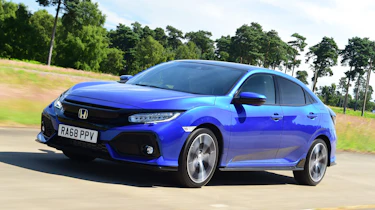
Hot Type R models aside, the Honda Civic hasn’t ever been an especially exciting car. Honda’s attempts to do ever weirder things with the styling from the eighth generation model onwards didn’t really help - by the 10th generation version of the car, we merely ended up with something that was dull and ugly.
The crease-heavy styling made some sort of sense when festooned with wings for the Type R version, at least. In any case, we were happy when the more conventional-looking 11th-gen Civic arrived.
Ssangyong Rodius
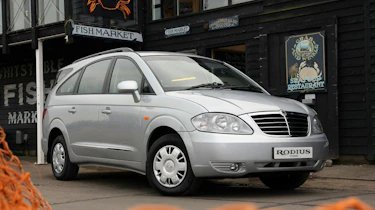
Ssangyong, now KGM, has launched its fair share of questionably-styled products over the years, but one rises above all others to take the dubious honour of being not just the Korean firm’s ugliest-ever car, but perhaps the most hideous motor in history. We’re talking, of course, about the first-generation Rodius.
Interestingly, its designer Ken Greenley used to be head of the Royal College of Art's Transportation Design School, an institution which counts Ian Callum and other car design greats amongst its former pupils. The story goes that Greenley took inspiration from luxury yachts when penning the Rodius, but unfortunately, that concept didn’t work so well for a large, reasonably-priced and cheaply-made MPV.
The Rodius is a mess of lines and features a front grille that looks like a bad knock-off of the one belonging to the (also very ugly) third-generation Lancia Delta. It’s even worse at the back end, where a fat, sloping C-pillar is topped by an incongruously boxy glasshouse. It’s a ropey car on the whole - Auto Express awarded it a single star in its review.
Hispano-Suiza Carmen
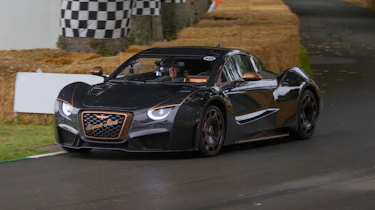
Founded in 1904, Hispano-Suiza spent a good chunk of its history not making cars at all, focusing instead on aerospace. From the early 2000s onwards, the Spanish firm kept teasing a return to the automotive world with some concepts, before finally taking the plunge with the Carmen, a £1 million electric hypercar.
It took inspiration from the one-off Hispano-Suiza H6B Dubonnet Xenia of the 1930s, but the modern interpretation was…awkward. The chunky chrome grille surround isn’t a great look, and as striking as its teardrop design and covered wheels might be, these features just don’t work on such a modern car.
At least, with over 1,000bhp and a 0-62mph time of 2.7 seconds, bystanders shouldn’t have to look at it for too long. Also, only 19 were planned, and it’s not clear if all of those got built, so you’ve precious little chance of ever seeing one.
Pontiac Aztek
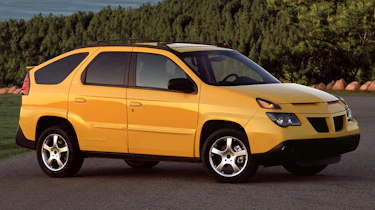
Many modern SUVs claim to be ‘lifestyle’ vehicles ideal for those who enjoy outdoor pursuits, but all are outdone by the Aztek in this regard. Here is a car with a removable drinks cooler and a Range Rover-like split tailgate complete with boot-mounted audio system controls for anyone sitting on it when it’s folded out. There’s even an optional camping kit including an attachable tent.
Unfortunately, all anyone could focus on with the Aztek was the way it looked. It was deliberately styled to be bold and aggressive, but the gawky results were almost universally derided. The Aztek is such an enduring laughing stock that it was ‘cast’ as the daily driver of one Walter White in the acclaimed TV show Breaking Bad, providing a metaphor for a man’s life that hadn’t quite worked out as hoped.
The appearance has helped the Aztek become something of a cult car, but without changing anyone’s opinion of its unfortunate aesthetics.
Edsel Corsair
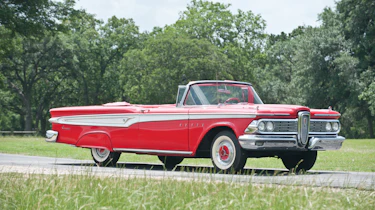
The front grille of the Edsel Corsair has been unfavourably compared to a toilet seat, but the borderline offensive front-end styling wasn’t the car’s only issue. It was riddled with faults, including some related to its unusual ‘Teletouch’ automatic gearbox drive selector buttons which were placed in the middle of the steering wheel.
The second-generation version ditched Teletouch and had a slightly more refined but similar-shaped front grille design. The writing was on the wall, though - this version of the Corsair lasted just a single model year, and the Edsel brand was wound up shortly after, achieving little other than costing parent company Ford a lot of money.
Subaru Tribeca
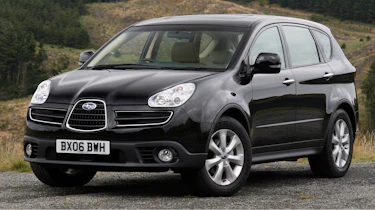
In the latter half of the noughties, Subaru referenced the aviation history of brand owner Fuji Heavy Industries with a three-part grille. The theme appeared on a couple of Kei cars and the ‘Hawkeye’ Subaru Impreza, but it looked its worst on the Tribeca SUV. The word ‘gopping’ seems too kind.
Plans to build a far-better-looking version branded as the Saab 9-6X were scrapped when then-Saab owner General Motors sold its stake in Fuji Heavy Industries, but the styling wrongs of the Tribeca were eventually righted - In 2007 a heavily facelifted version was revealed with a far more conventional grille arrangement. Subaru wisely dropped the motif from other cars too.
Ford Scorpio MkII
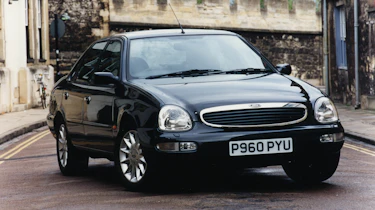
Underneath, the second-generation Scorpio doesn’t deviate all that much from its predecessor. You wouldn’t know it from the outside. Ford sought to differentiate the new Scorpio from the Sierra aesthetically, and for better or worse, the Blue Oval certainly succeeded.
The motoring press was quick to give the Scorpio MkII’s styling a good kicking, particularly its face, which looked like it had already had several and was frequently likened to that of a frog. Its plump, rounded rear didn’t win itself many fans either. Ford’s mid-life refresh improved the situation slightly, but the Scorpio remained a shoddy attempt at bringing a slice of retro Americana to Europe.
Those unfortunate looks do, however, mean this is a rear-wheel drive fast Ford you can buy - potentially with a Cosworth-tuned V6 - for very little in the 2020s. Every cloud.
Chrysler Crossfire
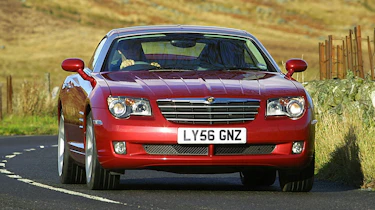
Infamously likened to a dog doing its business by a certain presenter on a certain motoring programme, the Crossfire was, in theory, a good idea. A product of the ill-fated Daimler-Chrysler tie-up, it combined German engineering with American styling. The only problem was that this ‘German engineering’ involved building the Crossfire around the then-aging R170 Mercedes SLK platform, and the ‘American styling’ was fussy and in places awkward in both coupe and convertible forms.
It failed to make much of a mark either side of the pond, ending up as a physical manifestation of Daimler-Chrysler’s failure as a business. Still, they’re pretty cheap these days, so if you do like its chrome-decorated, faux retro looks (we won’t judge), the Crossfire does now make some sort of vague sense.
Fiat Multipla
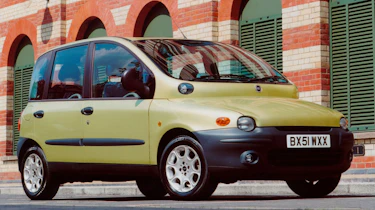
We shouldn’t be too hard on the original Fiat Multipla. For starters, it was innovative, being significantly shorter than its rivals yet able to carry six thanks to three-abreast seating in the front. And it’s commendable that Fiat managed to come up with something that genuinely stood out amidst the generic MPV masses back then - it’s just that the Multipla went about it the wrong way. From the globular chunk of metal at the base of the windscreen to the huge windows which gave excellent visibility but an awkwardly tall glasshouse, there’s a lot going on.
As Auto Express once noted when the mid-life facelift came along: “Success will rarely come to a family car that not only scares children, but makes their parents wince too”. Fiat was forced to tone things down to boost sales, which it did partly via a new bonnet which actually met the bottom of the windscreen ‘properly’. Yes, the result was a less distinctive-looking car, but also one less likely to make your stomach turn.
Cadillac SRX Mk1
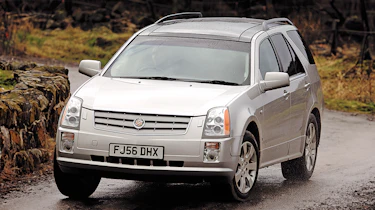
The first SRX was a curious blend of SUV and estate-car ideals, but unfortunately, the result of this wedding looks like something fit for a funeral. The hearse-like creation was, believe it or not, sold officially in the UK, although there weren’t many takers.
Along with the questionable looks, its interior quality and design were some way off the European luxury cars UK buyers were used to. Factor in so-so handling, and it’s no wonder that only a handful were sold on our shores.
Dodge Nitro
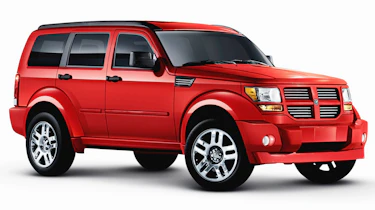
Dodge made a bold move by bringing the Nitro to the UK, but this didn’t really pay off - the SUV wasn’t exactly a sales hit. The Nitro’s chrome-festooned, slab-like front end and cartoonishly flared front wheel arches look ridiculous enough in its home country, let alone trundling through the centre of the average home county town.
The styling is far from the Nitro’s only issue. A close relative of the Jeep Liberty, the Nitro doesn’t ride very well, has a poorly-made and cheap-feeling interior, and was offered with a whopping 3.7-litre V6 which somehow splutters out just 203bhp. The four-cylinder petrol isn’t brilliant, either. Most buyers here sensibly went for the slightly better 2.8-litre diesel engine, although buying any Nitro is a decision that’s difficult to understand whatever’s under the bonnet.
MINI Coupe
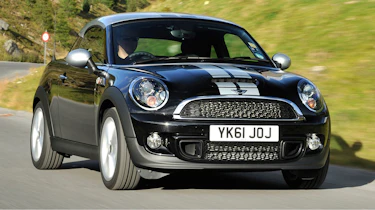
The MINI range has been characterised by aggressive expansion, which arguably went a little too far with the Coupe. Up to the bottom of the glasshouse, it’s all as-per the second-generation MINI Hatchback, but from there, it’s all change, and not all for the best.
The MINI Coupe got shorter windows, a much more steeply-raked windscreen and - most unusually of all - a roof which resembles a backwards-worn baseball cap. This gives a bottom-heavy design which - combined with a downgrade in practicality thanks to its two-seat arrangement - failed to win over many buyers.
In 2015, just four years after its market debut, the BMW-owned brand dropped the MINI Coupe and the related (and baseball cap-less) Roadster amidst slow sales and elected to replace neither for the following generation.
Nissan Juke Mk1
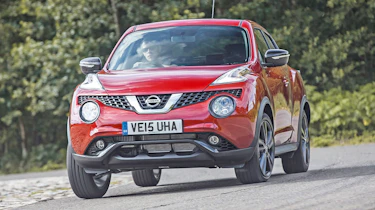
Although toned down from the certifiably bonkers Qanaza concept which preceded it, the Nissan Juke is still a divisive-looking thing, particularly with that odd, split-headlight design. The top clusters, by the way, are daytime running lights and indicators, with the main headlights in the round lamps below.
Inevitably, it got branded as ‘ugly’, but unlike a lot of cars here, that didn’t cause it to be a flop. Quite the opposite. The Juke was revolutionary as a very early example of a small ‘crossover’ SUV, effectively spawning a whole new genre of car. The current, second-generation version arrived in 2019 with a less controversial but still unusual look.
Kia Opirus
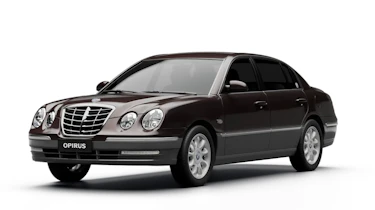
Looking a bit like how someone would draw a W211 Mercedes E-Class based solely on a description over a bad phone line, the Kia Opirus was the Korean brands attempt at wooing buyers away from cars like, well, the W211 Mercedes E-Class. It didn’t work.
Luxury car customers weren’t ready for a premium Kia just yet, and the Opirus’ styling with round headlamps, a gaudy grille and an oddly tall roofline really didn’t help matters. It serves as an effective demonstration of how far the brand has come in the years since, though.
Hyundai Coupe (Mk1 facelift)
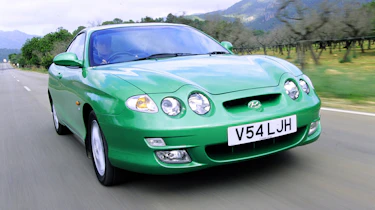
While some facelifts do a great job of fixing design issues, some do the opposite. In 1999, Hyundai refreshed its Coupe (called the Tiburon in some markets) and ruined it. Granted, the original one wasn’t a remarkable-looking two-door, but it was reasonably attractive in its own way. But the updated model? Oh dear.
Gone was the original car’s understated fascia, replaced with a drastically different front end with an ugly quad-headlamp arrangement made worse by a pair of bonnet humps leading up from the inner pair. It was discontinued in 2001, making way for an all-new and far easier-on-the-eye Coupe.
Mitsuoka Orochi
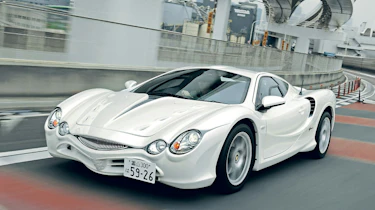
No one buys a Mitsuoka to blend in, but even so, the Orochi goes overboard in its quest to look distinctive. Abandoning the niche Japanese firm’s usual schtick of making coachbuilt oddities inspired by old British sports cars, the Orochi features a bespoke platform (albeit powered by a V6 borrowed from Toyota) and looks unlike no other car on the planet.
The Orochi or ‘huge serpent’ features an overabundance of lines, the face of a confused fish and a general sense of weirdness. With 231bhp feeding a five-speed automatic normally found in an SUV, the Orochi takes seven seconds to go from 0-60mph. This does, unfortunately, mean that you’re unlikely to drive away fast enough to prevent people from spotting you behind the wheel.
BMW 5-Series Gran Turismo
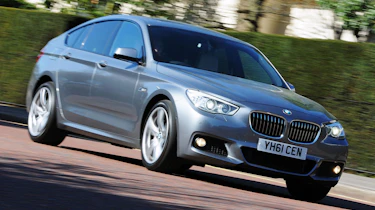
BMW was on a bit of niche model drive in the 2010s, with the Gran Turismo models in particular standing out as answers to questions nobody asked. The 3 Series GT was an odd-looking thing, but the 5-Series GT is downright ugly, with its hatchback bootlid giving it unenviable proportions.
It was a good car, of course, because the F10 5-Series it was based on was excellent. But there was little reason to get the GT over either the 5 Series saloon or estate of the day. Sales were slow, and it disappeared from showrooms without a successor. Good riddance.
Reva G-Wiz
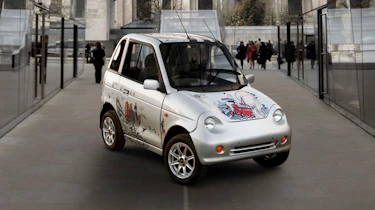
Yes, the Reva G-Wiz technically isn’t a car, but it has four wheels and a steering wheel - most people aren’t all that clued up on quadricycle regulations and would still describe it as a ‘car’. And although it might not seem hugely fair to bring in vehicles like this when the tiny proportions don’t exactly lend themselves towards beautiful design, we should point out how much better more recent quadricycles like the Citroen Ami look than this hideous little thing.
Ugly cars we grew to love
They say beauty is in the eye of the beholder, but the beholder also has every right to change their mind if they feel like it. Over time, a few cars that were derided as less-than-pretty have grown on the public and actually become appreciated for their looks.
BMW 5-Series (E60)
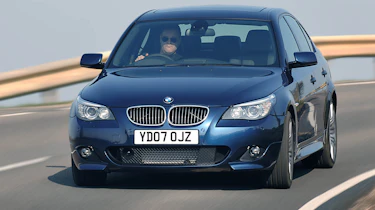
We could probably make a whole list of Chris Bangle-era BMWs. The designer’s ‘flame surfacing’ techniques were controversial at the time, particularly on the E60 5-Series, which looked fussy next to the understated brilliance of the E39 that came before it. It’s aged like a fine wine, though, looking especially good in M5 form. And compared to BMW’s more recent, bombastic styling efforts, the E60 looks nicely subtle.
Jaguar S-Type
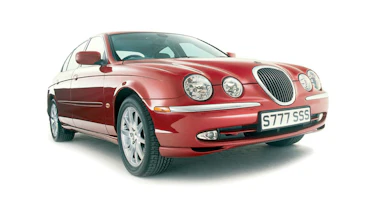
Another car that should prove not all retro revivals work, the main issue with the Jaguar S-Type is its grille. Taking a very similar shape to the original 60s S-Type, it just didn’t seem to work on a modern saloon car. And yet, fast forward to today, and the S-Type looks attractive in a way it didn’t at the time, particularly in its R sports saloon form.
Nissan Cube
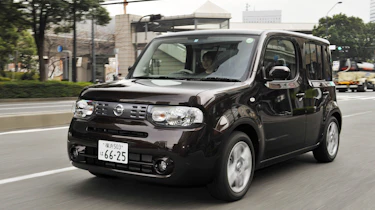
The Nissan Cube is a staple of ‘ugliest car’ lists, but we don’t think that’s fair these days. Yes, it stood out like a sore thumb when originally launched (not that many were sold here), but in these times of overly aggressive styling with excessive creases and enormous grilles, there’s something brilliant about the Cube’s simplicity. Staying true to its name, it really is just a bunch of straight lines, but presented in a delightfully quirky way that’s the antithesis of so much modern car design.
Now read our list of the worst cars ever made...