Best executive cars to buy 2026
The best executive cars add a real touch of class to every journey, and here they are
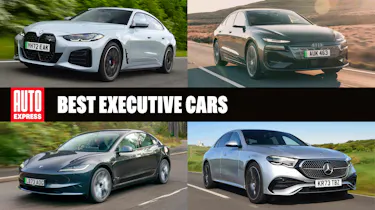
Executive car buyers used to have it easy. There were a few premium car brands to choose from, and they each had a range of different-sized saloons.
In 2026, there’s a huge range of executive car options from a variety of brands and buyers need to consider different bodystyles as well as whether to choose, petrol, electric, hybrid or even diesel. The best executive cars still combine comfort with impressive performance and cutting-edge technology. The trick is finding the best one for you.
For years, executive cars were the go-to for company car drivers, typically powered by petrol or diesel. But ever-rising Benefit-in-Kind (BiK) company car tax rates have made many switch to plug-in hybrid or fully electric executive models.
It’s not just company car drivers who want an executive car, though. Many private car buyers see these sleek premium-badged saloons, hatchbacks and estates as more stylish alternatives to the seemingly endless ranks of SUVs on the road. Thanks to the generous boot capacity, family-friendly cabin space and effortless motorway comfort a top executive car can fulfil a variety of roles.
With so much choice on offer, finding the right executive car model can feel overwhelming. Fortunately, our expert road testers have driven them all, going beyond the brochures to uncover what really makes them tick over hundreds of miles on UK roads. We’ve selected the very best executive cars below to help you choose your next one.
Compare the 10 best executive cars
The Audi A6 e-tron is the best executive car on sale, irrespective of what it’s powered by.
The slightly more expensive BMW i5 is next up, with a sportier drive than the Audi and better rear seat space. The Mercedes-Benz CLA is a more compact option. Available in both hybrid and fully electric forms it has a long range in EV form.
| Rank | Model | Price from | Overall rating | Max. WLTP combined efficiency | Boot space |
| 1 | Audi A6 e-tron | £63,400 | 4.5 | 4.4m/kWh | 326 litres |
| 2 | BMW i5 | £67,800 | 4.0 | 4.2m/kWh | 520 litres |
| 3 | Mercedes CLA | £38,700 | 4.5 | 5.0m/kWh | 405 litres |
| 4 | BMW 3 Series | £41,900 | 4.5 | 217.3mpg | 480 litres |
| 5 | Tesla Model 3 | £38,000 | 4.5 | 5.0m/kWh | 594 litres |
| 6 | VW ID.7 | £51,400 | 4.0 | 4.7m/kWh | 532 litres |
| 7 | Mercedes C-Class | £46,200 | 4.0 | 565mpg | 455 litres |
| 8 | BMW i4 | £71,500 | 4.5 | 4.3m/kWh | 470 litres |
| 9 | Mercedes E-Class | £57,200 | 4.0 | 235.4mpg | 540 litres |
| 10 | Porsche Taycan | £88,400 | 4.0 | 3.5m/kWh | 407 litres |
Keep reading to see our road testers’ top 10 best executive cars. Alternatively, you can click the links in the table above to jump to a particular model..
1. Audi A6 e-tron
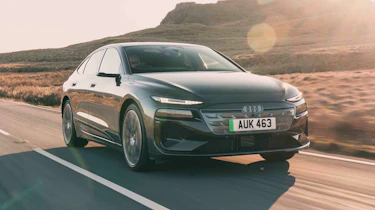
- Prices from £63,400
- Best electric executive car
Pros |
Cons |
|
|
Winner of our Large Company Car of the Year award for 2025, the Audi A6 e-tron has taken its time getting to us, but it feels well worth the wait.
The uber-sleek saloon didn’t settle for half-measures and hand-me-down platform technology used by the brand’s earlier EVs, opting instead for all new hardware (co-developed with Porsche) and the most cutting-edge technology.
There’s no shortage of numbers to impress the spreadsheet jockeys. For those that cover great distances, the mid-range Performance model can cover up to 464 miles from a 100kWh battery. Meanwhile a 270kW maximum charging speed means a 10 to 80 per cent top-up takes just 21 minutes; enough for a quick bite and a coffee, before you head out on the road again.
The most surprising thing about the A6 e-tron is the way it drives. Despite its size, it feels lighter on its feet than electric rivals, and refinement is excellent. It simply gets on with the job, without the artificial gimmicks some competitors insist on. However, if you’re after a bit of driver engagement, look elsewhere. This car majors on calm composure, not character.
Inside, the A6 does a nice line in modern tech. The screens are sharp in their resolution and bright, while the core controls are mostly intuitive. The layout feels a touch over complicated in places and the menus could use a clearer hierarchy.
Rear-seat space could be better and the boot’s not the biggest, but the Avant estate version sorts that second problem out nicely. The result is a car that’s clever, composed and highly competitive in the executive EV class.
“Audi took its time getting an all-electric executive car together, but the wait seems to have been worth it. This sleek, comfortable, refined, and tech-filled model hits all the right notes – tight rear seats notwithstanding.” – Jordan Katsianis, senior staff writer.
Alternatives to the Audi A6 e-tron include the BMW i5, which feels sharper to drive, and the Mercedes EQE, which prioritises comfort more. Both offer similar range and tech, but neither match the A6 e-tron’s understated appeal
2. BMW i5
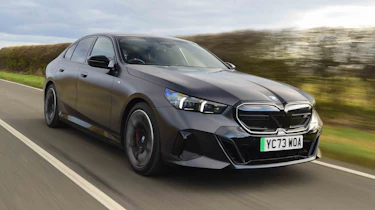
- Prices from £67,800
Pros |
Cons |
|
|
At a glance little gives away the BMW i5 as an EV - it’s effectively identical to its combustion 5 Series counterpart. And that’s really the point, giving 5 Series buyers a fully electric option if they desire it or if their company car tax status requires it. It’s a 5 Series that happens to be electric, rather than an electric-only curiosity like the original BMW i3.
Being an electric 5 Series, it also has all that car’s highlights and vices, from a typically composed chassis (albeit one that no longer really involves the driver as 5 Series used to) to excellent refinement, enhanced in this case by the electric drive - all BMW EVs are among the quietest and smoothest cars in their respective classes.
Two versions are available, a rear-drive eDrive 40 and a dual-motor, all-wheel drive M60, both with a 81.2kWh battery pack. They’re not short on performance (the M60 has 593bhp, once M5 territory) and on paper the range is good too, if not quite up there with the latest iX3; eDrive40 models can do up to 357 miles on a charge, and 316 miles for the M60.
Real-world efficiency isn’t quite as hot as the figures suggest - at around 3 miles per kWh, we’d bank on more like 300 miles from the eDrive 40 and 250 from the M60 - but 205kWh peak charging replenishes the battery quickly enough. To own, we think the i5 makes most sense as a company car, avoiding both the fairly hefty purchase price (£67,800 as an absolute minimum) and depreciation that halves its value after three years.
“We’d like a little improvement to overall efficiency, and it could be a touch more fun to drive, but if you’re after a refined long-distance EV, the BMW i5 is one of the more complete options.” – Richard Ingram, deputy editor.
The BMW i5 competes in an increasingly busy sector. The first car in this class and one of the best was the Tesla Model S, but that first went left-hand drive only and its factory is now going to churn out robots or flamethrowers or something else designed solely to boost the company’s stock price, so instead your i5 alternatives amount to the Mercedes EQE saloon, the Audi A6 Sportback and Avant e-tron, and the luxurious Genesis Electrified G80
3. Mercedes-Benz CLA
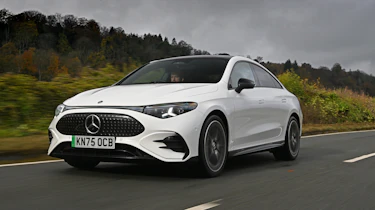
- Prices from £38,700
Pros |
Cons |
|
|
It’s more compact on most on this list, slotting in below the C-Class in Mercedes’ range, but the latest Mercedes-Benz CLA is nevertheless one of the best executive cars on sale. It’s offered in both hybrid and electric form, unlike its predecessor, and it’s the latter that stands out the most on account of its excellent efficiency and resulting long range.
On an 85kWh battery pack the electric CLA is claimed to cover up to 483 miles, putting it among the longest-range cars on sale. Cars that match or beat it have larger batteries, and those with similar power on board fall short of that range figure. And even if it can’t quite reach that without a gentle right foot, 400-plus miles of real-world range is still plenty. The 800-volt architecture allows for a 320kW maximum charging speed too, so top-ups take very little time compared to a lot of EVs.
This might all be for nought if the rest of the package wasn’t up to scratch, but the CLA’s new interior looks and feels good (albeit a little touchscreen-dependent) and while it’s no back-road thriller, the CLA’s ride and handling is composed, the brakes are excellent, and it’s very refined too.
And all that applies just as much to the hybrid models, so don’t write them off. They aren’t as peppy as the EV (with 134-187bhp rather than 268-349bhp) but they’re nearly as smooth and all offer 50mpg-plus economy.
“The CLA is not particularly fun or engaging to drive, but that’s not really the point with a hyper-efficient EV or hybrid – a more aggressive and powerful AMG version will answer that call when it arrives later on.” – Jordan Katsianis, senior staff writer.
Probably the most pressing competition for the electric version of the CLA, due to it being a global best-seller in this segment if nothing else, is the Tesla Model 3. Its starting price just undercuts the CLA and the Long Range version is cheaper than the highest-range CLA too, though it can’t match the Merc for range and isn’t as good to drive either. Elsewhere, the Polestar 2 is still worth a look, despite it getting on a bit now
4. BMW 3 Series
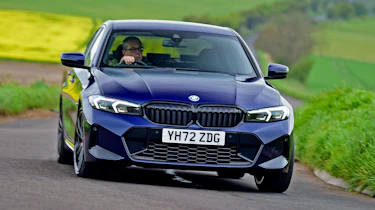
- Prices from £41,900
- Best for keen drivers
Pros |
Cons |
|
|
The BMW 3 Series offers pretty much the same brilliant attributes as its bigger brother, the 5 Series, for a more accessible price. The driving dynamics are better, there’s still an excellent, premium-feeling interior with plenty of technology, and the Touring estate model offers enough practicality for most families.
When designing the latest 3 Series, BMW wanted to match the comfort of the Mercedes C-Class without losing any of the agility we’ve come to expect from its cars. A tall order, but somehow the engineers accomplished it.
On motorways the BMW 3 Series is a very talented cruiser, with decent fuel economy, even on the entry-level model. The 330e plug-in hybrid offers an electric range of up to 62 miles and can deliver up to 353.1mpg, officially.
The interior features the same updated iDrive system as the 5 Series and many of the same premium materials. The only annoyance is that some of the controls are now within the touchscreen, which can be distracting on the go.
“The 3 Series has always been great to drive, offering engaging handling and sure-footed road holding.” – Shane Wilkinson, senior content editor.
If the BMW 3 Series isn’t quite what you’re after, then it may be worth considering the Audi A5 or the Mercedes C-Class as alternatives. The C-Class is a really high quality customer and the new A5 has excellent technology, though neither drives as well as the BMW
5. Tesla Model 3
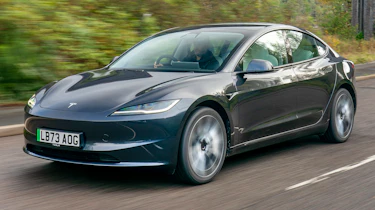
- Priced from £38,000
- Best for efficiency
Pros |
Cons |
|
|
If you don’t care what badge is on the nose of your car and can stick it out through a possibly frustrating learning curve, the Tesla Model 3 still feels like it’s a step ahead of most rivals in the compact executive-saloon class – particularly if you’re focusing only on EVs.
Whether you go for the rear-drive version or one with twin motors for all-wheel drive, the Model 3 delivers serious pace, with 0-62mph times dipping as low as 2.9 seconds in the Performance trim. Handling is tight and agile, although the steering feedback is numb and can be hyperactive at times, while the brake pedal doesn’t give much back to the driver. Refinement has taken a big step up, with road noise now noticeably quieter at speed than the previous model.
Then there’s the range of up to 390 miles in the Long Range model, or 436 in the rear-wheel drive long-distance version - all genuinely usable thanks to Tesla’s slick energy management and pre-conditioning tech.
The Model 3’s interior (and some of the exterior) was transformed during its mid-life facelift in 2024, with materials and build quality improving massively. It still feels very spacious, but the touchscreen-based controls won’t suit everyone. No indicator stalks (there are buttons on the steering wheel) also feels like a gimmick too far.
“The Tesla Model 3 is one of the best electric cars around. It’s practical, high-tech, and boasts great performance and range for a competitive price.” – Ellis Hyde, news reporter.
If the Tesla Model 3 isn’t for you, the Hyundai Ioniq 6 offers a smoother, more refined drive, while the Polestar 2 stands out with a more premium interior. However, the Tesla beats both with better efficiency, longer range, and unrivalled charging convenience
6. VW ID.7
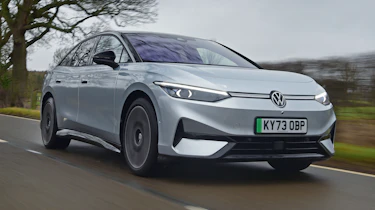
- Prices from £51,400
Pros |
Cons |
|
|
The Volkswagen ID.7 is more than just a big hatchback with a big battery – this is VW finally proving it knows how to build a serious EV.
Despite tipping the scales at more than two tonnes, the ID.7 never feels unwieldy. The steering is light but predictable, and although there’s some lean in corners, the car is composed on the motorway.
What really makes the ID.7 stand out is its efficiency. The Pro S has a huge 86kWh usable battery and a claimed range of up to 437 miles, yet on a long mixed run we managed 3.3mi/kWh. Charging is quick, too, with speeds of up to 200kW. That makes this one of the few EVs that can genuinely rival a diesel when it comes to covering big distances with minimal faff.
It’s pricey to buy, starting at more than £51,000, but with the Benefit-in-Kind tax set at just three per cent, it’s an appealing choice for company-car drivers wanting something sleek and understated.
The cabin is minimalist by VW’s standards, with a huge 15-inch screen and loads of rear space, though the slider controls for volume and temperature remain a weak point. Still, the ID.7 feels calm, mature and quietly capable — a proper flagship that ditches the gimmicks and focuses on what matters.
“In terms of its cabin, technology and general driving experience, the ID.7 easily justifies its price tag.” – Richard Ingram, deputy editor.
The ID.7 isn’t alone in the electric executive car game – as mentioned previously, the BMW i4 offers impressive handling, while Tesla nails tech, but neither balances comfort and practicality like the VW
7. Mercedes C-Class
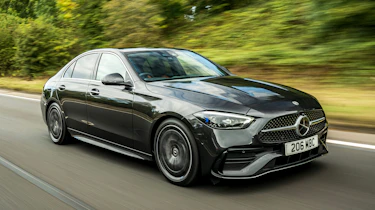
- Prices from £46,200
Pros |
Cons |
|
|
The Mercedes C-Class strikes a tempting balance between luxury and practicality in the compact executive saloon class. It offers a premium driving experience with just a few considerations for buyers to keep in mind.
Behind the wheel, the C-Class turns in a smooth and composed ride, though it’s worth noting that the larger wheels on some models can make progress feel a bit firmer, especially on choppy surfaces. The handling is responsive, and the steering offers a good level of feedback, making the car enjoyable to pilot through corners. While not exactly a sports car, the C-Class feels agile for its size.
On the running costs front, the C-Class offers decent efficiency, especially with the plug-in hybrid. Regular charging of the C 300 e will significantly reduce fuel consumption, and the 6 per cent Benefit-in-Kind (BiK) rate makes it more affordable for those company car drivers. By way of comparison, the C 300 comes with a hefty 36 per cent BiK rate so probably won’t feature on too many company car lists.
Inside, the C-Class impresses with a premium feel and high-quality materials, such as leather upholstery and polished wood accents that make it feel like a mini Mercedes S-Class. Digital displays dominate the dashboard, providing easy access to the intuitive MBUX infotainment system. The seats are comfortable with plenty of space up front, though rear passengers might feel a bit cramped on longer trips. The 360-litre boot is practical for daily use, but it’s smaller than the space in some rivals.
“The latest Mercedes C-Class offers sharp styling, heavily inspired by its bigger E-Class sibling, outstanding levels of comfort and strong on-board technology.” – Shane Wilkinson, senior content editor.
The C-Class competes with rivals like the BMW 3 Series and Alfa Romeo Giulia. Both offer strong performance and style, though neither match the C-Class for comfort
8. BMW i4
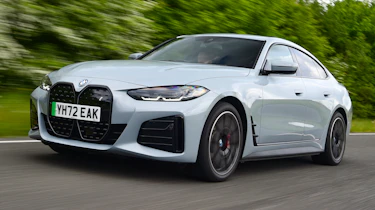
- Prices from £71,500
Pros |
Cons |
|
|
The BMW i4, as with Munich’s more conventional models, puts the driver at the heart of the experience – a rare thing in the EV age.
Handling is a strong suit, with precise steering and excellent grip that makes the car feel more like a petrol-powered BMW than a heavy EV. Comfort is also impressive, particularly in models fitted with adaptive suspension.
In terms of running costs, the i4’s electric powertrain provided a solid 3.6 miles per kWh in our real-world testing. However, it’s priced at almost £52,000, making it more expensive than some rivals like the Tesla Model 3. Charging is also relatively quick, with all models capable of 10-80% charge in under 40 minutes at rapid chargers, while home charging will take 11 to 13 hours, depending on the model.
Inside, the i4 offers a premium experience with high-quality materials and an intuitive infotainment system. However, rear legroom might be a concern for taller passengers, and while the 470-litre boot is decent, it’s not the most spacious in its class.
For those seeking an electric car with BMW’s trademark driving experience, the i4 is a top choice, but one thing now counts against it: BMW has recently rationalised the i4 range and it’s currently available only in top-spec M60 xDrive form, meaning the starting price is £20k higher than it was not so long ago. The upcoming BMW i3 will redress that gap but it takes some of the appeal out of buying a new i4.
“It's not just keen drivers who will be impressed with the i4, because the Gran Coupe oozes quality and is packed with the latest on-board technology.” – Ellis Hyde, News Reporter.
If the BMW i4 doesn’t quite do it for you, the Volkswagen ID.7 serves up lounge-like comfort and loads of space, while the Tesla Model 3 nails range and charging ease but the BMW's the one that's most exciting to drive
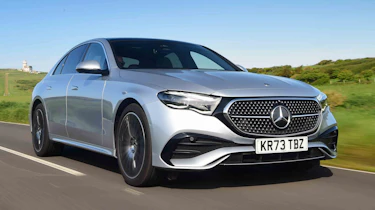
9. Mercedes E-Class
- Prices from £57,200
Pros |
Cons |
|
|
If you want a luxurious and tech-packed saloon that excels for comfort, look no further than the Mercedes E-Class.
Behind the wheel, the E-Class delivers a smooth, serene ride, especially when equipped with the optional air suspension. The handling is competent but not sporty, so it lacks the dynamic edge of rivals like the BMW 5 Series. The E-Class still keeps its composure on winding roads, though.
The E-Class impresses with its efficiency, especially the E 220 d diesel, which offers over 55mpg - proving there’s still a place in the market for a good diesel. The plug-in hybrids, like the E 300 e, further improve things with impressive electric-only ranges of over 70 miles meaning you could do a lot of your trips without using any fuel at all. The hybrid variants are quite a bit pricier but when it comes to company car tax, they deliver a temptingly low tax bracket.
Inside, the tech-heavy cabin is great in many respects but not without its issues. The Superscreen dashboard, with its trio of touchscreens, is impressive but can feel overwhelming. The quality of the materials, however, lives up to Mercedes’ reputation, and the tech features – including massaging seats and voice activation – certainly add to the appeal. Still, it might be a little too gadget-centric for some traditionalists, who may miss the more understated luxury of older Merc models. Its 540-litre boot is a major plus, however, the hybrid versions do lose some of this space due to the batteries.
“The Mercedes E-Class is something of a lifeline for buyers needing a car that can travel huge distances in comfort and without having to stop often for fuel.” – Dean Gibson, senior road test editor.
If the Mercedes E-Class doesn’t float your boat, the closest competitors are the Audi A6, which offers a high level of tech, and the BMW 5 Series, which excels in the handling department. Neither quite matches the E-Class’s comfort and luxury
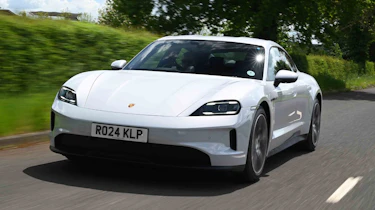
10. Porsche Taycan
- Prices from £88,400
Pros |
Cons |
|
|
The Porsche Taycan may be at the bottom of our executive car list, with several electric models above it too, but it remains one of the very best EVs and executive cars money can buy.
As of 2024, all Taycan models now come with twin-chamber air-suspension and dual-valve dampers, introduced on the Porsche Panamera, allowing the Taycan to deliver an even greater spread of dynamic talents. The Taycan was already good to drive, but now it’s more befitting of its badge than ever before.
Another improvement that was made as part of that 2024 facelift was a battery range boost to more than 400 miles, as well even quicker fast charging This has all helped to keep this Porsche firmly in the executive car race, while updates for 2027 have introduced the option of virtual gearchanges, adding a further layer of driver engagement.
A Lotus Emeya has the edge in the practicality stakes, but the Taycan still boasts a high-quality interior, albeit a rather minimalist one. There’s no denying that the screen-heavy dashboard has been at least partly influenced by Tesla, but those 2027 updates have also introduced much faster processing power, so the screen and its functions are quicker than ever.
“The Porsche Taycan has been built from the ground up to be a high-performance electric car. This means it’s brilliant to drive, which is all the more remarkable when you consider that this is a four-door coupe weighing over two tonnes.” - Jordan Katsianis, senior staff writer.
Just like the Lotus Emeya, two of the Porsche’s biggest threats come in the form of the Audi e-tron GT and the BMW i5. Of course, if you’re not too fussed about electric power, you could also look towards the Porsche Panamera.
How we choose the best executive cars
From a road tester’s point of view, choosing the best executive car is about making sure the vehicle delivers across a wide range of important areas. These models really have to excel to meet the high demands of customers paying premium prices.
Our expert road testers assess all the factors that matter most to someone who spends a significant amount of time in their car, ensuring we identify the best options that combine comfort, practicality, and performance.
Driving
The driving experience is the foundation of any great executive car. We test how each model handles a range of conditions, from tight city streets to long-distance motorway journeys. Comfort is key, and we focus on suspension, seat support, and cabin quietness to ensure that the car provides a smooth, composed feel on the move. The best executive cars are not only responsive but also relaxing, making them ideal for long hours behind the wheel.
Tax and running costs
Cost is an essential consideration, particularly for those using an executive car as a company vehicle. Our testers evaluate the potential company car tax costs based on emissions and list price as part of the overall cost of ownership. A great executive car offers premium features without a hefty tax bill, so we make sure to highlight those models that strike the best balance of luxury and long-term affordability.
Fuel efficiency is another critical aspect we examine. Executive cars are often used for long commutes and business trips, so we assess how each model performs in real-world driving conditions. Fuel economy is more important than ever, and we ensure that the cars we recommend manage to offer both power and economy without compromising performance.
Practicality and quality
While luxury is key, practicality is also important. We evaluate boot space, rear seat room, and overall storage options to ensure the car fits into daily life. Executive cars should be capable of transporting both passengers and luggage with ease, making them versatile enough for business and personal use.
The interior is where an executive car really makes an impression. We assess how well the cabin is designed, focusing on user-friendly technology, premium materials, and comfortable seating. A high-quality interior with intuitive tech ensures that every journey is a pleasant experience, whether it’s a quick trip to the office or a long-distance drive. The best executive cars combine elegant design with practicality, ensuring a refined yet functional cabin.
Once our road testers have assessed all of these aspects — driving experience, costs, efficiency, practicality, and interior quality — we compile the information to provide a comprehensive evaluation of each model. By weighing up all these factors, we ensure that the executive cars we recommend offer the best all-round package for those looking for performance, luxury, and real-world practicality.
What is an executive car?
This was once a very straightforward question to answer. You had your executive saloons, such as the BMW 5 Series and Mercedes E-Class, then you had your compact executive saloons, such as the BMW 3 Series. Today, the variety of options has multiplied.
Cars such as the Peugeot 508 and Skoda Superb all have aspirations of upsetting traditional executive car offerings. The best of these models offer most of the necessary quality and tech, and only really lack the premium badge.
Even without dipping into the SUV class, where executive-car buyers will increasingly find tempting options, there are more body styles available to executive-car drivers than ever. As well as the traditional saloons, there are the usual estate versions on offer, and beyond that things start to get interesting.
Coupes such as the BMW 4 Series offer similar engine ranges to their saloon counterparts for similar tax and running costs, while looking and driving that bit sharper. Many also come in convertible guise for open-air motoring.
The usual cohort of German executive-car manufacturers now has plenty of other challengers to face, especially the incoming wave of pure-electric models that qualify for executive-car status.
With the executive-car market so strongly reliant on business and company car buyers, EV powertrains are a huge draw because of the lower associated Benefit-in-Kind company car tax. Diesel and petrol powertrains are still popular for private buyers, but plug-in hybrid and electric are now the default choice. If you're willing to take the plunge into EV territory, the BMW i4, Polestar 2 and Tesla Model 3 offer sports car-rivalling straight-line performance, acres of space and very low everyday running costs.
How you can choose the best executive car
There are plenty of executive cars on the market, but each has its own pros and cons for buyers to consider. On this page we’ve picked our top executive options - covering a wide range of shapes, sizes, prices, and engines.
The demands of the market are changing, though, which means not everyone’s after an executive saloon or estate. Have a look at our guides to the best luxury or family SUVs, best long distance cars, or the best electric cars, for a wider view of what’s on offer.
A top executive model will be comfortable on a long journey but still able to entertain its driver on a twisty road. When you take your test drive make sure you sample it in different types of driving because a top executive car should excel across the board.
We expect a good quantity of advanced safety equipment as standard with lots more desirable options available to those with deep enough pockets. Keep an eye on the price when adding those optional extras because they really can push the price up at this level.
Think about practicality as well because space in the back will be important if you’re regularly carrying passengers - especially clients or colleagues. Compact executive models like the BMW 3 Series and Mercedes C-Class will not have the same roomy back seats you get in full executive models like the larger 5 Series or E-Class.
With many executive cars still employing the saloon bodystyle, the boot space can be quite low and long - forcing you to lean inside to retrieve items. If you need more flexible carrying capacity, one of the five-door hatchback options could suit you better - or maybe an SUV.
Searching for something a bit more special? Read our list of the best luxury cars...