New Lotus Emira hybrid confirmed as brand ditches EV-only plans
Poor sales have caused Lotus to backtrack on its EV only plans, and confirms a new hybrid Emira is incoming
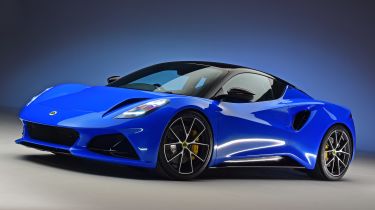
Lotus is pivoting to hybrid cars – including petrol/electric versions of its Eletre SUV and Emira sports car – because its 2028 ambition of 100 per cent electric sales has been scuppered by commercial reality.
Speaking at the Financial Times Future of the Car Summit 2026, Lotus group CEO Qingfeng Feng outlined a flexible powertrain approach and a commitment to the Hethel factory in Norfolk, as the sporty British brand rebuilds after epically failing to reach 150,000 units a year by 2028. Last year deliveries dropped from 11,984 to 6,520 cars.

“In 2018 we launched the Vision 18 business strategy because we believed electrification could be the future trend. I must admit that the plan was aggressive, and we did act too fast,” said Feng. “That is why we made a change and decided to go hybrid.”
Lotus has announced a new ‘Focus 2030’ initiative that it hopes will realign its priorities with demand in the luxury car market. Feng told the conference that global volume for upmarket pure electric cars numbered less than 10 per cent of total market, with demand also weak in China, the home market of Lotus parent Geely, despite it being the epicentre of ‘new energy vehicles’.
“That’s why we’re introducing our Focus 2030 strategy,” he explained. “We’ve set the [annual] target at 30,000 units: we believe that will be enough to keep us profitable and keep the business sustainable.”
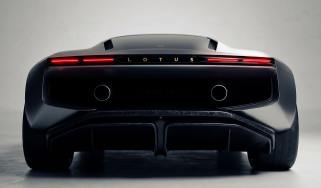
The shift in strategy is headlined by plans to revitalise the Lotus Emira sports car and roll out plug-in hybrid powertrains for Lotus’s four-door ‘lifestyle’ models. It also sets out plans for the creation of a new V8-powered Lotus Esprit supercar, codenamed Type 135.
The Focus 2030 plan aims to be true to Lotus’s core values of lightweight, aerodynamic and sporty cars, to reinforce the brand’s heritage while collaborating more closely with partners; the Geely group also includes Volvo, Polestar and Zeekr.
More Lotus sports and supercars – ideally made in Britain
The first fruit of all this will be a revamped Lotus Emira, which will be revealed in the coming weeks, alongside an unambiguous commitment from Lotus to British engineering and manufacturing at the Hethel plant in Norfolk.
“We will definitely keep the UK factory running,” pledged Feng. “We have already invested more than £1billion in Hethel. We definitely want it to be better, to grow. The factory has a lot of strengths and competitive edge; we have made a lot of efforts to improve the operational efficiency, especially logistics and the labour efficiency. The factory has great strength in terms of skillful engineers and also skilled workers.”

But Feng outlined the geopolitical issues facing its isolated British outpost. He explained that US customers account for up to 65 per cent of Emira sports car production, with President Trump’s US tariffs triggering a four-month shutdown in 2025 and leading to job losses. Last year, Hethel assembled 1,968 sports cars, down 62 per cent on 2024 and way below the plant’s 10,000 total annual capacity.
However, the UK’s trade deal with the US, which currently pegs import tariffs at 10 per cent, is a compelling reason for sports car production to remain in the UK, Feng said.
He added that Hethel is “the best option [for] the production of Type 135 and the hybrid Emira”.
“We are now investigating the possibility of producing these two models at the Hethel factory, [which] would require a lot of preparations to be done, especially from the supply chain,” Feng said, citing battery supply as a particularly sensitive issue, given that the high-value component would need to be localised to meet UK:EU rules of origin targets, where 55 per cent of a car’s value must be sourced in the region.
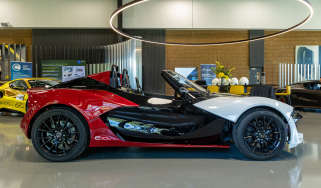
The Emira, Lotus’s petrol-powered, mid-engined sports car, is set for a series of upgrades. First up is the most powerful and lightest version yet, a stripped-out model to shine a fresh spotlight on the £80k car introduced in 2022. The Emira is currently offered with a Mercedes-AMG four-pot and a Toyota V6, and we expect it’s the latter which will power the Clubsport. However both are close to their ceiling when it comes to outright performance, suggesting that power gains will be subtle and the emphasis will be on cutting weight.
The hybrid Emira – revealed by Auto Express last summer before being confirmed in the autumn – is a much more ambitious project, with the car requiring root-and-branch re-engineering. Expect a significant performance boost – Feng said hybrid “must enhance the competency of the car” – as well as a new electronic architecture to “incorporate intelligent vehicle technologies”.
The Type 135, a V8/electric-powered supercar expected in 2028, should also help boost volume at Hethel. It’s expected to carry the evocative Esprit name, and you can read all about the hybrid super-Lotus on our dedicated page.
Focus on hybrid powertrains

The other major element of this new plan is a renewed focus on hybrid powertrains for the Lotus Eletre SUV. A new 938bhp variant called Eletre X will reach European customers in the fourth quarter of this year, and moving forward, the company will target a global sales split of 60:40 between PHEVs and BEV models in the short term.
Fulfilling the collaboration pillar, Lotus has dipped into the Horse Powertrains joint-venture between Geely and Renault to source a new 1.5-litre four-cylinder petrol engine for its ‘X Hybrid’ system. The set-up sees the petrol unit work in conjunction with two electric motors on a 900V electrical system. Feng has been encouraged by 1,000 orders for the Eletre hybrid in its first month on Chinese sale.
Lotus’ use of this new powertrain should only grow in future, too, with the Emeya saloon, as well as the Type 135 supercar, also primed to get a PHEV powertrain.
Lotus’ core growth strategy will be primarily aimed at the Chinese market, leveraging the increased demand for high performance plug-in hybrid models. Demand for BEVs remains flat in China, and with the reduction of local subsidies for electric cars, this is likely to continue.
If you’re in the market for a high-performance SUV just like the Lotus Eletre, check out the Auto Express Buy a Car service now for all the latest deals.