Are Mercedes cars too screen heavy? It could be about to get worse
Mercedes has made a point of putting lots of screen space in its new cars. But is it too much, and will it turn off customers?

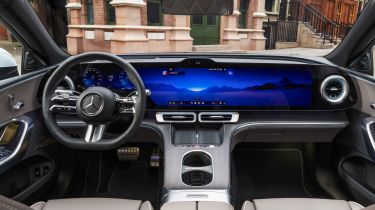
How much screen is too much screen? With many car manufacturers seemingly obsessed with the relentless growth of digital interfaces in their models, the only limitation to just how big they can become might just be the amount of space between the windscreen pillars.
While it’s easy to think of this trend as one that’s being driven by Chinese manufacturers, who develop cars with huge interfaces due to unambiguous demand from their domestic consumers, we’d argue that the most active protagonist is actually Mercedes. It was the first manufacturer to offer an edge-to-edge screen in global markets, not just created specifically for the Chinese.
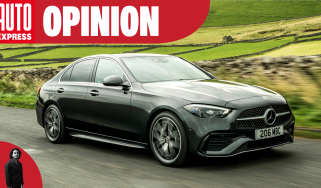
This is no more obvious than when driving the all-new C-Class Electric, a car that like its GLC SUV cousin, now features an unbroken edge-to-edge display that spans some 39.1 inches. But is this what consumers actually want?
Over the past few years, Auto Express’s Driver Power surveys have consistently told us that Mercedes owners rate their car extremely highly for its digital interfaces, with models such as the previous-generation Mercedes A-Class, C-Class and E-Class featuring prominently.
However, many of these models retained a majority of physical controls alongside screens, and as the new generation of Mercedes models reaches showrooms, it’s obvious that the brand’s priorities are shifting away from including those all-important buttons.
Mercedes is aware that it’s playing with fire when it comes to the amount of digitisation in its current models, but according to CEO Ola Källenius there’s a solid plan in place. We asked Källenius how Mercedes’ interiors would continue to evolve from today’s models, to which he answered: “I don’t think we’re at maximum screen, but we are at low buttons.”
Since the introduction of the latest CLA, all Mercedes models have had a similar button count that’s been further minimised from previous models. A total of four buttons, a volume scroller and the hazard switch are the only physical buttons mounted on the centre console and dashboard.
In the experience of both our road testers and readership, reducing button count isn’t necessarily a problem if the digital interface it’s attached to is as good as it needs to be – the laggy and slow-witted interfaces on early Volkswagen MEB products such as the ID.3, for example, only emphasised its lack of physical controls. However, Mercedes is hoping that its focus on the interfaces within the screen is what will keep its loyal customers happy.

Källenius continued: “We spend countless hours on UI [user interface]. Back in the day, it was countless hours of fine-tuning the chassis; we do that still today, but I don't know how many hours per year I actually personally spend discussing with engineers on UI.”
So what is Mercedes’ next move? It doesn’t seem like a future of reduced screen sizes is on the cards, but the inclusion of more switchgear does seem inevitable. And with even better systems, faster reaction times and a wider application of more useful digital services, there might well come a time when all this screen space is genuinely required, and not just a figure to brag about in relation to what rivals are offering.
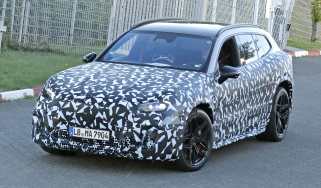
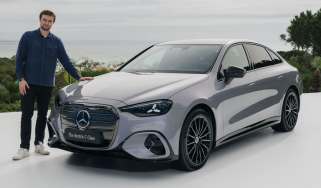
A key project to keep an eye on that is set to inform the future of Mercedes’ design language in the medium term is the next E-Class. This all-new model will finally shake off the remains of the jelly mould-era saloons and see a return to the traditional three-box silhouette, effectively replacing the current EQE. But it will also usher in a new type of cabin architecture, revealing the digital tightrope that Mercedes is about to walk across with its latest models.
And what are Mercedes’ rivals up to? Thanks to the variability of digitalisation in the 2020s, BMW and Audi are on different paths about where to draw that digital line. BMW has already shown off its next-generation interfaces, with a central, easy-to-reach touchscreen complemented by the clever Panoramic iDrive system just below the windscreen. Audi’s future is less clear, but screens won’t be quite so high on the agenda as the brand goes for a more curated user experience in its new generation of models, starting with the first A4 e-tron in 2028.
Did you know you can sell your car through Auto Express? We’ll help you get a great price and find a great deal on a new car, too.