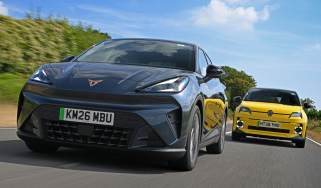
Home electric car charging: wallbox charger prices, installation and top tips
Home EV charging isn’t only convenient, it can be incredibly cheap, too. Our full guide answers your most burning questions...
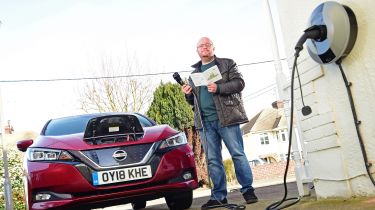
Charging your electric car at home opens up a new world of low costs and convenience, if you’re lucky enough to have the facilities to do it.
Roughly 70 per cent of UK households have access to off-road parking, according to the UK Department for Housing, Communities and Local Government. Most of those, and some who can safely run a charging cable out to a car parked on the street, have the option to buy an electric car and charge it at home.

Surveys by online EV charging database, ZapMap, suggest that the typical EV driver with off-road parking performs roughly 84 per cent of their charging at home, with the remaining 16 per cent of sessions are done utilising the UK’s slow and rapid public infrastructure. This is how an electric car can be so much cheaper to run than a petrol, diesel or even hybrid equivalent. Although public charging can be just as expensive as fuel per mile, the domestic electricity rates you pay at home work out much cheaper and specialist EV electricity tariffs open a whole new level of affordability.
That’s not to say that two people charging their electric cars at their respective homes will be paying the same, of course. It also doesn’t address the other big questions you might still have about home charging. That’s why we’ve put together this definitive guide: below you’ll find out how much home charging costs, how long it takes and how to choose the best EV wallbox charger, and get it installed. Plus much more…
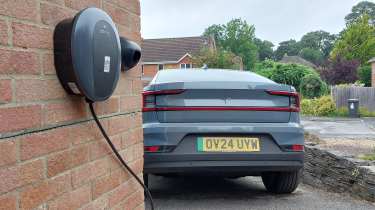
How do I charge an electric car at home?
There are basically two options if you want to charge at home: a traditional three-pin plug or a home wallbox charger.
While a three-pin plug is ideal for charging your phone battery, an electric car’s battery is much bigger and, unsurprisingly, requires a lot more power. A regular plug can indeed charge your EV, but it’ll take a very, very long time to do so.
A typical household socket delivers electricity at a rate of around 2.3kW. At this speed it’d take over 24 hours to charge an entry-level Tesla Model Y RWD’s battery from 0 to 100 per cent, which is far from practical. Because of this, some car manufacturers don’t recommend using a three-pin plug, even when a suitable cable is included with the EV. They see three-pin charging as an emergency measure for when there is absolutely no other choice.
The alternative and far more convenient option is having a home wallbox charger installed. This is a unit that is specifically designed for charging electric vehicles, and it delivers almost three times as much power as a regular domestic plug socket. You will need to arrange for a wallbox to be fitted by a specialist installer, but there are many suppliers to choose from with home installation services covering the entire country.
Once fitted, a modern 7kW home wallbox charger unit will fully charge the same Model Y in around eight-and-a-half hours, which is easily achievable if you plug it in overnight. This means you can wake up to a full ‘tank’ every morning, without having to drive anywhere to fill up. There will be some domestic properties with an 11kW ‘three-phase’ power supply that will allow a wallbox to charge a car even faster, but this is most common at commercial properties.
EV home charging time examples
Examples of charging times for popular EVs when plugged in at home.
| Battery Size | 3-pin plug (2.3kW) | Wallbox (7kW) | |
| Audi Q4 e-tron 45 | 77kWh | 33 hours 29 mins | 11 hours |
| BMW iX3 50 xDrive | 109kWh | 47 hours 23 minutes | 15 hours 34 minutes |
| Fiat Grande Panda | 44kWh | 19 hours 8 minutes | 6 hours 17 minutes |
| Renault 5 Comfort Range | 52kWh | 22 hours 37 minutes | 7 hours 26 minutes |
| Tesla Model Y Rear-Wheel Drive | 60kWh | 26 hours 5 minutes | 8 hours 34 minutes |
These shorter charging times made possible by a wallbox charger make a 200-mile round-trip commute feasible in a modern electric car, and it will cost significantly less in electricity than it would to buy fuel for a petrol or diesel model.
How much does home EV charging cost?
The cost of charging your electric car at home is ultimately defined by your domestic electricity rate. This can vary wildly from household to household and from supplier to supplier. However, you can ultimately calculate the cost of charging by multiplying the price of electricity by the amount of energy dispensed.
Between the 1 April and 30 June 2026, energy operator Ofgem set the energy price cap at 24.67 pence per kilowatt-hour. Besides standing charges, you won’t pay anything more for domestic electricity per unit than this and it will be possible to pay less with special deals.
However, many people can also make use of flexible energy tariffs that make charging an electric car overnight even cheaper. Many of these tariffs offer rates as low as eight pence per kilowatt hour, although they do typically attract higher standing chargers and peak time energy costs, so it’s important to do your sums.
If you charge your EV at home frequently, one of these tariffs from the likes of Octopus Energy, E.on Next, Scottish Power and British Gas, to name a few, might be worth considering.
EV home charging cost examples
Here are some examples of how much it will cost to charge some popular EV models at home on different electricity tariffs
| Battery Size | 100% Charge @ Ofgem Price Cap (24.67p) | 100% Charge @ Median Off-Peak Rate (8p) | |
| Audi Q4 e-tron 45 | 77kWh | £19 | £6.16 |
| BMW iX3 50 xDrive | 109kWh | £26.89 | £8.72 |
| Fiat Grande Panda | 44kWh | £10.85 | £3.52 |
| Renault 5 Comfort Range | 52kWh | £12.83 | £4.16 |
| Tesla Model Y Rear-Wheel Drive | 60kWh | £14.80 | £4.80 |
All of this is not even considering the even greater benefits enjoyed by those living in houses fitted with solar panels as they can effectively charge their electric cars for free.
There are also certain Vehicle-to-Grid tariffs like those offered by Octopus Energy. These also let you charge your car effectively free of charge by plugging it into the National Grid. The car charges off-peak and dispenses electricity back to the grid to help take the strain off at peak times.
Why is home EV charging cheaper than public EV charging?
As mentioned, charging at home is almost always cheaper than plugging in using public infrastructure. While the cost of domestic charging will consist mainly of your daily standing charge, plus whatever rate you’re paying per unit of electricity, the price you pay to use a public charger is the accumulation of several different costs.
For starters, chief executive of chargepoint operator trade body ChargeUK, Vicky Read, told Auto Express that “Energy prices for charge point operators are not the same as they are for households. [CPOs] pay business prices, which are not protected by the price cap and are generally higher than what you will pay for your home.”
On top of this, Read also points out that there are other “non-energy operational expenses such as the kit itself, its installation and maintenance and all the operator’s running costs.” ChargeUK claims that this tends to be roughly equal to the cost of what you pay in wholesale electricity, although this is usually higher for more complex and expensive-to-maintain rapid and ultra-rapid chargepoints.
There’s also the topic of VAT, or ‘Value Added Tax’. In the UK, VAT on domestic electricity is charged at a rate of five per cent, while public EV charging is charged at the standard 20 per cent VAT rate. This means that those who plug-in using public chargers will pay more in tax when charging up than those who do so at home. It’s a big part of the extra cost.

Can I get a home EV charger installed?
Those wishing to install a home EV charging wallbox will usually need either a driveway or private parking space. It is possible to charge a car parked on the street by running a cable safely out to it from a wallbox on your house.
While you don’t typically need a permit to install a wallbox charger at home, it’s worth getting in touch with your local authority or property leaseholder if the installation will take place in a shared space.
The Distribution Network Operator, which looks after local electricity supply, will also need to be notified – particularly if you live in a terraced or semi-detached house with a looped power supply – however, this step is usually taken by whichever installer you choose.
If, like many people, you don’t have the luxury of off-street parking, you do still have options. Although you’ll need permission from your local authority, there are under-pavement charging solutions available. These will allow you to feed a cable from your home to a roadside parking space without posing a trip hazard to pedestrians.
How much does it cost to install an electric car charger at home?
The cost to install an electric car charger at home can vary wildly due to the complexity of the installation, as well as which particular EV charger you choose.
It’s fair to say that on average most people pay around £800 to £1,200 to have one installed at their home. If your home has a three-phase electrical connection, you could install an even more powerful 11kW charger, although this will set you back even more.
Is there an electric car charger grant?
If you live in a flat or rented accommodation, you’re in luck, as the Government offers a grant that provides up to 75 per cent off the cost of buying and installing an (eligible) EV chargepoint, up to the value of £500.
This can cover the cost of a charger itself, or the cost of a cross-pavement solution for those without off-road parking – a good thing given the latter can incur several additional costs - such as digging gulleys in pavements - which driveway owners won’t have to concern themselves with.
One other thing to note is that some car manufacturers are also offering free wallboxes as an incentive when you buy a brand-new EV, so it’s worth keeping an eye out for any deals like this.

How long will a home charger installation take and how does it work?
Installation is usually straightforward. Once the installer has checked your home’s wiring and confirmed the location, the job typically takes two to four hours. That includes mounting the unit, connecting it to your electricity consumer unit, and setting up any smart features.
Once booked in, the process usually goes as follows…
Pre-installation checks
The installer will usually ask for photos of your consumer unit, electricity meter, and the area where you want the charger fitted. Sometimes a quick site survey might be needed to confirm your home’s electrical setup is suitable.
Delivery
Some suppliers deliver the charger before the install date, others bring it with them. The installer will confirm the best spot to mount your wallbox and check your electrics. If your home needs any upgrades such as a new consumer unit or additional wiring, this could add to the cost and installation time.
Fitting the charger
Most wallboxes are mounted on an outside wall close to your parking spot. It’s worth bearing in mind where the charging flap is located on your car to make sure you get the best location for easy charging.
The installer will drill through the wall to route the charging cable from inside your home to the outside. Cables will be run neatly either inside walls or along surface trunking depending on your property.
Wiring and safety checks
The charger is connected to your household mains using a dedicated circuit breaker for safety. The installer will run electrical tests to ensure everything is safe and complies with regulations.
Final checks and handover
When installation is complete, the installer will explain how to use your new charger and its features. You will also get a certificate confirming the installation meets electrical standards. Keep this safe for warranty or future home sales.
Buy a car with Auto Express. Our nationwide dealer network has some fantastic cars on offer right now with new, used and leasing deals to choose from...
Your electric car questions answered
- Should i buy an electric car?
- What’s the best way to buy an electric car?
- Is a hybrid, plug-in hybrid or electric car right for me?
- Should i buy a used electric car?
- Can i get a plug-in car grant?
- How is electric car range calculated?
- How much do electric cars cost to charge?
- How much do electric cars cost to run?
- How long do electric car batteries last?
- What happens to old electric car batteries?
- Should i get a heat pump on my electric car?
- What are fast charging and rapid charging?
- Can i tow with an electric car?
- Is wireless electric car charging the future?
- What’s the history of the electric car?