New Toyota C-HR+ gets Electric Car Grant green light for a big price cut
All three versions of the C-HR+ receive the government incentive - but it’s bad news for the updated bZ4X
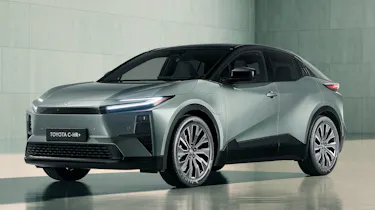
It’s been a busy few months for Toyota, the crazy GR GT supercar launched and we’ve driven plenty of family-oriented fresh metal like the Urban Cruiser, updated bZ4X and the all-new, all-electric C-HR+.
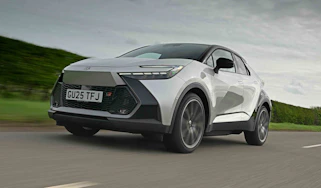
Now on sale, the new Toyota C-HR+ has gained eligibility for the government’s £1,500 Electric Car Grant. That makes it one of two Toyotas to appear on the ECG list, alongside the Proace City Verso. The bZ4X has been made ineligible for the grant after the facelifted model arrived in late 2025.
With the £1,500 band 2 ECG included, the C-HR+ in its entry-level ‘Icon’ trim is now priced at £32,995 - £3,000 more expensive than the new Urban Cruiser EV. The mid-tier C-HR+ Design model now starts at £36,150, while the range-topping Excel is priced from £40,150.
The new C-HR+ shares almost nothing bar its name with the hybrid and plug-in hybrid C-HR and it gives Toyota a foothold in the electric C-segment SUV market alongside the Skoda Elroq, Kia EV3 and Renault Scenic.

The cheapest C-HR+ Icon comes with a 57.7kWh battery for a maximum range of 284 miles. The Design uses a larger 77kWh battery for a range of up to 376 miles. The Excel trim gets the same battery and range as the Design, but comes with more kit as standard to justify its higher price tag.
If you’re not ready to go all-electric there’s an average saving of over £3,000 to be had on the hybrid Toyota C-HR on the Auto Express Find A Car service now.
Toyota C-HR+: trim and specifications
In Icon guise the C-HR+ comes with 18-inch alloy wheels, an 11kW onboard charger and the combination of a seven-inch digital driver’s display and 14-inch touchscreen - both of which you’ll also find on the newly-updated bZ4X. Inside there’s fabric and synthetic leather upholstery and a heated steering wheel, along with two wireless smartphone chargers.
The C-HR+ Design, which we’ve already reviewed here, adds that larger battery as well as an electric bootlid, tinted windows and the option of 20-inch alloy wheels. As for the Excel, that comes with a 22kW onboard charger, powered adjustment for the driver’s seat, synthetic suede and leather upholstery, an exterior parking camera, plus extra safety technology including front cross traffic alert and lane change assist. There are more options for the Excel too with the ‘Premium Pack’ adding a JBL sound system and panoramic sunroof.
Toyota C-HR+: powertrains and technical details
The C-HR+ is positioned between the new Urban Cruiser and bZ4X in Toyota’s EV range - though it gets the latter's e-TNGA platform.
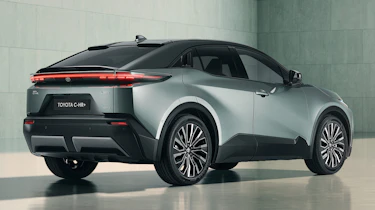
At 4,520mm long, the C-HR+ extends 40mm further than a Skoda Elroq although the Skoda has a significantly larger boot (470 litres) compared to the C-HR+ (412 litres) thanks to the Toyota’s coupe-like roofline. Despite an extra 150mm in length over the hybrid C-HR, we didn’t find the electric newcomer to be particularly roomy inside when we tested it - especially compared to the likes of the Skoda Elroq.
The C-HR+ gets a 165bhp front-mounted electric motor with the small battery, while the larger battery model has the option of either a 221bhp front-wheel drive or a 338bhp dual-motor 4x4 layout - the same system found in the most potent bZ4X.
In the least powerful C-HR+ the 0-62mph sprint takes 8.4 seconds while the other front-wheel drive model takes 7.3 seconds. There’s no performance data for the dual-motor C-HR+, but considering the bZ4X takes 5.1 seconds with the same setup, expect a blistering sub-five second 0-62mph time from this smaller, lighter model.
Despite the new C-HR+ being offered in all-wheel-drive form, it doesn’t inherit the XMode system from the larger Toyota EV (and its Subaru Solterra sibling) that provides different settings for different off-road conditions.
As with the bZ4X, Toyota has introduced battery pre-conditioning to improve charging speed. This is either engaged manually ahead of a recharging stop or automatically if the in-car navigation is set so the car knows when it will be charging. Charging speeds are reasonable, if not class-leading, with a 150kW providing a 10-80 per cent top up in 28 minutes.