1,400cc Club: The quirkiest and coolest 1.4-litre cars - 2015 group test
Auto Express celebrates 1,400 issues by driving our favourite 1,400cc cars from the last 25 years

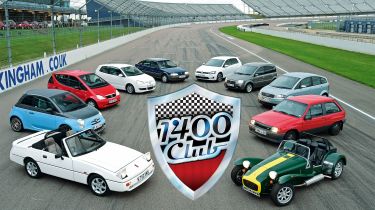
Auto Express has reached the incredible milestone of 1,400 issues, and to celebrate we’ve gathered together 10 of the quirkiest and coolest 1,400cc-engined cars of the last quarter of a century or so.
Like Auto Express itself, the fashion for 1.4-litres started in the late eighties, when the cheapest company car choices needed to have engines that squeezed in below the 1,400cc threshold. The way that Benefit in Kind tax is calculated has changed a lot since then, but the appeal of 1.4-litre models remains.
• The best new cars coming in 2016
From the Rover 214, our first-ever cover star, to the ultra-modern Volkswagen Golf GTE and everything in between, the 1,400cc engine has been at the heart of some of the cleverest and most characterful cars to hit the UK’s roads.
So join us as we celebrate an Auto Express landmark with a very special road test gathering.
Plus don't forget you can pick up your copy of our special 1,400th issue in shops now.
Click the links below or on the left for the 1,400cc cars that have made our list.
Reliant Scimitar SST
- Years: 1990-1992
- Price new: From £1,000
- Engine: 1.4-litre 4cyl, 75bhp
Reliant may have been most famous for its three-wheelers, but it has also dabbled in sports cars. The original Scimitar of the sixties and seventies was a V6-powered machine that was famously popular with Princess Anne. Yet Reliant revived the name in the eighties with the Scimitar SS1.
Used - available now

2021 BMW
1 Series
19,989 milesAutomaticPetrol1.5L
Cash £21,990
2023 Jaguar
F-Pace
29,994 milesAutomaticPetrol2.0L
Cash £34,500
2022 IVECO
DAILY
36,900 milesAutomaticDiesel2.3L
Cash £20,394
2018 FORD
TRANSIT
37,277 milesManualDiesel2.0L
Cash £29,995It first arrived in 1984, with a spaceframe chassis, full independent suspension and a wedge-shaped roadster body. With styling penned by famed Italian designer Giovanni Michelotti – in fact it was his last design – the distinctive lines and Porsche 928-style flip-up headlamps gave it a sharp look.
Engines included Ford’s then-current CVH unit, and while the first cars had 1.3-litre power, later versions came with a 1.4 CVH, producing a modest 75bhp. The SS1 was an intriguing little sports car, and in some ways it followed the same template made successful later by the Mazda MX-5. Reliant’s limited resources meant it only sold in modest numbers, however.
Still Reliant persevered with its roadster, and introduced the second-generation SST model in 1990. The update had bodywork enhanced by designer William Towns – hence the T in the name – and build quality was improved, too. The 1.4 CVH engine was carried over, although it now featured a five-speed gearbox.
The car we tested is owned by Scimitar fan Steven Feay, and is one of only five 1.4 SSTs in the UK. Once inside, the first thing that’s clear is that the SST is more spacious than expected, with plenty of shoulder and legroom for two. You’re surrounded by some familiar switchgear and controls, mainly sourced from Austin Rovers of the era, while Steven has fitted his own custom wind deflector to go with the aftermarket roll hoop.
The SST’s unassisted steering delivers good feedback once you’re up to speed, and the car’s light construction means it feels agile in corners. You also get the sense that the SST’s chassis could easily cope with more than the 75bhp the 1.4 CVH offers. This feeling is backed up by the fact that Reliant also sold the SST with a Nissan-sourced 1.8-litre turbo that offered a more potent 135bhp through the rear wheels.
Caterham Seven K Series
Years: 1991-2013Price new: £13,180Engine: 1.4-litre 4cyl, 105bhp
Classic looks and modern tech are an enticing mix in a sports car, and the Caterham Seven Classic has them both. The original Seven’s design stretches all the way back to 1957, but under the bonnet is the same fuel-injected, 16-valve engine found in the Rover 200.
In combination with the car’s 500kg kerbweight, the 105bhp 1.4-litre Rover K Series helps the Seven sprint from 0-62mph in 6.5 seconds and on to 110mph. But there’s even more fun to be had at lower speeds thanks to the car’s balance. There’s not much grip, but the detailed feel through the wheel gives the confidence to adjust your line with the accelerator, and you really have to rev it to extract the maximum due to the small capacity.
Cocooned in the tight cockpit, you’ll soon realise ergonomics have never been Caterham’s strong point, but with a heater and a heated windscreen, there’s enough to keep you comfortable until you find that perfect road.
Volkswagen Polo BlueMotion
Years: 2007-09Price new: £11,995Engine: 1.4-litre 3cyl, 79bhp
Eco-focused superminis are common now, but even in the late noughties that wasn’t the case. The Mk4 VW Polo was the first model to wear the BlueMotion badge, and had a 1.4 three-cylinder TDI engine optimised for efficiency, plus a host of changes to cut the car’s already low costs.
Lightweight wheels and low-rolling-resistance tyres, a more aerodynamic grille and longer gear ratios all helped keep CO2 down to 99g/km, which means it’s still free to tax today, nearly a decade on.
The 79bhp TDI featured belongs to Derek O’Donoghue and his girlfriend Laura Keane. It has a variable-geometry turbo – similar to the Porsche 911 Turbo of the time – so there’s more torque available lower down, which means you have to rev the engine less so use less fuel. While 0-62mph takes a lengthy 12.8 seconds, the BlueMotion is about numbers of a different kind, with returns of 72mpg. The engine clatters from cold, although at speed the Polo is more refined, thanks to low cruising revs – even with a five-speed gearbox.
However, the real pleasure is watching the fuel needle taking its time to fall, as the car ekes out its 45 litres of diesel over around 700 miles.
Mercedes A140
Years: 1997-2004Price new: £14,490Engine: 1.4 4cyl, 80bhp
It’s easy to forget how influential the original A-Class was. Mercedes’ first people carrier was tall, but had a short wheelbase. The height came from a clever ‘sandwich’ floor design, which means you climb up into the car so that in a crash, the engine and gearbox would slide under the split floor, rather than towards the driver’s legs.
However, the A-Class initially made safety headlines for the wrong reasons, when it flipped over in testing during a high-speed swerve test. But Mercedes solved the problem so the car’s packaging didn’t go to waste – plus with ESP standard on all models, it moved the game on another step.
You need to push the 80bhp 1.4-litre petrol hard to get the A-Class going, which affects the refinement. And with solid, dull grey plastic covering the dash it’s easy to date the A140 to a time when Mercedes’ build quality was on the wane.
Still, the A-Class’ cabin feels roomy, and while it might not look premium today, it opened up the three-pointed star to a whole new group of buyers.
Audi A2
Years: 1999-2005Price new: £14,650Engine: 1.4 3cyl, 74bhp
Few cars were as ahead of their time as the Audi A2. Designed to showcase the brand’s expertise in aluminium engineering, the innovative A2 packed A6 executive saloon-rivalling interior space into a supermini-sized package. Launched in 1999, the distinctive Audi immediately caused a stir with its style and efficiency.
There were a couple of petrol options, but the 1.4-litre TDI was the pick of the bunch. The three-cylinder engine is rattly at idle, but smooths out at speed, while the A2’s low kerbweight makes for sprightly performance. It’s hardly fun to drive, but the clever engineering adds real desirability.
Sadly, buyers weren’t ready for the costly A2, and production ceased in 2005. Today, the low running costs and roomy interior would be a surefire hit.
Volkswagen Golf GTE
Year: 2015Price new: £28,775 (inc Govt plug-in grant)Engine: 1.4-litre 4cyl/electric motor, 201bhp
Most 1,400cc contenders are cost effective entry-level models – except for the cutting-edge flagship that is the VW Golf GTE. Beneath its conventional hatchback bodywork beats a hi-tech plug-in hybrid heart that aims to effortlessly combine performance and penny-pinching running costs.
By mixing a 1.4-litre turbo petrol engine and a powerful electric motor, VW has created a car that delivers 201bhp, yet promises 166mpg. Plug the Golf into the mains and you can travel around 30 miles in zero emissions electric mode.
Externally, the GTE is distinguished by its distinctive blue trim inserts, while inside the car is heavily influenced by the racy GTI hot hatch – there’s the same flat-bottomed steering wheel and a similar tartan finish for the seats. It’s also every bit as solid and has the same family friendly practicality.
Squeeze the throttle and the Golf glides away silently on battery power alone. Hit the GTE button and the petrol engine joins in, helping it cover 0-62mph in 7.6 seconds. The weight of the hybrid system means the GTE isn’t as sharp to drive as its hot hatch brother, but it’s composed, grippy and very refined. And what it loses in outright thrills, it makes up for with small bills.
Vauxhall Nova 1.4SR
- Years: 1989-1993
- Price new: £7,985
- Engine: 1.4-litre 4cyl, 71bhp
Boxy styling and blistered wheelarches inspired a generation of car fans in the eighties, and the Vauxhall Nova SR was the aspirational warm hatch for young drivers who wanted thrills without the bills.
In 1989, the original’s 1.3-litre was replaced by a larger 1.4-litre. Pumping out 71bhp and weighing not much more than a shoebox (well, 675kg), the SR was rapid for the time. It will go from 0-62mph in 10.2 seconds, which doesn’t sound so fast now, but the engine revs freely and charges towards the red line with a snort from its tiny tailpipe.
By modern standards the brakes are wooden, the damping is lumpy and the engine is noisy at cruising speed. The steering is heavy at low speed, but there’s also keen turn-in for the time and a surprising amount of grip. It’s easy to forget how far modern cars have come, but this 1.4 SR is still a very special little hatchback.
Fiat Panda 100HP
Years: 2006-2010Price new: £9,995Engine: 1.4-litre 4cyl, 99bhp
The Fiat Group has used 1.4 power several times in its history. While current cars such as the Alfa Romeo MiTo and Abarth 595 use the turbocharged 1.4 MultiAir engine, the Panda 100HP featured naturally aspirated power.
The 1.4-litre 16v makes 100PS – hence the car’s name – and the 100HP got lowered suspension and some chunky styling add-ons to mark it out from the rest of the range. It was the only second-generation Panda to come with a six-speed manual gearbox, and the closely packed ratios were designed to keep the engine on the boil. That’s because peak power is made at a heady 5,800rpm, while peak torque comes in at 4,250rpm, and the engine revs all the way to 6,500rpm.
This rev-happy engine complements the super-stiff chassis. The ride is firm even on smooth roads, but that means the 100HP is hugely entertaining in corners – although the numb steering does peg back the 100HP’s performance car credentials.
Abarth 595C
Years: 2012 to date
Price new: £21,890
Engine: 1.4-litre 4cyl, 178bhp
You realise the Abarth 595C Competizione is a serious small car when you lower yourself into the rock-hard, figure-hugging Sabelt bucket seat. Turn the key and the four-cylinder 1.4-litre turbo gurgles into life, emitting an angry burble from the high-flow ‘Monza’ exhaust.
In the Competizione model, power is up to a healthy 178bhp. Push the throttle and not a great deal happens until 2,500rpm, when the turbo really starts pumping. The light gearshift isn’t a match for the firm brake pedal or iron-fisted damping, but push the clutch to snatch a new gear and that loud exhaust gives a snarling pop and crackle.
Despite the precise steering, you still have to muscle the car into corners and make the most of the grip on offer. And in the convertible C version, there’s another element to like. The roll-back roof gives even more access to that exhaust noise, but keeping the roof rails in place means the chassis retains its stiffness. Still, with a tiny rear bench and boot opening, plus the firm ride and hard seats, don’t expect the 595C to win any practicality awards.
Rover 214
- Years: 1989-1995
- Price new: £8,775
- Engine: 1.4-litre 4cyl, 105bhp
When planning this road test we knew there was one car that had to be here: the Rover 214. Rewind 27 years and 1,399 issues of Auto Express, and the British hatchback was our first-ever cover star.
Back then the Rover was still a year from launch, so our artist’s impression was based on spy shots. Looking at the renderings alongside the final production car, it’s clear we were spot-on. There’s the same chiselled profile, crisp lines and large glass area. It looks a little plain alongside today’s bold designs, but the 200 Series was a gamechanger.
Designed in partnership with Honda, the 200 looked far slicker than its predecessor, and was powered by a new, lightweight 1.4-litre K Series. It was no surprise when the Rover went on to be a huge sales hit.
Even today, the 214 feels lively. This Si model is owned by former Auto Express staffer Craig Cheetham and has just over 30,000 miles on the clock, so the K Series is still smooth and eager, while the unassisted steering is direct and delivers decent feedback. Perhaps the biggest shock is the ride, which is as supple as many modern executive saloons’.
Rover is no longer with us, but hopefully cars such as this will still be going when Auto Express hits 2,000 issues. Of course, that will be a very different test.