Best JDM cars: Japan’s greatest performance car legends
Japanese domestic market cars that have changed the car world for the better

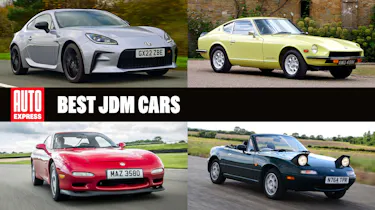
JDM cars are models manufactured for the Japanese Domestic Market and it being a right-hand drive market, we’ve seen a steady stream of them in the UK over the years, both through official routes and as ‘grey’ imports. The land of the rising sun has churned out some absolute corkers too and these are the best JDM legends that you can easily get your hands on today.
Japan only began building cars in the second half of the 20th century, but it caught up fast. By the 1970s it was building cars every bit the equal of those from Europe or the US in terms of features, and often better for reliability and quality. By the 1990s Japanese car brands were regularly turning out cars that had the measure of rivals in just about every area and creating performance models that set new standards for capability at their price points.
Whittling all that history down to just ten cars is an almost impossible task, but we’ve picked some of our favourite Japanese below, encompassing everything from Japan’s first globally successful sports car, to a luxury saloon that caught brands such as Mercedes and Jaguar napping, and rally-bred machines that dominated 1990s motorsport.
There’s a mix here from the 1960s through to the present day, but if you’d like to read more, then head over to our list of the best Japanese modern classics, concentrating more specifically on the cars of the 90s and 2000s.
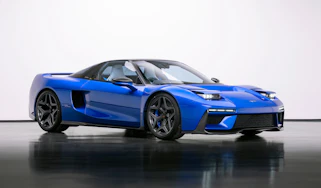
Honda NSX
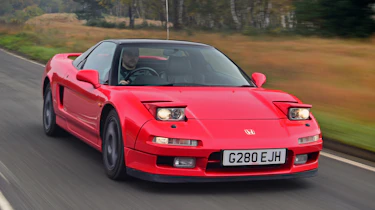
The idea that Honda sent Ferrari, Porsche, and other exotic European brands running away screaming with the NSX is probably a little overstated. Neither the Italians nor the Germans suddenly saw their sales fall off a cliff, and few typical Ferrari customers would be seen dead in a Honda, however good the car was. But as a technical exercise and a driver’s car, the NSX did highlight that heritage could only take you so far, and showed the world that supercars need not be painful to own.
Using an all-aluminium structure and with a mid-mounted 3.0-litre V6 VTEC engine (initially; it later expanded to 3.2 litres) the NSX was sophisticated, and used that sophistication to best effect. It set new standards for mid-engined handling (tricky at the limit, but what mid-engined car pre-ESP wasn’t?), and made good use of its 270bhp output (20 more than a 911 Carrera, 30 less than a Ferrari 348tb), but was also superbly comfortable, easy to see out of, and could be trickled around town as easily as it took to a race track. It’s little wonder Gordon Murray took more than a little inspiration from the NSX for the McLaren F1.
Mazda MX-5 (Mk1)
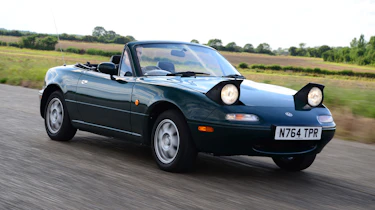
No list of Japan’s greatest cars would be complete without the world’s best-selling roadster. While no subsequent generation of MX-5 has matched the instant success of the original (which alone accounts for more than 400,000 of the model’s roughly 1.2 million sales since 1989), it’s always been one of the most accessible ways into a proper sports car. One that, when considering all the drivers who’ve bought used examples over the years, has brought driving fun to millions of people.
Objectively speaking the MX-5, known as the Eunos Roadster in its home market, has improved with each generation, just as a Porsche 911 has done, but the original 1989 to 1997 car is still the icon. From its styling hinting at sports car greats of the 1960s, to the pop-up headlights, and its pure driving experience, Mazda undoubtedly nailed the recipe from the very start. The original MX-5 is still as much fun as it ever was, and as 30-plus year old cars go, surprisingly usable too.
Toyota GR86
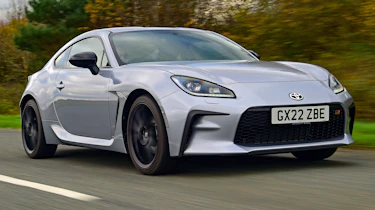
While the Toyota GR86 hasn’t had decades on the market to mature into a bona-fide Japanese performance car legend, its brief existence (in the UK at least) does feel like Toyota wanted to give modern car buyers just a taste of what life used to be like for Japanese sports car fans. Here was a dedicated platform offering an engine in the front, drive to the rear, and a manual gearbox in the middle. Aside from modern niceties such as ABS and stability control, the GR86 more or less left the driver to it.
The GR86 was preceded by the GT86, of course, and those are now a real bargain, but the GR model felt a little like Toyota finishing the job. The GT86’s 2.0-litre flat four was revvy but short on torque, whereas the GR86’s expanded 2.4-litre job, with 231bhp and a 45Nm bump to 250Nm, made it feel much more lively. Small refinements in other areas made it a more complete car overall too, yet on its 2022 debut, Toyota still kept the price down to under £30,000, less than most hot hatchbacks. It’s a guaranteed future classic.
Honda Integra Type-R
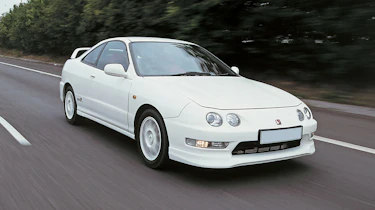
There had been brilliant front-wheel drive cars before, from hyper-agile hot French hatchbacks to the all-round competence of Corrado VR6s and Lotus Elan M100s, but the Integra Type-R really elevated the game for cars that powered only their front wheels. Launched in the UK in 1997 (but available in Japan since 1995) the Integra was a more serious driver’s car than most dedicated rear-wheel drive sports cars - and could give them a hard time on a circuit too.
In Honda-speak, R stands for Racing, so the Integra’s competence on track is no great surprise, but Honda went to huge lengths to make the Type R a proper sports car, from seam-welding the shell for stiffness, to hand-finishing the ports in the engine for perfect flow. The 1.8-litre VTEC engine made 187bhp and against a kerbweight of only 1,125kg, could nail 62mph in only 6.2 seconds. It’s become a tuning scene legend, but perhaps the best illustration of the Integra’s ability was that prior to its UK launch, Honda sent touring car driver James Thompson around to every UK circuit, ticking off a new Group N lap record at each.
Datsun 240Z
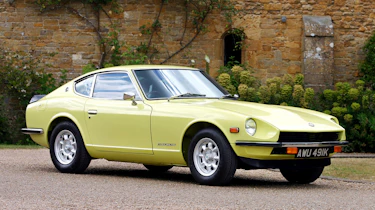
Japan’s carmakers entered the enormous and important US market with caution in the 1960s, prioritising commercial vehicles and the occasional economy car, but the success of small British sports cars convinced Nissan’s Yutaka Katayama to push for sports cars. Following the popularity of the Fairlady roadsters, in 1969 Nissan launched, under the Datsun brand, the 240Z, with a 2.4-litre inline six and rakish styling.
It was an instant success, helped by a price that put it on a par with those old Brit roadsters despite offering far more performance. Race wins on America’s circuits further bolstered its appeal, and while it never took off in quite the same way in the UK and Europe, it still received positive reviews. Even today, the 240Z and its successors are great to drive - the inline sixes feel brawny, the handling is balanced, and they still look great; the 240Z was Japan’s first real sports car success story.
Nissan GT-R (R35)
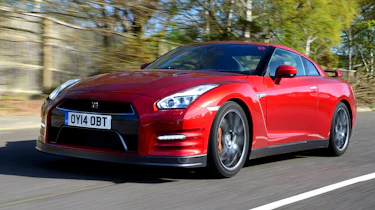
It’s tempting to list one of the legendary Skyline GT-Rs in this slot, from the classic ‘Hakosuka’ of the late 1960s that dominated touring car racing in Japan, through the R32 that made the Skyline’s name outside its home country (and earned it the nickname ‘Godzilla’), to the technological masterpiece that was the R34. But the ultimate expression of the GT-R has to be the R35 generation, unveiled in 2007.
Drive an R35 back to back with the R34 Skyline and you can feel their shared DNA, but the R35 felt like a car unconstrained by all the artificial limitations Nissan had put on the previous cars, from the quoted 276bhp output to the compact, tax-friendly dimensions. The R35 was big, fast and bold. Heavy too, though not many 1,700kg cars have ever hidden their weight so well. Do not believe accusations that driving a GT-R is like playing a videogame: for interaction and fun, it’s more like a near-500bhp, four-wheel drive, highly sophisticated Mazda MX-5.
Lexus LS400
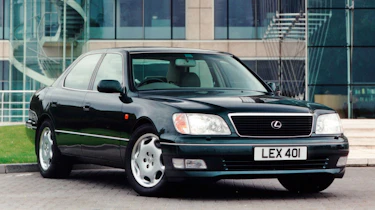
It’s not a performance car like most of the others on this list, but the Lexus LS400 is undoubtedly one of the greatest JDM cars of them all. People talk about the Honda NSX putting the wind up the likes of Ferrari and Porsche in the early 90s, but in the US particularly, the LS400 made its luxury car competition look absurd, out-performing and offering more luxury than almost all of them yet often for tens of thousands of dollars less money.
Mercedes had built a reputation on being engineered like no other, but that was a better descriptor for the LS400. Thousands of engineers tested hundreds of prototypes all over the world, resulting in a car that Lexus advertised not just with the old ‘coin on the cam cover’ trick to show off its smoothness, but by balancing a stack of cocktail glasses on the bonnet as the V8 powered the rear wheels to 145mph on a dyno.
Subaru Impreza Turbo
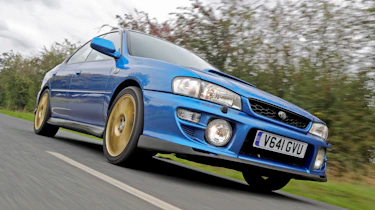
There’s been a value element to several of the great Japanese cars, from the 240Z out-punching Corvettes in the US to the NSX outperforming much more exotic and expensive cars. The Subaru Impreza Turbo was another, as when the first 208bhp version appeared on UK shores, it started at under £18,000 - £4,500 cheaper than an Escort Cosworth and more than £7k cheaper than a Lancia Delta Integrale, both cars it absolutely had the measure of on the road.
Of course, it also had the measure of them on the rally stages, which is where the Impreza really made its name. Thanks to the exploits of Richard Burns, Carlos Sainz, Piero Liatti, Didier Auriol, but most significantly 1995 World Rally Champion Colin McRae, the Impreza became synonymous with stage success, and the road and rally versions dragged each other up to higher and higher levels of performance. There’s arguably no more distinctive exhaust note than an early Impreza’s turbo boxer burble either.
Mitsubishi Lancer Evolution VI
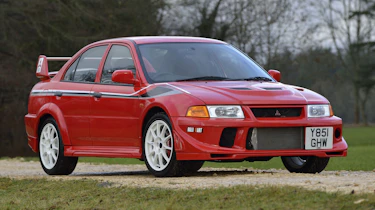
Like the Impreza the Mitsubishi Lancer Evolution became a legend on the rally stages, and was actually more successful overall thanks to the four straight WRC titles between 1996 and 1999 of Finn, Tommi Mäkinen. Mäkinen took those titles in a different Evolution of the Lancer each year, but it was the last of these, the Evolution VI of 1999, that best represents the breed.
That’s not just because it was the final development of 1996’s big update in the lineage, the Evolution IV, but because as a road car it was also sharpest to drive. Improvements developed in competition really did help the road car (and in turn, homologation of the road car ensured the Group A machine remained legal), which was blisteringly fast and hilariously agile and involving. The ultimate variant, the Tommi Mäkinen Edition (even sharper still) has since become hugely collectable.
Mazda RX-7 (Mk1)
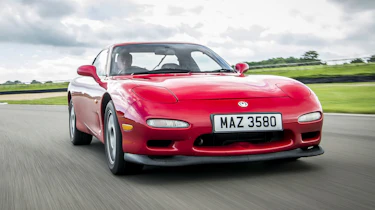
For pure performance, the third-generation Mazda RX-7 launched in 1991 is always the go-to - a car that Mazda poured all of its knowledge into, from rotary engine developments that also helped the company to Japan’s first ever outright win at the Le Mans 24 Hours, to a chassis not just lighter and smaller than that of its predecessor but also all its contemporary rivals.
But the original RX-7 deserves just as much attention. For a start, it was vastly more successful, selling nearly half a million units between 1978 and 1985. Most were in the US, where its starting price undercut almost anything you’d consider a rival, and where its thirst for fuel wasn’t such a big deal in a land of V8s. It also set the template for Mazda sports cars to follow, with great balance and direct steering, and an emphasis on low weight to improve both handling and performance. Contrary to popular belief, it was even reliable, something Mazda proved in racing, from the British Saloon Car Championship to the Spa 24 Hours; it won both in the early 1980s.
Did you know you can sell your car through Auto Express? We’ll help you get a great price and find a great deal on a new car, too.