Dacia Bigster review
The Dacia Bigster builds on the Duster’s appeal with a bigger, more spacious package

Our opinion on the Dacia Bigster
If ever there was a car with a name that reflects its intent, the Dacia Bigster is it. If you need more space than a Dacia Duster, then the Bigster fits the brief for a little more money.
The Bigster comes with chunky styling, efficient powertrains and user-friendly tech. The ride can be a little fidgety at low speeds, the cabin is built to a price, and the hybrid powertrain can be noisy in certain situations, but it’s easy to overlook these shortcomings thanks to its great value for money.
About the Dacia Bigster
The Dacia Bigster is the brand’s largest model, and it uses the same CMF-B platform as the Dacia Duster. The engine line-up is similar too: a mild-hybrid 1.2 TCe manual powertrain available with front or four-wheel drive, or a full-hybrid based around a 1.8-litre petrol engine, with an automatic gearbox and front-wheel drive.
Although it’s bigger than the Duster, the Bigster is still a strict five-seater. If you want a seven-seat Dacia, then you’ll have to choose the Sandero-based Jogger estate instead.
We’ve tested the Bigster extensively in the UK, including it in two separate twin tests. The first was a Hybrid Journey Dacia Bigster against the Nissan Qashqai, and the second was a similarly specified Dacia Bigster against a Citroen C5 Aircross. Our creative director, Darren Wilson, has also run a Dacia Bigster as part of our long-term test fleet.
Performance & driving experience
Pros |
|
Cons |
|
Given that it shares its platform and powertrains with the Duster, it’ll come as no surprise to learn that the Bigster has similar manners on the road. It’s not particularly fast, but it has enough power to keep pace with traffic, while refinement is reasonable at most speeds. There’s an unsettled nature to the ride at lower speeds, but it smooths out the faster you go.
| Model | Power | 0-62mph | Top speed |
| Bigster 1.2 TCe | 138bhp | 9.8 seconds | 112mph |
| Bigster 1.2 TCe 4WD | 128bhp | 11.2 seconds | 112mph |
| Bigster 1.8 Hybrid | 153bhp | 9.7 seconds | 112mph |
Performance, 0-60mph acceleration and top speed
Neither powertrain is particularly punchy, but there’s enough grunt to cope with the car’s size. The 1.2 TCe mild-hybrid manual has 138bhp and 230Nm of torque, while adding four-wheel drive sees the total power output drop a little to 128bhp even though torque remains the same. The added traction of four-wheel drive can’t overcome the reduction in power and slight increase in weight, so 0-62mph takes 11.2 seconds.
Used - available now

2026 Dacia
Bigster
802 milesAutomaticPetrol1.8L
Cash £27,990
2026 Dacia
Bigster
17,805 milesAutomaticPetrol1.8L
Cash £22,999
2026 Dacia
Bigster
2,500 milesManualPetrol1.2L
Cash £22,995
2026 Dacia
Bigster
1,556 milesAutomaticPetrol1.8L
Cash £26,995That sounds pretty sluggish, but from our experience, the Bigster 4x4 keeps up with traffic perfectly well, and it's only two-tenths of a second slower from 0-62mph than the Duster 4x4. There’s a sensation that the turbocharger is doing much of the work to get the 4x4 going, so it’s important to get in the right gear and use the bit of the rev range where the turbo is on song. This is easy to do because the six-speed manual is pleasant enough to use, despite its overly spongy clutch pedal.
The Bigster Hybrid was the first Renault model to use a petrol-electric powertrain based around a 1.8-litre four-cylinder engine, and this has now replaced the 1.6 Hybrid in the Duster and Jogger. In the Bigster it makes 153bhp and 205Nm of torque, and is assisted by an electric motor. As with hybrid rivals, the electronics switch between EV, hybrid and petrol modes, so the Bigster’s engine note doesn’t necessarily synchronise with the car’s acceleration. There are no complaints about the car’s power delivery, though, with linear acceleration from a standstill, although there’s a fair amount of engine noise at full throttle.
Town driving, visibility and parking
At low speeds there’s a fidgety edge to the Bigster’s ride when the road surface is poor, and this is amplified by the large 19-inch wheels and relatively low-profile tyres fitted to Journey trim. It’s not overly harsh, but when the similarly priced Citroen C5 Aircross glides over the same surfaces with barely a reaction, it’s clear that Dacia has made compromises.
The hybrid powertrain is great, though. Keep your speed sensible and throttle inputs gentle, and you’ll rarely hear the engine firing up. When it does, it cuts in smoothly and with a distant hum, so the cabin stays hushed at lower speeds.
Light steering boosts the car’s manoeuvrability, although we found the high-set bonnet made it slightly tricky to position the nearside of the car against a kerb. All cars feature side parking sensors that help you find the side of the road, though.
Country road driving and handling
Quick steering and a floaty sensation to the ride mean the Bigster isn’t really a car that offers much in the way of fun along a B-road. The damping settles down at higher speeds, which boosts comfort, but the tall ride height and soft set-up translate into plenty of body roll in corners. There’s decent weight to the steering and grip is good, but the amount of lean in bends will deter you from pushing the car really hard.
There’s more off-road ability in the Bigster than in many of its rivals and the 4x4 variant impressed us with its composure on rough terrain. A relatively light 1,428kg kerbweight helps the Bigster scamper over ruts and bumps, and the all-terrain tyres on the version we tested boost grip, too.
As well as an impressive 219mm of ground clearance, the Bigster has an approach angle of 24 degrees, a departure angle of 29 degrees and a ramp angle of 23.2 degrees. These figures are the best you’ll find this side of a Land Rover Defender or Mercedes G-Class.
Motorway driving and long-distance comfort
The Bigster is a decent cruiser at motorway speeds, with a floating sensation to the ride that boosts comfort. The hybrid model switches between petrol and EV drive even at 70mph, with no hesitation in the powertrain as you accelerate thanks to the electric motor taking the strain initially. Only a small amount of vibration can be felt when the four-cylinder engine cuts in. There’s only one level of brake regeneration in the hybrid, available when you select ‘B’ mode, and we’d prefer a selection of different strengths.
There’s wind noise from the door mirrors at speeds of around 55mph and above. Expression models on 19-inch wheels do suffer from a bit more tyre noise, so choosing a model with smaller wheels will help with this.
“With one electric motor providing drive, it means that the Bigster is quicker to respond than a Citroen C5 Aircross Hybrid.” – Dean Gibson, senior road test editor.
MPG & running costs
Pros |
|
Cons |
|
As well as offering a lot of car for the money, the Bigster delivers some impressive fuel economy figures, especially in hybrid guise. Officially, the poorest performer in the line-up is the 4WD 1.2 TCe mild hybrid, which returns 46.0mpg on the WLTP combined cycle – although we saw 44mpg on the motorway (almost matching the claimed 46mpg), dropping to 42.5mpg after some town driving. Next up is the slightly more powerful front-wheel-drive 1.2 TCe, which can return a claimed 52.3mpg.
However, in the real world we’d expect these engines to struggle to meet their respective WLTP figures. The Bigster is a relatively large car, and our past experience with the Renault Group’s small-capacity turbocharged three-cylinder units has shown they need to be worked harder to deliver the best performance, at the expense of fuel efficiency.
The hybrid model boasts an official fuel economy of up to 61.4mpg, which is impressive for a car of this size. Our creative director, Darren Wilson, achieved close to this with the car, averaging 59.3mpg during his long-term test. As part of the Bigster versus C5 Aircross twin test, we easily managed to achieve 50.5mpg in cold conditions with a lot of motorway driving and no special focus on fuel efficiency. The Citroen, on the other hand, only managed 42.1mpg, despite both models having similar claimed figures.
In normal driving, it’s obvious that the Bigster’s hybrid powertrain favours electric drive as much as possible, and a small ‘EV’ logo is shown in the bottom corner of the dash when the car is running on its electric motor alone.
| Model | MPG | CO2 | Insurance group |
| Bigster TCe 140 | 52.3mpg | 122g/km | 27 |
| Bigster TCe 130 4WD | 46.0mpg | 134g/km | 26 |
| Bigster Hybrid 155 | 61.4mpg | 105g/km | 28 |
Insurance groups
Group ratings for the Bigster align with the powertrain chosen. The mild hybrid is in group 27, while adding four-wheel drive and reducing power puts the car in group 26. The more complex hybrid model falls into group 28. These group ratings are on the high side when compared with some rivals.
For example, the Citroen C5 Aircross dips as low as group 18, while the Vauxhall Grandland starts from group 24. The similarly-priced MG HS is also a little cheaper from group 24.
Tax
All versions of the Bigster fall well below the luxury car tax threshold, even if you add every option going. If you’re looking at the Bigster as a company car, then the low list prices will help keep Benefit-in-Kind costs down.
However, you’ll want a fully electric car if you want the very lowest company car tax rates. Dacia doesn’t make an equivalent-sized EV, so you’ll need to look towards cars like the Renault Scenic, Skoda Elroq, and the MGS6.
Depreciation
The Bigster has some of the strongest predicted residual values in the new-car market, not just in the medium SUV sector. Our market data shows that the entire line-up will retain between 52 and 60 per cent of their original value after three years or 36,000 miles, with the hybrids being the strongest performers.
In comparison, the MG HS retains 48 to 51 per cent after the same period, while the Citroen C5 Aircross holds on to 48 to 50 per cent.
To get an accurate valuation for a specific model, check out our free car valuation tool...
Interior, design & technology
Pros |
|
Cons |
|
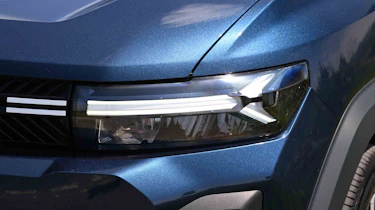
Distinguishing between the Bigster and smaller Duster is easier said than done, unless they’re parked side by side. Both have a rugged look, smart LED daytime running lights and X-themed exterior details that will appeal to SUV buyers, while the tall ride height gives that all-important high driving position.
The Bigster uses chunky design cues inside and out that make a virtue of the hard plastics and fabric trim, which are used throughout the car. But the overall material quality is clearly a step behind that of pricier rivals.
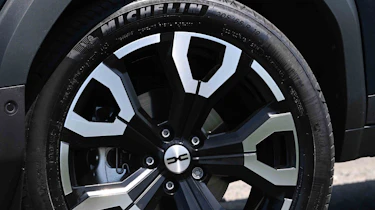
Despite the Bigster’s focus on value, it’s pretty well equipped. The base-level Expression comes with a 10.1-inch touchscreen and seven-inch driver’s display, plus dual-zone air-conditioning, a 40:20:40-split rear bench, front and rear parking sensors, a reversing camera, 17-inch diamond-cut alloy wheels and four ‘YouClip’ anchor points for attaching accessories such as cup-holders, phone mounts and bags.
Mid-spec Journey is our favourite trim, because for around £1,500 extra you get:
- 19-inch alloys
- A powered tailgate
- A 10.1-inch digital driver’s display
- A heated steering wheel
- Heated front seats
- Unique seat upholstery
- A wireless smartphone charger
- Electrically adjustable door mirrors
- High-beam assist.
Costing only around £300 more, the Extreme version is well worth a look too. Its adventurous looks are finished off with copper exterior highlights and smaller (and more comfortable) 18-inch wheels than the Journey. It also gets keyless entry, roof bars and a panoramic sunroof that we found casts a bit more light into that spacious interior. There’s even washable seat upholstery and rubber floor mats to make cleaning up after outdoor pursuits that much easier.
Interior and dashboard design
Despite the Bigster name emblazoned on the tailgate and C-pillars, we regularly found people confusing it with a Duster on our test drives. The two have the same design cues, such as the Y-shaped daytime running lights; it’s just that the Bigster is a bit larger.
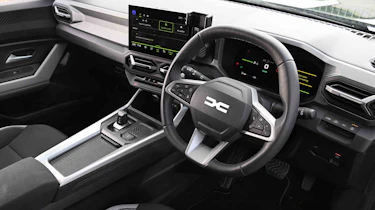
It’s a similar story inside, where the Y-shaped theme continues on the air vents and door trims, while the high-set touchscreen and digital dials add a modern edge. Those systems are borrowed from Dacia’s parent company, Renault, and plenty of switchgear is taken from the French brand, too, such as the bank of climate switches on the centre console and the steering column stalk that you can use to adjust the audio settings; even the keycard will be familiar to anyone who’s owned or driven a Renault from the past 20 years.
Materials and build quality
While the cabin looks smart, the material quality in places leaves a little to be desired. There’s not much wrong with how the switchgear works, and the neoprene-style seat fabric feels high-quality to the touch, but there are lots of hard plastics. In places they don’t feel particularly robust, either.
The rear door handles are another example of questionable perceived quality. These are mounted in the C-pillars, yet they feel a little flimsy – they’re double-hinged for strength, but the plastic grab handles flex as you pull the handle open.
There were rattles in the cabin, too, while the driver’s door seal on our car was missing a clip and didn’t sit smoothly with the shut line when the door was closed. It didn’t mean there was extra wind noise, but this was another sign that the Bigster is built down to a cost.
The nine plastic YouClip attachments (priced from £10 to £41) offer extra storage space for smartphone holders, cup-holders or even a removable lamp. They felt flimsy to us, and during our long-term testing, our creative director, Darren Wilson, found that the smartphone holder on the dash rattled while driving.
Infotainment, sat-nav and stereo
The Bigster uses the same touchscreen system as other Dacia and Renault models. Its 10.1-inch display has crisp graphics and clear text, while shortcut keys are positioned in a vertical row on the driver’s side.
The system responds reasonably well, but the built-in Here navigation software is slow to use. Thankfully, wireless smartphone connectivity is fitted so you can bypass Here completely. The set-up wouldn’t always detect our Apple device when it was connected via a cable, but Bluetooth worked fine.
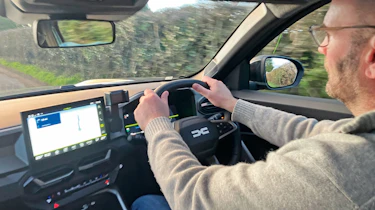
As for the driver’s display, it’s configurable to a degree, with a rather basic trip computer. You can have navigation instructions (smartphone app or in-built sat-nav) shown on the screen, which we think is a classy touch at this price point. In the 4x4 model, there’s also an off-road readout for things including altitude, the slope or tilt angle of the car, and a compass for when you’re really getting into the wilderness.
“Dacia’s YouClip system features small plastic squares that you can lock different pieces of kit to. There are additional YouClips in the boot, while Dacia offers a range of accessories such as a torch, bag, suit hanger and tablet holder.” – Dean Gibson, senior road test editor.
Boot space & practicality
Pros |
|
Cons |
|
The extra length and wheelbase the Bigster has over the Duster means it also offers more passenger and boot space than you’ll find in a number of more expensive rivals.
Dimensions and size
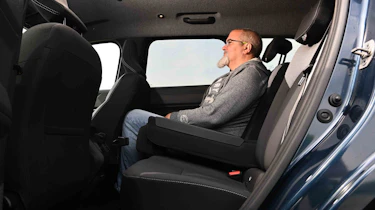
At 4,570mm, the Bigster is 227mm longer than the Duster and plenty of that has gone into making the rear seat and boot space even more generous. The boxy, upright profile of the Bigster also means that headroom isn’t an issue for tall adults up front or in the back.
| Dimensions comparison | |||
| Model | Dacia Bigster | Dacia Duster | Citroen C5 Aircross |
| Length | 4,570mm | 4,343mm | 4,652mm |
| Width | 1,812mm | 1,813mm | 1,936mm |
| Height | 1,711mm | 1,656mm | 1,688mm |
| Wheelbase | 2,702mm | 2,657mm | 2,784mm |
| Boot space | 612-1,977 litres | 474-1,609 litres | 565-1,668 litres |
Seats & passenger space
There’s a decent range of seat adjustment, but taller drivers might find the left footrest a little high and a lack of under-thigh seat support could cause some aches on longer trips. There’s a decent view out, although the high-set bonnet creates a bit of a blind spot immediately ahead of the car, so it’s better to position the seat a little higher than you might normally have it.
Storage up front is fine, but the design of the door cards makes access to the long bins below the armrests a little tight, while the bins themselves are narrow. There’s a reasonable glovebox – the fuses encroach into the space, but what’s left is quite deep – while the centre armrest is a decent size, with twin cup-holders ahead of it.
Access to the rear is good via long, wide-opening doors, and there will be no complaints from passengers about the space in the back. Headroom is plentiful, while legroom is among the best in the class, and there’s good foot space, even considering the ridge in the floor under the front seats.
Occupants are well catered for, too, with twin air vents and USB-C connectors, while the centre section of the back seat folds down to give you twin cup-holders and a couple of angled slots to hold phones – as well as a ski hatch. The rear door bins are a little narrow, though.
Boot space
Journey models get a powered tailgate that opens to reveal a vast cargo area. Its capacity of 612 litres is 140 litres up on the Duster, and ahead of the Nissan Qashqai and Hyundai Tucson hybrid, too.
Boot space varies according to the version you choose. The 4x4 comes with 17 more litres than the full-hybrid models, but thanks to the all-wheel drive system it’s 48 litres down on the two-wheel-drive mild-hybrid.
There are two false floorboards with enough room below for a space-saver spare wheel (a £200 option), while the rolling load cover can be fixed in two positions. The back seats fold almost flat and can be released via levers set into the sides of the boot, or there are fabric pulls on the seat shoulders, although these are thin and fiddly to reach from the passenger compartment.
Towing
Some buyers might want to tow with the Bigster, and if you want the maximum towing capacity, you’ll have to choose the non-hybrid version. The Bigster TCe with either two- or four-wheel drive will match the 1,500kg braked towing limit of the Duster. The 155 Hybrid tops out at a disappointing 1,000kg, which is only 250kg more than the hybrid Duster.
As mid-size SUVs go, the 2.0-litre TSI-powered Volkswagen Tiguan with 4MOTION is one of the very best options for towing, as it can manage up to 2,200kg. The 2.0-litre TDI diesel-powered Skoda Karoq isn’t far behind at 2,100kg.
“If you want to make the most of the Bigster’s improved cabin space over the Duster, then I’d recommend investing in the Sleep Pack. This simple camping kit costs £1,740 and adds a plywood box that contains a rolled-up mattress and blackout window blinds.” – Dean Gibson, senior road test editor.
Reliability & safety
Pros |
|
Cons |
|
The Bigster’s Euro NCAP safety score is based on the one achieved by the Duster in 2024, so it only has a three-star rating. There are plenty of advanced safety systems on board, though.
Emergency braking with pedestrian, cyclist and motorcycle detection, traffic-sign recognition, lane-change alert and driver-attention warning are included, and the systems aren’t as intrusive as those of many rivals. The cars lost points because they don’t have some of the more advanced systems that Euro NCAP requires to achieve the full five-star rating.
The Bigster didn’t appear in the 2026 Driver Power owner satisfaction survey, but the Dacia brand finished in a woeful 30th out of 30 on the best manufacturer scoreboard. The brand achieved poor scores in nearly every category, but it was ever-so-slightly redeemed by bagging top position for value.
| Euro NCAP safety ratings | |
| Euro NCAP safety rating | 3 stars (2024, based on Duster) |
| Adult occupant protection | 69% |
| Child occupant protection | 85% |
| Vulnerable road user protection | 60% |
| Safety assist | 57% |
Buying, prices and deals
Best buy: Dacia Bigster Hybrid Journey
The hybrid powertrain makes a lot of sense in the Bigster, because it’s efficient and won’t need to be worked as hard as the 1.2 TCe to make progress. And with such great value, the Journey trim is worth buying for its extra luxuries as long as you can live with the slightly unsettled ride. The Extreme version isn’t much more expensive, though.
The Bigster retains Dacia’s reputation for value, because it undercuts many similarly-sized rivals. There’s a starting price of around £25,000 for the mild-hybrid 1.2 TCe, which is roughly £3,500 more than the Duster with the same engine. As with the smaller car, adding four-wheel drive costs around £2,500, while the hybrid model starts at a fraction over £26,500. The only equivalent car that comes close to the Bigster’s price is the Citroen C5 Aircross Hybrid, but even that starts at over £31,000.
Unlike the Duster, there is no basic Essential variant, so the Bigster range kicks off with Expression trim, followed by Journey and then Extreme, with the latter offering a more rugged outdoor adventure design than the rest of the line-up.
You can save on the list price by building your new Dacia Bigster with the Auto Express Buy A Car service. We also have a range of Bigster leasing deals to choose from, along with new Bigster models in stock and ready to go.
Dacia Bigster alternatives
Considering the combination of the Bigster’s size and price, rivals are scarce, although there is steady competition for the high-spec hybrid versions. One recent arrival that comes close to the Bigster for value is the Citroen C5 Aircross.
In You! trim, the base Hybrid model is similarly priced to the Bigster’s Journey trim, but the Citroen offers better comfort than the Dacia. Elsewhere there’s the well-equipped MG HS, which offers a plug-in hybrid version with a 75-mile electric range. Other similarly sized SUVs such as the Nissan Qashqai and Kia Sportage, start from around £5,000 more, but won’t be as well equipped.
Key updates of the Dacia Bigster review
31 July 2026: Latest driving impressions from our long-term test.
Frequently Asked Questions
Dacia created its ‘Zen package’ in 2024 to improve the warranty on its vehicles. With the Bigster, if you get the car serviced at an official Dacia franchise, then it is automatically entitled to 12 months or 18,000 miles of warranty cover. You can cover the Bigster up to its seventh year or for up to 75,000 miles.
Deals on the Dacia Bigster and rivals
More reviews
Car group tests
In-depth reviews
Long-term tests
Which Is Best