Vauxhall Vivaro Life review
Van-derived Vauxhall Vivaro Life MPV offers acres of space and refinement, but efficiency lets it down

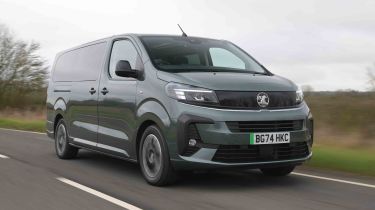

Our opinion on the Vauxhall Vivaro Life
If passenger carrying is important to you, then a van-derived MPV such as the Vauxhall Vivaro Life is worth considering. This model offers up to nine seats, depending on which version you choose, and there’s quiet all-electric running on offer. However, other electric van-based MPVs have moved the game on with more efficient powertrains and a more enjoyable drive, leaving the Vivaro Life as a niche choice suitable for a narrow range of users.
About the Vauxhall Vivaro Life
Vauxhall has long been a curator of MPVs, with cars such as the Zafira and Meriva offering families lots of space in an affordable package. Today, with SUVs taking over much of the market, it falls to Vauxhall’s van-derived models, the Vivaro Life and smaller Combo Life, to meet that same requirement.
The Vivaro Life is one of a number of van-derived models from within the Stellantis group. It shares its bodyshell and mechanicals with the Citroen SpaceTourer, Peugeot Traveller and Toyota Proace Verso, plus non-UK models including the Fiat Ulysse and Opel Zafira Life. And that’s not to mention all the panel and crew van derivatives that also use the same tech.
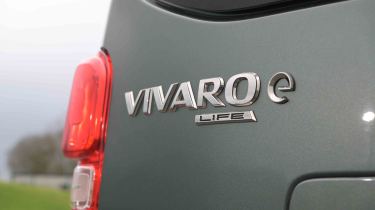
Electric drive is standard on the Vivaro Life, with a 75kWh battery under the floor and a front-mounted electric motor. Vauxhall offers the Vivaro Life in two lengths, with the longer body called XL, while there are eight or nine-seat configurations as standard, or a six-seat executive upgrade. If you don’t need that many seats, then the Vauxhall Vivaro van is available as a five or six-seat crew van, with a bulkhead dividing the load area from the passenger compartment.
Used - available now

2023 Audi
Q7
57,600 milesAutomaticPetrol3.0L
Cash £36,490
2024 Kia
Ceed
41,113 milesManualPetrol1.5L
Cash £12,080
2021 Ford
Fiesta
45,933 milesManualPetrol1.0L
Cash £8,690
2023 Nissan
Juke
45,856 milesManualPetrol1.0L
Cash £11,290We've tested the Vauxhall Vivaro Life against the Kia PV5 Passenger, and while you can get the Vauxhall with more seats than the Kia, the latter makes the Vivaro Life feel a generation behind in terms of its driving and efficiency. The Vauxhall is also quite pricey compared with its rival.
Vauxhall Vivaro Life prices and latest deals
Prices for the Vauxhall Vivaro Life start from just under £37,000 before any electric vehicle grants (ECG) are deducted. The entry-level nine-seat model Combi trim in standard and longer XL body (a £900 extra, whichever trim you choose) qualifies for the £1,500 Band 2 discount. The rest of the Vivaro Life line-up are too expensive to qualify for this discount.
Design trim starts from around £42,750 and is slightly less basic, and features eight seats as standard. The Ultimate starts from around £48,000 and is also an eight-seater as standard, and features plusher materials. With so many manufacturers offering very similar models in a small market, there are discounts of up to £4,000 on the Vivaro Life via Auto Express Buy a car.
Performance & driving experience
Pros |
|
Cons |
|
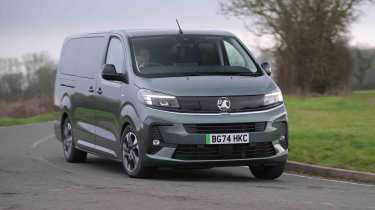
The Vivaro Life isn’t as van-like from behind the wheel as some MPVs, but it’s not going to set the world on fire with an engaging drive because it’s relatively underpowered.
Electric motors, 0-60mph acceleration and top speed
The Vauxhall Vivaro Life uses a platform that was originally developed by PSA Peugeot Citroen before the French company took over Vauxhall Opel and then later formed the Stellantis Group. It uses parts of PSA’s EMP2 passenger car platform to boost overall driving performance, and in the Vivaro Life it currently comes with a 134bhp electric motor that drives the front wheels, with a 75kWh battery providing energy.
It’s not the fastest set-up around, but once you’re under way, there’s acceptable mid-range acceleration once the system reacts to your throttle inputs. Just don’t expect much in the way of overtaking punch.
Town driving, visibility and parking
The Vivaro is at the smaller end of the medium-sized van sector, but the passenger version is still pretty big when compared even with large SUVs. Thankfully, it’s mostly the vehicle’s length that you need to account for, because it’s not especially wide and can get through width restrictions without issue. The Vivaro Life is also less than two metres tall, so it’ll fit in most multi-storey car parks.
Light steering boosts manoeuvrability, while the tall seating position helps you position the front of the car. It’s trickier looking behind, because the door mirrors aren’t the biggest you’ll find in this sector, but all versions come with rear parking sensors as standard.
The boxy body keeps occupants reasonably comfortable, but bigger bumps can resonate through the cabin. At least the weight of the battery helps to smooth out the ride.
The most recent updates to the Vivaro introduced energy recovery that’s adjustable via steering wheel paddles, and in the strongest setting you only really need to use the physical brakes when coming to a halt, because there’s no one-pedal driving offered.
Country road driving and handling
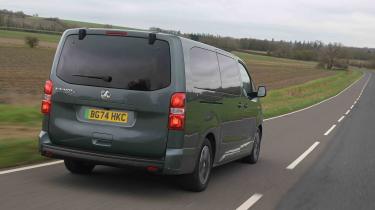
It’s all about keeping up momentum at higher speeds, because the Vivaro Life hasn’t really got the grunt to make it an enjoyable car to drive. You get an excellent view of the road ahead, but the steering is vague around the dead ahead and is slow to react, and it doesn’t really give you any information about what the front tyres are doing.
This is a big, heavy van-derived MPV, so you’re not going to expect scintillating handling, but even when compared with rivals such as the Kia PV5 Passenger and Ford Tourneo Custom, the Vivaro Life is more about getting from A to B than being enjoyable. At least the ride remains comfortable.
Motorway driving and long-distance comfort
There’s a bit more wind and road noise at the national limit, but the Vivaro Life is stable and can keep pace with flowing traffic fairly easily. Steeper slopes might see it struggle a little if you’re carrying a full set of passengers.
To help with comfort we’d recommend setting the energy recovery to its lowest level so you coast more often. With the higher settings engaged, it can be tricky to maintain a smooth throttle, and this can result in a jerky drive that could unsettle passengers.
"The Vivaro Life suits the executive travel market well, and is an ideal shuttle for airport or hotel concierge services. The Ultimate version looks pretty smart and is quiet and refined at lower speeds." – Dean Gibson, senior test editor
Range, charging & running costs
Pros |
|
Cons |
|
There’s better value at the entry point to the Vivaro Life range, although the top-spec Ultimate is very affordable when compared with the Mercedes EQV, if you’re looking for an executive shuttle.
Electric range, battery life and charge time
While a 50kWh battery was offered for a time in the Vauxhall Vivaro Life, it only comes with a larger 75kWh pack now. It’s located under the floor, while the electric motor and auxiliary running gear are under the bonnet where the diesel engine would otherwise be located.
Official range figures quote a maximum of 216 miles for the Vivaro Life, while the longer and heavier XL model is a couple of miles behind that. We have lots of experience of the Vivaro Life’s powertrain in a number of other Stellantis vans and people carriers, and we have always found the official figures difficult to match.
When we tested a Vivaro Life XL against the Kia PV5 Passenger in cold weather, we saw a best return of two miles per kWh for the Vauxhall when driving on dual carriageways and faster A-roads. That’s not very impressive, especially when the Kia managed 2.7 miles per kWh on similar roads. Neither car came with a heat pump to mitigate against any energy losses due to the cold weather, although the top-spec PV5 offers one as an option.
Charging speeds are modest for the Vivaro Life, with a maximum DC charging rate of 100kW on offer. This can take the battery from 5-80 per cent capacity in 45 minutes, which isn’t particularly impressive. On the plus side, Vauxhall fits 11kW three-phase charging as standard to the Vivaro, so a flat battery can be charged overnight in seven-and-a-half hours, or it’s 11 hours and 20 minutes from a standard home wallbox.
| Model | Battery size | Range | Insurance group |
| Vivaro Life | 75kWh | 216 miles | 33 |
| Vivaro Life XL | 75kWh | 213 miles | 33 |
Insurance groups
Group 33 ratings are quoted for Design and Ultimate versions. There’s no rating for the more basic Combi, but it might be cheaper to insure courtesy of its easy-to-repair black plastic bumpers and basic steel wheels. These ratings are a little high, especially when you consider that the Kia PV5 Passenger starts in Group 25.
Tax
Vehicle excise duty (VED) or road tax is charged at the standard rate for every model in the Vivaro Life line-up, although beware of adding too many options to the highest-spec Ultimate cars, because that could push them over the £50,000 luxury car surcharge faced by expensive models in years two to six.
Company car rates are fairly low, with annual BiK rates rising from £250-£500 depending on P11D price.
Depreciation
We don’t have residual value figures for the Vivaro Life, but the smaller Combo Life is the 39-41 per cent range, and we don’t expect the more expensive Vivaro version to be able to match that, despite its fairly unusual ability to seat nine people while still being classed as a passenger car.
Interior, design & technology
Pros |
|
Cons |
|
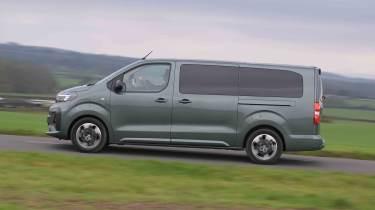
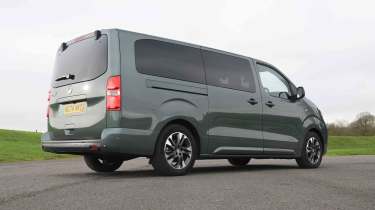
There’s no getting away from the Vivaro Life’s van roots, with its sloping front end and monobox shape. It’s been designed to offer as much space as possible within its dimensions, so you get flat sides, a level roof and an upright rear end.
Interior and dashboard design
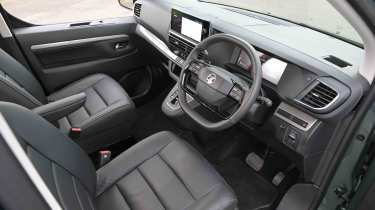
There’s not much design flair on the inside, either. Vans are designed to be functional, and the Vivaro Life has a simple configuration with plenty of straight edges and hard plastics on show. With a couple of redesigns through its life, the switchgear has become haphazard, with the drive selector toggle switch positioned on a protruding piece of dashboard where a manual gearlever or drive selector was once mounted, while a manual handbrake has been replaced by an electric switch. This now sits to the right of the steering wheel; it used to be next to the driver’s seat.
Materials and build quality
There’s no avoiding the hard plastics used across the top of the dashboard and doors, but the piece of silver trim added to the dash on Ultimate cars gives them a bit of a lift, as does the leather upholstery. Lower-spec cars come with hard-wearing grey fabric. Everything feels well put together, though, with no rattles or squeaks to be heard when we tested the Vivaro Life XL in Ultimate trim.
Infotainment, sat-nav and stereo
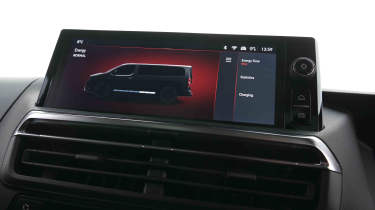
The Vivaro Life has a 10-inch widescreen infotainment display that’s located on top of the dashboard above the central air vents, where it’s easy to access. It comes with a physical volume knob and a pair of shortcut keys that take you directly to the home screen and driver assistance menus, while the physical climate controls below the air vents mean quick adjustments can be made easily while on the move.
Another digital display is located ahead of the driver. This is another 10-inch cluster that includes driving information, although the range of data that you can display (which is changed via buttons on the steering wheel) is limited. The trip computer, for example, is rather basic, with just three sets of information to choose from.
The Vivaro’s infotainment is a reskin of a system used elsewhere in the Stellantis group, but has red highlights to indicate that you’re in a Vauxhall. Picture resolution is fine, although the 10-inch widescreen display needs a deliberate prod to confirm a selection and can sometimes be slow to respond.
Ultimate cars add navigation, but the grey map colours don’t make the mapping particularly clear. If you connect a phone, a shortcut button appears in the top corner of the display for CarPlay or Android Auto.
"There have been headlines recently calling out Stellantis for backtracking on its commitment to zero-emissions vehicles by offering diesel versions of its medium-sized van. In reality, the diesel models never went away, they were just in limited supply. Take the Vivaro Life as an example. Private buyers can only drive away in an electric model, but Vauxhall offers a diesel version to companies that specialise in conversions, mainly within the wheelchair access market." – Dean Gibson, senior test editor
Boot space & practicality
Pros |
|
Cons |
|
With a van-derived MPV, you’re getting the most amount of space you’re likely to get within a vehicle’s footprint. Box-like dimensions offer room that’s easy to configure and fill with stuff if you need to.
Dimensions and size
There are two body lengths on offer with the Vivaro Life, but the wheelbase and width remains the same for both cars. The Vivaro is at the smaller end of the medium-sized van scale, and the Ford Tourneo/Transit Custom, Renault Trafic and Mercedes Vito/V-Class/EQV are all bigger.
| Dimensions comparison | |||
| Model | Vauxhall Vivaro Life/XL | Volkswagen ID. Buzz/LWB | Ford Tourneo Custom |
| Length | 4,980/5,331mm | 4,712/4,982mm | 5,050/5,450mm |
| Width | 1,920mm | 1,985mm | N/A |
| Height | 1,890mm | 1,927mm | 1,981mm |
| Wheelbase | 3,275mm | 2,989/3,239mm | 2,933/3,300mm |
| Boot space (5 seats) | 1,624 litres | 1,121 litres | 1,735 litres |
Seats & passenger space
Combi versions of the Vivaro Life come with nine seats in a three-three-three configuration, while the Design and Ultimate versions have eight seats in a two-three-three layout. On top of that, you can upgrade the top-spec model with individual armchairs in the middle and rearmost rows, turning the Vivaro Life into a seven- or six-seater.
The Combi’s front row is taken from the Vivaro van, so there’s a bit more space around the driver with a twin passenger seat next to it that’s a bit too narrow for two adults to sit on it comfortably. What’s more, it’s bolted to the floor so you can’t adjust it for more legroom, which is needed for the middle seat because the drive selector sits proud of the dashboard, eating into knee space.
The two-seat configuration in Design and Ultimate cars offers lots of room, while the latter is pushed upmarket thanks to its leather trim, seat heating and massage function.
Storage is decent up front, with the door bins and shelves offering plenty of options, but the shelf next to the USB charging port is a bit shallow for a smartphone, the cupholders at either end of the dash top aren’t very deep and the lidded cubby on top of the dashboard is small. There’s no glovebox, just a shelf next to the fuses.
The two back rows offer plenty of room, while access is simple via the sliding side doors, even in tight parking spaces. They’re fine for comfort, while the armchair upgrade for Ultimate trim adds a couple of plush seats that can even be turned through 180 degrees to be rear facing, although Vauxhall recommends choosing the XL body if you want to do this, because the standard length will be short on legroom.
There are bins in the sliding doors and cupholders for the rearmost row, while fitting the armchairs also adds a central table/storage unit that slides on the rails in the floor.

Boot space
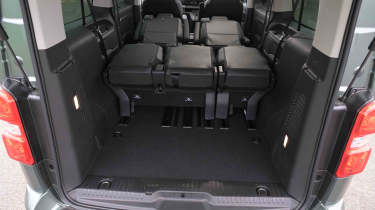
A big body means plenty of space in the back of the Vivaro Life, and you can make even more room if you remove the seats, although this is a slightly awkward affair because they’re heavy and you’ll need somewhere to store them. The three-abreast seats consist of a single seat next to a double, but the three backrests fold individually, so it’s always an option to load longer items across the top of the seats without removing them completely.
A low load lip, flat floor and vertical sides boost the Vivaro’s load-carrying capability, and you can slide the seats forward if you need to make the most of the boot.
"If you don’t need the eight or nine seats, you can make the Ultimate model a seven-seater with the Rear Seat Pack. For £750 this adds two plush leather armchairs in the middle row that can slide, rotate and be removed completely, while they still come with Isofix child seat mounts, too. On top of that, an extra £740 allows you to add two more armchairs in the rearmost row, turning the Vivaro Life into six-seat executive transport. If that all looks a bit pricey, the Vivaro van is available in a Crew configuration with five or six seats in two rows and with a plastic bulkhead dividing the cargo and passenger areas." – Dean Gibson, senior test editor
Reliability & safety
Pros |
|
Cons |
|
The sheer number of models using the same bodyshell and running gear as the Vivaro Life within the Stellantis group should ensure millions of miles are covered that could expose any potential issues. Plus, there’s the added benefit of the simplified electric running gear, which means it’s less likely to fail in the first place.
Safety kit is decent, too, with automatic emergency braking, speed limit warning, lane assist and auto main beam all as standard across the line-up, although blind-spot detection is only fitted to the top-spec Ultimate model.
That’s the positive side of things; the negatives include a basic three-year warranty (you have to pay extra for an extension), while adaptive cruise control is optional and rather oddly, it’s bundled in with a heated steering wheel.
Warranty cover is only basic at three years and 60,000 miles, which is disappointing when some rival brands offer longer cover. Toyota is a prime example. The Proace Verso is largely the same as the Vauxhall, but it’s covered by a service-activated warranty that can last up to 10 years or 100,000 miles.
Buying and owning
Best buy: Vauxhall Vivaro Life Design XL
If you need nine seats, then the Vivaro Combi is the model for you, but we’d spend a little extra and pick the Design model for its improved looks, courtesy of the body-coloured bumpers and alloy wheels.
Vauxhall Vivaro Life alternatives
The obvious alternatives are the Citroen, Peugeot and Toyota models that share the same body and running gear as the Vivaro Life. They are all closely matched on price and spec, so the decision could come down to who has the best finance offers at the time of purchase.
Beyond these, the Volkswagen ID. Buzz is a high-end van-derived SUV that’s expensive, but it will be a far more enjoyable ownership experience. The Mercedes EQV is even more expensive and adds a premium edge, but the most convincing rival for the Vivaro Life is the Kia PV5 Passenger. It’s not quite as big as the Vauxhall and only has five seats at launch, but it’s a lot better to drive, is far more efficient and undercuts the Vauxhall on price.
Vauxhall Vivaro Life pictures
Frequently Asked Questions
Intervals are every 24 months or 25,000 miles, whichever comes first. And with all-electric running gear under the skin, the Vivaro Life has few moving parts that need attention, so service costs should be lower than they are for a diesel van.