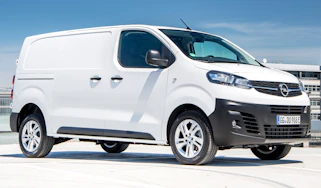
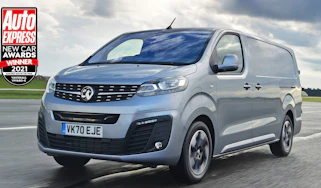
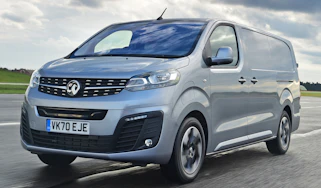
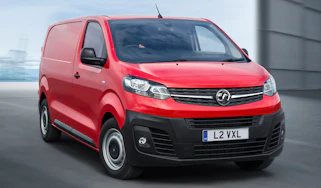
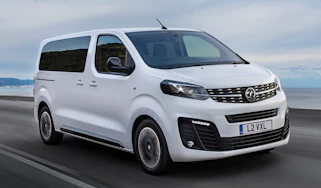
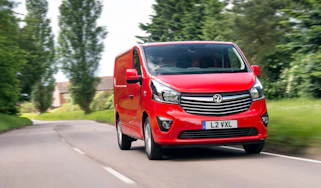
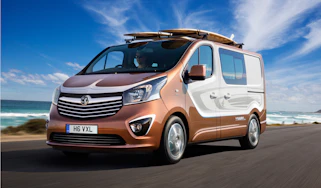
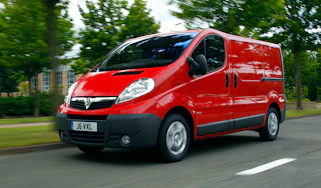
Vauxhall Vivaro van review
The Vauxhall Vivaro comes with a range of body and powertrain options, but it’s no spring chicken
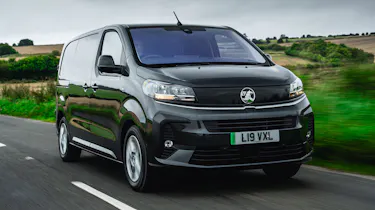
Our opinion on the Vauxhall Vivaro
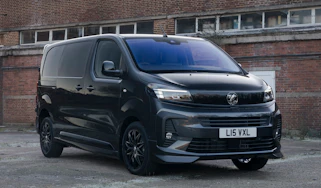
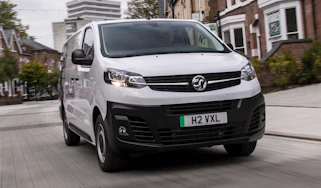
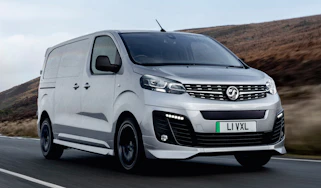
Overall, the Vauxhall Vivaro offers a user-friendly package that should appeal to medium-sized van buyers who want something that's car-like to drive. Prospective Vivaro owners are also faced with an appealing amount of choice with both diesel and electric power on offer, along with a number of body styles.
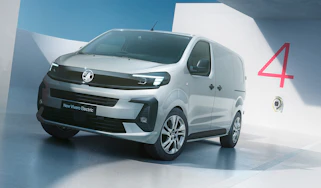
However, this generation of the Vivaro dates back to 2019, and although a facelift was carried out in 2024, this van is starting to feel a bit dated compared to younger rivals like the Kia PV5 Cargo.
About the Vauxhall Vivaro
Now that Vauxhall is one of many Stellantis-owned brands, the Vivaro shares its engineering and most of its design with the Citroen Dispatch, Peugeot Expert and Fiat Scudo. There’s also a fourth, non-Stellantis member of the family, the Toyota Proace.
These may be stablemates of a sort, but they all provide stiff competition for the Vivaro, each offering unique touches. There’s also some price fluctuation to keep an eye on.
The Vauxhall Vivaro is built in two lengths, standard and XL, with the latter’s additional length located behind the rear axle. This means both variants have the same wheelbase. The Vivaro is no longer available with a high-roof option, but the five-seater Vivaro Double cab continues. This has a second row of seats and it's available in the same standard and XL lengths as the panel van.
Used - available now

2019 BMW
5 Series Touring
75,529 milesAutomaticDiesel2.0L
Cash £16,399
2018 Skoda
Fabia
16,292 milesAutomaticPetrol1.0L
Cash £11,500
2018 Audi
A3 e-tron
81,677 milesAutomaticPetrol1.4L
Cash £9,500
2021 Suzuki
Swift
84,709 milesManualPetrol1.2L
Cash £8,200Powertrain options were slimmed as part of the Vivaro’s mid-life facelift, but there’s still a choice of diesel or electric – the former with a choice of manual or automatic gearboxes.
MPG and running costs
Pros |
|
Cons |
|
For those sticking with combustion power, the Vivaro now comes with a choice of two engines: a 1.5- or 2.0-litre Turbo D diesel. The larger engine also comes with two power outputs, depending on your chosen spec.
It’d be natural to presume that the best-performing engine for economy is the smaller 1.5-litre, and this is certainly pretty good on fuel at up to 44.8mpg on the WLTP combined cycle. However, it’s actually the less-powerful 2.0-litre unit which leads the way at 45.6mpg. The more powerful 2.0-litre isn’t too far behind, either, at 43.5mpg.
There’s a slight economy penalty to pay if you opt for an automatic transmission, regardless of your chosen engine.
The diesels have a 22.5-litre AdBlue tank that will need filling every few thousand miles. This is critical to controlling the van's emissions, and the trip computer will let you know when it needs doing – ignore it and eventually the van won't start.
Electric range, battery life and charge time
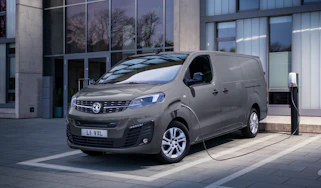
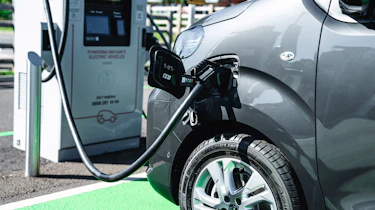
The Vivaro Electric has fewer moving parts, so it should, theoretically, be easier to maintain – provided the 219-mile WLTP combined electric range suits your needs.
When you need to top it up, 100kW DC rapid charging allows a 5-80 per cent top-up of the 75kWh battery within 45 minutes. 11kW AC charging is available, but seeing as most home wallbox chargers are 7.4kW units, a full charge from one of these will take around 10 hours.
Load space and practicality
Pros |
|
Cons |
|
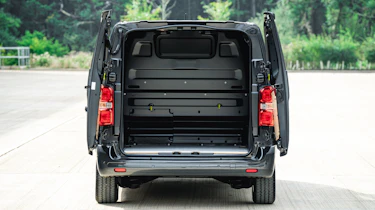
The Vivaro comes in standard or XL guise, but while the last Vivaro had a longer wheelbase to increase cargo volume, the Vivaro Mk3 has extended bodywork behind the rear axle. The two variants measure at 4,959mm and 5,309mm in length, respectively.
Unlike previous generations, the current Vivaro isn’t offered with a high roof option. The standard van is slightly taller than before, but that's no compensation for buyers wanting significant extra height. For this, they'll need to look at rivals like the Ford Transit Custom or Renault Trafic.
Although it lacks a high roof option, the latest Vivaro’s cargo capacity is slightly larger than the previous model. Load volumes measure up at 5.3 cubic metres for the standard, and 6.1 cubic metres for the XL. This expands to 5.8 and 6.6 cubic metres when the through-load facility is used, but this only applies to loads that can fit through the hole in the bulkhead, which will be planks, ladders, tubing or pipework.
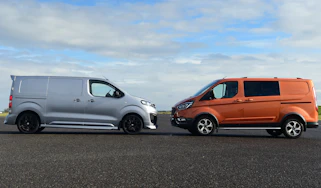
In comparison, the Ford Transit Custom offers up to 5.8 cubic metres of space without adding a through-load option, and there's an XL variant that extends this to 6.8 cubic metres.
There's also quite a broad spread of payload weights for the Vivaro, depending on your chosen powertrain. The least powerful 1.5-litre diesel manages up to 1,173kg, while the lesser-powered 2.0-litre bumps this to 1,326kg. Diesel Vivaros fitted with an automatic suffer a slight payload penalty, and because it’s not available with a manual, the higher-powered 2.0-litre is only capable of 1,296kg. The Vivaro Electric, meanwhile, can only handle up to 1,210kg.
While load volumes and payload weights are good, access to the Vivaro's load space is a bit of a sticking point. The van's exterior design means the rear isn't as upright and square as before, and the back door openings are 100mm shorter, while the overall width of the rear opening is down by 109mm. This might be a major sticking point for potential buyers, although twin side doors are at least standard across the range.
Reliability, safety and security
Pros |
|
Cons |
|
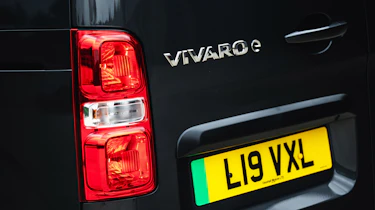
The Vauxhall Vivaro is now one of the safest medium panel vans on sale. It sources electronics from the company’s EMP2 platform found under cars such as the Citroen C5 Aircross and previous generation Vauxhall Grandland. This means advanced safety kit such as lane departure warning, adaptive cruise control and autonomous emergency braking are standard.
One issue we do have with the Vivaro is the lack of wide-angle mirrors. The old van used to have a second smaller mirror below the main door mirror to boost rear visibility, but that's no longer the case. The Dynamic Surround View with Connected Navi Pack adds blind-spot assist, plus a load of cameras and all-round parking sensors, but it’s a £1,250 option on base models.
In the unfortunate event that you do have an accident, the Vivaro earned a gold Euro NCAP rating when tested in 2024.
And the good news continues in terms of the latest Vivaro's reliability. Again, its use of Stellantis Group running gear means it's all been tried and tested on a variety of passenger cars and commercial vehicles. For example, the body, chassis, suspension, engines and electronics are all shared with the Citroen Dispatch and Peugeot Expert, and these two models have been for sale in the UK since 2016 without much issue.
Driving and performance
Pros |
|
Cons |
|
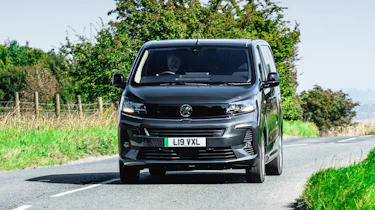
There's a choice of 1.5 or 2.0-litre diesels, and unless you don't carry many weighty items in the back of your van, we'd recommend the 2.0-litre over the 1.5. The lower-capacity unit is good for economy, but you'll have to work it harder with a heavy load on board, which will cancel out any fuel-saving benefits it might provide.
The 2.0 is available with either 118bhp or 148bhp. We found that the less-powerful covers most bases and, in our experience, didn’t seem to suffer with a full load in the back. Our test van had the standard-fit six-speed manual gearbox, which has a relatively short first gear but can get bogged down if you’re not prepared to cycle through the cogs when pulling out for an overtake, for example. If you're doing big mileages and can afford the extra outlay, we'd choose the eight-speed auto. It's a smooth gearbox that takes the strain out of driving.
As with a number of modern medium panel vans, the Vivaro’s responses are pretty car-like. The steering reacts quickly to inputs, and with a low centre of gravity, this van feels quite nimble when unladen. A Ford Transit Custom is more enjoyable from behind the wheel, though, if flinging your company van around is a priority.
Of course, the Vauxhall’s suspension is designed with heavy payloads in mind, and there's good stability with a half-load on board. When unladen, there's some suspension bounce, but it's not as harsh as some rival vans in the class.
Town driving, visibility and parking
Generally, the Vivaro feels manoeuvrable and compact in tight streets, but visibility could be better. For the quietest and briskest experience, the Vivaro Electric delivers instant EV acceleration without the clatter of a diesel engine.
Motorway driving and long-distance comfort
Generally speaking, refinement is good, and both the diesel and electric Vivaros are relatively quiet at higher speeds. This is especially the case if you’ve got a load out back, softening some of the road noise penetrating the bulkhead. We just wish the door mirrors were larger so you could have a better feel for your surroundings.
Cab interior and technology
Pros |
|
Cons |
|
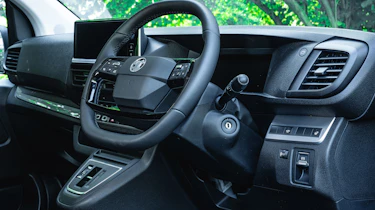
One thing we immediately noticed upon climbing into the Vauxhall Vivaro is that the seating position feels surprisingly low from behind the wheel. This is mostly due to the running gear, which makes this van feel car-like in a number of ways. It's still taller than most SUVs, but doesn't quite have the same commanding position that the old Vivaro did.
However, there's plenty of seat and wheel adjustment, so it's easy to get comfortable, and the seats themselves are reasonably supportive. Standard-fit lumbar support helps, although they might feel a little soft for some. One niggle is that while the driver gets a left armrest, there isn't one on the right – so you’re forced to lean into the centre of the van to get comfortable, or rest your arm on the window ledge, which feels a little high.
The seats are trimmed in easy-clean fabric, while all vans get a pair of passenger seats. However, if you are regularly travelling three-up, you might want to look elsewhere, because the Vivaro isn't the most comfortable three-seat van on the market – especially if you go for the manual gearbox, which will have you regularly brushing your companion’s knee.
Build quality is fine rather than particularly premium, with hard-wearing plastics that feel robust and solid, while storage is useful, too. The middle seat has a section that folds down to create a table, while the seat bases open to reveal underfloor storage, though this is also where loads come through if you're using the hatch in the bulkhead. The glovebox is on the small side, courtesy of the position of the fuse box next to it, but there's dashtop storage and deep door bins, plus individual cupholders on either side of the dash.
Infotainment, sat-nav and stereo
The Vivaro's dashboard is identical to the one you'll find in the Citroen Dispatch or Peugeot Expert, with the latest examples getting a pair of bright, clear digital displays. Most functions are on the central touchscreen, although the climate controls are separate, which we like. Apple CarPlay and Android Auto make pairing your phone nice and easy, and you can run maps and media seamlessly just as you would in most modern cars.
Buying and owning
If you do a lot of local trips around town, the Vauxhall Vivaro Electric will be the best option. Despite costing more initially, it could save you a lot of money in tax, tolls and fuel in the long run.
However, the diesel options will be a better bet for businesses that expect the van to be regularly used on the motorway. 40mpg isn’t too difficult from any of the diesel engines, and the automatic options take a lot of effort out of driving.
Alternatives
The Fiat Scudo, Citroen Dispatch, Peugeot Expert and Toyota Proace are all pretty much the same van as the Vivaro. The main differences are that the Toyota has a better warranty, and that their respective prices can vary quite considerably. Be sure to shop around to find the very best one for your needs and budget.
Elsewhere, the Vauxhall Vivaro’s arch-nemesis, the Ford Transit Custom, is a huge seller in the UK and comes in both diesel, plug-in hybrid, and electric forms. For those considering switching to zero-emission motoring, the Kia PV5 Cargo and Volkswagen ID. Buzz Cargo are two of the strongest contenders in this sector.
Van dimensions | |||
| Body style | Height | Width (with mirrors) | Length |
| Vivaro (& Doublecab) | 1,904mm | 2,204mm | 4,981mm |
| Vivaro XL (& Doublecab) | 1,935mm | 2,204mm | 5,331mm |
Load area dimensions | ||||
| Body style | Height | Width | Length | Volume |
| Vivaro (w/bulkhead option) | 1,397mm | 1,636mm | 2,512mm (3,674mm) | 5.3m3 (5.8m3) |
| Vivaro XL (w/bulkhead option) | 1,397mm | 1,636mm | 2,862mm (4,024mm) | 6.1m3 (6.6m3) |
Key updates of the Vauxhall Vivaro review
20 May 2026: Latest driving impressions and pricing.
Frequently Asked Questions
It’s a standard three-year or 100,000-mile warranty, which is the bare minimum to expect of a van warranty in the UK. The Vivaro Electric’s battery is covered for eight years against loss of capacity.