BMW 5 Series GT Power eDrive ride review
We take a ride in a BMW 5 Series GT prototype with the latest Power eDrive plug-in hybrid tech

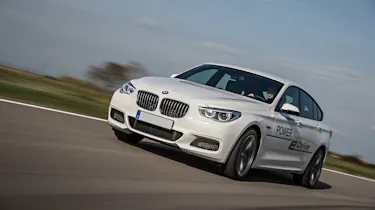
When we think of plug-in hybrids we tend to think of fuel economy and low emissions but BMW’s Power eDrive system delivers devastating performance too. The extra weight it adds to the BMW 5 Series GT prototype we had a ride in was evident in the corners but production versions will be significantly less bulky. With Power eDrive tech destined to filter out across the range, the future looks bright for BMW performance cars
BMW’s Power eDrive isn’t a powertrain you’ll be familiar with but be sure to remember the name, you’ll be hearing a lot more about it. Neatly packaged into the body of a 5 Series GT, the petrol-electric hybrid unit provides an insight into what BMW’s future performance models could be packing by the end of the decade.
The German brand has already confirmed its commitment to plug-in hybrid technology and that tech will be implemented into performance models. Beneath the surface of the 5 Series GT Power eDrive sits a petrol-electric powertrain and while exact performance figures are yet been finalized, this early demonstrator is pushing out around 650bhp. As for torque, engineers weren’t a liberty to divulge exact numbers but “four-figures” were hinted at.
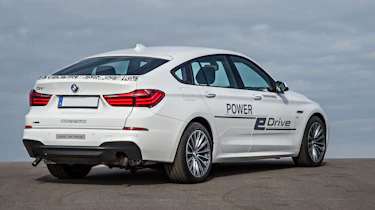
The powertrain consists of a 200bhp four-cylinder petrol engine along with a modified 200bhp electric motor from the i3 on the front axle, while a more powerful 250bhp motor sits at the rear. The setup is also designed to be scalable, with every engine configuration from four to 12 cylinders able to adapt to the system. Total power output can lie anywhere between 250bhp and 650bhp depending on requirement, with every model from the 3 Series upwards able to adopt the powertrain.
Used - available now

2019 Mercedes
GLA
53,561 milesManualPetrol1.6L
Cash £11,400
2021 SEAT
Arona
41,515 milesManualPetrol1.0L
Cash £9,600
2014 Audi
Q3
71,755 milesAutomaticDiesel2.0L
Cash £9,200
2020 Kia
Sportage
61,896 milesAutomaticDiesel1.6L
Cash £11,600• BMW 3 Series plug-in hybrid review
Our passenger lap of BMW’s test facility in Miramas, Southern France, was brief but was sufficient to give us an idea how capable but brutal the powertrain is.
Our test driver, Peter Schoplocher, Powertrain Developer for Concept Vehicles, pulls out of the pit lane in combined mode which sends power to front and rear axles via their respective axle-mounted electric motors, aided by the combustion engine.
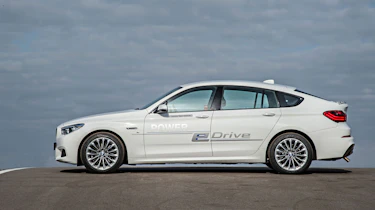
After a brief warning the throttle is mashed into the floor with neck-snapping acceleration being the predictable result. The delivery of torque is instant, with a deep whine from the electric motors the dominant soundtrack. The featureless track makes it difficult to judge speed but a quick glance over at the speedo as we approach the end of the straight showed the 5 Series GT nudging 160kmh (99mph) after little more than 10 seconds of flat out acceleration.
As we approach the first sweeping right hander, Schoplocher stamps on the brakes which highlights the cars physical bulk and weight for the first time. It weighs “significantly more than 2,000kg” but as this 5 Series GT is merely a demonstrator and not even a prototype it’s not reflective of any real world setup. The performance, however, is. We roll out of the bend tyres screeching under the immense weight before another savage attack on the throttle propels us straight ahead with unrelenting force.
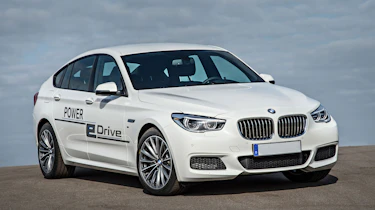
The outright pace of this plug-in hybrid is comparable of that of a 552bhp M5 but it’s worth noting an M5 has several hundred kilograms less to haul around. The Power eDrive 5 Series GT actually feels actually feels quicker off the line due over 1,000Nm of torque available from a standstill. Any future BMW that will feature this ruthless powertrain will be shedding all unnecessary weight and that’s a mouthwatering prospect for performance fans.
But it’s not all about brutal acceleration as a 20kwh battery provides up to a 62-mile fully electric range, currently double what any other plug-in hybrid offers. We’re unlikely to see the powertrain in any production capacity before 2020, but it’ll definitely be worth the wait.