New DS No8 Long Range 2026 review: lavish and likeable
The new DS No8 Long Range is expensive, but there's a lot of things to like


Verdict
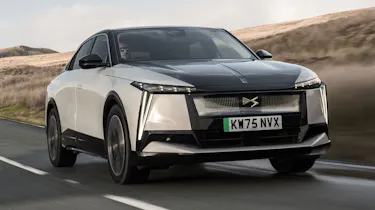
The DS No8 is both lavish and likeable. It deserves much more success than its predecessors with genuinely competitive electric underpinnings and a driving experience that refreshingly focuses on comfort and refinement above all else. It’s not quick, nor does it handle as sweetly as its many premium rivals, plus the Long Range version that makes the most sense, despite poor real-world range, is pretty expensive. But, No8 owners can enjoy the fact that they will have made a conscious decision to experience something genuinely different.
Big, premium French cars traditionally don’t sell well here in the UK. Consider, for example, the charming Citroen C6, which failed to upset the German monopoly of the executive saloon market. Or the DS5, which despite its interesting design, couldn’t strike a chord with buyers. More recently there was the ‘blink and you’ll miss it’ DS 9 flagship, which is a rare sight on UK roads despite only going off sale in 2024.
Looking to turn the tide is the DS No8, which we’ve already driven in the UK in its AWD dual-motor Long Range form. Now we’ve spent some time living with the single-motor Long Range model.
Over-ambitious pricing killed off the £75,000 DS 9 before it could gain any momentum, and it appears DS has learned a lesson with the No8. At £50,790, the DS No8 is more than £12,000 cheaper than the Audi A6 e-tron Sportback and over £17,000 less than the BMW i5. That’s for the single-motor car in base Pallas trim, while the better-equipped Etoile costs an extra £4,000. The entry-level model gets a 73.7kWh battery and single 226bhp motor mounted on the front wheels, while the long-range 97.3kWh battery pack comes with either a 242bhp single-motor layout or 343bhp dual-motor option.
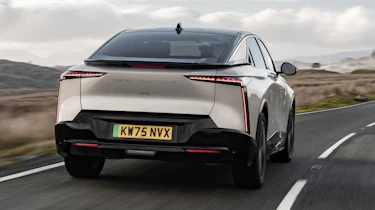
We’ve got the single-motor Long Range, which is suitably named as DS claims it can do a whopping 465 miles on a charge – 137 miles more than the small battery model, and 39 miles up on the dual-motor. However, its near-£60,000 price tag brings into play the likes of the BMW iX3 and Volvo EX60, which can conquer 500 miles on a charge – or as we’ve experienced in the real world for the BMW at least, around 391 miles.
Used - available now

2026 Tesla
Model 3
48,625 milesAutomaticElectric
Cash £25,995
2018 Mercedes
C-Class Coupe
26,070 milesAutomaticPetrol2.0L
Cash £18,995
2017 Audi
S4 Avant
81,828 milesAutomaticPetrol3.0L
Cash £19,995
2023 FORD
TRANSIT CUSTOM
98,268 milesAutomaticDiesel2.0L
Cash £14,995Having charged the DS No8 to its maximum (during which you’ll get a basic readout of the expected finishing time and the charging speed in miles per hour) we saw a range estimate of 370 miles. After using up around half of the battery on a mix of motorway and country roads, the No8 Long Range returned an efficiency of 3.4 miles per kWh – a long way off the 4.8mi/kWh figure average that DS claims.
We also noticed that during the outbound leg of the journey, the No8’s battery depleted far quicker than on the way back, despite using the same roads at the same speed, making the brand’s estimation of remaining range difficult to trust. Maximum charge for the No8 stands at 160kW, which means a 20 to 80 per cent top up takes 28 minutes. That’s not as quick as Hyundai and Kia’s E-GMP 800V architecture for the Ioniq 5 and EV6, allowing for 350kW, and the aforementioned BMW and Volvo, which rapid charge up to 400kW.
The No8’s claimed range figure is all the more impressive when you see its kerbweight figure of 2,180kg – some 50kg more than the small battery model. Quite rightly (and refreshingly), DS hasn’t attempted to instill really any dynamism into the No8. Its 7.8-second 0-62mph time delivers smooth, solid progress and makes the dual-motor (which is 2.3 seconds quicker from 0-62mph) feel redundant, especially considering the loss of range.
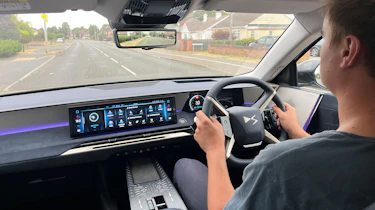
Through the wacky X-shaped steering wheel, which you eventually get used to after positioning your hands further up or down than usual, the No8 feels relaxed with consistent feedback from the front end, although abrupt inputs can unsettle the body control very easily. That’s also noticeable at low speed – particularly in car parks, where the light steering causes some wobbling in the suspension. Another urban driving gripe we have concerns the brakes, which are grabby and make it far too difficult to bring the No8 to a smooth stop.
Big Citroens of old pioneered hydro-pneumatic suspension systems with self-levelling technology, but while the No8 makes do with more conventional coil springs, it does get adaptive suspension with ‘active scan’ technology – which features a front-facing camera to analyse the road surface and prepare the damping to suit. On the smaller 20-inch wheels, the ride was exceptional on a long motorway stint, with the No8 successfully softening bumps in the road. The standard-fit sound-deadening windows also played a part in keeping road and wind noise to a minimum. Where it didn’t perform so well was around town – you can find the limit of the suspension’s comfort over fairly average-sized potholes and drain covers.
Being the top-spec Etoile, our car was fitted with blue Alcantara rather than caramel Nappa leather. As with the rest of the No8’s interior, it proved to be divisive, with comments from friends and family likening the material’s texture to something you’d find on a London tube train, while others praised the bold styling that confidently goes in a different direction to the comparably sterile environments of BMW, Audi and Volvo.
| Model: | DS Automobiles No8 Long Range Etoile |
| Base price: | £59,290 |
| Powertrain: | 97.3kWh battery, 1x e-motor |
| Transmission: | Single-speed automatic, front-wheel drive |
| Power/torque: | 242bhp/345Nm |
| 0-62mph: | 7.7 seconds |
| Top speed: | 118mph |
| Range/charging: | 465 miles/160kW 20-80% in 28 mins |
| Length/width/height: | 4,820mm/1,900mm/1,580mm |
| On sale: | Now |