MG Cyberster review
The MG Cyberster boasts strong performance and eye-catching design, but it’s more of a grand tourer than an outright sports car

Our opinion on the MG Cyberster
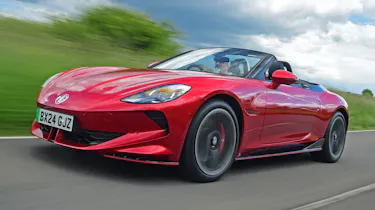
If you're looking for an electric Mazda MX-5, the MG Cyberster isn't it. The spirit of MG's classic sports cars is difficult to emulate when you add electrification to the mix, so MG has steered the Cyberster away from being an MGB copy and placed a focus on grand touring. The ride is smooth, it's searingly quick in a straight line and those doors will be a talking point every time you use them, but as a driver's car, the Cyberster lacks that sense of occasion that the best open-topped GTs deliver.
About the MG Cyberster
For the style and performance on offer, plus the theatre of those scissor doors, the MG Cyberster is pretty good value for money. Nevertheless, it does mark new, uncharted territory for MG in terms of pricing strategy.
The line-up kicks off from over £55,000, so the Cyberster is very much in the premium ballpark rather than a budget one like so many other MGs. However, considering that the electric Porsche Boxster is yet to arrive and there’s no sign of a BMW Z4 EV, it’s currently running without any direct competition.
In order to see just how the MG Cyberster compares to its beloved ancestors, we lined it up against the classic MGB in a special Auto Express feature. While the two cars share some core design aspects, the tech-filled Cyberster looked absolutely enormous when parked next to its older sibling.
Performance & driving experience
Pros |
|
Cons |
|
In its entry-level specification, the MG Cyberster is powered by a single rear-mounted electric motor producing 335bhp. The top-spec GT adds an additional motor at the front for four-wheel drive and a total output of 496bhp.
Used - available now

2024 Kia
Stonic
4,372 milesAutomaticPetrol1.0L
Cash £15,495
2025 SEAT
Ibiza
16,499 milesAutomaticPetrol1.0L
Cash £15,999
2022 Ford
Mondeo Estate
16,463 milesAutomaticPetrol2.0L
Cash £17,499
2026 Peugeot
E-3008
21,245 milesAutomaticElectric
Cash £22,295Each powertrain option has a single designated trim level; Trophy for the RWD car, and GT for the more powerful model. But, aside from the extra shove on offer, and a set of 20-inch alloys, the GT doesn’t bring any extra equipment over the entry car.
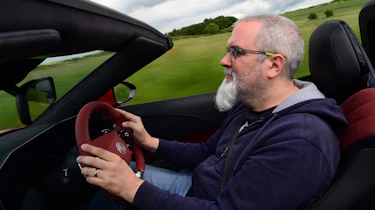
As with many modern EVs, the Cyberster turns on as soon as you get behind the wheel, so all you have to do is select drive and you’re ready to roll - there’s not even a handbrake to select, it simply engages when you select Park. Setting off delivers the first strange sensation of driving an open-topped EV: virtually silent running. MG has incorporated a couple of synthesised sounds, one futuristic, the other offering a low-end buzz reminiscent of an MGB’s, but total silence is also offered.
And this silence offers an insight into the Cyberster’s character, because it delivers fantastic refinement, not just at low speeds, but through the entire driving spectrum. The suspension has a lot of weight to deal with, so the damping has been set up to absorb bumps, which it does so with ease. Combine this with the effortless power that’s on offer, and the Cyberster offers the sensation of an old-school grand tourer.
| Model | Power | 0-62mph | Top speed |
| MG Cyberster Trophy | 335bhp | 5.0 seconds | 121mph |
| MG Cyberster GT | 496bhp | 3.2 seconds | 125mph |
Electric motors, 0-60mph acceleration and top speed
There’s plenty of straight line performance on offer no matter which model you go for. The Cyberster Trophy provides 475Nm of instantly available torque to help it get from 0-62mph in 5.0 seconds flat, while upgrading to the all-wheel drive GT brings a phenomenal 725Nm, and a supercar-baiting 3.2-second sprint time.
The drop-top MG’s electric powertrains offer instant responses, but different driving modes mean you can tailor its character to your needs. In reality, the standard setting is good enough, but if you want to be a winner at the traffic-light grand prix - or scare a passenger - there’s a Super Sport mode that unleashes full power. Launch control is also included - simply press the brake pedal with your left foot, put the accelerator to the floor, release the brake, and away the Cyberster shoots forwards. It’s a typical EV in that regard, with the added sensation of the wind in your hair with the roof down.
Country road driving and handling
Unfortunately the Cyberster’s weight counts against it on twisty roads. The steering is light and grip is plentiful, but over the lumps and bumps of UK B-roads, the suspension struggles to keep the car tied down. The chassis bobs around over rough surfaces, while there’s plenty of pitch under acceleration and braking.
The brakes themselves feel as if they struggle to scrub off speed as quickly as you can pile it on, while the car’s grand touring nature means that you’re more likely to use the car’s regenerative braking to scrub your speed. The energy recovery system has three levels of assistance - coasting, strong and a one-pedal setting – while one of the paddles behind the wheel adjusts this on the fly.
Motorway driving and long-distance comfort
Lean into the Cyberster’s character, and it offers a plush ride and excellent comfort. With the roof up, there’s not much noise to be heard, although at motorway speeds there’s more tyre roar, while our car suffered from some wind noise around the doors when cruising at motorway speeds. But at urban speeds the Cyberster is all but silent.
Put the roof down, and the silence offers a unique sensation in a sports car such as this. Increase your pace, and the Cyberster does suffer from wind buffeting from around 50mph and above.
“A serious diet would certainly help make the Cyberster more of a pure sports car. However, that’s not surprising given that it weighs nearly two tonnes.” - Ellis Hyde, news reporter.
Range, charging & running costs
Pros |
|
Cons |
|
You shouldn't have any worries planning a longer road trip in the Cyberster. MG claims the rear-wheel drive Trophy version is capable of covering up to 316 miles between battery tops (WLTP combined cycle), while if you opt for the extra reassurance of the-wheel drive GT then you’ll need to sacrifice 40 miles of range compared with the entry car.
The Cyberster’s 144kW maximum charging rate is good, but not outstanding. It means you’ll need around 38 minutes to take the battery from a 10 to 80 per cent charge, while an overnight top up at home (from 10-100 per cent), via a 7.4kW wallbox charger, requires around 12 and a half hours.
| Model | Battery size | Range | Insurance group |
| MG Cyberster Trophy | 77kWh (74.4kWh usable) | 316 miles | 47 |
| MG Cyberster GT | 77kWh (74.4kWh usable) | 276 miles | 50 |
Insurance groups
While charging the Cyberster at home can help to dramatically reduce your running costs, there’s no getting away from the fact that it will be expensive to insure. With the Trophy version in group 47, and the GT in the top group 50 rating.
Tax
Being an electric car means the MG Cyberster avoids any emissions-based tax penalties, but its price brings the luxury car tax surcharge into play. This means an additional £440 is added onto the base VED road tax rate between the second and sixth year after the car is registered.
While we’d be rather surprised if a £55k convertible is on your list of potential company cars, it does at least attract the lowest applicable Benefit-in-Kind (BiK) tax rates if you are fortunate enough to bag yourself one.
Depreciation
Our market data shows that the MG Cyberster is set to retain 45 per cent of its original value after three years or 36,000 miles. While there aren’t any other premium electric roadsters to compare it to, the Cyberster should at least alleviate any fears about EVs suffering from catastrophic depreciation, as the BMW 4 Series Convertible manages a very similar 42 to 47 per cent.
Interior, design & technology
Pros |
|
Cons |
|
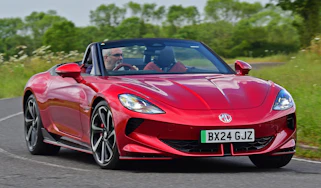
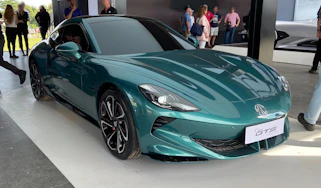
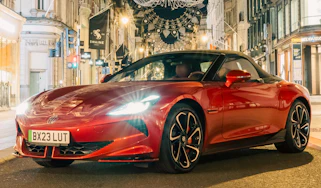
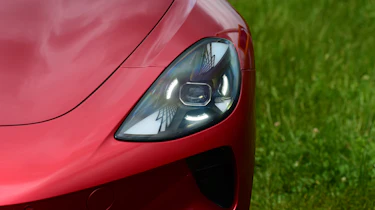
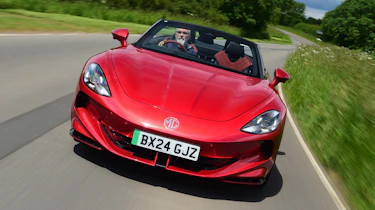
While the Cyberster is big, that two-seat body manages to hide its dimensions well, and the car’s proportions reflect those of a front-engined machine, with a long bonnet, a set-back cockpit and short bootlid. From the front, the pointed nose sweeps up and back to create a smooth shape, while the rear end is broken up by a set of fussy LED lights. The big arrows that point in the direction of the indicators look rather comical, although it’s only the outer edges that flash when you’re turning.
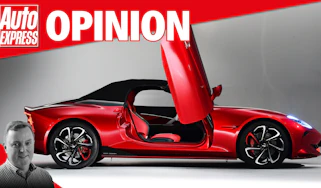
The biggest talking point about the exterior is the Cyberster’s scissor doors. Press a button, and electric motors allow them to sweep open vertically, which is bound to draw attention every time you use them. Access to the cabin is simple enough once they’re up (sensors prevent the doors opening if objects or people are too close, and the opening height can be set at different levels) while two big buttons on either side of the roof switch on the centre console are used to close them.
The Cyberster features a canvas folding roof that opens and closes electrically, and it operates separately from the doors, so it can be used when they’re open or closed. The roof takes less than 15 seconds to operate, and can be operated at speeds up to 30mph, too.
Infotainment, sat-nav and stereo
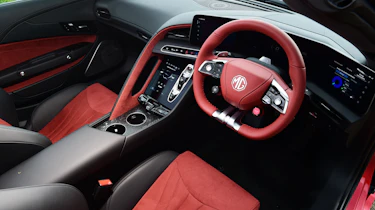
The overall cabin experience is somewhat of a mixed bag. While space is good, there are some ergonomic flaws to contend with. The triple-screen set-up for the driver features touchscreens on either side, but the steering wheel obscures around a third of the lower corners of the outer displays, while the way the assorted functions are distributed between the screens is confusing. Essential data such as speed, range and navigation info can be shown on the central 10.25-inch screen, while images relayed from the car’s cameras appear on the right-hand screen. But then smartphone info is shown on the left-hand display, which is also where multimedia info is located.
The two outer screens measure seven inches across and are touch-sensitive, but some functions are replicated on the multifunction steering wheel, where extra buttons cycle through different menus. Unfortunately the system isn’t very intuitive to use, although more time with the system might help to unlock its user-friendliness.
To the left of the driver, the centre console has another touchscreen display. This portrait layout features the climate controls and drive settings, but it’s something of a distraction to use while driving - our car also had the habit of beeping when not paying attention to the road ahead, although this happened most times when using the portrait display. And it’s not as if the centre screen is easy to use for a passenger, either, with the large grab handle obscuring the screen.
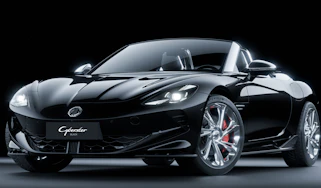
“The use of black bodywork tricks the eye into thinking the sheet metal is more slender and more curvaceous than it actually is.” - Jordan Katsianis, news editor.
Boot space & practicality
Pros |
|
Cons |
|
We’ve already mentioned how the MG Cyberster feels more like a grand tourer to drive, and it offers just about enough space to live up to this status when it comes to practicality. However, some storage space under the lengthy bonnet would’ve been a welcome feature.
Dimensions and size
At more than 4.5 metres, the Cyberster is longer than a Porsche 911 Cabriolet, while its gross weight of 2.2 tonnes is around 200kg more than the Porsche’s when fully laden.
| Dimensions comparison | |||
| Model | MG Cyberster | Porsche 911 Cabriolet | BMW 4 Series Convertible |
| Length | 4,535mm | 4,542mm | 4,768mm |
| Width | 1,913mm | 2,033mm | 1,852mm |
| Height | 1,329mm | 1,297mm | 1,384mm |
| Wheelbase | 2,690mm | 2,450mm | 2,856mm |
| Boot space | 249 litres | 135 litres | 385 litres |
Seats & passenger space
From behind the wheel, the Cyberster’s cabin feels roomy for a roadster, with plenty of space for two. However, one tell-tale sign of the car’s electric powertrain is evident as soon as you’re seated. When you climb aboard a Mazda MX-5, there’s a sensation that your backside is only inches from the road, but in the Cyberster, you sit as tall as you would in a family hatchback.
The location of the battery under the floor has dictated this, and while it means it’s easy to get in and out, it detracts from the sense of occasion that a sports car such as this should deliver.
The Cyberster’s seats are comfortable enough; trimmed in a combination of synthetic leather and a suede-effect material. Both have a heating function (as does the steering wheel) and include six-way electrical adjustment with lumbar support.
Boot space
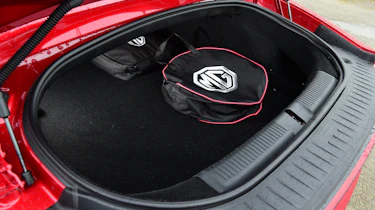
One benefit of the roadster’s larger size is that there’s plenty of scope for packing. There’s no frunk, but a large open space behind the seats will be big enough for a soft bag or two, while the 249-litre boot has space for a small suitcase or two - as long as you can fit them in around the charging cables.
In comparison, the petrol-powered BMW 4 Series Convertible offers 385 litres, while the sporty Mazda MX-5 only has 130 litres at its disposal.
Reliability & safety
Pros |
|
Cons |
|
The MG Cyberster’s rather exclusive status means it's unlikely to appear in the Driver Power owner satisfaction survey. However, the MG brand’s 29th-place ranking out of 30 in the most recent best manufacturer results is a pretty alarming one. Owners were left underwhelmed in several areas, with the on-board tech being a particularly notable source of complaint. Only Dacia performed worse.
Although the Cyberster hasn’t been assessed by industry safety experts, Euro NCAP, it should be a relatively safe car. The MG Pilot system comes as standard across the range and features a host of active safety tech, including lane-keeping assist, active emergency braking (with cyclist and pedestrian detection), active rear cross traffic Alert and blind spot detection.
Buying, prices and deals
Best buy: MG Cyberster GT
If you’re in the market for the MG Cyberster that costs just over £55,000 in its base Trophy trim, we’re willing to bet that you’re ready to invest extra money in order to get the best version. Therefore, we’d go all out and go for the four-wheel drive GT for around £60,500. This’ll bring you a notable power boost, a less jittery ride and improved traction.
MG Cyberster alternatives
The electric convertible market is a slow-moving one. In fact, we can’t really say that the MG Cyberster has any direct competitors, at least for now. A new BMW i4 Convertible, Polestar 6, Porsche Boxster EV and Tesla Roadster are all in the works, but you’ll have to be patient.
If you’re happy to consider differing shapes and sizes, though, the Abarth 500e and MINI Cooper Electric are both available in drop-top forms.
Alternatively, sticking with petrol power will open up some more options that are more closely aligned with the Cyberster. The BMW 4 Series Convertible and Mercedes CLE Cabriolet are two premium offerings that are within the same pricing bracket of the Cyberster. Alternatively, for outright sporting prowess, you have the Mazda MX-5 at one end of the scale and the Porsche 911 Cabriolet at the other.
MG Cyberster pictures
Key updates of the MG Cyberster review
13 October 2026: Latest driving impressions and depreciation data.
Frequently Asked Questions
The Cyberster comes with a seven-year/80,000-mile warranty, which is a lot better than the standard three-year cover offered by some rivals, and it’s transferable to any future owners.
Deals on the Cyberster and alternatives