Used BMW X1 and iX1 (Mk3, 2022 to date) buyer’s guide: big SUV quality in a small package
The most recent iteration of BMW’s smallest SUV is a great used buy – but it still doesn’t come cheap

Verdict
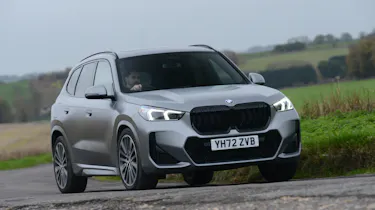
BMW’s hit rate is better than most. The company has produced very few poor cars in recent years, despite its designs being sometimes controversial. The BMW X1 and BMW iX1 are just what you would expect from the brand, because they are user-friendly with truly excellent infotainment systems, feature high-quality cabins, they’re generally good to drive (firm ride notwithstanding), and they’re also efficient.
In short they’re easy to live with, but the iX1 has a fairly significant flaw in that its range isn’t as good as it should be. If that isn’t a deal breaker for you, the upside is that used iX1 values are fairly keen. If it is a deal breaker, the ICE X1 makes for a very decent substitute.
After BMW introduced the X5 to enormous acclaim in 2000, it was inevitable that it would expand its customer base by offering smaller and more affordable SUVs.
By 2004, the X3 had arrived, then five years later came the first-generation X1. All proved to be smash hits, and since those first editions we’ve had numerous generations of each, with the latest X1 – the third generation – also available in electric form as the iX1.
We ran an X1 xDrive23i and iX1 eDrive20 on our long-term fleets and thought they were both excellent in most respects: fun to drive, efficient, high-quality and easy to live with; the X1’s firm ride grated after a while, but that was about the only problem. Buy one and you’re unlikely to be disappointed in any meaningful way, which is why we presented BMW’s smallest crossover with our Small Premium SUV of the Year award in 2023.
History
When BMW launched the third-generation X1 in May 2022, it also came in fully electric form as the iX1. For those wanting to stick with a petrol engine, there was the 215bhp xDrive23i with a 2.0-litre engine. Diesel fans could choose between the 148bhp sDrive18d and the 208bhp xDrive23d, both with a 2.0-litre engine. BMW also offered two plug-in hybrids: the 241bhp xDrive25e and the 321bhp xDrive30e. The electric iX1 was first offered as the 309bhp eDrive30.
Used - available now


A new entry-level petrol model joined the line-up in spring 2023 – the 168bhp sDrive20i – shortly followed by the X1 M35i xDrive range-topper, which came with a 296bhp twin-turbo 2.0-litre four-cylinder petrol engine. Within weeks a new entry-level model was also added to the iX1 range. The eDrive20 had 201bhp sent to the front wheels.
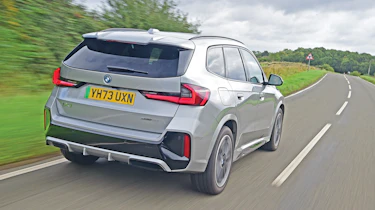
Which one should I buy?
All of the regular petrol and diesel models come with mild-hybrid tech as standard; only the M35i misses out on this. Expect a real-world 35-40mpg from the petrol engines and 50-55mpg from the diesels. The plug-in hybrids typically give 45-55mpg, but can give much more depending on journey length and driving style.
Both derivatives of the iX1 have a 64.7kWh battery; BMW claims that the eDrive20 gives up to 296 miles while the xDrive30 can do up to 272 miles on a charge. Our long-term eDrive20 averaged 3.7 miles per kWh to give a real-world range of about 230 miles. Choose between Sport, X Line, M Sport and M Sport Pro trims, all of which are well equipped and get ever sportier with their design and equipment, the further up the model range you go.
On the road
The entry-level petrol and diesel models are quick enough, but the posher editions are really pretty rapid; the xDrive30e can do 0-62mph in just 5.6 seconds (the same as the iX1 xDrive30), whereas the sDrive18d takes 8.9 seconds.
But the performance is just a small part of the picture, because all X1s and iXs are among the best in their respective classes, when it comes to driving enjoyment. The X1 has the edge when it comes to steering feedback and brakes, while M Sport editions have a firm ride that you might find uncomfortable, but overall the driving experience is very good.
Prices
There are a lot more X1s for sale than you might think, but you’ll be doing well to secure one for less than £25,000. This buys an early 30,000-mile sDrive18d Sport; about one-in-seven X1s has a diesel engine, whereas half of the cars for sale are petrol variants.
There are fewer used iX1s for sale, but there are some, with a fairly even split between the eDrive20 and eDrive30; prices start at £23,000 for a 35,000-mile eDrive30 X Line on a 23-plate. You can buy a used BMW X1 for as little as £25,000 through our Buy A Car service.
Check the price of a used BMW X1 or iX1 with our free car valuation tool…
Alternatives
If a premium badge is key and you want a compact SUV with an internal combustion engine, we suggest you put the Audi Q2/Q3 and Mercedes GLA on your shortlist, plus the Range Rover Evoque and Volvo XC40. The Mazda CX-30 is worth considering too, because it looks great and feels premium, while the Volkswagen T-Roc is plentiful, affordable and practical as well as comfortable.
Other options include the Lexus UX and MINI Countryman, while if the X1 doesn’t suit you, the BMW X2 might. Alternatives to the iX1 include the Tesla Model Y, Mercedes EQA/EQB and Audi Q4 e-tron, along with the Volvo EX40, Volkswagen ID.5 and Skoda Enyaq; you could maybe even try the Genesis GV60.
What to look for
Top tips for choosing your X1...
Powertrain options
All X1s came with a seven-speed dual-clutch automatic transmission with no manual option. xDrive models have four-wheel drive; only the X1 sDrive18d and iX1 eDrive20 are front-wheel drive.
Software glitches
Some owners have had problems with the dual-clutch transmission being jerky, while the infotainment system can sometimes freeze. In both instances, software updates tend to put things right.
Infotainment
As with the X1, infotainment system glitches aren’t unusual in the iX1, but the EV can also suffer from driver-assistance systems playing up – check that the adaptive cruise control and rear camera especially are working.
Towing
Each X1 derivative has a different towing limit, between 1,700kg (sDrive18i) and 2,000kg (xDrive23i, xDrive23d). The iX1 eDrive20 is limited to 750kg; the xDrive30 can pull up to 1,200kg.
Interior
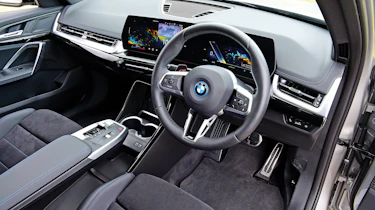
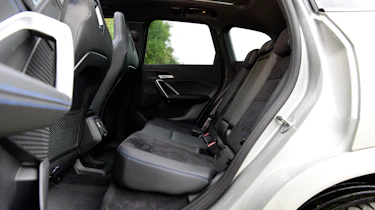
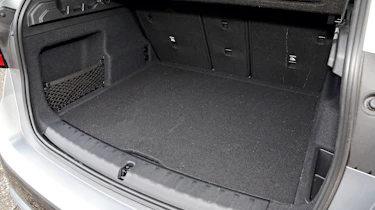
X1 and iX1 interiors are pretty much identical. Both have superb build quality, class-leading infotainment, and considering this is BMW’s smallest SUV, the cabin and boot aren’t short of room. Sliding rear seats were a worthwhile option on the X1; boot space is 500 or 1,545 litres (seats up/down), or 490/1,495 litres for the iX1.
Running costs
The X1 comes with condition-based servicing as standard, which means that the car decides when maintenance is due. This system allows up to two years or 18,000 miles, which is also when it’s recommended that the iX1 is serviced. The brake fluid should be changed on all X1s and iX1s every two years regardless of mileage, at a cost of £137. An oil and filter change on an X1 costs £330; replace the air filter and spark plugs too (which is due every fourth service), and this increases to £534.
Of the X1s, only the sDrive18d cost less than £40k when new, so most X1s are liable for the £440 expensive road tax supplement until the car’s sixth birthday. The iX1 xDrive30 is also liable because it cost over £50k (EVs have a different threshold), but the eDrive20 was generally below this. Insurance groups range from 24-35 for the X1, whereas the iX1 sits in groups 29-38.
Recalls
The X1 Mk3 has been recalled eight times so far, with three separate recalls for the iX1. Taking the latter first, there have been campaigns because of faulty connections within the battery pack (May 2023), short circuits in the battery pack (August 2023) and driveshafts working loose (September 2023).
Five recalls were issued for the X1 in 2024, including three for brake servo faults in March, September and October. The other two campaigns were because of poorly made front passenger seats; these were issued in July and August for two different faults. There were three further recalls in 2025, for B-pillars made of the incorrect material (issued in January), front seatbelt retractor glitches (September) and sub-standard rear seatbelts (October).
Driver Power owner satisfaction
The X1 Mk3 has never appeared in Driver Power, but the X3 is pretty much a constant, and most of the ratings notched up by that should be pretty similar for its smaller sibling. While the X3 achieved a mid-table 39th spot out of 75 in the 2024 survey, in our latest poll it came 39th out of 50.
As a company overall, BMW tends to do pretty well. In the 2025 Brands survey there were 31 entries and BMW came a pretty decent eighth, up from 14th out of 32 entries in the 2024 poll.
Tell us what you love (and hate) about your car. Take the Driver Power survey now.