Renault’s big future plans: hybrid focus and new mid-size cars to build on 5, Twingo and Scenic success, fast
Renault’s new boss is about to unveil his ‘FutuREady’ strategy – including these five pillars

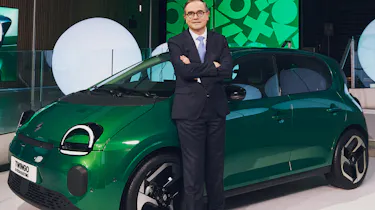
Renault vows to build on landmark cars such as the new Twingo, Renault 5 and Scenic EVs, when it unveils its new mid-term plan on 10 March.
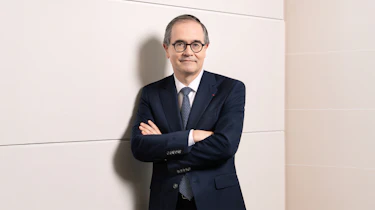
New company CEO Francois Provost has revealed the new strategy will be called ‘FutuREady’, a huge hint that the company will reinvent its cars, technology and how it works over the next four years, to drive down costs and fight increasing competition from Chinese car makers.
Provost rose to the top seven months ago, succeeding Luca de Meo whose ‘Renaulution’ plan slashed costs, restructured the company and unleashed 22 new models, taking Renault from a €7-billion loss to record profits. Provost, the former chief procurement officer and a 23-year company servant, plans to drive the leaner, fitter Renault forward – and here’s how.
1. Keep up the momentum with great cars
“Product [was] the heart of our Renaulution plan and product will be the number one priority of our next mid-term plan,” Provost told us in Paris. “We will structure a second cycle of new, successful products in Europe.”
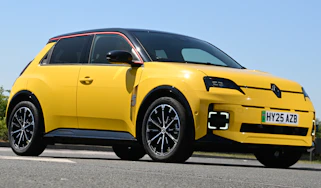
The new CEO is signalling the need for the design and engineering teams to maintain the levels that successfully revived the Renault 5 hatchback, recreated the Twingo as one of Europe’s cheapest EVs ahead of rivals including Volkswagen, and reinvented the 1960s Renault 4 as an electric SUV.
“In Renault, we are too cyclical,” he explained. “After a successful line up we suffer more. [So it’s] my obsession [that we launch] a new bunch of products as successful as today’s.”
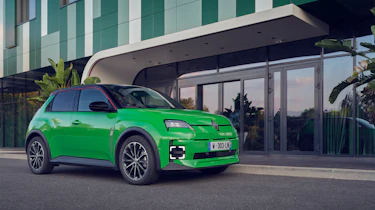
He has a point: Renault followed up the avant-garde Mégane Mk2 with the forgettable Mk3, and no subsequent Twingo has so far lived up to the original. Provost is in the studio twice a week overseeing the next generation of cars, design chief Laurens van den Acker told us. “The CEO knows [product] is what has saved our ass the last few years, and he's been appointed because he wants to continue the dynamic. This is extremely important, because it can get diluted very quickly.”
2. Sell more large cars – based on a new platform
Provost’s focus will be on larger, more profitable (C-segment) cars; despite this area being a Renaulution objective, the electric Megane hatch and Austral SUV haven’t delivered breakthrough sales.
“In the next mid-term plan, we will continue to invest in C-segment cars and technology. We [will] propose a new platform to grow in this segment,” the boss told Auto Express. Expect this new vehicle architecture to underpin the replacements for all Renault’s mid-size and large cars, as well as the production version of the sleek, spacious Embleme concept car – tipped to be the next Renault Espace.
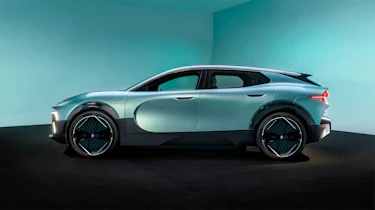
Engineering work on the new platform is well underway with the first cars due for launch in 2028, and a key aspect will be powertrain flexibility, another staple of the upcoming FutuREady strategy.
3. Become number one in hybrid, while continuing the EV push
While Provost vows Renault remains committed to electric, the stuttering consumer transition demands a pragmatic pivot to offering new hybrid engines. So the new architecture will accommodate both pure electric and hybrid powertrains.
And for large cars, product boss Bruno Vanel said Renault is “looking at” range-extender (Rex) hybrids. Horse, Renault’s spin-off powertrain division co-owned with Geely, has developed a super-compact range-extender hybrid (Rex) engine, with a 1.5-litre engine acting as a generator to charge onboard batteries. “Super-hybrid can help people get into the electric world with less anxiety, with cars having, say, 500-miles of highway range. Even if people can’t find a charging point, they can still drive,” Vanel told us in Brussels.
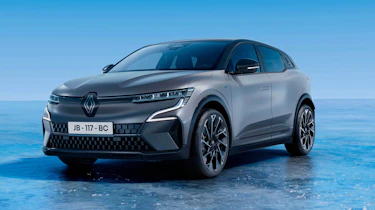
In smaller, ‘B-segment’ cars, Renault plans to stick with standalone EVs such as the 5 and its Clio petrol/electric alternative. “We have a hybrid platform for the Clio and Captur,” said Provost. “My intention is to invest in this platform: we’ve given a strong priority to Horse to improve our hybrid’s efficiency and cost.” And it comes with one audacious goal: to overtake Toyota to become “the leader in Europe for small and medium hybrid cars,” said the new boss.
4. Move at lightning speed, across the entire company
De Meo’s legacy includes rewiring Renault to shortcircuit its development times. He established a Shanghai engineering centre to learn first-hand how the Chinese can introduce cars so much faster than western rivals. And the Twingo – spun off an existing components set but with greatly reduced complexity – is Renault’s new development lodestar.
“We have to reinforce our agility,” stressed the new CEO. “This is one of our core assets today. The [Twingo’s development] window was 21 months: I don’t think a non-Chinese manufacturer is capable of that – and this is a car produced in Europe that fits this market.”
The challenge for Provost is to export this urgency from China to the rest of the organisation, particularly his Parisian engineering base. “The problem is not what we have to do but how we change the mindset of our engineers and the organisation to develop as quickly as our Chinese competitors.”
But the upside is huge. Not only will it help Renault keep its portfolio fresh and attractive, it will also slash costs to compete with budget rivals and counter the new car price inflation that is putting off prospective European buyers. Provost counsels that the cost of technical innovations strongly correlates with the amount of time spent developing them.
5. With Europe stagnant, develop new international markets
In 2025, Renault sold just over 1-million new cars and vans in Europe, with another 621,000 deliveries in overseas markets including Turkey and Morocco. And the company is in the midst of a four-year, €3-billion investment to launch eight new vehicles outside of Europe.
“On top of the second cycle of European cars, we will have a [product] offensive outside Europe, focusing on a limited number of priorities: first is South America, second is India,” explained Provost.
South America has introduced the Boreal mid-size SUV – a Renault version of the Dacia Bigster – and a soon-to-be-revealed pick-up. This formula is being applied to India, where the Boreal will be manufactured in Chennai alongside 2026’s headline new vehicle, a poshed-up Renault Duster. Meanwhile South Korea gets another curio: a 4.9m-long coupe-SUV based on a shared Geely architecture called the Filante.
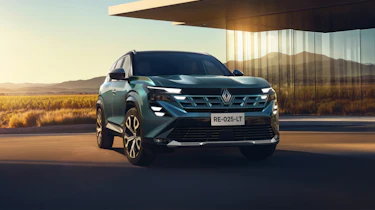
The international growth plan aims to boost economies of scale, broaden the group’s engineering capability (enabling product development to work around the clock) and double overseas revenues.
Luca de Meo and the Renaulution plan is a tough act to follow for Francois Provost. But his design boss Laurens van den Acker takes comfort in a football analogy. “It’s like when Jurgen Klopp left Liverpool; everyone thought the thing would fall apart. They got in a manager who did it his way – and they became champions again the next year.”
Did you know you can sell your car through Auto Express? We’ll help you get a great price and find a great deal on a new car, too.