Best car engines of all time
What makes a great internal-combustion motor? We explain why these petrols, diesels and even a hybrid made the list

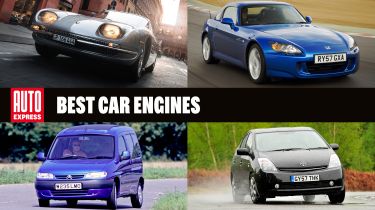
The age of electrification is upon us, but even the most devoted EV enthusiast would admit that there’s something special about the internal combustion engine. As we all know, the very best car engines do far more than merely provide propulsion.
The sounds and smells of fossil fuels being exploded in cylinders have captivated car fans for generations. The greatest engines have unmistakable characters all of their own that come to define the cars they’re bolted into. From singing V6s and throbbing V8s to bulletproof diesels and little four-pots that punch far above their weight, the engine makes the car, for better or for worse, and a great engine can certainly propel the right car to legendary status.
It all makes whittling the list of the greatest car engines ever made down to a top 10 fiendishly difficult but our expert judges were well up for the challenge. These are their picks of the absolute, all-time best engines. If your favourite hasn’t made an appearance, be sure to tell us about it in the comments section at the bottom of the page.
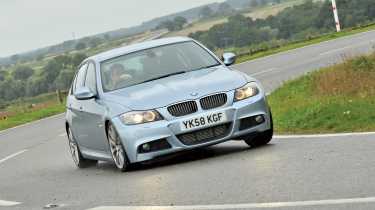
BMW M57/N57
By Paul Barker
- Model: BMW 330d
- Engine: 3.0-litre 6cyl diesel
- Gearbox: Six-speed manual
- Power/torque: 241bhp/520Nm
- 0-62mph: 5.9 seconds
- Top speed: 155mph
The 3.0-litre diesel in a BMW 3 Series was the absolute pinnacle of diesel engines as far as I’m concerned, and at a time where diesel ruled the roads for ‘normal’ drivers, slotted into a 330d it really was all the car you’d ever need.
It was so far ahead of German premium rivals of its age for performance and refinement, and all with the potential of delivering a comfortable 50mpg when you weren’t exploiting the addictive surge of lovely diesel torque as it punched out of a roundabout.
I ran one for six months back in the early 2010s, and it’s still one of my favourite cars, and a brilliant piece of engineering, and about as good a combination of economy, speed and driving fun as you’ll come across.
BMW used the M57 and N57 3.0-litre diesel across the board up to the 7 Series and X6, and it was a fine choice in any of them, but the lightest and nimblest application was definitely the best. A 330d was capable of putting any hot hatch in its place, while still offering saloon or Touring estate practicality, well-equipped comfort and subtle looks that belied the potency.
It was top of the class across four generations of 3 Series, each offering the same brilliant range of capabilities, and it was a sad day in mid-2024 when the plunging diesel demand and high production and engineering costs eventually saw it pulled from UK sales.
GMA T.50 Cosworth V12
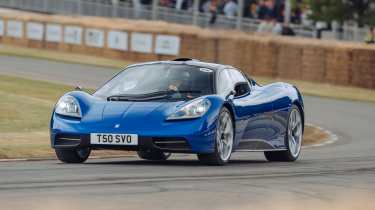
By Ellis Hyde
- Model: GMA T.50
- Engine: 3.9-litre V12 petrol
- Gearbox: Six-speed manual
- Power/torque: 661bhp/467Nm
- 0-62mph: <3.0 seconds
- Top speed: 226mph
Gordon Murray’s GMA T.50 is the follow-up to one of the greatest cars ever made, the McLaren F1, and was designed to be the ultimate analogue hypercar, so of course it needed a truly speculator engine. Something more theatrical than an Italian opera.
The artists at Cosworth created a genuine masterpiece in the form of a 3.9-litre naturally aspirated V12 that revs to an astonishing 12,100rpm and produces a sound that would make a modern Formula One car weep from envy.
It also weighs just 178kg and delivers 661bhp, making it the most power-dense engine to ever feature in a road car. More importantly, peak power is produced at 11,500rpm, giving drivers a reason to chase the redline, other than satisfying their soul with the music from the Inconel and titanium exhaust.
Interestingly, while the McLaren F1’s V12 engine had 12 individual throttle bodies, the T.50’s has just four and a carbon fibre plenum chamber which allows it to offer better low-speed driveability, refinement and throttle smoothness.
It’s impossible to imagine how you could possibly improve what is clearly the greatest engine of all time, and yet the track-only GMA T.50s Niki Lauda manages turns the dial up even further. Its version of the V12 features bespoke cylinder head and camshafts, a higher compression ratio of 15:1, weighs only 162kg and spits out 761bhp.
The engine of this devilish apex predator is fed by 12 throttle bodies and two sets of fuel injectors while a new ram induction system to force more air into the engine. Better still, the exhaust ditches the catalysts to create an angrier, totally uncensored symphony.
Lexus 1UR
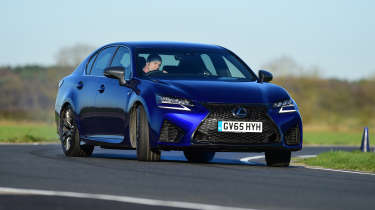
- Model: Lexus GS-F
- Engine: 5.0-litre V8 petrol
- Gearbox: 10-speed automatic
- Power/torque: 471bhp/530Nm
- 0-62mph: 4.6 seconds
- Top speed: 168mph
When one thinks of a deep, barrel-chested and baritone V8, the automatic reaction might be to assume it has come from America, right? Or perhaps Germany? Well in my opinion, one of the best V8s ever actually finds its origin in the land of the rising sun, and largely sit under the bonnet of luxury four-door saloons.
The ‘1UR’ series V8, itself an update of the original ‘UZ’, was part of an engine plan developed to give Toyota and Lexus an true rival high-end saloons from the USA and Europe. But over time, and with a bit of help from Yamaha, the engine was transformed into the simply superb 5.0-litre 2UR-GSE. This unit found a home in various high-end Lexus F models, none of which suited it better than the GS-F saloon.
On paper, its power and torque figures were behind many of its key rivals in period. But with the progression of time, its razor-sharp responses, resonant intake noise and incredible bandwidth stand tall in our memories. And yet, with one eye on the reality of running these engines, the fact Lexus gave the 2UR an exotic, highly-strung feel with the same legendary reliability and toughness you’d expect from any Toyota or Lexus is its most impressive attribute. All the thrills, none of the fuss.
Alfa Romeo Busso V6
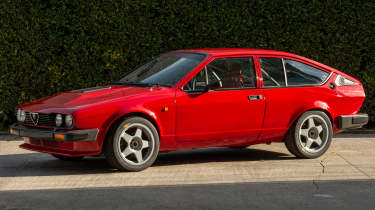
- Model: Alfa Romeo GTV6
- Engine: 2.5-litre V6 petrol
- Gearbox: Five-speed manual, rear transaxle layout
- Power/torque: 160bhp/210Nm
- 0-60mph: 8.5 seconds
- Top speed: 132mph
When I think about engines that are truly great, none come to mind as instantly as Alfa Romeo’s Busso V6. Designed by engineer Giuseppe Busso, it debuted in the late 1970s and quickly earned a reputation for its character and defined some of Alfa Romeo’s most memorable cars.
The Busso is perhaps best known for its sound. Throaty, metallic, and almost musical, it rewards precise gear changes and sings as it rises beautifully through the rev-range, giving the car a personality few engines achieve.
Its most notable application is the GTV6, which is also where I first experienced the engine myself. In that car, the 2.5-litre V6 produced 160 bhp and 210 Nm of torque and delivered smooth and responsive power. Combined with the rear transaxle layout, it made the GTV6 feel exceptionally balanced and agile through corners.
Beyond the GTV6, the Busso V6 had a long and remarkable life across Alfa Romeo’s lineup. The very first production car to use it was the Alfa Romeo 6 in 1979, a quiet debut for an engine that would go on to define so many memorable cars. From the 75 and Spider, to the 164 saloon and later 156, each model carried the same distinctive note and character that made the engine special.
Driving any Busso-powered car today still feels extraordinary. Every gear change, every rev shows the passion that went into its design. For enthusiasts driving these cars, the experience is unforgettable. The Busso V6 is more than just an engine. It is a reminder of an era when engineering, and the engines in particular, were at the heart of what ignited the passionate fire of many car enthusiasts, and why many still say you can’t be a true petrol head until you’ve owned an Alfa Romeo.
VW Group EA888
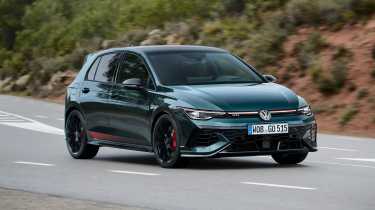
- Model: Volkswagen Golf GTI Edition 50
- Engine: 2.0-litre 4cyl turbo petrol
- Gearbox: Seven-speed DSG automatic
- Power/torque: 321bhp/420Nm
- 0-62mph: 5.3 seconds
- Top speed: 168mph
Sure, I could’ve chosen any number of V8, V10 or V12s as my greatest ever engine. But instead, I’ve gone for the one that’s had the most profound effect on me and my automotive career: the Volkswagen Group’s EA888 turbo petrol, as found in everything from the Audi TT and SEAT Leon Cupra, to the Volkswagen Tiguan and latest Golf R.
First appearing in 2007, it has transformed through its various generations to become one of the world’s most flexible and widely used performance-car engines. My first taste of the EA888 was in the now-legendary Mk7 Golf GTI; linked to a slick six-speed manual transmission, I was instantly smitten with the adjustable and responsive and relentlessly torquey motor.
It’s got better with age, too. My most recent experience came courtesy of the Golf GTI Edition 50: not only the ultimate expression of GTI, but the ultimate expression of VW’s heroic EA888. Matched to a super-sharp chassis, limited-slip differential and front-wheel drive, even mated to the now-standard DSG gearbox the fizzy 2.0-litre turbo was the absolute star of the show.
The best news? VW is currently in the process of renewing its evergreen EA888 to meet Euro 7 emissions regulations, meaning we’ll continue to enjoy it for many years to come.
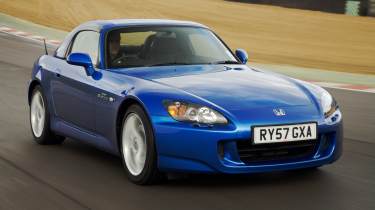
Honda F20C VTEC
By Steve Walker
- Model: Honda S2000
- Engine: 2.0-litre 4cyl petrol
- Gearbox: Six-speed manual
- Power/torque: 237bhp/207Nm
- 0-62mph: 6.2 seconds
- Top speed: 150mph
It shouldn’t be a surprise to anyone that a Japanese manufacturer in the 1990s, and Honda in particular, chose a high-technology route to improving the efficiency and performance of its engines. While US and European brands may have thrown extra displacement at the problem, Honda engineer Ikuo Kajitani, encouraged by domestic market tax policy, came up with VTEC to invigorate units of more modest size.
With its name abbreviated for simplicity’s sake, the Variable Valve Timing & Lift Electronic Control engine was anything but simple by the standards of other compact powerplants of the day. Using the variable valve timing and two cam profiles, it could optimise for efficiency at lower engine speeds. Then, at higher rpm the famous VTEC cam change kicked-in with its soaring whine to deliver bigger performance and make driver neck hairs go all tingly.
The VTEC family of engines went in all manner of Hondas from the Accord and CR-V to the Civic Type R and the tech remains in use today, but it arguably reached its thoroughbred peak in the S2000 roadster.
This was a car, complete with exquisite gearbox and sci-fi digital rev-counter, seemingly created to showcase the brain trembling intensity that the F20C 2.0-litre engine could deliver in its VTEC sweet spot between 6,000rpm and the astonishing 9,000rpm limiter. At launch in 1999 with 237bhp, it had the highest specific output (power per litre) of any non-turbo engine in a production car.
Lamborghini 3.5-litre V12
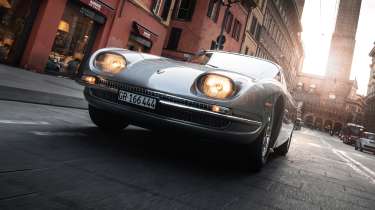
- Model: Lamborghini 350 GT
- Engine: 3.5-litre V12 petrol
- Gearbox: Five-speed manual
- Power/torque: 280bhp/325Nm
- 0-62mph: 6.8 seconds
- Top speed: 158mph
Some engines are so iconic that they even become part of a car maker’s identity and the Lamborghini V12 is perhaps the greatest example of this. The men responsible for this glorious engine is an automotive hall of fame in itself, Giotto Bizzarrini, Giampaolo Dallara and of course Ferrucio Lamborghini.
Eventually utilised first in the 350GT (after the show car’s infamous brick-filled engine bay at the Turin Auto Show), the 3.5-litre V12 went on to find a home in the legendary Miura as a 380bhp 3.9-litre, helping to chalk up a world record for the fastest production car with a top speed of 174mph. Then came a series of bedroom wall posters for several generations of kids: the Countach, the Diablo and the Murcielago. The Murcielago had the honour of being the last car to be powered by the V12, which had grown to 6.5-litres and 661bhp in the Murcielago’s final LP 670-4 SuperVeloce form. Whilst the engine received major changes of its near half a century of production, like swapping carburettors for injection, doubling the valves per cylinder and swapping wet for dry sump design, the roots of the engine could still very much be traced back to the original.
In 2011 the Aventador arrived with an all-new 6.5-litre V12 - but the hallmarks of the original were still present. It was naturally-aspirated, was incredibly fast and sounded utterly fantastic.
Toyota Hybrid Synergy Drive
By Tom Jervis
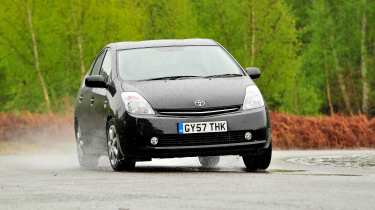
- Model: Toyota Prius (Mk2)
- Engine: 1.5-litre, 4cyl petrol, 1x e-motor
- Gearbox: CVT automatic
- Power/torque: 113bhp/478Nm
- 0-60mph: 10.9 seconds
- Top speed: 106mph
Auto Express recently concluded that the Toyota Prius was the most important new car of the last few decades, and its hybrid powertrain was fundamental to that, catapulting electrification into the mainstream. A refinement of the 2001 original, the Mk2 Prius’ 1.5-litre self-charging ‘Hybrid Synergy Drive’ engine only produced 113bhp, despite boasting an electric motor with around 50 per cent more power than the Mk1; 0-62mph took around 11 seconds. It was fuel economy where the HSD came into its own, though, with a combined efficiency of over 65mpg, comparable to hybrid models even today.
Ultimately, while the original Mk1 Toyota Prius felt a bit like a proof of concept, the added performance and fuel economy of the Mk2’s HSD engine made hybrid tech a lot more appealing and not simply a gimmick intended for well-meaning climate evangelists. Perhaps a testament to its impact is how many of these cars you still see on the road, reinforcing not only the Prius’ popularity, but also the HSD’s reliability; with very few perishable components, it's not uncommon to find examples running into the several hundreds of thousands of miles.
Volvo D5
By Max Adams
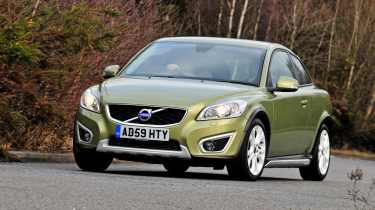
- Model: Volvo C30
- Engine: 2.4-litre, 5cyl diesel
- Gearbox: Six-speed manual
- Power/torque: 178bhp/400Nm
- 0-62mph: 7.7 seconds
- Top speed: 140mph
The second diesel on this list may not have been fitted to the world's most exotic supercars, but it was used to great effect across Volvo's varied product range from 2002 right up to 2017. True, it isn’t the world’s only in-line five-cylinder diesel engine, but Volvo’s D5 is most probably the best when you factor in performance, efficiency and reliability.
It’s not unheard of to find examples of cars with this engine with several 100,000 miles on them thanks to regular servicing, and because of this engine’s stout construction, it’s quite easy for tuning companies to provide a significant boost in performance without mechanical alteration. Not that you’d really need to up the power much when this engine is installed in the quirky little C30 hatchback, and with a six-speed manual, you can revel in this engine’s rather satisfying five-cylinder thrum. Sadly, it’s an engine that’ll never be repeated as the world marches, quite rightly, to an electrified future.
But that doesn’t mean we can’t enjoy it for a little longer, and that brings me to another important category that often gets overlooked: serviceability. I say this not only because I own several D5-engine cars, but also because whenever I talk to people who work on cars, there’s always a knowing appreciation for how well the D5 is packaged.
For instance, unlike the 5-cylinder Alfa Romeo used, the alternator in a D5 is not buried; it’s right at the top of the engine, and a competent mechanic should have no issue getting to it. And because this engine is actually quite easy to work on (more so than the later VEA engines, apparently), many jobs could quite easily be tackled by yourself at home. They’re a great engine to get started on learning how to work on cars.
PSA XUD
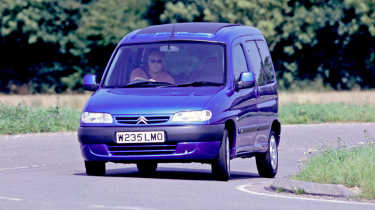
- Model: Citroen Berlingo/Peugeot Partner (Mk1)
- Engine: 1.9-litre 4cyl diesel
- Gearbox: Five-speed manual
- Power/torque: 69bhp/130Nm
- 0-62mph: 15.8 seconds
- Top speed: 87mph
While it’s never about to win any awards for performance or refinement, the immensely durable PSA XUD continues to clatter on in thousands of cars across the continent. While these French diesel lumps are primarily a Peugeot and Citroen party piece, they have actually appeared in several other cars, too, ranging from the Rover 200 to the FSO Polonez.
While it’s never going to be as exciting as an Italian V12, I firmly believe that this humble workhorse deserves its place on this list. Over the years the XUD lumps have earned a stellar reputation for being almost unkillable, even after racking up some truly mega miles. On the rare occasion that they do misbehave, they’re also generally simple to fettle with and get going again.
So why do I think the Citroen Berlingo and Peugeot Partner demonstrate this engine at its best? To put it simply, these cars add a huge amount of versatility into the mix. Whether you need a trusty little van, a practical family MPV, a wheelchair-accessible vehicle or even a camper conversion, the first-generation Berlingo and Partner are up to the job. They even have a genuine charm about them, with an appealing exterior design and the option of some incredibly colourful interiors (one of the very best things about 90s French cars, if you ask me). Combine this versatility with the reliability of the XUD, and you really can’t go wrong.
Don't miss out! See more of Auto Express in your Google Top Stories. Click here...