Cars that changed the world: the 50 most important and influential modern motors
The automotive landscape has changed dramatically over the past 30 years. To celebrate, we name the 50 models that we think illustrate the transformation best

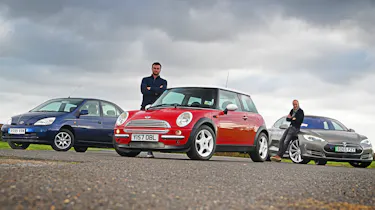
Do you drive one of the most influential cars of the past 30 years? There have been plenty of lists trumpeting historical greats such as the Benz Motorwagen, Ford Model T, VW Beetle, Citroen 2CV and so on. But what about modern cars that have stirred our souls and filled our driveways, not to mention taken four-wheeled transport to new technological, environmental and cultural heights?
The Auto Express team has racked its brains, argued into the night, and come up with a list of cars on sale at the millennium or beyond that have transformed modern motoring in terms of design, technology, concept or commercial performance. This is our list of the 50 modern cars that changed the world. Do you agree? Let the countdown – and debate – commence!
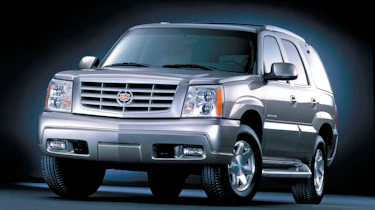
50. Cadillac Escalade
- No. built: 1 million
- From: 1998-present
- Price: N/A
- Our pick: 6.2-litre V8, 420bhp
- Top speed: 112mph
From geriatric customers to Jay-Z and J-Lo, Cadillac’s remarkable noughties turnaround was powered by its luxurious leviathan, the Escalade. General Motors’ upmarket brand slumped in the nineties, as Lexus and the Germans took chunks out of its US premium market share. Enter Brit Simon Cox, who alongside design boss Wayne Cherry created the ‘Art and Science’ design language. Even in diluted form on the second-generation Escalade (2002), it made a former badge-engineered GMC stand out, elevating it into one of hip-hop culture’s most treasured accessories.
Jay-Z, The Game and 50 Cent embraced the V8-powered, chrome-rimmed SUV, a trend GM mined by getting celebrities to shape future editions. Backed up by some hot V saloons to give BMW’s M Division a fright, Caddy’s image was transformed. And the increasingly decadent Escalade became America’s favourite luxury SUV, topping one million sales.
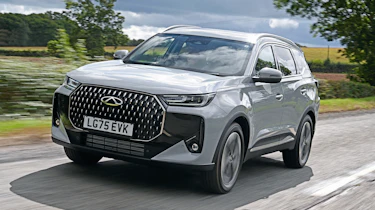
49. Chery Tiggo 7
- No. built: 1 million
- From: 2016-present
- Price: from £24,995
- Our pick: 1.6-litre four-cylinder, 145bhp
- Top speed: 112mph
China’s biggest exporter isn’t BYD, or MG's owner, Shanghai Automotive, it’s Chery – and it has been for more than 20 years. Way back in 2001, just over a year after launching its first saloon, Chery had the foresight to establish a global operation. And 2005’s Tiggo compact SUV – which has spawned a family of 4x4s – is the engine room of the five-million export sales racked up in more than 80 countries.
Central to its success domestically and in key markets such as Brazil, Turkey and Russia is the Tiggo 7, which passed the one-million-unit milestone in November 2024. Fresh onto the UK market, the Tiggo 7 epitomises Chery's proposition: practical and spacious family motoring at ruthlessly competitive prices.
The Nissan Qashqai-sized SUV is offered as a turbocharged petrol and a plug-in hybrid which, at under £30,000, is the cheapest on UK sale. And it’s already making inroads, with more than 5,000 registrations in four months.
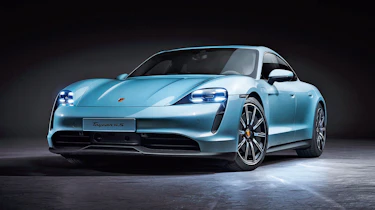
48. Porsche Taycan
- No. built: 170,000
- From: 2019-present
- Price: from £30,000
- Our pick: 93kWh, 469bhp
- Top speed: 143mph
The Taycan is the poster child for the car industry’s troubled transformation to electric. It rocketed into existence like a 911 Turbo S in Launch mode, its 41,000 sales in 2021 eclipsing the 911’s although the sports car had posted a record year. No surprise why: this was the first true enthusiast EV with feelsome steering and genuine Porsche performance, underpinned by delightful standard-fit air suspension. The sleek looks were unlocked by a T-shaped battery that left pockets of space for footwells, enabling lower-set seats and a sportier roofline.
But initial success lured Porsche into a false sense of security: it predicted 80 per cent of its sales would be zero-emission by 2030, and made the Macan SUV replacement electric only – as the Taycan bubble (and residual values) burst. Porsche has now rewritten its product plan to make its electric Boxster replacement petrol-powered too, and added an extra hybrid SUV. The impact on Porsche has been seismic, with execs falling on their swords and three profit warnings in 2025 alone.
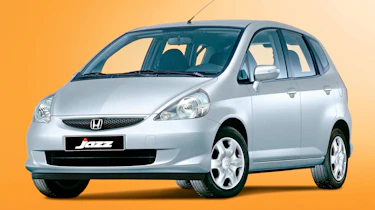
47. Honda Jazz
- No. built: 8 million
- From: 2001-present
- Price: from £795
- Our pick: 1.4-litre 4cyl petrol, 81bhp
- Top speed: 106mph
Honda used to be laser-focused on delivering niche cars to delight enthusiasts or populist cars that made mass motoring better. The 2001 Jazz was one of the latter: a brilliantly conceived, one-box hatchback with interior space and seat flexibility that belied its 3.8-metre length.
Smart thinking relocated the fuel tank from under the back seats to the fronts, so the rear-seat bases could flip up and create space for carrying tall objects such as picture frames or pot plants. The compact rear suspension also unlocked a roomy boot, while a 60:40-split, fold-flat bench and a front passenger seat that could lay prone meant you could slide in a stepladder.
People knock the Jazz as a pensioner-wagon with a sit-up-and-beg driving position and sluggish 1.4-litre petrol engine (originally), though hybrid power in 2010 added another string to its bow. The Jazz’s versatility and affordability triggered success in America (where it was named the Fit) and Europe: it’s a UK Honda staple to this day.
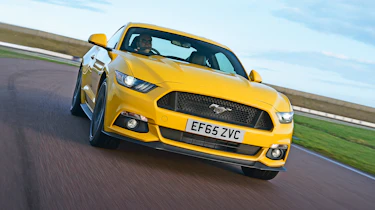
46. Ford Mustang
- No. built: 10 million
- From: 1964-present
- Price: from £18,000
- Our pick: 5.0-litre V8 petrol, 410bhp
- Top speed: 155mph
Outsiders chuckle at baseball’s ‘World Series’ status when it’s primarily a North American concern – and you could level the same criticism at the Ford Mustang. Until 2015 – when Ford took the car global.
Just like during the oil crisis of the early seventies, this S550 generation came with a 2.3-litre four-cylinder engine, rather than a V6, to help meet European CO2 concerns. It was more puny car than ‘pony car’ to purists and amusingly, buyers flocked to the V8, with variants ranging from our 410bhp 5.0-litre Coyote to the US’s supercharged 5.2-litre 760bhp Shelby GT500.
Special S550s celebrated 50th birthdays, with the Limited Edition’s tweaks marking the Mustang’s own introduction, while the 2018 Bullit model commemorated its iconic celluloid moment with Steve McQueen. The ‘Stang spreading its wings helped it become the world’s best-selling sports car – though many would argue it’s more of a muscle car in reality.
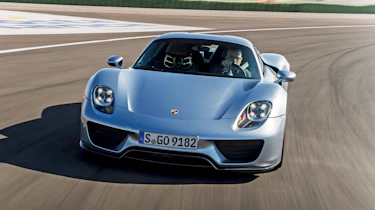
45. Porsche 918 Spyder
- No. built: 918
- From: 2013-2015
- Price: From £1.5m
- Our pick: 4.6-litre V8 + 2x e-motors, 600bhp
- Top speed: 215mph
The Porsche 918 Spyder was part of the Holy Trinity alongside two parallel hybrid hypercars – the plug-in McLaren P1 and Ferrari LaFerrari. But the Porsche’s drivetrain was the most ambitious, with its additional electric motor turning the front axle and endowing the 918 with all-wheel drive. It also offered more than double the McLaren’s six EV miles, but more meaningful was Porsche’s target of a hypercar that could deliver economy of 3.0l/100km (94mpg) and lap the Nürburgring in less than 7min 30sec.
That explained the race car suspension, seats and brakes, accompanied by steering more touchy-feely than Oscars night. And the acceleration – 0-62mph in 2.6 seconds and onto 125mph 4.7 secs later – was mind-blowing. The LaFerrari, the P1 and 918 Spyder were all exhilarating and remarkable. The basis of the modern hybrid supercar – evolved and enhanced by Lamborghini, Ferrari and McLaren – started here.
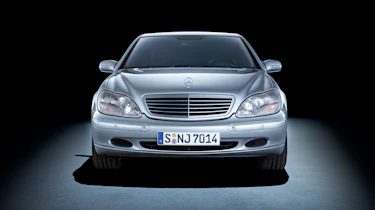
44. Mercedes S-Class W220
- No. built: 484,683
- From: 1998-2005
- Price: from £2,000
- Our pick: V8 petrol, 298bhp
- Top speed: 155mph
Massively successful in the US and Europe, the W220-generation S-Class really cemented Mercedes’ flagship as the standard for luxury limousines. Available in short wheelbase, long wheelbase or even in stretched-limo ‘Pullman’ guise, the W220 was also the first S-Class to come with diesel power in inline-six or V8 form. Petrol engines ranged from a 2.7-litre V6 to a 5.0-litre V8. There was even a 6.0-litre V12 to take on BMW’s V12 750i and the Audi A8 W12.
As ever, what set the Mercedes apart from its competition was its future-thinking technology. The S-Class introduced kit 25 years ago that has since become expected on more regular cars; the W220 was the first car in the world to get radar-assisted cruise control, engine cylinder deactivation and keyless go. This level of innovation means that whenever a new S-Class arrives, every car brand takes note.
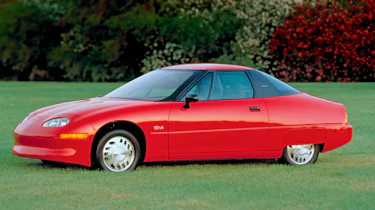
43. GM EV1
- No. built: 1,117
- From: 1996-1999
- Price: N/A
- Our pick: 26.4kWh, 137bhp
- Top speed: 80mph
Don’t let the design and tiny production numbers fool you – if the EV1 had a little more commitment from GM it could have been the Nissan Leaf, just 15 years earlier. General Motors really was ahead of the curve when it unveiled the Impact Concept in 1990, and six years later it revealed the EV1 production version. Staying true to the concept’s aero-focused design (a drag coefficient of just 0.19Cd) and pure-electric powertrain, the EV1 initially had a range of 55 miles with its ridiculously heavy 533kg lead-acid battery. But later cars came with a Nickel-metal hydride battery that could provide up to 142 miles – around double the range of the original Leaf.
Actors, politicians and anyone wanting to do their bit for the environment (or be seen to do so) lined up for an EV1. The only thing was you couldn’t buy one from GM – you had to lease it. Some owners wanted to buy their EV1s outright when the lease ended in the early 2000s, but GM called quits on the EV1 project and crushed most, with others ending up in museums.
42. Hyundai Ioniq
- No. built: 325,500
- From: 2016-2022
- Price: from £5,000
- Our pick: 1.6-litre 4cyl petrol + 1x e-motor, 139bhp
- Top speed: 116mph
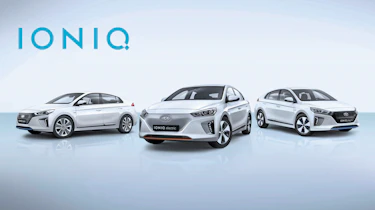
You may have heard a few car brands repeat phrases such as ‘value of choice’ or ‘multi-pathway strategy’ when it comes to fuel sources, but the first to properly put that into action was Hyundai with the Ioniq hatch.
The Ioniq – which has since given its name to Hyundai’s range of all-electric cars – could be ordered with hybrid, plug-in hybrid or pure-electric power, the first in the world to do so. A focus on efficiency meant the Ioniq was at the mercy of aerodynamics for its design, resulting in a very similar look to the Toyota Prius.
Just like the Toyota, the Ioniq also became exceptionally popular with taxi drivers; thanks to its fuel-sipping ability, the HEV could return 62.8mpg, while the plug-in hybrid offered an incredible 256.8mpg – on paper at least.
With a 38.3kWh battery, the EV could offer up to 193 miles of range. Modest numbers compared with contemporary Hyundai EVs, which can trace their lineage back to the rolling laboratory that was the original Ioniq.
41. Ford F-150
- No. built: 40 million
- From: 1948-present
- Price: N/A
- Our pick: 5.0-litre V8 petrol, 400bhp
- Top speed: 106mph
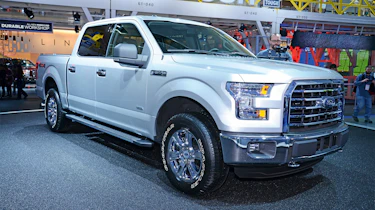
In America, bigger is always better, which is why the Ford F-Series is the country’s best-selling vehicle. As much a part of US culture as a hamburger and fries, this vast pick-up has been on sale in various forms since 1948 and is now in its 14th generation.
In nearly 80 years it has evolved steadily from the spit-and-sawdust original, but it took perhaps its biggest leap forward in 2014 with the 13th F-150. The first-ever US Ford to be built from aluminium, it was 300kg lighter than its predecessor, which made it more efficient and better to drive.
Then, in 2021, an EV was introduced, a move that some in America saw as unconstitutional as burning the stars and stripes. It wasn’t a success, and was dropped late last year. Yet the F-150 continues to go from strength-to-strength, and with a mind-boggling 40 million sold (and counting), it remains second only to the Toyota Corolla in the world’s all-time best-seller list.
40. Range Rover Evoque
- No. built: 1.4 million
- From: 2011-present
- Price: from £4,000
- Our pick: 2.2-litre 4cyl diesel, 187bhp
- Top speed: 121mph
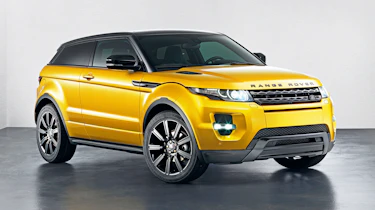
By squeezing the luxury and upper-class appeal of a full-size Range Rover into a more compact and affordable package, Land Rover created a sales smash hit with the Evoque. Thanks to its low-slung, three-door coupé-like body, beautifully finished interior and all the firm’s trademark off-road ability, the genre-busting newcomer became a huge-selling ‘it’ car when it was revealed in 2011. It was quickly joined by a more practical five-door version, making it an even more attractive proposition.
The second-generation model in 2018 retained all of the original’s style but added even more sophistication. So how influential is the Evoque? Well, if you can’t see its obvious copycat likeness in the latest Jaecoo 7, then it’s probably time to take a trip to Specsavers.
Latest Range Rover Evoque deals
39. Ford Fiesta Mk6
- No. built: 6 million
- From: 2002-2008
- Price: from £400
- Our pick: 1.25-litre 4cyl petrol, 74bhp
- Top speed: 101mph
When it comes to industry-leading influence, you can make a claim for any version of the Ford Fiesta. The 1976 original was one of the first hatchback superminis, while the fourth generation delivered class-leading driving fun.
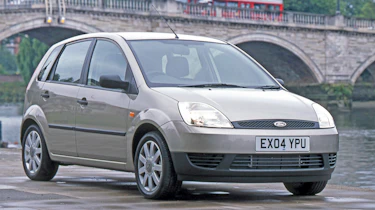
Yet for us, it's the sixth-generation model that deserves most praise. Not only was it the one that sold in the biggest numbers, it brought together the dynamic sparkle of its predecessors with a dusting of premium appeal never before seen in the value-for-money supermini sector.
It looked very smart too, featuring the latest evolution of the ‘New Edge’ design language first seen on the original Ka. It also drove brilliantly, with crisp handling and a refined ride. There was even a hot ST that packed a lusty 148bhp 2.0-litre motor. With Ford mulling a possible revival of the Fiesta, it could do a lot worse than take inspiration from this brilliant big-seller.
38. BMW X6
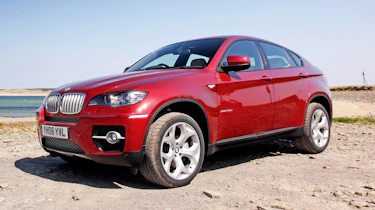
- No. built: 680,000
- From: 2008-present
- Price: from £5,000
- Our pick: 3.0-litre 6cyl diesel, 231bhp
- Top speed: 145mph
Splicing together luxurious SUV comfort and sleek coupé style, the BMW X6 created a whole new class when it hit the road in 2008. With demand for off-road-inspired models going through the roof, bosses at the firm spotted a gap in the market for a new type of vehicle. Using the all-wheel-drive underpinnings of BMW’s hugely popular X5, the newcomer featured a distinctive body with a lower roof and swooping hatchback rear. Inside, it was as upmarket as the car it was based on, while a four-seat layout gave it a more cosseting and exclusive feel.
But the genius of this high-riding fashion accessory was that development costs were a fraction of those for an all-new model, yet it was more expensive to buy than the dynamically identical but more practical X5. Even so, buyers rolled up in their thousands and the super-profitable X6 became a mainstay of the brand’s line-up.
37. Ferrari 458
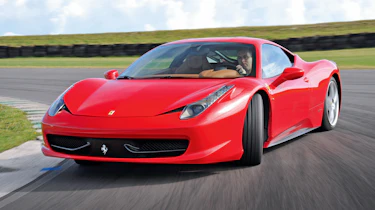
- No. built: 22,000
- From: 2009-2015
- Price: from £108,000
- Our pick: 4.5-litre V8 petrol, 562bhp
- Top speed: 202mph
Was this peak Ferrari? That’s a bold claim, but the 458’s blend of performance, handling, looks and usability made one of the high points of the Prancing Horse’s illustrious history.
It was the last of the firm’s models to use a mid-mounted, naturally aspirated V8, and the 4.5-litre unit was an absolute corker. Delivering 562bhp at a heady 9,000rpm, it served up a spine-tingling, operatic soundtrack that left you grinning from ear to ear. Coupled to ultra-quick steering and a sublimely balanced chassis, it helped deliver a heavenly driving experience. Then there was the limited-run Speciale, which was even more, erm, special. Yet unlike previous Ferraris, it was also comfortable, decently practical and as easy to drive as a Fiat Panda; this was no highly strung diva.
36. Volkswagen Golf MK4
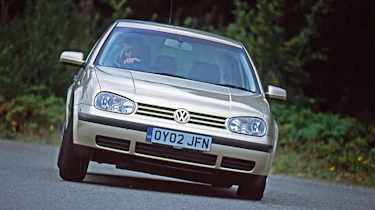
- No. built: 4.9 million
- From: 1998-2006
- Price: from £400
- Engine: 1.9-litre 4cyl diesel, 110bhp
- Top speed: 120mph
Today, every mainstream brand wants to jump on the premium bandwagon, but it was the Golf Mk4 that first injected some upmarket appeal into the humble family hatchback market. The brainchild of obsessive VW boss Ferdinand Piech, the all-new fourth-generation model was designed to banish memories of its slightly flaky predecessor. Huge attention was lavished on the cabin, which was awash with soft-touch plastics, had a hewn-from-solid-rock feel and featured cool blue instrument lighting. Yet it was the beautifully damped grabhandles that would have passengers gasping with delight.
Dynamically, the Ford Focus was a much sharper car to drive, while the UK-only naturally aspirated GTI’s soggy handling and 115bhp output shamed the famous hot-hatch badge. But on the other hand, the Golf’s cutting-edge range of punchy and frugal direct-injection 1.9 TDI motors helped get British drivers hooked on diesel power. Classy yet classless, the Mk4 remains a game changing family car.
35. Ford Crown Victoria
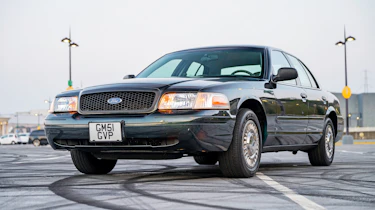
- No. built: 1.5 million
- From: 1992-2012
- Price: from £9,500
- Our pick: 4.7-litre V8 petrol, 247bhp
- Top speed: 120mph
A star of more Hollywood blockbusters than Tom Cruise, the Ford Crown Victoria will be as familiar to many UK drivers as a Fiesta or Focus. The vast, V8-engined saloon has been the go-to car for silver screen Highway Patrol officers across the United States for the past two decades. And no film set in New York city would be complete without hundreds of bright yellow Crown Vic taxis criss-crossing the Big Apple’s grid-like streets.
The name can trace its roots back to 1955, when it was first used on flagship versions of the Fairline saloon, but it wasn’t until 1992 that the Crown Victoria became a model in its own right. A second-generation version was launched six years later, but both cars featured the same burbling 4.7-litre V8 petrol, slushy four-speed automatic gearbox and rear-wheel-drive layout. Production finally ended in 2012 (surprisingly for an all-American icon, the Crown Vic was assembled in Canada), but not before 1.5 million units had rolled out of the factory.
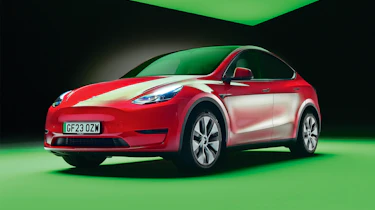
34. Tesla Model Y
- No. built: 4.5 million
- From: 2020-present
- Price: from £17,000
- Our pick: 1x e-motor, 292bhp
- Top speed: 110mph
While the Model S was the car that proved the Tesla concept in 2012, the Model Y has rocketed the American brand into the big time by being the world’s biggest-selling car (not just EV) for the past three years.
Packaging the cutting-edge EV architecture of the Model 3 compact exec into a more fashionable SUV bodystyle, the Model Y delivered a spacious and well equipped interior, a range in excess of 300 miles, access to the brand’s famed Supercharger public charging network and rock-bottom tax rates, helping to quickly wean a generation of petrol and diesel company-car drivers off fossil fuels.
Provocative company CEO Elon Musk has done his best to stunt sales, but a facelift last year and the arrival of a new £41,990 entry-level model means the Tesla remains a tempting choice for many.
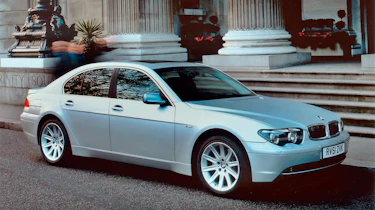
33. BMW 7 series E65
- No. built: 343,000
- From: 2001-2008
- Price: from £2,500
- Our pick: 3.0-litre 6cyl diesel, 228bhp
- Top speed: 148mph
It’s 25 years since BMW launched the E65 7 Series, the fourth generation of its flagship saloon, which arguably still looks as bold as ever. The first model from the Bavarian brand to feature the controversial ‘flame surfacing’ styling of American design boss, Chris Bangle, it caused jaws to drop and coffees to be spilled at the Frankfurt Motor Show in 2001. The head-turning concept was rolled out for other BMWs over the following decade, before the firm returned to its more sober-suited roots.
However, the 7 Series’ real influence was to be found inside. Here, sitting between the front seats was what looked like the upturned cake tin from a Mr Kipling’s Bakewell tart, but was actually the rotary controller for BMW’s first iDrive infotainment system. It was a little fiddly to master at first, but over the years the innovative twist-and-click set-up has been refined into one of the most intuitive systems ever. Sadly, touchscreens and voice control have now overtaken it.
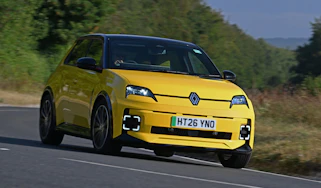
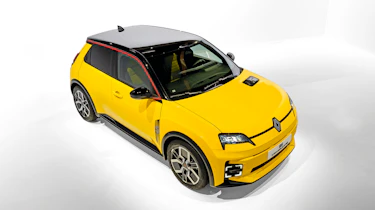
32. Renault 5
- No. built: 100,000
- From: 2025-present
- Price: from £22,995
- Our pick: 52kWh, 148bhp
- Top speed: 93mph
Some cars create an impact the moment the covers are pulled off – and the Renault 5 is a prime example. As with the reborn MINI a quarter of a century ago, it combines the cleverly updated looks of an iconic ancestor with thoroughly modern underpinnings and driving dynamics that have been sprinkled with a dash of joie de vivre.
In many respects there’s nothing revolutionary about the 5; its electric architecture has been used elsewhere, while its 250-mile range and 148bhp power output are nothing to write home about. Yet those retro looks start conversations wherever you go, the cabin is bursting with Gallic charm and it is affordably priced. Better still, it’s a hoot to drive, with nimble handing, a cushioned ride and punchy performance. However, the reason it gets a place here is that it’s arguably the car that’s done the most to convince petrolheads there are reasons to be cheerful for an electrified future.
31. Mercedes SLK

- No. built: 670,000
- From: 1996-2016
- Price: from £1,000
- Our pick: 2.3-litre 4cyl petrol supercharged, 190bhp
- Top speed: 142mph
In the mid-nineties, two-seat roadsters were hugely popular. Almost every brand had a compact drop-top sports car on its books, but none created such a stir as the SLK. Designed to rival models such as the Porsche Boxster and BMW Z3, the Merc hit showrooms in 1996 featuring lines lifted straight from the SLK Concept first shown at the Turin Motor Show two years previously.
Yet it was its folding-metal hard-top that really stopped traffic. Offering coupé-like comfort and style when raised, the powered roof could be lowered in just 25 seconds for wind-in-the-hair thrills. The SLK couldn’t quite match the Porsche for driver thrills, but the Merc won hands down for kerb appeal. Moreover, it kick-started a trend for metal-topped convertibles that lasted almost 20 years, with mainstream brands such as Peugeot popularising the tech.
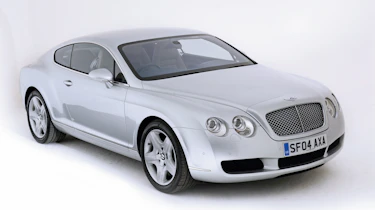
30. Bentley Continental GT
- No. built: 100,000
- From: 2003-present
- Price: from £10,000
- Our pick: 4.0-litre twin-turbo V8, 521bhp
- Top speed: 192mph
Like the Rolls-Royce Phantom found in our rundown, the Bentley Continental GT served as proof that upper-class British brands could thrive under foreign ownership. When it was bought by the Volkswagen Group 1998, Bentley had a limited line-up of outdated, expensive motors and was struggling to make ends meet. However, its new bosses saw the luxury firm’s potential, pouring resources into an all-new, more affordable £110k car aimed at broadening Bentley’s appeal.
Launched in 2003, the Continental GT married cutting-edge German engineering to traditional British craftsmanship. Under the skin it combined the VW Phaeton’s chassis with a majestic twin-turbocharged 6.0-litre W12 and sophisticated all-wheel drive. Inside, it oozed club-class appeal, thanks to its hand-stitched leather and lustrous wood trim. On the move, the imposing four-seat coupé melded devastating straight-line pace and surprising agility with refinement and a cosseting ride. Now in its third generation, it has quickly become Bentley’s best-selling model, helping secure the manufacturer's financial future.
29. BYD F3
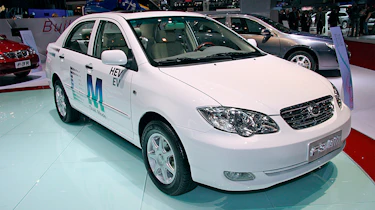
- No. built: 3,000
- From: 2008-2013
- Price: N/A
- Our pick: 1.0-litre 3cyl PHEV, 168bhp
- Top speed: 93mph
Which company made the first plug-in hybrid production car? Toyota? Nope. Honda? Think again. No, the honours for creating pioneering PHEV tech go to BYD. Today it’s one of the fastest-growing car brands in the world, but when it revealed the F3DM in 2008, Build Your Dreams was little known outside its native China.
You’d expect a design that’s nearly two decades old to be a little old hat, but its efficient 1.0-litre three-cylinder generator, compact dual-motor drivetrain and claimed 60-mile EV range look on the money now. It even featured a solar panel in the roof to power the air-con. And this leading-edge technology encouraged American bellwether investor Warren Buffett to back BYD. The rest, as they say, is history.
Around 3,000 F3DMs emerged over a six-year production run, putting BYD on the path to becoming the world’s biggest ‘new energy vehicle’ manufacturer. Its scalable e-platform 3.0 and ‘Blade’ LFP battery underpin millions of electric vehicles, and BYD’s goal is now to become the world’s biggest car maker.
28. Kia Sportage
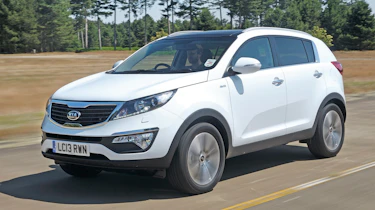
- No. built: 7 million
- From: 1993-present
- Price: from £1,250
- Our pick: 1.6-litre 4cyl petrol turbo, 157bhp
- Top speed: 108mph
In the space of just 20 years, Kia has gone from budget brand to mainstream player, spearheaded by this key car: the Sportage. When ex-Audi design boss Peter Schreyer joined Kia in 2006, he claimed that great design would lead the Korean brand to the top of the sales charts.
One or two bosses of established European brands chuckled at this suggestion, but Kia bedded in European production of the Cee’d hatch and Mk2 Sportage, then revealed the third-generation Sportage SUV in 2010, which wiped the smirk off their faces.
Boasting bold, angular lines and an interior that served up style, substance and space, it was a cut above any of the firm’s previous frumpy efforts. It also drove well, packed an eye-catching price and was backed by Kia's trademark seven-year warranty. As a result, buyers made a beeline for the brand's dealers, helping cast the die for the company's current solid-gold status.
27. Honda Civic Type R FL5
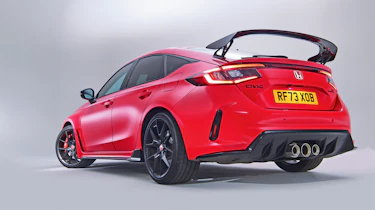
- No. built: 44,000
- From: 2023-2025
- Price: from £40,000
- Our pick: 2.0-litre 4cyl turbo, 324bhp
- Top speed: 167mph
The Volkswagen Golf GTI might be the first-ever hot hatch, but the most recent Honda Civic Type R is arguably the greatest. Known as the FL5, it’s the latest in a long line of pocket rockets from the Japanese brand, stretching all the way back to the EK9 in 1995. What makes the current car so special is that it’s also a bona fide record-breaker, setting the fastest lap for a front-wheel-drive production car all over the world, including the Nürburgring, Suzuka and Spa-Francorchamps.
Yet it’s the way the Civic drives that really marks the Type R out, with the analogue delights of its beautifully balanced handling, deliciously precise manual gearbox and rev-hungry 324bhp 2.0-litre turbocharged petrol engine serving as a refreshing tonic to the increasingly hi-tech and driver-assisted competition. The downside? Honda has just pulled the plug on European Type R sales, but it lives on in the US and Japan.
Latest Honda Civic Type R deals
26. Nissan GT-R R35
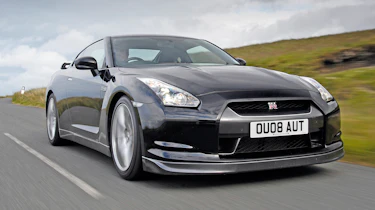
- No. built: 48,000
- From: 2008-2024
- Price: from £35,000
- Our pick: 3.8-litre twin-turbo V6, 562bhp
- Top speed: 196mph
Nothing epitomised Nissan’s turnaround from near-bankruptcy in 1999 than ‘Godzilla’, the mighty Nissan GT-R kicked off by CEO Carlos Ghosn to deliver a Porsche-challenging halo model to motivate employees and thrill customers. It combined a thumping win-turbocharged 3.8-litre V6, electronically controlled all-wheel-drive transmission and a twin-clutch gearbox to devastating effect.
Following in the wheeltracks of a long line of scorching, Japan-centric Skyline models, the R35 was the first GT-R to be fully homologated for Europe from the outset. Despite its size and hefty 1,800kg kerbweight, the GT-R delivered brutal acceleration and twinkle-toed agility – all for a price that comfortably undercut rivals. In fact, the GT-R was so brilliant that it managed to stay in production, and at the top of its game, for nearly 20 years.
25. Fiat 500
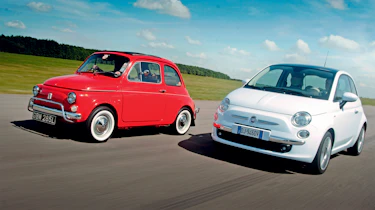
- No. built: 3 million
- From: 2007-present
- Price: from £600
- Our pick: 1.2-litre 4cyl, 69bhp
- Top speed: 99mph
Fiat was a bit late to the retro-themed party, but it quickly made up for lost time. It might have been beaten to the nostalgic punch by the rebooted VW Beetle (1998) and reimagined BMW-funded MINI (2001), but the Italian brand’s funky 500 re-make has proved to be a sales smash since making its debut in 2007.
Featuring cheeky lines inspired by the fifties original, a host of customisable options and penny-pinching running costs, the 500 found favour with both fashion-conscious younger buyers and older customers who were looking to recapture their youth. Humble Panda underpinnings meant the city car was only average to drive, while the standard 1.2-litre engine couldn’t pull the skin off a panna cotta. However, there were hot Abarth versions, a drop-top convertible and numerous special editions. Even the arrival of an all-new EV in 2020 couldn’t dim the cute Fiat’s appeal.
24. Rolls-Royce Phantom VII
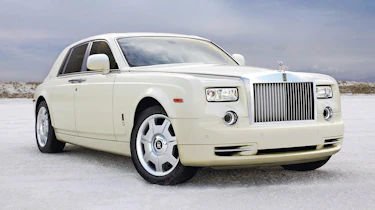
- No. built: 15,000
- From: 2003-present
- Price: from £65,000
- Our pick: 6.75-litre V12, 563bhp
- Top speed: 155mph
Few machines arrive with as much expectation as a Rolls-Royce, because the company has been producing some of the best cars in the world for 120 years. As a result, BMW knew that there could be no half measures when it bought the aristocratic British brand in 1998. In fact, it took five years for it to launch its first all-new model, but the imposing Phantom VII proved to be more than worth the wait.
Handcrafted at the brand’s purpose-built factory in Goodwood, the vast four-door saloon set new standards for luxury, comfort and refinement. Featuring a bespoke platform, sumptuous interior and near-silent 6.75-litre V12 motor, the Phantom became the ultimate symbol of success, as popular with rappers as it was royalty. The two-door Phantom Coupé and open-topped Drophead Coupé only added to its upper-crust appeal. More importantly, it paved the way for Rolls-Royce to become one of the most bankable brands of the 21st century, a byword for excellence and excess.
23. Renault Scenic
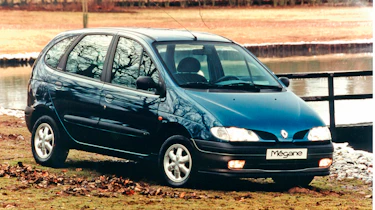
- No. built: 5.4 million
- From: 1997-present
- Price: from £800
- Our pick: 1.6-litre 4cyl petrol, 109bhp
- Top speed: 115mph
While SUVs and crossovers dominate the sales charts these days, not that long ago car makers wanting to make a mint needed an MPV in their line-ups. Designed from the inside out, these family-friendly machines prioritised space and storage over speed and style – and Renault was undisputed king of the people-carrier class, having pioneered the sector in Europe with its seven-seat Espace in 1982.
The French firm stole a march on rivals again 15 years later with the Scenic, which delivered MPV versatility in a compact family-car package. With its bold one-box design, this roomy runaround’s cleverly engineered five-seat interior featured a sliding rear bench, aircraft-style picnic tables and numerous storage compartments – in a car the size of today’s VW Polo. There was even a rugged, SUV-inspired four-wheel-drive RX4 that set the template for today’s compact crossovers. Sales of MPVs have dwindled, but the Scenic’s legacy is assured by the fact that it lives on today as a stylish and practical family EV.
22. Porsche Boxster
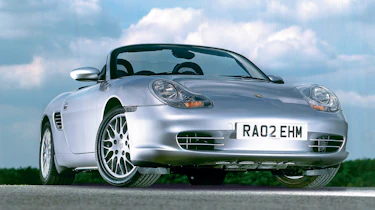
- No. built: 400,000
- From: 1996-present
- Price: from £4,000
- Our pick: 4.0-litre flat-six, 395bhp
- Top speed: 179mph
Porsche was in a bit of a pickle when it launched the original Boxster in 1996. After cashing in on the greed-is-good boom of the eighties, the German firm’s sales had slumped a decade later. It hit back with this roadster, modernising the rear-engined 911’s layout with a sweet-spinning 2.5-litre flat-six motor just behind the seats. The result was beautifully balanced handling at a lower price, making the Boxster an instant hit. Then, nearly a decade later in 2005, Porsche launched the Boxster’s faster tin-top cousin, the Cayman, which delivered 911 driving thrills for half the price.
Ever since, and over four generations, this dynamic duo have gone from strength to strength, with the most recent 718 4.0-litre GTS proving to be one of the best sports cars ever. The ultra desirable Cayenne SUV might have helped Porsche become one of the richest car makers ever, but the company wouldn’t be here today without the Boxster. The all-new petrol and electric versions due later this year have a lot to live up to.
21. Nissan Leaf
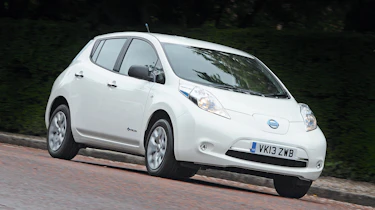
- No. built: 700,000
- From: 2011-present
- Price: from £1,500
- Our pick: 75kWh, 214bhp
- Top speed: 99mph
If you look at the Nissan Leaf in isolation, you’d be forgiven for dismissing it as a compromised early attempt at electromobility for the masses. Yet in reality, it helped transform the new-car market and bring electric cars to the fore.
Sure, by today’s standards, the original car’s 24kWh battery and 50 to 70-mile real-world range are laughable. But it’s no exaggeration to say that if the Leaf hadn’t appeared, it’s unlikely we’d have the plethora of EVs that we do today.
It looked like a puffer fish and the interior was filled with cheap-feeling plastics and a horrible early infotainment system. But the first Leaf drove like a proper car, had space for four and could be connected to a domestic plug and charged to full overnight. The latest version has transformed into a fashionable coupé-crossover, but the fact Nissan has stuck with its Leaf name is testament to its long-standing and successful electric-car endeavours.
20. Volvo XC90
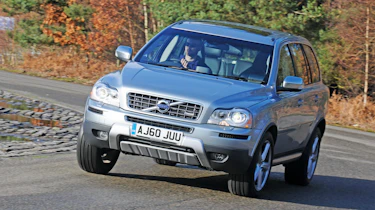
- No. built: 1.67 million
- From: 2002-present
- Price: from £2,000
- Our pick: 2.0-litre 4cyl turbo petrol MHEV, 247bhp
- Top speed: 112mph
The first XC90 put Volvo on the map, and transformed the brand’s image from dull estate-car maker to Scandi-cool premium player. It wasn’t the first luxury SUV – the Mercedes ML and BMW X5 can lay claim to that title – but the XC90 put as much emphasis on family-friendly features as it did on its high-quality cabin.
Being a Volvo, safety has always been a top priority. Internet rumours throw around claims that no one has ever been killed in an XC90, and while unsubstantiated, it has a record as a tough, dependable workhorse. Gutsy engines – such as the five-cylinder D5 diesel – can do huge mileages with regular maintenance, and they’ll tow all but the biggest loads if the need arises.
Looking back to its launch in 2002, you’d not have bet on Volvo’s SUVs surpassing the appeal of its estates, but the XC90 – and the smaller XC60 and XC40 – have elevated the brand alongside the upmarket leaders.
19. Dacia logan
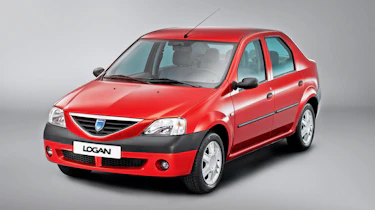
- No. built: 4.5 million
- From: 2004-present
- Price: from £2,000
- Our pick: 1.2-litre 4cyl petrol, 73bhp
- Top speed: 100mph
Despite its relative obscurity in the UK, the Dacia Logan is a shoo-in for our list of automotive game changers. It was the first bespoke model born from Renault’s acquisition of the Romanian brand and was colloquially known as “the 5,000 Euro car” at its launch in 2004. It quickly became one of central and eastern Europe’s best-selling models. At the car’s peak in 2007, Dacia built more than 200,000 Logans, while more than four million have now been sold worldwide.
It paved the way for the hugely successful Sandero and Duster, which were launched alongside the Logan MCV estate when Dacia arrived in the UK in 2013. The firm now has a 1.49 per cent market share in Britain, and outsells Citroen, SEAT and Suzuki. We can’t see Dacia’s success slowing – and we’d argue the Logan was a key part of that.
18. Skoda Octavia
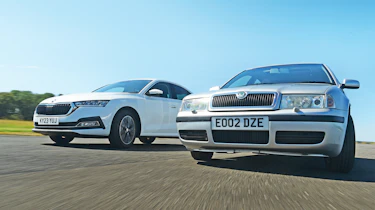
- No. built: 7.5 million
- From: 1996-present
- Price: From £1,000
- Our pick: 1.5-litre turbo petrol, 114bhp
- Top speed: 126mph
Sure, there are more exciting models on our list of the 50 cars that changed the world, but few get as close to that clichéd title of ‘all the car you’d ever need’. Throughout its life, the Skoda Octavia has been lauded – including with several Auto Express awards – as a model that transcends all social barriers, helping to shake the company’s dowdy image and pull it in line with the mainstream elite.
It’s no exaggeration, therefore, to suggest that the Octavia was (and still is) the fuel in the Czech manufacturer’s tank. It’s Skoda’s best-selling car bar none, and over the years has evolved from boring, squarely styled hatch, to practical estate and go-faster vRS. These days, there’s a huge variety of bodystyles and powertrains to choose from; just pick the one that suits you. You never know, it might be the last car you ever need to buy…
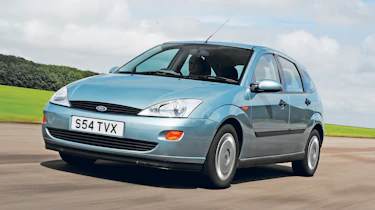
17. Ford Focus
- No. built: 12 million
- From: 1998-2025
- Price: from £500
- Our pick: 1.6-litre 4cyl petrol, 98bhp
- Top speed: 115mph
The Ford Focus blew its rivals out of the water when it was launched in 1998. Not only was its space-age design like nothing else on the market, it showed the car-buying public that they needn’t settle for sloppy steering or a wallowy ride.
Its innovative rear suspension offered a level of control unseen in mainstream models up to that point, proving that even humble hatchbacks could handle like sports cars. The original Focus beat all-comers consistently throughout its storied existence and even spawned a bonkers 212bhp RS hot-hatch version in 2002.
Created in an era when the manufacturer wanted to globalise model development, the Focus was sold largely unchanged across the world. Yet while the Europeans (and the Brits in particular) lapped it up, it struggled in foreign markets. As the insatiable appetite for SUVs took hold, the Focus’s appeal waned and production finally ceased – after four generations and more than 12 million units produced – late last year.
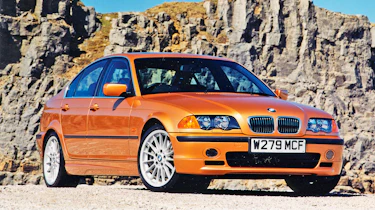
16. BMW 3 Series
- No. built: >18 million
- From: 1975-present
- Price: from £2,000
- Our pick: 3.0-litre 6cyl petrol, 228bhp
- Top speed: 155mph
BMW’s smallest saloon is the compact-exec equivalent of the Ford Fiesta. Not in the sense that it’s about to meet its maker after a 50-year spell at the top of the new-car sales tree, but because nearly everyone you meet will have a story about the German stalwart.
More than 18 million 3 Series models have been built and sold since 1975, so whether it’s fond memories of travelling in the back of one as a kid, getting the keys to your first company car or upgrading to a fire-breathing M3, BMW’s baby is the quintessential premium exec.
How and why did it gain this cult status? Well, following on from the sixties and seventies’ Neue Klasse models, the first E21-generation 3 Series unashamedly put the driver front and centre. With its sweet, adaptable, rear-driven chassis, gutsy engines, and a robust build quality that many of its European rivals couldn’t match, the 3 elevated the brand to new heights.
The late-nineties E46 car was arguably peak 3 Series, but every model follows the same formula. Even with the first electric 3 Series on the horizon, its appeal shows no sign of waning.
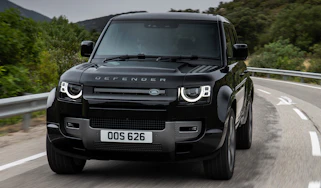
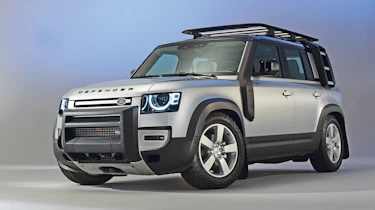
15. Land Rover Defender
- No. built: 486,000
- From: 2020-present
- Price: from £57,135 (new)
- Our pick: 3.0-litre 6cyl diesel, 345bhp
- Top speed: 119mph
It’s no exaggeration to say Land Rover has done a MINI with its revived Defender, taking a beloved but antiquated icon and creating a modern, upmarket smash hit. The original Land Rover/Defender went out of production in 2016, throttled by tightening emissions and safety laws and with sales below 20,000 units.
Well before then, Land Rover was on the case, showing its hand with the chunky DC100 concepts in late 2011. Their clean surfaces and lamp details hinted at the 2020 Defender in embryonic form: eight years later the upright, more horizontal Defender duly emerged. It was obviously a Land Rover but thoroughly modernised, with its all-aluminium monocoque chassis to transform refinement and go-anywhere suspension and four-wheel drive.
Despite being launched during the Covid pandemic, buyers fell in love with this modern, desirable Land Rover. Despite a hefty price hike, JLR sold 112,000 in the last financial year, with the V8 flagship Octa version a cool £165,000. And its look – and success – have influenced a horde of SUV imitators, particularly from China.
Latest Land Rover Defender deals
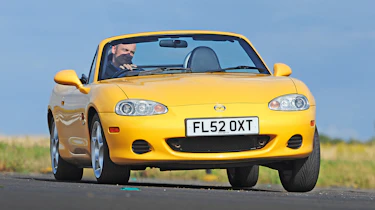
14. Mazda MX-5
- No. built: 1.2 million
- From: 1989-present
- Price: from £1,500
- Our pick: 1.8-litre 4cyl petrol, 140bhp
- Top speed: 127mph
The Mazda MX-5 is the world’s best-selling roadster, bar none. The cynics among us might attribute that to the fact there really isn’t much choice in the two-seat, open-top sports-car class these days, but those who are a bit more ‘glass half-full’ will allow credit where it’s due.
Throughout its near 40-year history, the MX-5 has set the benchmark for small, lightweight, driver-focused models, winning the hearts and minds of buyers across the globe. The Japanese brand’s formula is truly simple: usable, real-world performance at an affordable price – everything you want and nothing you don’t.
Matching a sweet chassis with a sporty rear-wheel-drive layout, plus accurate, feelsome steering and a compliant ride, the MX-5 is blessed with a set of components that make it a hoot to drive on complex, broken UK backroads. Throw in a selection of modest but rev-hungry petrol powertrains and you’ve got the perfect starter sports car. It’s no wonder that the MX-5 is still so popular.
13. Porsche Cayenne
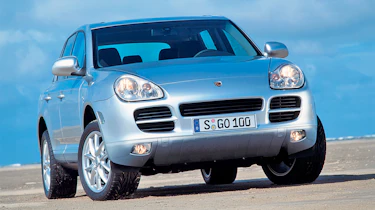
- No. built: 1.4 million
- From: 2002-present
- Price: from £44,500
- Our pick: 4.5-litre V8 petrol, 340bhp
- Top speed: 150mph
The year is 2002 and Porsche, maker of some of the world’s most iconic sports cars, has been stuck in a deep financial crisis since the early nineties and its line-up was about as diverse as Coldplay’s. Enter the Cayenne; a V8-powered leviathan of an SUV wearing the famous crest had the purists up in arms and we think calling it ugly would be a compliment.
But this car is the reason Porsche is the powerhouse it is today. It was a massive, immediate hit, because the Cayenne managed to tap into a seismic shift in the global car market, giving wealthy buyers exactly what they wanted: sports car thrills with SUV utility.
The profits generated by this car not only stabilised the brand, they also helped it ride out the 2008-2010 financial crisis and bankroll the development of a new era of sports cars, including the Carrera GT and the next 911. You see, the Porsche Cayenne did a lot more than change the world of the SUV.
12. Range Rover L332
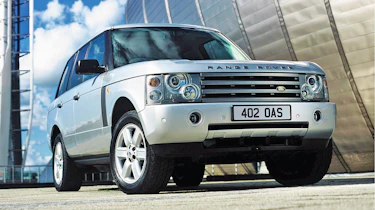
- No. built: 293,000
- From: 2002-2012
- Price: from £2,500
- Our pick: 4.4-litre V8 petrol, 282bhp
- Top speed: 130mph
Today’s Range Rover entry-level price is £105,000 and luxury SUVs – from Bentley, Lamborghini, Rolls-Royce, Ferrari – are now a thing. And it’s all thanks to this car, the third-generation Range Rover from 2001. Queen Elizabeth II owned several, which is quite the royal seal of approval. And what does everyman farmer and car nut Jeremy Clarkson use to chip around the farm on his Amazon Prime show? An L322 – despite being able to afford all of the above.
This Range Rover was developed during BMW’s brief Land Rover ownership, so it benefited from the German marque’s M57 diesel and M62 V8 petrol engines, electronics from the E39 5 Series, and was shepherded by executives who truly understood premium cars, such as Wolfgang Reitzle.
The L322 ditched the traditional body-on-frame chassis for a modern monocoque construction with independent four-wheel air suspension that allowed the model to float over bumps on the road and helped when tackling obstacles off the beaten track.
But sealing the deal was a cabin which was a cut above the competition and far removed from the vinyl-upholstered, hose-out utility of the original 1970 Range Rover. Its architectural design, mixing blocks of beautiful wood, chunky controls and lustrous leather, was a gamechanger. The L322 Range Rover was exceptional in 2001 – and it still is today.
11. Porsche 996 Carrera
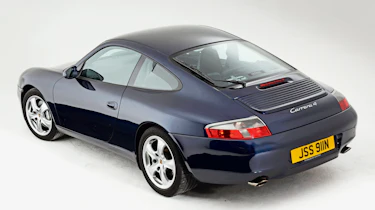
- No. built: 175,000
- From: 1997-2006
- Price: from £10,000
- Our pick: 3.4-litre 6cyl petrol, 300bhp
- Top speed: 174mph
The Porsche 911 has stuck with the same fundamental back-to-front, rear-engined formula throughout its 62-year history, but the 996-generation – the Mk5 for those who don’t know the lingo – marked a huge leap forward for the legendary sports car and made it accessible to more driving enthusiasts.
Out went the classic air-cooled engines, replaced by water-cooled ones that weren’t as traditional but offered better reliability and efficiency, plus more power. The 911’s signature round headlights went too, as part of a radical design overhaul that also saw the car become much bigger and more spacious. Those were good things; the ‘fried egg’ headlights, however, were not.
The 996 also introduced the world to the now-legendary 911 GT3 and GT3 RS. These were homologation specials Porsche needed for it to go racing, but the company actually feared it wouldn’t be able to sell the numbers required. Boy were they wrong.
10. Nissan Qashqai Mk1
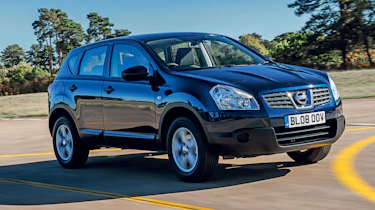
- No. built: 1.75 million
- From: 2007-2013
- Price: from £500
- Our pick: 1.6-litre 4cyl petrol, 113bhp
- Top speed: 109mph
“Offering greater space than a regular hatchback, but more compact and manoeuvrable than an SUV, the Nissan Qashqai really is the best of both worlds.” It’s hard to imagine that back in 2007, when those words appeared on Auto Express, anyone knew that this ordinary-looking crossover would change the world. Not even Nissan.
Designed, developed and built in Britain, the Qashqai was not the first crossover SUV. Toyota had paved the way years earlier with the original RAV4. The Honda HR-V had already been around for several years, too, as had the Kia Sportage for that matter. Nissan even sold something similar, the Murano, which had proven popular in the US.
However, Nissan’s gamble of replacing its Almera hatchback with the Qashqai paid off in a huge way. The new car’s combination of good ride and handling, but with a more commanding view of the road, plus a generous amount of space inside, resonated with family car buyers.
The Qashqai might not have been as practical as the compact MPVs of the time, but its more attractive design and ground clearance offered a slice of the SUV life that bland people carriers couldn’t compete with.
By the time production of the Mk1 Qashqai came to an end in 2013, more than 1.7 million units had been sold and other car brands were trying to claim their slice of the compact-SUV pie. Not everyone appreciates the crossover craze that the Nissan started, but there is no denying the Qashqai is one of the most influential cars ever made.
9. Bugatti Veyron
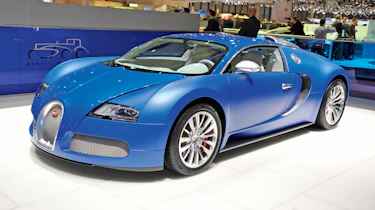
- No. built: 450
- From: 2005-2015
- Price: from £1.5m
- Our pick: 8.0-litre quad-turbo W16, 987bhp
- Top speed: 253.81mph
Every now and again something comes along that possesses that rare ability to capture the public’s imagination and astound us all. The Bugatti Veyron was the brainchild and passion of an Austrian called Ferdinand Piëch. He was the grandson of Ferdinand Porsche, an engineer by trade and the man who, as chairman of VW, pushed for the acquisition of Bugatti.
Once the ink had dried on the deal, Piëch set his engineers the herculean task of creating the fastest, most expensive and, perhaps, greatest supercar the world had ever seen. He required it to have 1,000 horsepower, be able to reach a top speed of at least 407.1km/h (253mph), pull 1.2G in acceleration and 2.0G when braking – and be powered by an engine unlike anything else.
The Veyron did all those things in 2005, setting a new record for the fastest production car ever made when it hit 408.47 km/h (253.81mph) – close to 100mph quicker than a jumbo jet at take-off. The Veyron Super Sport that came later not only got more power and an even higher top speed – 267.85mph, to be precise – but also significant chassis and design changes.
Simply put, the Bugatti Veyron is a marvel of engineering that deserves to be mentioned in the same breath as Concorde, Bloodhound SSC or the Boeing 747, and it’s for this reason – rather than the sheer speed it was capable of – that this car deserves a spot on this list. No wonder each one cost nearly £1million, and Volkswagen lost close to £5million every time it sold one.
8. Audi TT Mk1
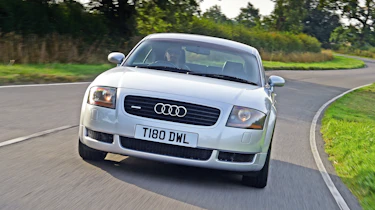
- No. built: 178,000
- From: 1998-2006
- Price: from £1,200
- Our pick: 1.8-litre 4cyl turbo petrol, 222bhp
- Top speed: 150mph
In 1995 Pierce Brosnan made his debut as 007 in Goldeneye, the first Playstation took the world by storm, and we got our first taster of the Audi TT. The stunning ‘TT Coupé Concept’ was unveiled at that year’s Frankfurt Motor Show as a vision of a “car for enthusiasts”. It showed off a new, less angular and more curvaceous design language for the brand that seemed to take inspiration from the revolutionary Bauhaus movement born in Germany in the early 20th century.
Incredibly, when the road car arrived, it looked almost identical. The only major change was the incorporation of a rear side window, which had the added benefit of elongating the car’s already graceful profile. As well as being a staggering beauty – and the car to be seen in at the turn of the millennium – the Audi TT was genuinely attainable thanks in part to being based on the same platform as the contemporary Mk4 VW Golf.
Although the TT bowed out in 2023, Audi is returning to the idea of a simple yet staggeringly beautiful two-seater very soon. The stunning Concept C revealed last year previewed not only a new design direction but a future sports car that will continue the TT’s legacy.
7. Toyota RAV4
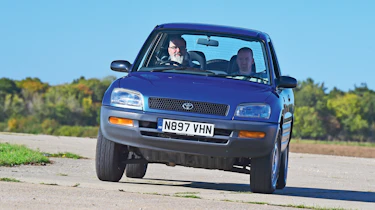
- No. built: 10 million
- From: 1994-present
- Price: from £1,500
- Our pick: 2.0-litre 4cyl petrol, 150bhp
- Top speed: 106mph
Every compact crossover, baby SUV and wannabe 4x4 – which feels like most new cars being sold and launched these days – can trace their roots back to Toyota’s “Recreational Active Vehicle with four-wheel drive”, more commonly known as the RAV4: the OG ‘soft-roader’.
When it was launched in 1994, the only options for people wanting something with a bit of extra ground clearance were cars such as the Land Rover Discovery – proper 4x4s that used body-on-frame construction and a ladder chassis. This helped them tackle any terrain that tried to stand in their way, but they were big, heavy cars that cost a lot of money to buy and to run. But perhaps their biggest shortcoming was not being nearly as good on the road as they were off it.
Toyota flipped the script for the RAV4, because it was small, light and designed to offer the rugged look of an SUV, but handle much better on tarmac. Underneath was a new monocoque structure derived from the Corolla, with fully independent suspension that offered a generous amount of ground clearance and more travel than a traditional family hatchback.
Weighing less than 1,200kg and measuring just over 3.9 metres long in its original three-door form, the RAV4 only needed a modest 2.0-litre four-cylinder petrol engine (Toyota’s tried-and-tested 3S-FE) for a good blend of performance and fuel economy. But the newcomer was also available with a permanent four-wheel drive system and a locking differential, if customers ever fancied going off the beaten track.
The RAV4 was not just a trendsetter when it came to the use of plastic cladding and chunky bumpers though, it was also a pioneer in electric vehicle technology. That’s right, in 2003 – almost two decades before the Tesla Model Y would be unveiled – an electric version of the Toyota was sold in California.
The Toyota RAV4 was an overnight sensation, with its sales figures double the Japanese brand’s own projections. So it’s hardly surprising that other manufacturers hoped to get in on the action, leading to an obsession with small SUVs that’s still going strong to this day. And of course, the RAV4 wasn’t a one-hit wonder; in total, more than 10 million have been sold and, for a time, it was the most popular car on the planet.
6. Tesla Model 3
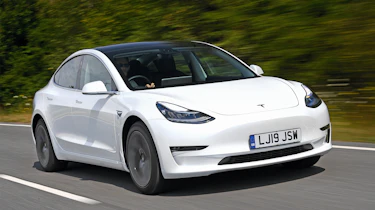
- No. built: 3 million
- From: 2017-present
- Price: from £10,000
- Our pick: 60kWh battery, 1x e-motor, 242bhp
- Top speed: 110mph
Talk of an affordable Tesla called ‘Model 3’ started back in the mid-2000s, after the firm captured the imagination with the Roadster and had success with the Model S and Model X. In 2017, the brand finally brought its entry model to market.
The success Tesla’s base model has enjoyed over the past eight years has been incredible. Initial production issues for the Model 3 eventually subsided and in 2018 it became the world’s best-selling electric car. Then in 2019, Tesla’s gigafactory in China starting supplying Model 3s for Europe, Australia and Asia, boosting sales and helping the Model 3 become the first electric vehicle to pass one million sales in 2021.
At a time when the best-selling EVs barely nudged 150 miles on a charge, the Model 3 with its 254-mile range seemed like a revolution for all-electric cars. Shortly after launch, the appropriately named ‘Long Range’ edition arrived with a 348-mile range and today, after a series of upgrades, the latest version offers an incredible 466 miles on a charge.
The Model 3 was quick, too; 0-62mph times ranging from a hot hatch-troubling 6.2 seconds to an insane 2.9 seconds in a relatively normal family saloon weren’t something we’d seen before. But the overall driving dynamics never quite matched the potency of the electric motors.
Then there’s the Model 3’s design. We already knew Tesla was targeting minimalism with the Model S and Model X, but the Model 3 took that to new heights by hiding all the interior air vents, having no driver’s display and disposing of any physical switches – placing a greater emphasis on the huge 15.4-inch touchscreen. The Model 3’s style of interior has become so popular in the automotive landscape that it now feels almost like a novelty to find a new car with actual buttons.
Priced at £38,900 in 2019, the Model 3 also represented good value for money – cornering the electric-saloon market for Tesla until a flood of rivals including the Polestar 2, Hyundai Ioniq 6 and BMW i4 tried to get in on the action.
5. BMW X5 E53
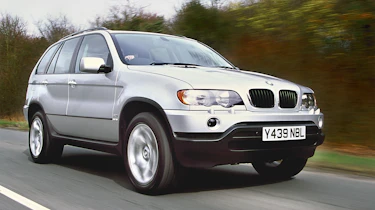
- No. built: 467,995
- From: 1999-2006
- Price: from £1,000
- Our pick: 3.0-litre 6cyl petrol, 231bhp
- Top speed: 131mph
BMW embraced the SUV sector early on with the E53-generation X5 in 1999. Instead of going after the likes of the Range Rover and Toyota Land Cruiser, however, the German firm came up with a new genre of ‘Sports Activity Vehicle’ with the X5, beating the Porsche Cayenne, Volkswagen Touareg and Volvo XC90 to market.
Responsible for several other iconic car designs (MINI, Fiat 500 and McLaren P1, for example), BMW employed the trusty hand of Frank Stephenson to pen the X5. With BMW owning the Rover Group from 1994 to 2000, Stephenson’s brief was to show what a Land Rover-BMW would look like.
A model was created within six weeks, and while the proportions broke new ground for BMW, the X5 still bore the brand’s distinctive design traits, with the Hofmeister kink, kidney grilles and incisive belt line that ran through the door handles.
Production of the first X5 primarily took place at BMW’s Spartanburg facility in South Carolina, US, which has now become the company’s global centre of competence for its X models.
As well as looking recognisably like a BMW, the X5 was developed to drive like one. The engines – petrol and diesel 3.0-litre straight sixes and various naturally aspirated V8s – were taken from the 5 Series, plus there was BMW’s typical 50:50 weight distribution, and 63 per cent of the power went to the rear axle through an xDrive all-wheel drive system. During the X5’s 2003 mid-life refresh, this set-up was revised to give it some extra mud-plugging ability – but this was a 4x4 that was always most at home on the road, like so many of its contemporary rivals.
Our original verdict declared the X5’s handling and roadholding to be “in a different league to virtually any other off-roader”, despite BMW’s reliance on old-fashioned steel suspension rather than the air springs offered by some rivals.
The X5 also came at a time when BMW’s interior layouts were ergonomically spot on and it was more practical than any BMW before it, with features including a handy split-opening tailgate. It’s easy to see why almost half a million E53 X5s were sold during its seven-year run. Not only did it lay the foundation for the wide range of X-badged BMWs available today, it also set the standard for rival SUVs to aim for.
4. Volkswagen Jetta TDi
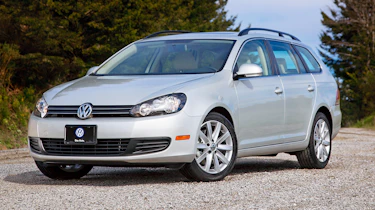
- No. built: 18 million
- From: 1979-present
- Price: N/A
- Our pick: 1.5-litre 4cyl diesel, 160bhp
- Top speed: 126mph
To Europeans, VW’s Jetta has always been the Golf’s insignificant booted cousin, despite huge overseas sales. But that changed overnight in September 2015, when the Dieselgate scandal broke. Two years earlier, three doctoral students commissioned by the International Council on Clean Transportation had begun examining diesel emissions in passenger cars, testing a 2012 VW Jetta SportWagen and Passat alongside a BMW diesel.
The students couldn’t understand why the Jetta conformed with harmful nitrogen oxide emission standards on a rolling road, yet violated the legal limit by up to 40 times on real tarmac. It was because VW’s engineers had fitted software that could mask its emissions during test conditions, at other times flagrantly flouting limits for protecting people and the environment.
When the regulators closed in, VW eventually admitted wrongdoing. The cost to the German giant was huge, reportedly in excess of $33billion in fines and settlements. VW instantly switched huge resources to hybrid and electric cars, fast-tracking development of its ID. range on the MEB electric-car platform.
And diesel as a car fuel collapsed from 53 per cent of all European Union registrations in 2014 to 11 per cent a decade later, as regulators, furious at being duped, turned the screw with exacting electric-car sales targets. Automotive powertrain history was turned on its head – all by one nondescript compact estate car.
3. Tesla Model S
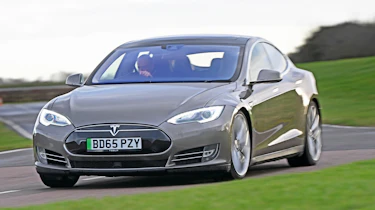
- No. built: 400,000
- From: 2012-present
- Price: from £11,000
- Engine: 100kWh battery, 2x e-motors, 670hp
- Top speed: 149mph
Tesla’s goal for the first three months of 2013 was to make a single, measly dollar. After more than $1billion in losses, the electric start-up was fighting for its life, desperate to produce and sell sufficient Model S cars to convince investors it was viable.
At the same time as trying to build a crucial US retail network, battle to improve quality at its Fremont factory, code and engineer Model S upgrades, plus develop the Model X SUV and Model 3, Tesla’s luxury saloon came to Europe.
Early imports looked like this titanium copper example, still featuring a combustion-style grille that disappeared in 2016 as a redesign accentuated its electric credentials. Memories seep back of the first time we drove a Model S, on punishing country roads around Silverstone, in February 2014.
Electric cars just weren’t like this, they were city runabouts or modest hatchbacks. This was Tesla’s genius: by making a model almost as long as a Mercedes S-Class, it created space in the chassis for up to 90kWh of batteries. And that unlocked unprecedented range – around 250 miles in the case of this 90D test car. Plenty of interior space also made the Tesla felt like a private jet.
The price was also in another world, close to £70k, or more than $100,000 for US Performance models. While other car makers had thought small – we had a BMW i3 at the Silverstone test, with 100 miles of range and a £30,000 price – Tesla had invented the luxury EV. It resembled Aston Martin’s Rapide saloon, with its conventional good looks the polar opposite of an i3 or Nissan Leaf. If the Model S sold, it would generate the cash to bankroll the firm’s expansion – including a lower-priced saloon to take the Tesla electric lifestyle mainstream.
This 65-plate S still feels modern. Hidden door handles glide outwards as you approach. The enormous, portrait-orientated touchscreen looks upmarket, cutting-edge; along with the lack of switchgear and void between the front seats, this revolutionised the car’s cockpit architecture and control systems. And Tesla sublimated hardware to software, rolling out over-the-air (OTA) updates to add new features and enhance the capabilities of the car, including its ‘Autopilot’ driver assistance.
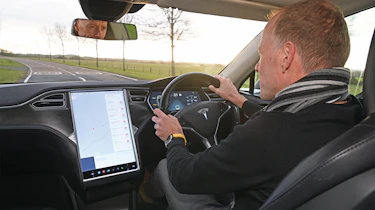
The driver’s display states more than 265,000 miles, and with no wheel unkerbed, no body panel untouched, this Model S has panel gaps matching the infamous quality of pioneering 2012 cars. The seat belt feels like parchment, the leather is shinier than a taxi’s, the reversing camera display is foggy.
But this example's original battery still offers 86 per cent capacity and that astonishingly high level of performance remains. A flex of your right toes is still all that’s required to uncork acceleration that felt mind-blowing 12 years ago.
Today’s commonality of torquey EVs and a reduction in this car’s mid-range punch slightly diminish the impact. The ride is still jittery but not as punishing as our decade-old notes recall, the responsive steering less elastic than those early imports. The S corners flat, wind noise is intrusive and the brake pedal feels understandably baggy.
In May 2014, Tesla chief executive officer (CEO) Elon Musk attended the handover of the first right-hand-drive customer cars in London, promising to roll out Superchargers that would make travelling around the British Isles free and feasible for owners. By that point Tesla’s future was more secure. In the first quarter a year earlier, the manufacturer had delivered 4,750 cars and, with sales revenue boosted by selling environmental credits to other car makers, the fledgling company made not just a dollar but an $11million profit.
The Tesla Model S was the future, a white-space revolutionary that sent legacy car makers back to the drawing board. It’s gone on to rack up more than 400,000 sales, and it put Elon Musk on the path to becoming a giant of today’s automotive, cultural and political fabric – for better or for worse.
2. MINI Cooper
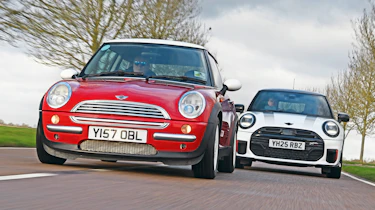
- No. built: 5 million
- From: 2001-present
- Price: from £500
- Our pick: 1.6-litre 4cyl petrol, 116bhp
- Top speed: 125mph
Reviving icons is big business in the automotive industry. Cars like the Fiat 500, Volkswagen Beetle, Renault 5 and VW ID. Buzz all try to play on customers’ fondness for popular classics, but none have done it quite as convincingly as BMW’s MINI.
Mini’s previous owner, British Leyland, had a few stabs at creating a replacement with the ill-fated ADO74 and ADO88 projects. Then in 1995, BMW and Rover drew up plans for a new model. Rover had three designs: the Evolution and Revolution were practical, conventional hatchbacks, while the Spiritual was a rather wacky-looking rear-engined creation. BMW’s alternative was the MGF-based ACV30 from Adrian van Hooydonk.
Frank Stephenson eventually came up with a winning design, which was shown off in concept form at the 1997 Frankfurt Motor Show, casting a retro-shaped shadow over the unveilings of two other new small cars: the Mercedes A-Class and Smart ForTwo. Bringing some affirmation to the event was John Cooper, who helped realise the original Mini’s capacity for motor racing in the sixties. He remarked “it looks like a Mini. It’s a little bigger, but I think the team at Rover have done a wonderful job.”
The final production car at the Paris Motor Show in 2000 looked almost identical to Stephenson’s concept. The round, chrome-rimmed headlights, pillarless exterior glass, clamshell bonnet, floating roof and retro-inspired interior with old-school toggle switches and the central speedometer gave the new MINI a distinctive, yet familiar look with the premium appeal BMW wanted from the off. The exhaust tip, which was conceived in a matter of minutes by Stephenson hurriedly sticking an empty beer can into the back of the clay model, gave the MINI even more character.
Graham Biggs, who worked in the MINI press department during the car’s launch, told us what it was like to announce an iconic car like the new MINI on the world stage: “There was massive expectation when it came to the new MINI. The sense of responsibility for us was also absolutely huge.” Thankfully for Biggs, MINI and BMW, the response was overwhelmingly positive.
“When we pulled the covers off, the initial reaction was just ‘wow’. Frank Stephenson got the design and the proportions absolutely right.” During the first test drives of the new MINI in 2001, Biggs recalled the buzz around the car: “The venue for the UK drive was the Great Eastern hotel in London. Surrounding offices emptied, with crowds coming to stand and look at our row of cars. Some even went to a dealer around the corner and immediately put deposits down.”
At a keen price point of £11,600, the Cooper was priced above mainstream rivals such as the Peugeot 206, Renault Clio and Ford Fiesta, but the MINI’s sheer style and charm made them look unworthy of the new millennium.
The design of the MINI has been such a success that most of the cues remained for subsequent versions, as well as new models such as the Clubman, Countryman, Aceman and Paceman. But it needed more than good looks to be a hit.
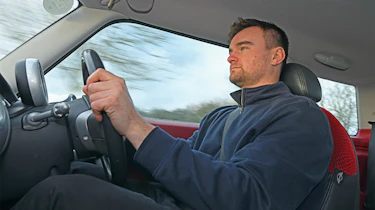
It had to be a hoot to drive. The supercharged Cooper S and Works GP were absolute riots, but the fun wasn’t just restricted to the hot hatch variants. Driving the first MINI, codenamed the R50 (ours was a very rare and early Y-reg example), today it gives a sense that if the original Mini had been significantly updated, modernised and refined throughout its 41-year lifespan, this is where it would have ended up.
The 116bhp 1.6-litre four-cylinder engine and the manual gearbox – which needed a firmer hand to shift than you might think – were stars of the show. The relatively sophisticated mix of MacPherson struts up front and a BMW multi-link rear axle helped provide entertainment in the bends. Pointy, precise steering allowed you to take liberties with the MINI’s balance, and with a wheel right out at each corner, and it was incredibly agile.
The way it drove, the looks, and build quality instilled from BMW also helped MINI crack the US market. For a nation that loves big cars, the idea that the brand could be a sales success was bold, but it shifted 36,000 units in its first full year.
The original Mini sold over 5.3 million units during its long run, while BMW's modern MINI brand has achieved the same figure in less than half the time – owing it all to the R50-generation. MINI showed us how to take a much-loved classic and reimagine it for the modern age – and then some.
1. Toyota Prius
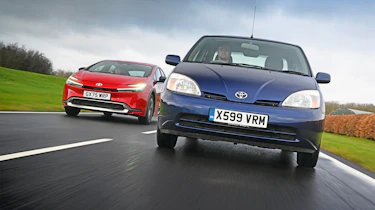
- No. built: 5 million
- From: 1997-present
- Price: from £1,000
- Our pick: 1.5-litre 4cyl, 70bhp + 43bhp e-motor
- Top speed: 99mph
Thirty-four million hybrid sales. Sending rival engineers scurrying to their drawing boards. Having TV lampooners South Park dedicate an episode to a car… These are the commercial, industrial and cultural impacts of the Toyota Prius, which celebrates its 30th birthday next year.
The mass-produced hybrid started with this little saloon, no bigger than a VW Golf, with 14-inch alloy wheels that look so dainty, so simple. Back in 2000, I was working for a magazine for company-car drivers, and its four writers all rushed round to the office car park to behold a green-coloured Japanese alien combining petrol and electric power. According to our perceptive editor-in-chief, the acid test was whether the Prius was as intuitive to drive as any other car.
A quarter of a decade later, those words ping around my head as I perch on the elevated, scratchy fabric seat and turn the key in the ignition. Just as back then, I forget it needs another twist to reach the ‘on’ position, then a chime tells me we’re good to go.
That ‘is it on?’ conundrum was the only bugbear back then. And that’s why the Prius hanged the world, because Toyota nailed the basic technology from the get go. To most car buyers, the Prius delivered easy wins: double the fuel economy and half the CO2 emissions with few compromises – no charging or hydrogen gas infrastructure needed.
Admittedly, the Prius looked a bit weird – the following generations even more so, having elongated the roofline to boost aerodynamic efficiency – and the engine’s soaring revs and lack of instant torque weren’t for petrolheads.
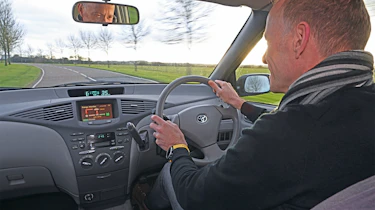
This ‘Toyota Hybrid System’ might be familiar now but it was utterly groundbreaking back in 1997. Supplementing the efficient 1.5-litre petrol engine were two motors, one to boost motive power and perform as a generator during deceleration, the other to act as a starter motor, control the transmission and divert petrol-engine power to generate electricity. Hence Toyota’s controversial ‘self-charging hybrid’ sales pitch, which critics deemed as greenwashing because it downplayed fossil fuel’s role in the process.
Engineering the G21 project (G for global, 21 for creating a 21st-century car) was a nightmare. Prototypes kept breaking down, with engineers having to check way more drivetrain elements to identify faults. There was no hybrid supply chain and the nickel-hydride battery (no lithium-ion then) delivered half the power despite initially being twice the requested size; our test car has a telltale step in the barely accessible boot. Plus, revolutionary software needed coding to manage the e-motor and four-pot’s complex tango.
And to crank up the pressure, management pulled the launch forward by a year, to showcase the Prius at COP3, the 1997 convention in Kyoto, Japan, that yielded the world’s first treaty to cut greenhouse emissions, the Prius’s laudable mission. It wanted to keep ahead of rivals, too, and this determination to reap first-mover advantage paid dividends: Toyota is synonymous with hybrids.
General Motors – at that point the world’s biggest car maker – didn’t introduce its first until 2004, then ploughed resources into trying to get ahead with the plug-in Chevrolet Volt. The firm’s macho product boss Bob Lutz told me “if you haven’t got a hybrid, people think you can’t shoot straight” at one freezing Detroit show.
The cigar-toting, fighter jet-flying Lutz wasn’t the target audience, but Hollywood was: virtue-signalling early-adopters included Leonardo DiCaprio, Tom Hanks and Cameron Diaz. Hence South Park’s 2006 takedown, where the Colorado town is engulfed in a cloud of ‘smug’ emitted by the town’s hybrid-driving residents.
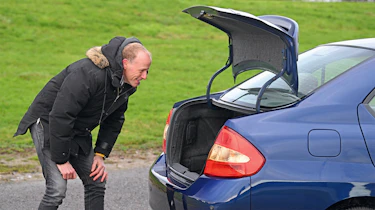
It was equally beloved by taxi drivers, attracted by its running costs and Toyota’s reliability: the Prius was Europe’s first car backed by a five-year/100,000-mile warranty. Ironically, being macho helps when driving an original Prius wearing 81,000 miles: the steering is pretty leaden during manoeuvres and around corners, and incredibly slow off the straight-ahead. The ride is as cushy as the spongy pedal responses, the wind roars at 50mph and the suspension funnels harsh noises into the airy cabin. And the disconnect between that wave of revs and the glacial acceleration (0-62mph takes 13.4 seconds) emphasises that the Prius is all about its 57.6mpg economy, not performance.
But the swoopy fifth-generation car shows how far the Prius has come – and not just because it’s almost 30cm longer. Under the founder’s grandson, Akio Toyoda, Toyota dynamics have been transformed. This Prius is the polar opposite of its forebear: responsive, refined, twice as quick to 62mph from standstill and – like the third-generation Prius – able to silently roll on electric power. Indeed, this model has evolved to being a PHEV. But there’s some commonality inside: the digital display relaying what the drivetrain is doing, the staggered gear selector and the B mode to boost regenerative braking.
This handsome Prius is the best yet, although after more than five million total sales, its commercial star is falling. No matter: its hybrid powertrain has spread across the range, meaning anyone can jump into a regular Toyota, drive it like a rally car and still get mid-50s mpg.
The Prius made the industry follow, and saw off VW’s attempt to fight back with diesel. And, while the electric transition struggles to go mainstream, hybrid powertrains still do their bit to reduce emissions – the motivation that made Toyota greenlight the Prius project in the mid-nineties. All this makes the Prius the most significant car of the modern era – and helped elevate Toyota into the world’s most valuable legacy car maker.
50 modern cars that changed the world
| 1 | Toyota Prius | 26 | Nissan GT-R R35 |
| 2 | MINI | 27 | Honda Civic Type R FL5 |
| 3 | Tesla Model S | 28 | Kia Sportage |
| 4 | VW Jetta TDi (2009 US edition) | 29 | BYD F3 |
| 5 | BMW X5 | 30 | Bentley Continental GT |
| 6 | Tesla Model 3 | 31 | Mercedes SLK |
| 7 | Toyota RAV4 | 32 | Renault 5 |
| 8 | Audi TT | 33 | BMW 7 Series (2001) |
| 9 | Bugatti Veyron | 34 | Tesla Model Y |
| 10 | Nissan Qashqai | 35 | Ford Crown Vic |
| 11 | Porsche 911 996 | 36 | Volkswagen Golf (Mk) |
| 12 | Range Rover L322 | 37 | Ferrari 458 |
| 13 | Porsche Cayenne | 38 | BMW X6 |
| 14 | Mazda MX-5 (Mk2) | 39 | Ford Fiesta (2001) |
| 15 | Land Rover Defender | 40 | Range Rover Evoque |
| 16 | BMW 3 Series (E46) | 41 | Ford F-150 (2014) |
| 17 | Ford Focus | 42 | Hyundai Ioniq |
| 18 | Skoda Octavia | 43 | GM EV1 |
| 19 | Dacia Logan | 44 | Mercedes S-Class W220 |
| 20 | Volvo XC90 3 | 45 | Porsche 918 Spyder |
| 21 | Nissan Leaf | 46 | Ford Mustang (2015) |
| 22 | Porsche Boxster | 47 | Honda Jazz (MK1) |
| 23 | Renault Scenic (1997) | 48 | Porsche Taycan |
| 24 | Rolls-Royce Phantom | 49 | Chery Tiggo 7 |
| 25 | Fiat 500 | 50 | Cadillac Escalade |
Don't miss out! See more of Auto Express in your Google Top Stories. Click here...