Rarest cars in the UK - one-off unicorns you’ll never see on the road… probably
With only one example of each of these cars registered for road use in the UK, it doesn’t get any rarer than this
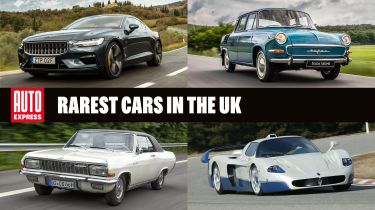
Cars can be rare on UK roads for a number of reasons. Perhaps they were originally made in very limited numbers, making it only natural that the surviving population is reduced to the point of extinction over time. They might even fit into that camp, but be so valuable that most are kept off the road.
Alternatively, it could be a car that wasn’t sold here originally, and one so niche and obscure that few people have even thought to go through the arduous process of importation. Finally, our favourite path to rarity of all. It might simply be because the car is so naff and underwhelming that few people bought one and fewer still could be bothered to keep them going.
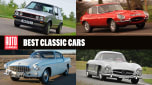
The rare cars here fall into all three of those categories, but they all share one common thing - according to DVLA data, there’s only one example of each still registered for use on UK roads. So, if you see one of these driving around, it’s your lucky day - there isn’t another one like it. Consider buying a lottery ticket on your way home.
Let’s take a look at the rarest cars in the UK right now…
Acura TL
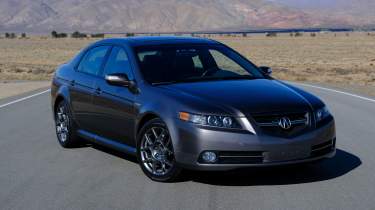
You’re unlikely to see an Acura of any kind in the UK. It’s a luxury offshoot of Honda, in much the same way that Toyota has its posher Lexus brand. The difference is that Acura has a focus on the North American market. Acura models aren’t officially sold anywhere in Europe, but a handful have made it to the UK via unofficial channels, including just one solitary TL.
The name ‘Acura TL’ sounds interesting enough, but as you might have been able to tell from our accompanying image, it’s little more than a slightly glammed-up Honda Accord. Albeit a glammed-up version of the North American Accord, which is a bit different to the European one.
Most TLs of this vintage are powered by a 3.2-litre V6 engine that’s more powerful than the equivalent V6 in the Accord of the day. You’ll find plusher materials inside the Acura, too.
We quite like the sound of the Acura TL Type-S, which features a pokier 3.5-litre V6, sportier styling touches, stiffer suspension and a limited-slip differential. So far as we can work out, though, the sole TL registered in the UK is the normal version.
Alfa Romeo Alfa 6
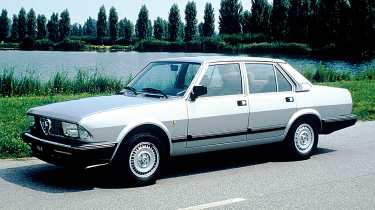
The Alfa 6 is one of a few cars on our list to have come ‘back from the dead’. For years, there wasn’t a single taxed example in the UK, but one sole survivor has appeared in the DVLA data every year since 2020.
We’re assuming it’s the same one, because surviving examples of many Alfa Romeo models from this era are extremely rare. Alfas of the time were notorious for rusting away, and parts supply is going to be a nightmare. Plus, the Alfa 6 isn’t exactly an iconic Alfa of the era in the same way that something like a GTV is.
The Alfa 6, built from 1979 to 1967, is an interesting car nonetheless. The name refers to its V6 engine, differentiating it from the related Alfetta. That powerplant is the iconic ‘Arese’ or ‘Busso’ V6, built in one form or another all the way up to the mid-2000s. Confusingly, though, you could still have one with a five-cylinder diesel.
Just on the name - that’s not a typo. It really was named Alfa Romeo Alfa 6, rather like the Alfa Romeo Alfasud. Perhaps this is where the inspiration for ‘Ferrari LaFerrari’ came from. But probably not.
Alfa Romeo Arna
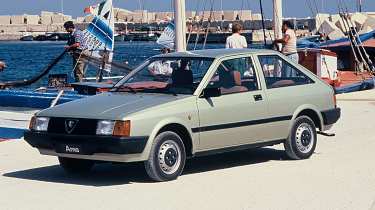
The Arna is an Alfa Romeo you’re more likely to have heard of, but not for a good reason.
The name is short for ‘Alfa Romeo Nissan Autoveicoli’, because the Arna is the result of a joint venture between the Italian and Japanese manufacturers. There’s nothing odd about that - such collaborations have occurred throughout automotive history, and have only become more common as manufacturers seek to reduce costs. The problem is the way Alfa and Nissan went about it.
Logic would dictate that this car should use reliable Japanese electronics and mechanicals housed within a stylish Italian body, but infamously, the opposite happened. The Arna was the unholy marriage of a dull Nissan Cherry body and the boxer engine plus electronics of the Alfasud.
At the time, Alfa Romeo was languishing in one of the many rough financial spots in its famously chequered history, something which the Arna failed to turn around, and probably worsened. When Fiat took over Alfa in the late 1980s, it swiftly brought down the axe on the Arna.
It’s not the sort of car many people will have bothered preserving, so it’s no surprise that there’s only one currently taxed in the UK. It popped up in the DVLA data in 2024, after years of precisely zero Arnas being taxed in this country.
We’re not sure whether to doff a metaphorical cap at whoever has taken it upon themselves to keep this car going despite everything, or simply check if they’re OK.
Aston Martin DBR22
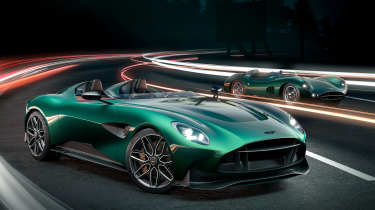
This roofless V12 special was limited to just 22 units (see what they did there?), and given the difficult-to-predict nature of the British weather, it shouldn’t come as a surprise that the number of taxed examples in the UK peaked at just two. Now, it’s down to just one.
The DBR22 was built to celebrate the 10th anniversary of Aston Martin’s ‘Q’ bespoke department, with each car costing a chunky £1.5 million. Power comes from the company’s now-discontinued 5.2-litre twin-turbo V12, here making 705bhp. The top speed is 198mph - probably best to don a helmet or, at the very least, some fetching goggles, before attempting that.
The latter attire would go well with the DBR22’s aesthetic, which is inspired by the legendary Aston Martin DBR1, the brand’s only car to take outright victory at the 24 Hours of Le Mans. If you thought £1.5 million for the DBR22 was expensive, hold that thought, because one example of the DBR1 sold for around £17.5 million, making it the priciest British car to be sold at auction for some time. Incidentally, its UK rarity factor is similar to the DBR22’s - there are currently two survivors on our shores.
BMW 1500
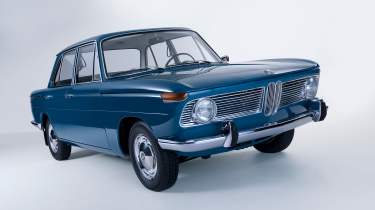
The BMW Neue Klasse or ‘new class’ is something we’ve heard an awful lot about recently, attached to several concept cars and production vehicles, including the new iX3. Originally, though, this referred to another new line of cars which would shape the German brand for years to come, starting with the 1500 saloon.
Before the Neue Klasse, BMW had focused on either budget bubble cars or expensive luxury vehicles. The 1500 sat somewhere in the middle of those, becoming a huge success and having a long-lasting legacy. Along with setting the direction of the company, the 1500 also used the legendary M10 four-cylinder engine, which BMW would use up to the late 1980s. Meanwhile, the ‘Hofmeister kink’ design feature that originated in its rear three-quarter window is still found on BMW models today.
It’s perhaps the most important car from BMW’s history, so it might come as a surprise that there’s just one 1500 registered for road use in the UK. Other members of the Neue Klasse, including the BMW 2000, are much better represented in terms of survivors.
Bristol 402
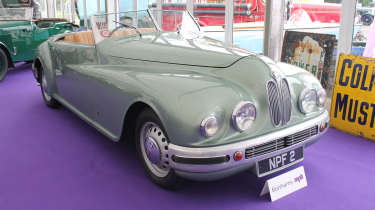
Those famous BMW models we mentioned in the last entry remain relevant here, because the Bristol 402 used an engine from one of them. Specifically, the 2.0-litre inline-six from the BMW 328.
The 402 convertible was built from 1948 to 1953 alongside its coupe equivalent, the 401. It’s the drop-top that’s far rarer, though - up until recently there were as many as 20 401s, compared to just the one 402.
This stems from the original production numbers. While over 600 401s were built, making it the most prolifically produced model in the quirky company’s history, Bristol only made 26 402s. Not many, but still, that’s a bigger production run than for the brand’s most recent car, the Bristol Fighter, which recently made an inexplicable return.
Famous Bristol 402 owners include actor Stewart Granger, and Prince Varananda, a Thai royal who flew an RAF Spitfire during the World War II invasion of Normandy. Neither example is still in the UK, though.
Cadillac XLR
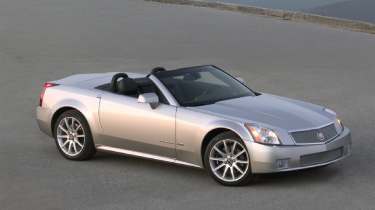
The angular Cadillac XLR was based on the C6-generation Chevrolet Corvette, but with a very different remit. Of a more relaxed character and packing a folding hard-top roof, it was very much Cadillac’s answer to the Mercedes SL of the day. Incidentally, the company that made its roof mechanism was set up as a joint venture between Porsche and… Mercedes.
The XLR failed to win over many buyers, though, clocking up a modest 15,000 or so sales, compared to well over 200,000 C6 Corvettes, and just under 170,000 R230-generation Mercedes SLs.
You might be wondering if the single XLR currently taxed in the UK is merely one of a handful that have been imported by American car enthusiasts with peculiar tastes, but the XLR was officially available in the UK, albeit briefly.
Sold in left-hand drive only and with cabin quality that simply didn’t befit a car costing the equivalent of over £100,000 in today’s money, it didn’t win over many customers. Two XLRs were registered for road use up to 2017, but since then it’s just been the one.
Ferrari SA Aperta
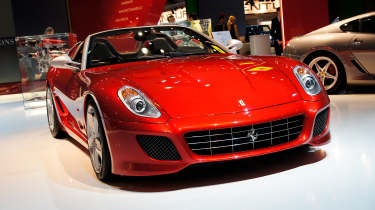
For anyone miffed that they couldn’t hear enough of the Ferrari 599 GTB’s 6.0-litre V12, there was the Ferrari SA Aperta. Well, there was if they could get themselves an allocation - just 80 were made, of which a handful did make it to the UK.
The SA Aperta was priced at a significant premium over the GTB, justified by the rarity, the use of a 599 GTO-spec engine and various bespoke touches including a more heavily raked windscreen. In the long run, though, it’s been well worth the extra outlay for anyone who bought one and held onto it, because SA Apertas go for chunky, seven-figure numbers that are many times what you’ll pay for an equivalent GTB.
Combine those values with the roofless Aperta’s unsuitability in soggier countries, and we can see why there’s only one currently taxed for road use. Yes, there is a removable soft top, but it’s a bit of an afterthought which Ferrari said at the time was “to be resorted to only if the weather gets particularly bad”. Have they been to the UK?
Fiat 500 Topolino
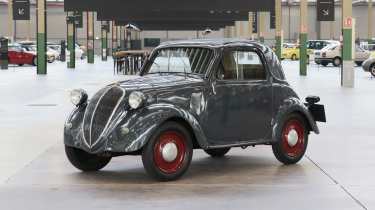
The Italian word ‘Topolino’ directly translates as ‘little mouse’, the country’s name for Mickey Mouse. We can see how the original Fiat 500 ended up with the nickname, which was never official, but curiously seems to have ended up on the DVLA data for a 1952 example, which is now the sole road-registered survivor in the UK.
The proper model name of '500' came from its dinky four-cylinder engine, which displaced 569cc for a power output of just 13bhp and a top speed of 53mph. Production started in 1936 and continued to 1955, with hundreds of thousands of units made. It made way for its more famous and recognisable successor of the same name.
You’ll find a fair few surviving examples of the more recognisable 1957-on 500 in the UK, but just the one road-going 500 Topolino. Soon, though, there’ll be plenty of Topolinos making their way to the UK, in the shape of the new Fiat Topolino, a badge-engineered Citroen Ami, for which British order books finally opened in summer 2026.
Hyundai Stellar
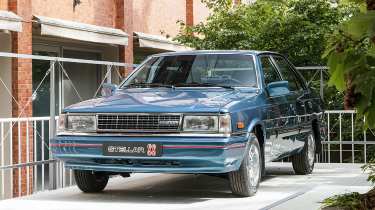
“Designed by the talented Giorgetto Giugiaro, the Stellar proudly became the second independently developed model by Hyundai Motor,” is how the Korean manufacturer glowingly refers to this car. And while true, that leaves out the important bit about the Stellar being built on a fifth-generation Ford Cortina platform and using Mitsubishi engines built under license.
The design came courtesy of Giorgetto Giugiaro, the same bloke who did the Lancia Delta, Lotus Esprit S1 and DMC DeLorean, amongst many others. The conservative styling isn’t exactly as memorable as something like Doc Brown’s daily driver in Back to the Future, but it contrasted well with the then-radical-looking Ford Sierra. In fact, the Stellar looked rather a lot like the Sierra’s Cortina predecessor from which it borrowed so much.
Today, it mostly serves as a reminder of how far Hyundai has come as a company. It’s not the sort of desirable classic that strikes people as worthy of preserving, but there is still one currently taxed, and it’s the high-spec GSL, no less. Keep your eyes peeled, if you don’t immediately forget what the Stellar looks like after reading this article.
Maserati MC12
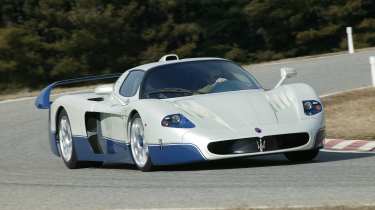
The MC12 isn’t much of a Maserati at all. Underneath, it’s a barely altered Ferrari Enzo, and its main reason for being was to be produced in the lowest number possible to satisfy FIA GT Championship rules of the time. There was an initial run of 25 road cars, and another 25 with slightly different dimensions to comply with changing regulations.
We don’t care about any of that, because it’s a fabulous-looking thing, and one of the most striking supercars of the 2000s. It’s also gone on to be one of the most valuable, with one example selling in 2026 for the equivalent of about £7.5 million.
Of the handful that made it to the UK - just three, we think - only one remains taxed for road use. It’s understandable that two of the three owners would rather keep their shouty, impractical V12 investments tucked away, but we applaud the remaining one for doing ‘the right thing’.
Opel Diplomat
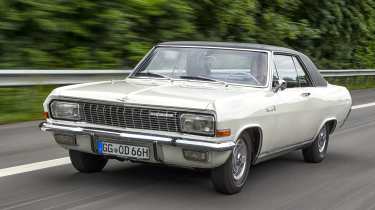
Although Opel models were sold in the UK before 1980 (after this point, Opels were sold here as Vauxhalls), the Diplomat wasn’t one of them. That hasn’t stopped a sole Diplomat B from making its way here through unofficial channels, though.
The 1971 example is a Diplomat V8, too, which means it has a 5.4-litre Chevrolet Small Block engine instead of a much less powerful 2.8-litre inline-six. With the Chevy engine fitted, about 230bhp makes its way to the rear wheels via a three-speed automatic gearbox.
It’s an interesting thing, but it wasn’t massively successful in its day at combating rivals from fellow German brands including the Mercedes S-Class. The Diplomat was eventually replaced by the Opel Senator, of which there was, of course, a Vauxhall-badged version. The Diplomat name did live on in some form, at least, revived some years later as an upscale trim level for the Vauxhall Carlton and Cavalier models.
Polestar 1
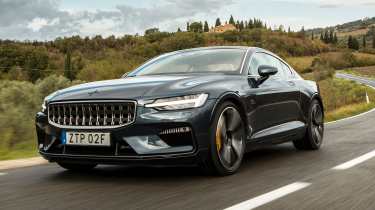
A left-hand drive, £140,000 car sharing much in common with a Volvo S90 was always going to struggle. Even at the peak, there were all of four Polestar 1s registered for road use in the UK, dwindling in recent years to a solitary licensed example.
What it lacked in UK sales clout, the Polestar 1 made up for by generating column inches in the motoring press. It spearheaded Polestar’s reinvention as a standalone brand (it was previously a race team and Volvo’s performance sub-brand), and did so with an attention-grabbing two-door body that’s the spitting image of the gorgeous 2013 Volvo Concept Coupe.
While contemporary rivals, including the BMW M8 and Bentley Continental GT, propelled themselves with snarling V8s, the 1 had a much less exotic 2.0-litre, four-cylinder engine borrowed from cars like the aforementioned S90. It had a rather large helping hand, though, from a plug-in hybrid system packing a whopping 34kWh battery pack and potent electric motor to power the rear wheels.
The result is 601bhp and 1,000Nm, although the weight penalty of that battery made for a somewhat underwhelming 0-62mph time of 4.2 seconds. The high cell count does get you an impressive 77 miles of electric-only running, though.
Skoda 1000 MB
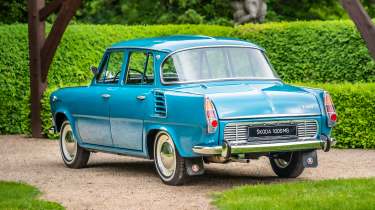
One of the lesser-known Skoda models on our shores, the 1000 MB is a big deal in the Czech manufacturer’s history, with nearly 450,000 made between 1964 and 1969. The 1000 MB also marked a move from front-engined cars to rear-engined, which would remain a hallmark of Skoda’s cars for years to come.
Skoda did actually sell the 1000 MB in the UK as a cheaper alternative to cars like the Ford Anglia, which it looks quite similar to, and the also rear-engined Renault Dauphine. Whether or not the sole survivor here is an official UK car, we can’t be sure.
1000 referred to the displacement of the 1.0-litre four-cylinder engine, which develops about 40bhp. There was also an 1100 MB, displacing - you guessed it - 1.1 litres. The ‘MB’ bit, meanwhile, is a reference to Mladá Boleslav, where the car was made, and where Skoda models are still manufactured today.
Now you can buy a car through our network of top dealers around the UK. Search for the latest deals…
Get even more from Auto Express, follow our channels...
• Google
• Reddit
• Whatsapp