Cars that will die in 2026: get 'em before they're gone
In 2026 we'll wave goodbye to some big names from the automotive world. We drive the best of these death row models one last time...

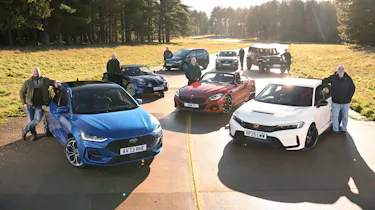
We're here not to bury cars, but to celebrate them. The peak hot hatch. A Ford that transformed hatchback dynamics for the benefit of millions. Two rear-wheel-drive sports cars.
Sales of these seminal models – plus an archetypal estate, iconic SUV and once-zeitgeisty MPV – have either ended, or will very soon, because the car world has changed. For every two new cars bought in Europe, one is an SUV, according to analyst S&P Global Mobility.
The do-it-all practicality of the 4x4, combined with the subconscious fear of being struck by one in a smaller car, has fuelled the SUV arms race. Car makers who 25 years ago didn’t offer one – Audi, Peugeot, Renault, Volkswagen, Volvo – are now all in. They have to be.
That's because something has to fund the drive to electrify and decarbonise road transport. Let’s overlook the paradox that heavier, less aerodynamic SUVs burn more fuel than estate cars or hatchbacks. The car industry boom times are over, and investment that could have gone into alternative bodystyles, or keeping excess factories open, can no longer be justified. Car makers must mine the virtuous – or is that actually vicious – circle of selling SUV after SUV.
And the regulatory grip tightens. Corporate average fuel economy targets mean the Honda Civic Type R, emitting 186g/km of CO2, cannot be allowed to raise the firm’s average CO2 rating. Or the cost of retrofitting the Jeep Wrangler to meet next year’s stricter General Safety Regulation doesn’t add up.
We could apportion blame. But today we praise, by driving some fine 21st century cars. And maybe tomorrow, we’ll buy one used. Because great cars should never, ever be allowed to die.
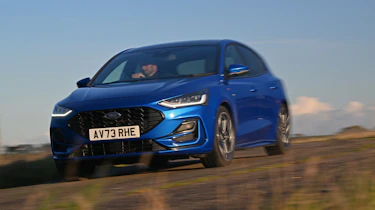
Ford Focus
By Darren Wilson
It’s easy to forget now, but the Ford Focus was one of the most revolutionary new cars of its era. A model that set the template for incredible sales success over almost three decades.
First, a little context. By the nineties, the iconic Escort had become a shadow of its former self. What was once a class-leader had declined into a rather underwhelming machine, whether judged by its styling, its driving experience or its family car credentials. The likes of the Peugeot 306 and the Volkswagen Golf demonstrated, respectively, how well a family hatchback could drive and how well finished it could be. Being shown up by the competition didn’t stop the Escort from being a consistent best-selling car in the UK, mind you, but it was clear that revolution was needed.
Step forward the Focus, deserving of an all-new name because of just how much of a quantum leap it took over its predecessor. As the covers were lifted at the 1998 Geneva Motor Show, I remember the excitement it generated – but also some trepidation. Especially in our office, where our editor, born and bred in Ford’s heartland of Essex, had a special attachment to the brand, and in particular the Escort nameplate. There were certainly some doubts about the move in the chatter across the desks of the Auto Express editorial team, but the radically styled replacement changed minds pretty quickly.
At the time, it looked like nothing else on the road. From my perspective, the exterior lines and styling were something of a shock – especially after the dowdy Escort – but it was a move that shook up the segment. It proved that family cars didn’t need to be dull. The same applied to the cabin; I remember stepping inside the Focus for the first time and being blown away by the radical angles and curves. It was brilliant.
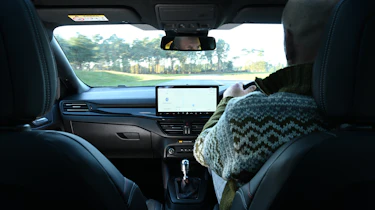
It wasn’t just radical, though, it was also superbly designed for family life. Take the back seats, for example; they weren’t only roomy, but the seat squabs also had secondary headrest slots in them so that, when the seat backs folded forward, the headrests wouldn’t get in the way and they could fold completely flat. So simple, yet incredibly smart.
But the stand-out quality of the original Focus was the way it drove. While I was generally knocking about in another radical Ford, the Ka, at the time, I remember my colleagues raving about its ride and handling; the late Richard Parry-Jones and his team had engineered a family hatchback that had a more sophisticated ride and handling balance than not just its rivals, but many high-end performance cars of the era. Combining all of this in a package guaranteed sales for Ford, and also for Auto Express; sticking a Focus on the cover was a surefire way for copies to fly off the shelves.
Various versions of the ST in particular conjure up fond memories for me. From the understated original, with its fabulous chassis, to the Mk2 with its glorious five-cylinder engine and thuggish styling, plus a lively colour palette (something that continued through the next two generations of the ST), every drive was always memorable. Using a manual gearbox was always a simple pleasure that’s gradually falling out of favour, too.
In those later generations, Ford toned down the radical styling, but the sharp handling and composed ride remained. By the time we reached the Mk3 and certainly the final Mk4, the company had begun to introduce cutting-edge technology, bringing driver-assistance and slick infotainment tech to the mass market. But, as ever, family car credentials remained at the heart of the Focus brief; the final model in particular offered rear
cabin space to rival the most roomy in the class.
Revisiting it today reminded me of what a great car the Focus remains. But ultimately the enjoyment of driving it is tinged with sadness that this is going to be the final version. That frustration is exacerbated by the fact its demise means that the brand’s three big hitters, the Fiesta, Focus and Mondeo, are all no more and have no replacements in sight. At least when the Sierra and Escort ended back in my early days on Auto Express, we knew that something else was coming. The rise of the SUV is to blame, of course. Will buying trends once again change in the future, so the likes of the Focus might return? I, for one, certainly hope so.
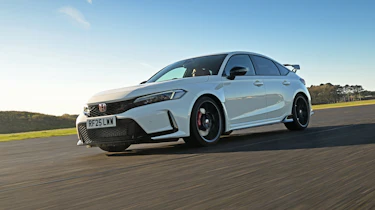
Honda Civic Type R
By Dean Gibson
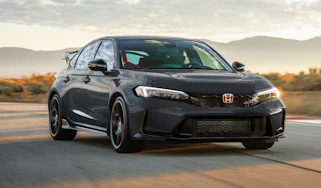
It’s been more than 30 years since the Type R badge first appeared on a Honda. The NSX got the ball rolling, but the Integra Type R that followed set a template of rev-happy, front-wheel-drive performance that the Honda Civic Type R has emulated ever since.
We didn’t get the original EK9-generation Civic Type R in the UK, although some have found their way here as grey imports. But the following EP3 model, which was developed and built here in the UK, gained a cult following that continues to this day. That car’s running gear was then transplanted into the larger, space-age-looking FN2 that offered a more grown-up drive, while the later FK2, FK8 and current FL5 versions swapped the rev-hungry VTEC-boosted naturally aspirated engine for turbo power, at the same time as growing in size and capability.
Over time, the Type R formula has been refined and enhanced with each generation, and this last-of-the-line version is arguably the definitive front-wheel-drive hot hatchback. There was a time when it was considered excessive to put 250bhp through a car’s front wheels, but while the Civic shoots well above that mark with 324bhp, it’s not the torque-steering monster that you might expect.
Years of refinement mean that the Civic Type R is able to deliver on its promise, with the precise six-speed gearbox offering the best shift of any manual gearbox currently available, while a limited-slip diff helps to get that power to the road surface. Yes, it will still try to spin up the tyres if you ask for full power when it’s slippery (even in third gear), but it remains arrow-straight and the steering tells you exactly what the front wheels are doing.
While turbocharging has helped boost the 2.0-litre engine, there’s still a VTEC kick to the power delivery. The needle on the rev-counter surges to the red line, while a row of shift lights on the dashboard prompt you to change up.
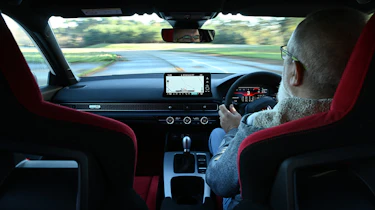
But there’s more to the Type R than just straight-line speed, with the chassis delivering lots of grip, but not at the expense of entertainment. You really need a track to explore the very limits of the Type R’s ability, but on country roads there’s still plenty of fun to be had. Even better is that adaptive dampers are fitted as standard, so there’s a wider range of ability here than in any previous model. Sure, it’s no limo when you’re not tackling country lanes, but the softest setting does at least give passengers a fighting chance of remaining comfortable.
And then there’s how the last Civic Type R looks. The first two turbocharged generations went a bit crazy with the vents, grilles and wings, but the handsome 11th-generation Civic has been a decent base to create one of the best looking hot hatchbacks ever. The revisions are strong enough to make an impact, but not OTT, with the flared wheelarches a particular design highlight. Combine this with black alloy wheels, a bonnet vent, purposeful rear wing and triple-exit exhaust, top it off with traditional Type R Championship White paint and red Honda logos, and this is a hot hatch that makes a statement.
The biggest issue with the Type R is its price, which had broken the £50,000 mark by the time sales stopped earlier this year. While new-car prices as a whole have risen sharply, the idea of a £50k hot hatch – remember that this is a class of car that has traditionally offered performance on a more modest budget – has proven too much, despite the fact that even more powerful models such as the Audi RS 3 and Mercedes A 45 are the wrong side of £60k. Looked at from the perspective of its rivals, the Type R still offers decent bang for your buck.
Putting aside prices, some would say that the hot hatchback class isn’t ready for the move to hybrid power or electrification anyway. The immediate response of a tuneful petrol engine and the driving connection that a manual gearbox delivers is something that doesn’t come naturally with a hybrid, while the extra weight of a drive battery means plenty of compromise in the corners for EVs. We’ve certainly yet to see a car that uses either power source to deliver the kind of driving fun that the Civic Type R has in spades, and we wonder if we ever will.
Jeep Wrangler
By Tom Jervis
Here in the UK, it’s Land Rover that reigns as the de facto king of the 4x4s. However, across the pond in the land of baseball, it’s the Jeep Wrangler that’s the off-road president.
Now a standalone brand in its own right, the Jeep name can trace its origins all the way back to 1940 when the US military gave three American firms – Willys-Overland Motors, American Bantam Company and Ford – 49 days to design and engineer a general purpose vehicle for reconnaissance use.
Willys-Overland won the contract, and in 1943 trademarked the name, but a ‘Jeep’ can now be defined as any one of a large number of models, from the Jeep Avenger EV all the way to the Gladiator pick-up truck. However, it’s the Wrangler that’s undoubtedly the original off-roader’s spiritual successor and currently exists in its fourth iteration under this nameplate.
Yet despite its iconic status and unwavering popularity in the States (more than 150,000 were sold in 2024 alone), the revered off-roader’s days are numbered in Europe.
Jeep recently told Auto Express: “There are several regulations that are affecting the compatibility of Wrangler with the European region, like the safety regulation that’s coming in mid-2026 that needs some additional features that will be hard to implement.”
It goes beyond the lack of advanced driver- assistance tech, though. For example, the protruding bumpers and sheer size and angularity of it don’t exactly scream “pedestrian safety”.
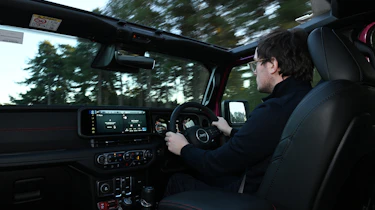
Another shortcoming of the Jeep’s familiar design is that it gives it the aerodynamic efficiency of an aircraft hangar. This, combined with the thirsty standard-fit 2.0-litre four cylinder under the bonnet, which is still rather hilariously clamped shut with old-fashioned latches on the outside, means that I wasn’t entirely surprised when I saw an average of just 22mpg when I climbed out of our test car for the final time. A CO2 emissions figure
of 269 grams per kilometre also makes it one of the most polluting vehicles around.
Granted, the Wrangler’s petrol engine does produce a potent 268bhp and hauls the two-tonne behemoth from 0-62mph in just over 7.5 seconds. However, while US buyers have the choice of a plug-in hybrid option, the rather rough four-pot available in the UK feels a tad rudimentary.
Although there are plenty of reasons for the Wrangler’s discontinuation, the original Jeep’s sheer impracticality also makes it a joyful oddity.
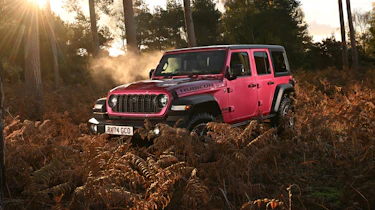
For example, there’s the sheer sense of occasion as you scale the Wrangler Rubicon’s near-11 inches of ground clearance and clamber inside. Once you’re seated, you have a truly commanding view of the road; in combination with the mountain of physical buttons that make the cockpit of Star Wars’ Millennium Falcon look minimalist, driving the Wrangler feels like operating heavy machinery, rather than driving a traditional crossover or SUV.
It would also be an oversight not to address the elephant in the room that is the Wrangler’s sublime off-road capability; that aforementioned ground clearance means that the Jeep is able to tackle almost anything smaller than a medium-sized block of flats. This is helped by a standard-fit low-range automatic gearbox, locking differentials and even a detachable anti-roll bar on Rubicon models.
It’s heavily customisable, too; the lurid ‘Tuscadero’ magenta paintwork on our test car made me feel more conspicuous than I've ever felt while driving. But it goes beyond factory-fitted options, with several pre-wired auxiliary switches on the dashboard enabling easy installation of extra equipment such as supplementary off-road lights, CB radios and even air compressors.
Now, it’s worth pointing out that the Wrangler could potentially live on in some form; Jeep’s European head of product planning, Marco Montepeloso, has told us that the brand “[is] exploring [the possibility], but today cannot commit on anything”.
That’s a shame, because the Wrangler is the Jeep of today which, despite its contemporary touchscreens and leather upholstery, best channels the same utilitarian go-anywhere attitude as the original military vehicle from 80-plus years ago. As our roads slowly become populated by electrified, digitised cars made by new brands
from the likes of China, losing an icon such as this takes us another step scarily closer to forgetting how mechanical cars once were.
Alpine A110
By Ellis Hyde
Ten years ago, only serious petrolheads, motorsport obsessives and French car fanatics would have come across the name Alpine. Now of course, it’s a globally recognised brand with a Formula One team, cars starring in Hollywood movies and plans to launch no fewer than seven models within the next few years. And that’s all thanks to the phenomenal Alpine A110.
Alpine was founded 70 years ago by Jean Rédélé, a charismatic racing driver who instilled in the company an ethos of pursuing elegance, lightness and agility. The original A110 arrived in 1963 and made its mark by winning the Monte Carlo Rally in 1971, plus the inaugural World Rally Championship a few years later.
After achieving middling sales success, Alpine went away in the mid-nineties and it took owner Renault a few attempts to revive it. But in 2017, the new-age A110 pulled Alpine into the present day and showed Audi, Lotus and Porsche how to make a sports car.
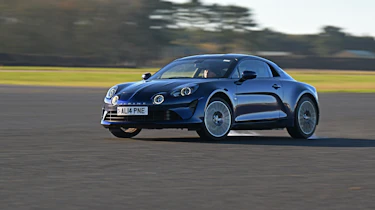
The design is an exquisite homage to the original, through their similar silhouettes and features such as the rally-style driving lights, and even the way the bonnet and doors are sculpted. But the 2017 model puts enough of a contemporary twist on things that it doesn’t look like a needlessly nostalgic facsimile.
It’s aged spectacularly well, too. Not many people would think this car is nearly a decade old, and it continues to attract curious, lustful glances whenever one passes by.
Alpine proved modern cars don’t have to be big, heavy, complicated and needlessly powerful with the A110. By making its bespoke chassis and bodywork out of aluminium, and being so fastidious that it even fitted a lightweight sound system, the car weighs in at just over 1,100kg – about 200kg less than the rival Porsche 718 Cayman – yet doesn’t feel in any way fragile.
The A110’s turbocharged 1.8-litre four-pot petrol engine, which was sourced from Nissan, perhaps isn’t as special as Porsche’s sonorous flat-six, and it ‘only’ produces 248bhp in the base model or 296bhp in the more focused S, GTS or R variants.
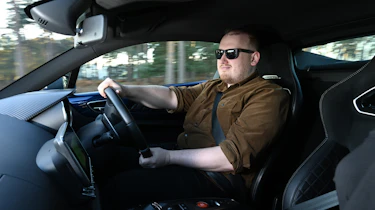
However that’s plenty for such a lightweight; it dances through corners with its light yet precise steering, and then flies out of them accompanied by lightning-quick shifts from its dual-clutch gearbox, actuated by column-mounted paddles behind the steering wheel.
It ‘only’ revs to 7,000rpm too, but the red line honestly doesn’t matter because of the pops, bangs and crackles that come from the exhaust at every opportunity, turning even the most serious drivers into grinning teenagers in seconds. Then there’s the turbo whoosh, and genuine induction noise that comes into the cabin via an intake resonance tube – another feature borrowed from the original A110.
This car may have been born in France, but it feels like it was bred for British B-roads because of its size and how well the suspension manages to soak up potholes. The supple ride also makes the A110 a car that you can cover thousands of miles in, either commuting to work or in pursuit of the most magnificent stretches of road.
This A110 will be going out of production in 2026, and as you may be aware, there’s an all-new, all-electric model coming to replace it. There have been some suggestions that a petrol engine could find its way into the next A110 if need be, but bosses at Alpine have also told us that going EV was really the only way forward for the brand.
Speaking to Auto Express earlier this year, Alpine design director Antony Villain explained: “If we want to stay on ICE, to get the right engine with the right performance compared with super-famous competitors, it will take years to catch up and will be super expensive.”
What’s more, in France the government slaps an additional tax called ‘Malus’ of up to 70,000 Euros (around £61,580 at the time of writing) on models that emit a lot of CO2, which obviously includes sports cars.
Bold promises have been made about the next A110’s electric performance and soul, but still we must say au revoir to the A110 as we know it.
Volvo V90
By Phil McNamara
Buried deep in Volvo’s genetic core lies the estate car. Practical Americans may have invented the station wagon concept, but the Swedes cottoned on early with the Duett in 1953. Taking coachbuilders’ estate-conversion work in-house, the name celebrated the vehicle’s dual purpose: delivery van during the week, a more luxurious family-mover come the weekend.
Volvo continuously produced a big estate from then on: the big 260 my dad’s best friend drove in the seventies, the immaculate, green V70 I pass walking the kids to school, its deep glasshouse and horizontal roof shaped by the millennium era’s more utilitarian approach to design.
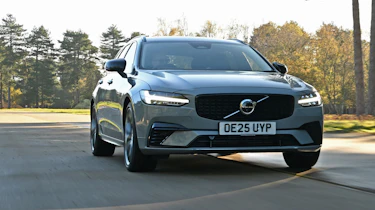
Its final descendant, the Volvo V90, is no relic to look at or drive. The roofline and side-glass curve in coupé-esque fashion, the glossy black grille and mirror caps remain fashionable, the body looks slammed over 10-spoke alloys 20 inches in diameter. The 488-litre boot isn’t as massive as you might expect, but a lift-up flap segments it brilliantly to corral a couple of shopping bags, and the ski hatch and fold-flat rear bench help nail practicality.
The welcoming seats are classic Volvo armchairs, upholstered in leather. Only the tiny touchscreen with its fuzzy surround camera date it, although the software is still competitive: thank Volvo for being
a far-sighted adopter of Android Automotive.
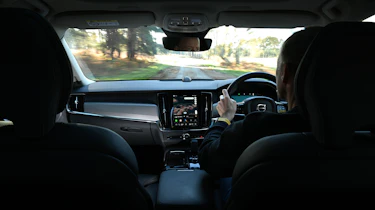
This final edition is a plug-in hybrid. Spinning the rear axle is a 143bhp electric motor, powered by a 14.7kWh battery in the transmission tunnel, with a 306bhp turbocharged petrol engine up front. It’s quick. Kick the throttle and – tick, tick, boom – the V90 pauses, then launches with a lovely metallic crescendo from its 2.0-litre four.
That sub-five-second 0-62mph performance is a nice-to-have: most of the time you’ll be wafting along in silent electric rear-drive, enjoying the sweetly compliant ride quality, elbow on the door top, guiding the prow with a tug of the nicely weighted, responsive steering. With the Volvo cleverly rationing its 40-50-mile electric range, we got 59mpg on our recent 100-mile cruise to our photoshoot in Suffolk. The trick is never to run it volt-free: economy will plummet below 40mpg.
This drivetrain was one nail in the V90’s coffin: all plug-in hybrids must meet a new European homologation process for 2026. But it was the flight to SUVs that put the writing on the wall.
Surely the pendulum will one day swing back to estates: more economical, more dynamic, almost as practical. In the meantime savvy used buyers should flock to this handsome, desirable beast.
Volvo has pushed the V90 out on a wooden barge, released the fiery Viking arrows and watched it burn. The burial of the big Volvo estate is nigh.
Volkswagen Touran
By Paul Barker
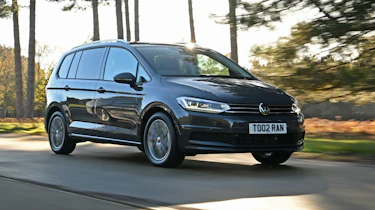
It’s not controversial to say the Volkswagen Touran isn’t the sexiest car here. Hell, even VW itself digitally tagged the first pictures of the original Touran as “brotwagen” (breadvan in German) as an internal joke. Which the company then forgot to delete before issuing them. Ouch…
At the time, compact and practical seven-seaters were part of the furniture. No more. The passing of the Touran, which is now only available to order from stock, is the tip of the iceberg. This is the end of a whole breed of nameplates that once swarmed our roads; from Ford’s C-MAX to Vauxhall’s Zafira, the various cars to wear Citroen’s Picasso nameplate and the Renault Scenic, these cars were big business at the beginning of this century.
The mini-MPV was the birthplace of clever storage solutions: a third row of seats that could comfortably take children or be folded flat into the floor to make for a cavernous luggage area, and individual middle-row seats that could fit three child seats next to each other.
These models were dismissed as boring boxes by anyone who hasn’t had to herd small children and their associated gumph from A to B, yet they were the clever choice in a seemingly simpler time when function outpointed form.
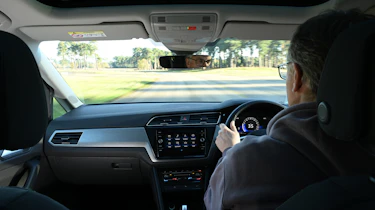
But the unstoppable rise of the SUV has given families an alternative that didn’t look like a family bus, and Touran production has declined from a high of almost 200,000 in 2007 to around 30,000 per year. More than half of these find European homes, with many of the rest heading for China, where the car was once the taxi of choice.
Despite its dowdy looks, the Touran brought innovations along the way. Back in 2003 it was the first car to feature VW’s electro-mechanical steering that altered the weight according to speed, while the 2006 facelift brought Park Assist tech to the brand for the first time.
But this current car looks ready to go. It was launched a decade ago, making it one of the longest-standing cars on sale, even if it won’t quite make the 12 years of the first-generation Touran that limped to 2015. That’s when it was replaced by the current car, which sits on the VW Group’s MQB platform that has underpinned everything from the Audi TT and SEAT Leon to the Skoda Superb and Volkswagen Golf and Passat.
It now looks rather expensive, too – even the entry Match spec costs more than £40,000. That’s roughly the same as the new Tayron seven-seater that is the Touran’s spiritual replacement. An SUV, of course.
BMW Z4
By Steve Sutcliffe
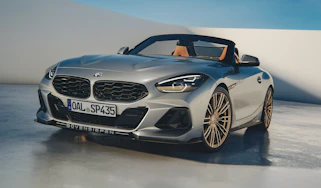
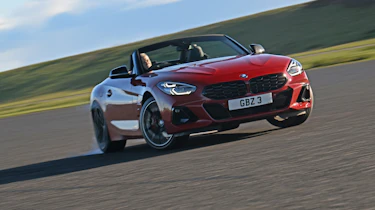
The BMW Z4 has split opinion ever since it was unleashed in the summer of 2002. Back then, its underpinnings were based unashamedly on those of the E46 3 Series, and there was not a lot wrong with that. But the main talking point was always its ‘flame surfacing’ design.
That’s what polarised people on day one, and has done so ever since – over three generations and both coupé and roadster forms.
Now, though, BMW’s seminal two-seat sports car is about to reach its end. The firm will keep making this latest G29 version in Austria until spring next year, but the UK order books are already closed, with final deliveries of the last examples happening before summer.
Why? Because the notion of a front-engine, rear-drive sports car that’s a touch raw in its appeal, and which runs on petrol alone, no longer fits within BMW’s remit in 2026.
Partly this is because the audience for such a car has diminished in recent years, says BMW, but it’s also a question of image. In 2026, the idea of a sports car like the Z4 is too old-school to sit comfortably beside the rest of BMW’s EV-based range. So, after a quarter of a century and almost half a million sales worldwide, the Z4’s time has come. The guillotine has fallen.
Whatever the reason for its demise, the Z4 will be sorely missed, not least because it will mean BMW no longer has what most of us would define as a sports car within its range. That feels quite odd given the company’s ‘ultimate driving machine’ mantra, but such is the world in which we now live.
BMW will no doubt point out that the M badge lives on and is stronger than ever commercially, but it’s still hard to accept that a two-seat sports car has become surplus to requirements at the company, especially when the sales figures show quite clearly that an audience still exists for the car.
The first-generation model – the E85/86 from 2002-2008 – sold best of all with almost 200,000 finding homes. The second (the E89) fared less well, with 115,000 sales between 2009 and 2016. Had the third-generation G29 version continued this trend, it would be easier to understand BMW’s decision not to make a fourth, but the reality would appear to be
the exact opposite.
Since going on sale in 2019 and despite enduring a global pandemic, BMW has still managed to shift more than 160,000 G29 Z4s. So even though it is being discontinued, it remains a strong-selling car, one that also costs BMW a lot less to make than most.
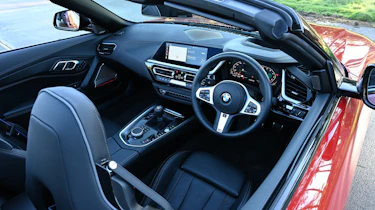
And when you drive the latest Z4 in M40i guise as seen here, it doesn’t take long to work out why. On the move, it’s as dramatic as it looks. On a sunny day with the hood down and a nice empty road in front of you, there’s not much that can spoil your fun in a Z4. Its appeal is extraordinarily easy to comprehend.
BMW was commissioned by Toyota to do the underpinnings of the current Supra, and it duly did so by developing that car’s components in tandem with those of the G29 Z4, the results of which are pretty spectacular on both sides. But if anything, the Z4 feels the more exciting of the two to drive, especially with its canvas electric roof down so you can appreciate the cultured screams of its 335bhp, 3.0-litre turbo engine that much more viscerally.
The driving position remains a defining factor; some like it, some don’t. You feel as if you’re sitting right over the rear axle, the end of the bonnet miles away, stuck somewhere in the sixties perhaps. Yet the manual gearbox is excellent; the response from its potent six-cylinder engine is as crisp as a thin layer of fresh ice. And, holy smoke, is it still quick when you put your foot down, as in 0-62mph in 4.6 seconds with a thunderous mid-range that’s absolutely chock-full of torque.
You drive a Z4 with your heart first, your mind and body second, and on the right road it is lovely. True, on a rainy Tuesday night in dense traffic its appeal can fade a touch, but that doesn’t prevent it from being one of BMW’s more memorable cars of the past three decades. One that will be much missed.
Get even more from Auto Express, follow our channels...
• Google
• Reddit
• Whatsapp