Best and worst retro cars
Retro designs are in fashion, and some of them really hit the mark. Our team picks their retro winners

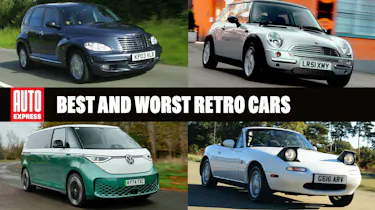
While the technology side of the car industry marches forward relentlessly, there’s an argument that car styling might have peaked long ago. Nostalgia sells, too, so it’s no surprise that manufacturers are often looking backwards when deciding what their cars look like.
Retro cars are big business, either directly referencing something specific from a brand’s own back catalogues or merely harking back to a particular era of design. Retro is a tricky thing to get right, though. Here is a selection of hits, and a few misses.
What is a retro car?
Love it or hate it, retro style has been a common theme throughout the history of car design. Essentially, it’s the practice of looking back to reuse elements from the past in creating something new.
It’s inevitable that those imagining new cars are influenced by what’s gone before but most new models emerge with at least the intention of reflecting the modern aesthetic or even establishing new visuals that will help define the future. Most, but not alll.
On occasion, car designers go completely retro, deliberately and obviously recreating classic designs from history. Sometimes the particular car brand has a much-loved model languishing in its back catalogue that it wants to reference, or recreate, for financial gain. There are also long-running model lines that have merely passed original design themes down their generations so that the current versions inherit a retro look by default. Other times, designers just design retro cars because lots of people really like them.
The best retro cars
Done well, retro is nostalgic, familiar and yet different from the majority of cars that roll off the production lines in a given era. Modern technology overlaid with classic design themes is a formula that’s been revisited time and time again by different cars over the years and our pick of the best and worst retro cars are the models on this theme that we think stand out, for good or bad…
MINI
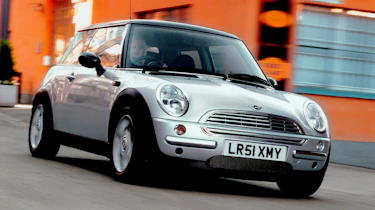
- Price new: £11,680
- Price now: from £1,000
- Powertrain: 1.6-litre 4cyl petrol; five-speed manual
- Power: 115bhp
- 0-62/top speed: 8.9 secs/124mph
The modern MINI is arguably the best retro remake ever. It shocked the industry when the covers came off at the turn of the millennium, and it still looks fresh today.
Yet to me, a good retro reproduction needs to offer more than looks. It has to capture the feel of the original, too – not just in terms of the interior, but also how it drives. The MINI nails both, with a charismatic cabin and go-kart-like handling – sitting in one today you struggle to believe it's the best part of 25 years old. Sure, it’s bigger than its forebear, but it’s dinky compared with today's superminis. If you want one, you’d better act fast, because good ones are becoming harder and harder to find.
Mazda MX-5
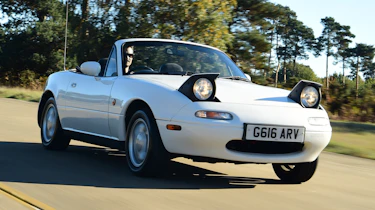
- Price new: £14,000
- Price now: from £2,000
- Powertrain: 1.8-litre 4cyl petrol; five-speed manual
- Power: 128bhp
- 0-62/top speed: 8.0 secs/126mph
In creating the MX-5, Mazda looked not just to other manufacturers but a completely different part of the world. The idea of the MX-5 was to resurrect the classic British sports car, minus the chronic unreliability. The original Mk1 MX-5 wasn’t explicitly retro in its styling, but there is a whiff of the Lotus Elan in its design.
It must have seemed quite the gamble at the time, but it more than paid off. Mazda has gone on to sell well over a million MX-5s through four generations of the pint-size roadster.
Fiat 500
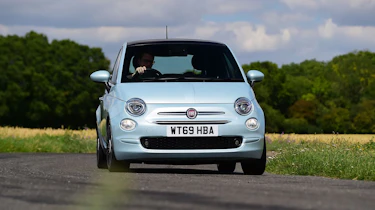
- Price new: £8,000
- Price now: from £500
- Powertrain: 1.2-litre 4cyl petrol; five-speed manual
- Power: 69bhp
- 0-62/top speed: 12.5 secs/99mph
In terms of retro relaunch success, the Fiat 500 is only really beaten by the MINI. It reinterpreted the looks of the 1950s original brilliantly, and although it’s been around for the best part of two decades and has changed quite a bit, it’s barely any longer than it was when launched in 2007. This is great news for city buyers that there’s a new petrol-powered version, with the third-generation 500 having originally launched exclusively in all-electric 500e form. Oh, and a fun fact for you - its designer was Frank Stephenson, who was also responsible for penning the new MINI.
Volkswagen ID. Buzz
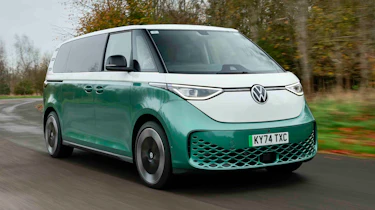
- Price new: from £59,405
- Price now: £30,000
- Powertrain: 86kWh batt, 1x e-motor, single-speed auto
- Power: 282bhp
- 0-62/top speed: 7.9 secs/112mph
Some cars take a while to reach production, but the Volkswagen ID. Buzz’s yawning 22 years between initial concept and showroom-ready road car could be a sign that the company knew it couldn’t afford to get it wrong. The ID. Buzz coincides with a period of financial trouble for the German giant, driven by production delays and software issues that its EVs encountered in the wake of Dieselgate.
That meant the ID. Buzz needed to be pretty much perfect – and it is. The vibrant VW has a design that transcends retro, tapping into the very culture that the brand has created with generations of iconic vans. Just as the New Beetle did at the turn of the century, let’s hope that the ID. Buzz has the same restorative effect on Volkswagen.
Latest Volkswagen ID. Buzz deals
Ford GT
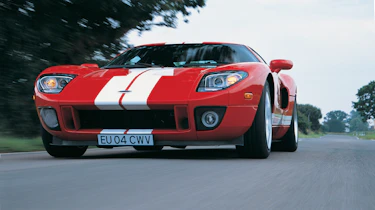
- Price new: from £120,900
- Price now: £350,000
- Powertrain: 5.5-litre petrol supercharged V8, six-speed manual
- Power: 550bhp
- 0-62/top speed: 3.3 seconds/205mph
Twenty years since the Ford GT's debut, we still have no idea how the firm managed to create something so visually similar to its sixties Le Mans legend. It had all the lines and features of the original racer, yet looked so brilliantly modern in its execution at the same time.
The supercharged 5.5-litre V8 made a terrific noise, and the performance holds up against many of today’s supercars. Its handling even earned the GT a spot in our sister title evo’s Car of the Year shortlist in 2005. Prices have tripled since its launch, but there will never be anything like it again.
Renault 5/Alpine A290
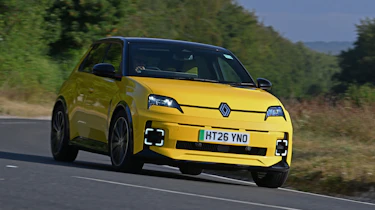
- Price now: from £21,495
- Powertrain: 52kWh batt, 1x e-motor, single-speed automatic
- Power: 148bhp
- 0-62/top speed: 8.0 seconds/93mph
An open goal is still a goal, so there’s no shame in picking the very obvious new Renault 5 as the best retro car. The French firm has done a brilliant job of translating the classic R5’s looks and unique design cues into a model fit for modern life, and it certainly teaches other brands a thing or two about successfully trading on their heritage. It’s a design that makes you smile, which is something too few cars do these days, and Renault’s bold colour choices help an already stand-out car shine even brighter.
It’s even more appealing in Alpine A290 form, and although that version deviates from the R5’s retro looks a touch, the existence of the original Renault 5 Alpine of the 1980s means we’re happy to let that slide.
Renault 4
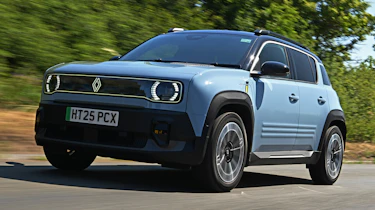
- Price now: from £23,645
- Powertrain: 52kWh batt, 1x e-motor, single-speed automatic
- Power: 148bhp
- 0-62/top speed: 8.2 seconds/93mph
The big problem with the Renault 4 is… the Renault 5. Its slightly smaller, slightly cheaper sibling is simply cooler. But viewed in isolation, the R4 is a great retro car too. It doesn’t evoke the shape of its original namesake as closely as the R5 does, but that’s not such a bad thing – we’re not sure the old R4’s silhouette would really work in a modern context.
Instead, the new R4 smartly takes elements of the original and updates them in a thoroughly modern way. Just look at that massive light panel at the front - the light signature running around the edges references the chrome grille surround of the first Renault 4. The fact you get detailing like this on a car that starts from well under £25,000 is remarkable. And if you don’t mind spending a bit more, there’s even now a ‘Plein Sud’ convertible version.
Ford Mustang GT

- Price new: from £58,670
- Price now: from £19,995
- Powertrain: 5.0-litre petrol V8, six-speed manual or 10-speed automatic
- Power: 390bhp
- 0-62/top speed: 5.3 seconds (manual) or 4.9 seconds (automatic)/155mph
Ford knows how to make a muscle car, and the Ford Mustang is a model that has remained fairly true to its roots. A reboot in 2005 saw it take retro lines and contours from the original sixties design, revitalising the look of the modern-day muscle car in the process.
The firm has opted for an evolution of this design ever since, with each generation clearly maintaining its DNA – and the 2024 Mustang GT is the best one yet. Thunderous V8 power and a surprisingly well-honed chassis make the Mustang more than a one-trick pony – and strong residuals reflect that.
The Mustang may be a dying breed, but it's a wonderful driver’s car and a refreshing alternative choice in Ford’s current line-up.
Ford Bronco
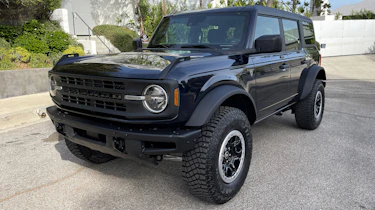
- Price new: from $41,295
- Powertrain: 2.3-litre 4cyl, 10-speed auto
- Power: 270bhp
- 0-62/top speed: 6.8 seconds/101mph
Ford brought back the Bronco name with a bang for the 2021-on, sixth-generation version of the car. It’s a fabulous modern take on the styling of the original, which first arrived in 1966, and in fact, a 1976 example was digitally scanned to aid the design process.
We’re quite sad about this one not making it to the UK, particularly with its Jeep Wrangler rival no longer sold here. We’re short on proper rivals of the Land Rover Defender, after all, not including various Chinese ‘clones’ on their way. Much like the Land Rover Defender, it’s available in a short-wheelbase, three-door layout along with a bigger five-door version, with the former looking even cooler.
Toyota Land Cruiser

- Price new: from £80,945
- Price now: from £50,000
- Powertrain: 2.8-litre 4cyl, eight-speed auto
- Power: 201bhp
- 0-62/top speed: 12.8 seconds/106mph
While not as forcefully retro as some of the cars here, there’s a clear old-school theme going on with the Toyota Land Cruiser’s boxy proportions. It’s a similar deal inside, with straight lines and a general sense of chunkiness being the order of the day. It all comes together to hark back to Land Cruiser models of old.
The Land Cruiser isn’t just retro in terms of its looks, either – unlike the current Land Rover Defender, the Toyota retains a body-on-frame construction. Sticking a shell on top of a massive ladder frame does hamper on-road refinement for a bit, but this is still considered the best setup for tackling the rough stuff. We’d happily take some more modernity under the bonnet, though - the 2.8-litre, four-cylinder diesel engine is quite gruff.
Latest Toyota Land Cruiser deals
Land Rover Defender
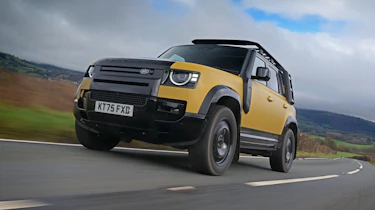
- Price new: from £58,655
- Powertrain: 3.0-litre six-cyl turbodiesel, eight-speed manual
- Power: 247bhp
- 0-62/top speed: 7.9 seconds/117mph
Hardcore Land Rover Defender enthusiasts might have decried the new model’s different direction when it arrived in 2019, but there are still stylistic references to the original, which in turn was a continuation of the original Series Land Rovers dating back to the late 1940s.
There are plenty of little details if you’re looking for them, including the little ‘Alpine’ windows at the rear, and the round daytime running light segments. It’s still a boxy thing compared to the average SUV, and retains short front and rear overhangs, serving as both a reference to the original and a practical purpose of improving clearance off-road. And, of course, you can still have it as a retro-tastic short-wheelbase, three-door 90.
Latest Land Rover Defender deals
Citroen Dispatch H-van
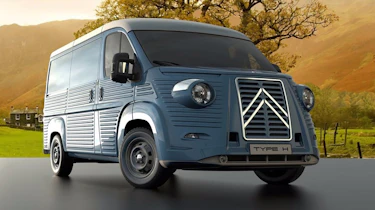
- Price new: from £38,000
- Price now: from £15,000
- Powertrain: 2.0-litre four-cyl turbodiesel, six-speed manual
- Power: 110bhp
- 0-62/top speed: 12.1 seconds/110mph
The last time you saw a Citroen H-van, it was probably parked up at an event or shopping centre with a barista or an artisan baker hanging out the side, peddling their wares. Old vans can be great for businesses like that, but reliability isn’t going to be a strong point.
However, the 2CV Shop based in Warminster, Wiltshire, might just have the answer. It imports conversion kits from Italian firm Caselani that can transform Citroen’s Berlingo, Dispatch and Relay vans into retro homages to the old H, HG, HY and Fourgonnette models, with bug-eyed headlights, a retro grille and corrugated panels that recall the appearance of Citroen's traditional 'tin shed'. They don’t come cheap, but they’re produced under licence from Citroen and are as close as you can get to an official retro modern van today.
Honda e
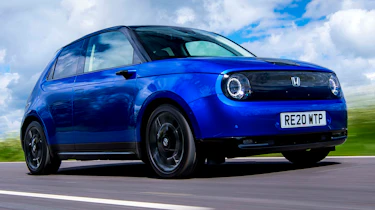
- Price new: from £30,000
- Price now: from £12,000
- Powertrain: 1x e-motor, 35.5kWh batt.
- Power: 152bhp
- 0-62/top speed: 9.0 seconds/90mph
The Honda e is retro-inspired in a more general sense, rather than rebooting a specific model. Honda did it a slight disservice by previewing it with the fantastic-looking Urban EV concept of 2017, but even if the e wasn’t quite as cool, it certainly did stand out with its twin, round headlamps and slightly boxy proportions.
Unfortunately, that wasn’t enough to win over buyers, many of whom were probably put off by the Honda e’s high price considering its limited range and small size. It was killed off relatively early by Honda, but its short-lived nature and relative rarity mean it might just have some future classic potential.
Plymouth Prowler
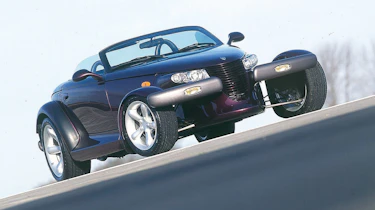
- Price new: from £30,000
- Price now: from £28,000
- Powertrain: 3.5-litre V6, four-speed auto
- Power: 214bhp
- 0-62/top speed: 6.0 seconds/118mph
If you’re going to design a retro car, you want it to look the part. While the Plymouth Prowler is actually rather mundane to drive, and filled with cheap and nasty plastics, nobody can deny that it stands out from the crowd.
Those in the know can identify the Prowler straight away, despite the fact that production ended as much as 20 years ago. But even those with no clue what it is will find themselves unable to avert their eyes. Yes, the Plymouth is technically and dynamically a bit on the poor side, but just look at it.
The worst retro cars
Sometimes retro cars don’t quite work. Maybe the designers fail to hit the brief or the underlying car isn’t very good. Sometimes it’s a combination of both…
Chrysler PT Cruiser
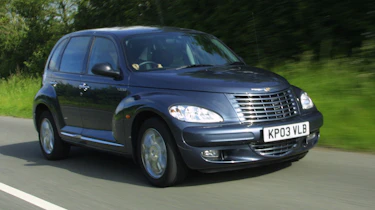
- Price new: from £12,995 (2001)
- Price now: from £500
- Powertrain: 2.4-litre 4cyl, five-speed manual
- Power: 113bhp
- 0-62/top speed: 9.7 secs/131mph
Chrysler’s dabbling with retro design and hot-rod culture created some almighty clangers, but few were as awful as the PT Cruiser. This hatchback-wagon-van hybrid was the result of the US firm's desperate attempt to find itself a place in the 21st century after decades of uninspired and poorly built models.
The genesis of this new way of thinking was seen in the 1989 Dodge Viper concept, a car that made all the Chrysler Group brands of the era want to make a change of their own. A few years after the success of the Viper, the Plymouth Prowler was introduced with a more overt hot-rod aesthetic, one that was eventually picked up by Chrysler itself for the PT Cruiser – a new compact car that it hoped would sell in vast quantities. And indeed it did, across both America and the rest of the world – but that didn’t stop it from being a wholly wretched and quite tacky pastiche in plastic.
GWM ORA 3 (Funky Cat)
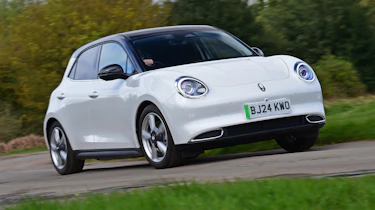
- Price new: £30,495
- Price now: from £15,000
- Powertrain: 45.4kWh batt, 1x e-motor; single-speed auto
- Power: 167bhp
- 0-62/top speed: 8.3 secs/99mph
You might wonder why – when the two cars look ostensibly so similar – we can rate the MINI so highly yet take such objection to the Ora 03 (nee Funky Cat). Well, probably the biggest issue for us is how the Ora tries to mash together so many iconic designs into one, without much success.
There’s undoubtedly some essence of the MINI at the front, mixed with bits of Volkswagen Beetle or even early Porsche 911. Yet from here it all goes to pot, and with an odd single-piece rear lightbar and a bulbous back end, the overall styling is messy to say the least.
The interior is clumsy, too, with a fiddly infotainment system and compromised packaging. Plus, the EV’s battery range isn’t much to write home about, either. Unfortunately, we suspect the Ora will go down as one of many early Chinese cars that didn’t quite chime with European tastes.
Fiat 500L
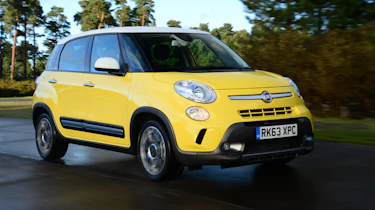
- Price new: £15,000
- Price now: from £2,000
- Powertrain: 0.9-litre 2cyl petrol, six-speed manual
- Power: 94bhp
- 0-62/top speed: 10.7 seconds/ 117mph
The original Fiat 500 is a tiny city car that oozes classic charm, and the brand managed to recapture this when it launched the first modern iteration in 2007. Unfortunately, five years later, the Italian company then decided that its retro-inspired small car styling would also look good on a chunky MPV.
That was a big mistake – the result was the 500L, a hefty, bulbous machine that wasn’t as practical as its rivals, nor anywhere near as good to drive or as chic as the proper 500.
Volkswagen New Beetle
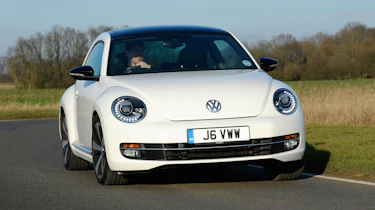
- Price new: £11,500
- Price now: from £750
- Powertrain: 2.0-litre 4cyl petrol, five-speed manual
- Power: 113bhp
- 0-62/top speed: 10.6 seconds/115mph
When Volkswagen wheeled out its Concept One homage to the original Beetle back in the mid-nineties, it was easy to get sucked into the hype that convinced VW to put the car into production in 1997. The joys of hindsight show that this was premature.
Car design should be innovative and intriguing, but we ended the last century distracted by playschool-level pastiche models that really should have been an offence to good taste.
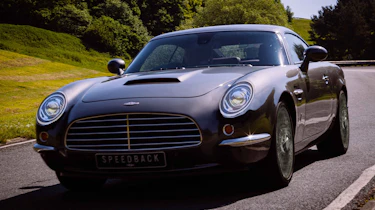
David Brown Speedback GT
- Price new: £594,000
- Price now: £275,000
- Powertrain: 5.0-litre V8 petrol, six-speed auto
- Power: 510bhp
- 0-62/top speed: 4.6 secs/155mph
The Aston Martin DB5 is one of the most beautiful cars ever, which makes this gawping, Frankenstein imitation all the more embarrassing.
Created by David Brown Automotive (nothing to do with the former boss of Aston Martin), the Speedback GT tried to blend coachbuilt skills with modern tech. The end result is cringe-inducing. It isn’t even an Aston; it’s based on a Jaguar XKR with awful wheels.
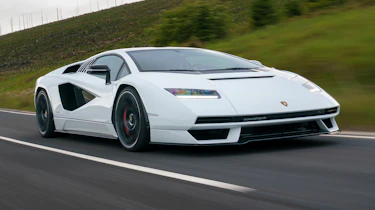
Lamborghini Countach LPI 800-4
- Price new: £2,000,000
- Price now: £2,000,000-plus
- Powertrain: 6.5-litre V12 mild hybrid; seven-speed auto
- Power: 803bhp
- 0-62/top speed: 2.8 seconds/221mph
If you’re after an ultra-exclusive Lambo, the Italian maker is sure to oblige. It has produced hit after hit over the years, and plenty of limited-run specials. But the reimagined Lamborghini Countach is a huge miss.
There's been nothing quite like the original Countach concept that was revealed at the Geneva Motor Show back in 1971, but this 50th anniversary reimagining fails to live up to its beauty. Trying to transpose the first car’s elegant shape to the Aventador/Sian platform created an awkward-looking mess – it doesn’t even have pop-up headlights. Only 112 were built, and despite costing more than £2million apiece, they sold out in less than a week. Perhaps that proves that money really can’t buy taste.
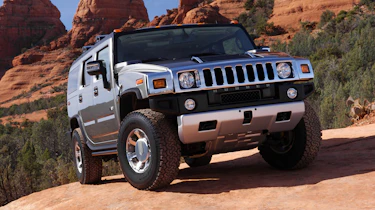
Hummer H2
- Price new: N/A (UK)
- Price now: from £20,000
- Powertrain: 6.0-litre V8, four-speed automatic
- Power: 321bhp
- 0-62/top speed: 11 secs/99mph
Although America sometimes nails it when it creates retro-styled cars, it can also occasionally produce a pile of dog’s mess, and that’s exactly what happened when it inflicted the Hummer H2 upon us. The numbers are all wrong for a start: despite having a hulking great V8, the scaled-down Hummvee would lose a traffic-light drag race to a Toyota Prius of the same era. It wouldn’t top 100mph, fuel consumption was in the teens (if not worse) and it cost more than a BMW X5 at the time.
Yes, there’s an eccentric character to the H2 that some would find comical or even endearing these days – Arnold Schwarzenegger was a big fan for a start. But to most of us it’s simply a garish symbol of brash, over-styled American excess.
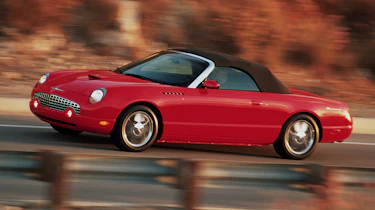
Ford Thunderbird
- Price new: N/A (UK)
- Price now: from £10,000
- Powertrain: 3.9-litre petrol V8, five-speed manual
- Power: 248bhp
- 0-62/top speed: 7.2 seconds/140mph
Much like the Ford Mustang, the Thunderbird moved with the times from generation to generation, before the Blue Oval decided its 11th generation model needed to be a stylistic throwback. At the time, the looks generally went down pretty well. Whether they look good now is up for debate.
What’s unequivocal, however, is that the Thunderbird was a massive flop, finishing off the model for good - there hasn’t been another one since. It didn’t help that it was expensive and made from a bunch of bits shared with the Lincoln LS. That same platform was also used for the Jaguar S-Type, which is from where the Thunderbird obtained its not especially powerful 3.9-litre V8 engine.
Chevrolet SSR
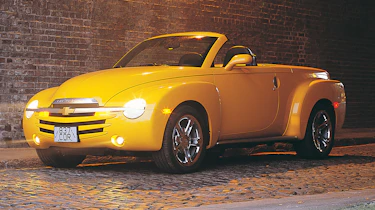
- Price new: N/A (UK)
- Price now: from £20,000
- Powertrain: 6.0-litre petrol V8, six-speed manual
- Power: 390bhp
- 0-62/top speed: 5.2 seconds/126mph
In an attempt to cash in on the retro boom, Chevrolet got to work creating the SSR – or Super Sport Roadster.
Sure, America loves a pick-up, and Chevy is no stranger to creating a good one. But a retro truck that was also a convertible hard-top roadster with design inspiration from the forties was a bold move. Plus, despite its Marmite looks, the SSR was marketed via motorsport, becoming the official pace car for the 2003 Indy 500 in a bid to capture the crowd’s imagination. There were decent safety features and in-car kit, but it was expensive and not even GM's LS2 V8 engine could save it from being a flop.
Mitsuoka Viewt
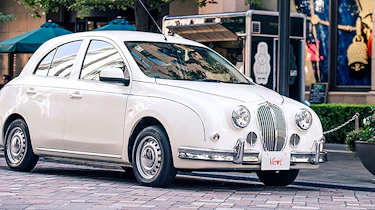
- Price new: N/A (UK)
- Price now: N/A
- Powertrain: 1.0-litre petrol 4cyl, five-speed manual
- Power: 69bhp
- 0-62/top speed: 15 seconds/96mph
Japanese company Mitsuoka seems to thrive on making iffy-looking retro pastiches based on very humble platforms. The Viewt is possibly the most egregious of the lot, attempting to recreate the Jaguar Mark II in a downright offensive manner.
The original was based on a K11 Nissan Micra, as is painfully obvious if you look at the car’s side profile. K12 and K13-based versions followed, while the current model uses the Toyota Yaris as a starting point. In each case, you really can tell. It’s not a good look.
Get the latest car news in your inbox, for FREE! Sign up to the Auto Express email newsletter...