BYD Atto 2 review
The BYD Atto 2 is a well-equipped small SUV that's best sampled with its impressive plug-in hybrid system

Our opinion on the BYD Atto 2
We found the BYD Atto 2 slightly underwhelming in its pure-electric form, though the Atto 2 DM-i claws back some points as a plug-in hybrid (PHEV). It's a compact SUV that comes with lots of technology and equipment as standard, plus it has a competitive six-year warranty. There’s a decent amount of space inside, and the more potent of the two PHEVs delivers realistic fuel-economy benefits and a useful electric driving range.
It could ride a little better, and the EV version doesn't really stand out in this busy segment because there are rivals that offer more range and faster charging speeds. The DM-i is the pick of the line-up because it provides plug-in hybrid technology at a very attractive price point.
About the BYD Atto 2
The BYD Atto 2 is a small SUV that uses the same electric running gear as the BYD Dolphin supermini and larger BYD Atto 3 SUV. It slots into the BYD range between them, both in terms of size and price.
Initially, the Atto 2 only came with all-electric power, but against a growing number of small EV rivals powered by volts alone, the Atto 2 electric isn't particularly special – whether you go for its entry-level Boost or Comfort forms, the latter of which offers a little more driving range. The plug-in hybrid (PHEV) DM-i model is a much more interesting proposition now that the Renault Captur isn't offered as a PHEV anymore, leaving only the Toyota C-HR as a similarly sized rival. It makes the Atto 2 DM-i look like a bargain, though, since the least expensive C-HR PHEV costs nearly £10,000 more.
Used - available now

2025 BYD
Atto 2
3,000 milesAutomaticElectric
Cash £22,495
2025 BYD
Atto 2
1,698 milesAutomaticElectric
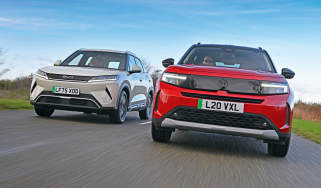
Cash £21,497We've tested both the electric and plug-in hybrid versions of the Atto 2, including a twin-test of the Boost version of the BYD Atto 2 electric against the Vauxhall Frontera electric.
Performance & driving experience
Pros |
|
Cons |
|
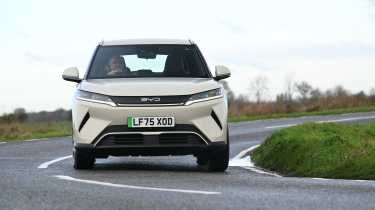
According to BYD’s own marketing material, the Atto 2 is designed for urban driving, and overall that seems to be where its strengths lie.
With the Atto 2 electric, there are two battery sizes available, with the Comfort getting a more powerful electric motor than its cheaper Boost sibling. There are also two versions of the plug-in hybrid DM-i, again with the entry-level Active using a smaller-capacity battery and offering slightly less power than the more potent Boost, which has a bigger battery and a longer electric-only range. In all versions of Atto 2, front-wheel drive is standard.
Performance, 0-60mph acceleration and top speed
The standard Atto 2 EV makes 174bhp and 290Nm of torque, while the Comfort model has the power increased to 201bhp and 310Nm. Essentially, BYD has turned up the wick to compensate for the extra 130kg the Comfort model carries, because while there’s more power, it has the same 0-62mph time of 7.9 seconds.
In everyday use, having around 300Nm of torque available as soon as you press the throttle means that the Atto 2 is pretty responsive from a standstill. The front wheels can break traction if it’s slippery and you have some steering lock on, although the only indication you’ll have of this is the traction control light flashing and some noise from the tyres, because the remote steering doesn’t offer any clue as to what the front wheels are doing.
Because the plug-in hybrid model has fairly powerful electric motors that drive the front wheels, it feels pretty similar to the EV to drive. The DM-i system combines a 1.5-litre four-cylinder Atkinson petrol engine (like the Honda Civic) with a pair of electric motors (hence the ‘DM’ or dual-motor part of the name) – where one is responsible for generating power, and the other sends drive straight to the wheels. The less powerful Active version of the DM-i plug-in hybrid has 164bhp, resulting in a 9.1-second 0-62mph time, while the more potent 209bhp Boost manages the same sprint in 7.5 seconds.
None of the powertrains is really designed with neck-snapping acceleration in mind, but it’s good that both versions of the Atto 2 electric and Boost plug-in hybrid have a bit of power on tap when you need it.
| Model | Power | 0-62mph | Top speed |
| Atto 2 DM-i Active | 164bhp | 9.1 seconds | 111mph |
| Atto 2 Comfort | 201bhp | 7.9 seconds | 99mph |
| Atto 2 DM-i Boost | 209bhp | 7.5 seconds | 111mph |
Town driving, visibility and parking
Overall, the Atto 2 is easy to drive around town. There’s a decent turning circle, and at low speed especially, the near-instant torque delivery of the electric motors in both the plug-in hybrid and full electric versions is great for keeping up with the flow of traffic or when emerging from junctions. There’s good visibility all round, while the standard-fit front and rear parking sensors and 360-degree camera system with multiple viewing angles cover all of your surroundings. There’s even a handy measurement indicator showing you the physical distance between the car and objects, just like you'll find on a Tesla.
The Atto 2 isn't as deft as a Dacia Duster or a Skoda Elroq at isolating you from impacts with potholes, and there's an underlying fidget to the low-speed ride of the plug-in hybrid DM-i version that causes the odd vibration in the cabin.
BYD has fitted regenerative braking to all versions of the Atto 2, but we can't say we felt much difference in strength between the two settings. One is slightly stronger than the other, but neither is powerful enough to slow the car significantly, and certainly not enough for one-pedal driving. The mechanical brakes can be a little too sharp, making it difficult to smoothly control with the brake pedal as you're trying to creep during low-speed manoeuvres.
Country road driving and handling
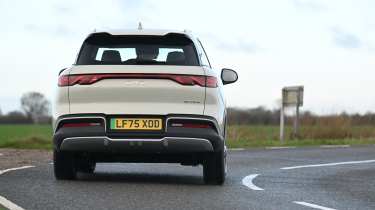
The Atto 2 isn’t a car that you’d take for a drive just for the sake of it. It’s competent enough on country roads, but there’s very little involvement to be had. The steering simply points the car in the right direction without any feedback, and the body leans more in bends than better handling small SUVs like the Ford Puma. The Atto 2 isn't wallowy or wayward, but it doesn’t really encourage you to push the car any harder than necessary. At least the brakes are progressive – with so little regeneration offered by the electric motor, there’s no jerky transition between the regenerative and mechanical braking systems.
Motorway driving and long-distance comfort
The plug-in hybrid’s preference for EV-only running does create a refined environment. You have to mash the throttle hard into the floor to cause the petrol engine to wake up. When it does, it can sound harsh as the revs build, but because the car gets up to speed relatively quickly, you won't have to experience the din for too long before you can lift off again, at which point the engine quietens down into the background. We’ve found that both the EV and PHEV versions suffer from a little too much wind and road noise at higher speeds, denting this car's overall refinement.
Because of the placement of the battery in the DM-i and the energy recovery unit just in front of the rear axle, the PHEV gets a less sophisticated compact torsion beam suspension setup at the rear compared with the more advanced multi-link suspension of the electric model. This doesn’t help the overall ride comfort in the DM-i version, because it can fidget at high speeds compared to the more assured, bigger-battery Atto 2 EV, which is reasonably comfortable at motorway speeds, although expansion joints can send thumps through the whole car.
MPG & running costs
Pros |
|
Cons |
|
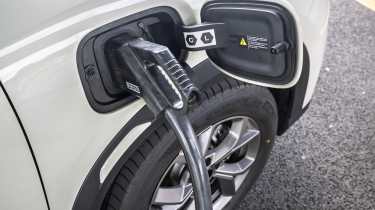
The DM-i plug-in hybrid system generally utilises the electric motors over the petrol engine to get you the most miles per gallon of fuel. Similar to the system in the larger BYD Sealion 5, it'll try to keep the PHEV battery at around 25 per cent state of charge in order to have enough power to run the hybrid system as efficiently as possible, and prevent your fuel economy dropping off a cliff as it does in other PHEVs when the hybrid battery is flat.
Officially, both versions of the Atto 2 DM-i have a WLTP fuel economy figure of 55.4mpg, which seems to be entirely achievable because we averaged 62mpg in the DM-i Boost over a journey of about 150 miles on a variety of roads.
Electric range, battery life and charge time
Official range figures for the Atto 2 electric are 214 miles for the 51.1kWh Boost model and 261 miles for the Comfort version with its larger 64.8kWh battery. When we tested the Boost model, we saw an estimated range of 214 miles from the trip computer, so the official figures appear to be pretty accurate and should remain consistent courtesy of the standard-fit heat pump.
When we tested the Atto 2 against the Vauxhall Frontera in cold conditions and on similar roads, we saw an impressive return of four miles per kWh from the Comfort model, 1.2mi/kWh better than the Vauxhall could offer. It’s worth noting that the BYD’s efficiency figure still only equates to a range of 180 miles, though.
We got a decent level of efficiency in the Atto 2 DM-i as well. During our test drive of the bigger-battery Boost model in pure-EV mode, we found the electric range matched the claimed WLTP figure of 55 miles.
One minor quibble we have with the BYD EV is the differing DC charging speeds offered across models. The Comfort can be charged at a maximum rate of 155kW, so a 10-80 per cent charge can take 25 minutes from a powerful enough source, but the Boost model can only charge at 82kW, which is slower than most rivals. A charge from 10-80 per cent capacity takes 40 minutes in this model, which is disappointing when most rivals can charge to the same amount in around half an hour.
BYD doesn’t quote a time to fully recharge either version of the DM-i PHEV from 0-100 per cent, only from 15 to 100 per cent. The Active version takes just over 2.5 hours, while the Boost takes three hours. The maximum charging speed of the plug-in hybrid is 6.6kW, while the smaller battery Active model halves this to 3.3kW.
| Model | Battery size | Range | Insurance group |
| Atto 2 Boost | 51.1kWh | 214 miles | 30 |
| Atto 2 Comfort | 64.8kWh | 261 miles | 32 |
| Atto 2 DM-i Boost | 18.3kWh | 55 miles | N/A |
Insurance groups
The Atto 2 electric line-up sits in group 30 and 32, which is around 15 groups higher than the Vauxhall Frontera, for example. However, when we received quotes from the AA, the Atto 2 had lower prices by around £200, proving that it pays to shop around to get the best quote.
The plug-in hybrid starts a little lower in group 25 for the Active model, and goes up to group 30 for the Boost version.
Tax
As with all its EV rivals, the BYD faces road tax of £200, while Benefit-in-Kind company car tax is charged at four per cent. The BYD isn’t the cheapest small electric SUV, but you’re still looking at costs in the hundreds of pounds, compared with thousands for similarly-sized hybrid models. The electric Atto 2 falls well under the increased £50,000 luxury car tax threshold for EVs.
The affordable pricing of the BYD Atto 2 DM-i means it drops below the lower £40,000 threshold for petrol, diesel, and hybrid cars, so you'll only have to pay the standard rate of vehicle excise duty (VED). Company car drivers will be subject to a 10 per cent BiK rate for the DM-i Boost, and a higher 16 per cent BiK fee for the DM-i Active.
Depreciation
Residual values of 40-42 per cent for the Atto 2 EV are nothing to write home about, being among the poorest in the BYD line-up. However, this is on a par with class rivals such as the Ford Puma Gen-E (39 to 41 per cent) and better than they are for the Vauxhall Frontera (34 to 36 per cent).
Depreciation data for the plug-in hybrid is a little better, maintaining around 50 per cent of its original value over a typical ownership period of three years or 36,000 miles. That's still not as good as those of the Dacia Duster, which maintains between 56 and 60 per cent of its original value over the same period.
Interior, design & technology
Pros |
|
Cons |
|
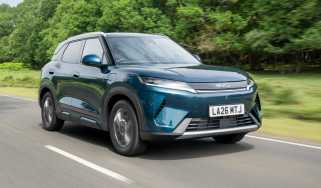
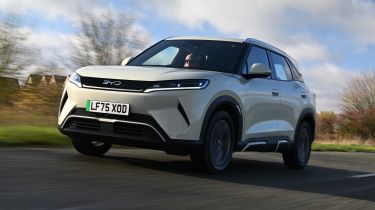
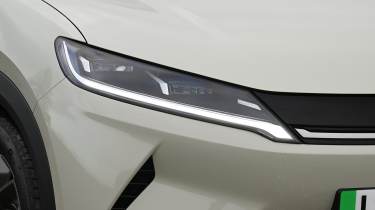
Vehicle design is something that Chinese car makers are still trying to get the hang of, and overall, the BYD Atto 2 fails to stand out. It’s an inoffensive design that has echoes of the Suzuki Vitara about it, while the rounded lines are a familiar cue shared with other BYD models.
Unless you spot the slightly larger air intakes at the front, the positioning of the fuel filler cap, and get under the rear bumper to see the exhaust pipe, there’s no telling the PHEV and EV versions of the Atto 2 apart visually.
The base Active model comes with the following:
- Rear-view camera
- Parking sensors
- Rain-sensing wipers
- Adaptive cruise control
- LED headlights
- Metallic paint
Boost, which comes standard on the Atto 2 EV, adds the following:
- 360-degree camera
- Heated front seats
- Heated steering wheel
- Panoramic roof
- Wireless smartphone charging
The Atto 2 EV also gets a Comfort trim level at the top of its range that adds driver’s seat lumbar support, electrically folding door mirrors and rear tinted windows.
You can even use the Boost’s larger battery with vehicle-to-load (V2L) tech to power external appliances.
Interior and dashboard design
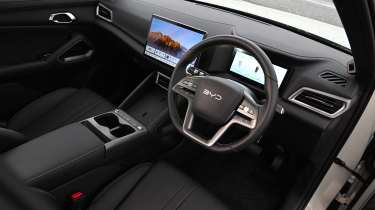
The cabin layout is plain and simple. It’s dominated by the large 12.8-inch touchscreen that can be rotated through 90 degrees for portrait or landscape orientation (in the EV only, the PHEV is fixed in landscape), while there are a few buttons on the dashboard below and on the steering wheel. Different grades of plastic and artificial leather are used inside, while silver trim inserts break things up. There are two colour options on offer, either black or beige, with the latter helping to brighten the cabin.
Materials and build quality
The materials used on board are as you’d expect from a car in this price range, with harder plastics in some places, such as the centre console and doors, but soft-touch materials in other areas. We really didn’t like the fake stitching on the rear doors - which was all the more obvious thanks to real stitching on the front doors. It all feels well screwed together, though, with no squeaks or rattles in the car we tested.
Infotainment, sat-nav and stereo
The main screen is used for almost all functions, with just a strip of buttons beneath the phone trays, including a starter button that is a little lost in the middle.
The driver also has a secondary display that measures 8.8 inches across and features a lot of information. However, it all feels rather crammed in, with lots of information in a thin font that can be difficult to read when a light background is selected.
While the display can turn through 90 degrees, as with other BYD models, it feels more natural to keep it in a landscape format so it doesn’t obscure the windscreen.
There are large on-screen buttons that are easy to find while on the move, while a shortcut across the top of the display gives quick access to some functions. The shortcuts across the bottom can be personalised, although we’d like to see separate buttons for frequently used functions such as the screen heaters. It is possible to quickly alter the climate control temperature by using three fingers to swipe up and down the screen, while doing the same from side to side adjusts the fan speed.
"Our car had a bit of an issue with misting, so we spent more time than we should having to scroll through the climate menus, but if there were physical climate controls we could have managed the situation more easily." - Dean Gibson, senior road test editor.
Boot space & practicality

Pros |
|
Cons |
|
A conventional small SUV shape means the tall and high-riding Atto 2 should be easy to get in and out of and offer a good view of your surroundings.
Dimensions and size
Compared with the BYD Atto 3, which was the first car the brand sold in the UK and is more of a family SUV, the Atto 2 is 145mm shorter and 45mm narrower. That means it’s very similar in size to the Ford Puma Gen-E, but the Ford offers considerably more luggage capacity in five-seat mode.
| Dimensions comparison | |||
| Model | BYD Atto 2 | Ford Puma Gen-E | Citroen e-C3 Aircross |
| Length | 4,310mm | 4,313mm | 4,395mm |
| Width | 1,830mm | 1,805mm | 1,850mm |
| Height | 1,675mm | 1,555mm | 1,560mm |
| Wheelbase | 2,620mm | 2,588mm | 2,672mm |
| Boot space | 400-1,340 litres | 556-1,283 litres | 460-1,600 litres |
Seats & passenger space
Despite having two different powertrains, there’s no difference in cabin space inside the EV compared to the plug-in hybrid.
A wide range of wheel and seat adjustment means it’s easy to get comfortable at the wheel of the Atto 2, and on the whole the artificial leather seats offer decent support. One issue for some occupants could be the fixed headrests, which are integrated into the seats. They’re not adjustable and push your head forward, which might be uncomfortable for some passengers.
Storage up front is decent, with twin smartphone trays ahead of the twin cup-holders, one of which features wireless charging. Beneath the high centre console is another storage area, although the shallow sides mean that taller items might fall out. There are two USB-C connectors here with 60-watt charging, while a 12-volt socket is also present. One issue is with the door bins, which are small and awkward to access below the armrests.
If you’re more likely to be carrying passengers than luggage, then the Atto 2 might be more suitable than some of its rivals because legroom is fairly decent. The tall body also creates good headroom, while having two six-footers in the rear won’t be an issue. There are two sets of Isofix points in the back, but the bench isn’t wide enough to accommodate a centre armrest.
Back-seat passengers also benefit from two USB-C sockets, but there’s just a single air vent, and as with the front doors, the bins are on the small side.
Boot space
There’s a 400-litre boot in five-seat mode, so the Atto 2 doesn’t have the best cargo capacity in the class – the Vauxhall Frontera and Citroen e-C3 Aircross have its number here – but it’s still a useful space. The floor has two levels so you can create some under-floor storage, while the load lip is lower than you’ll find in its Vauxhall or Citroen rivals.
Those looking for a bit more room will be better served by the DM-i, which gets an extra 25 litres in the boot.
"The back seats are reasonable for tall occupants, and the standard-fit panoramic glass roof helps to make the interior feel bright and airy. The touch-sensitive controls for the roller blind are easily missed near the dome lights." - Dean Gibson, senior road test editor.
Reliability & safety
Pros |
|
Cons |
|
The BYD Atto 2 is based on the same platform as the Atto 3 and gets the same suite of safety features, so while it hasn’t been tested by Euro NCAP, we anticipate it should do well considering the Atto 3’s five-star rating.
The Atto 2 comes with an extensive array of driver-assistance systems as standard, including adaptive cruise control, autonomous emergency braking (AEB), blind spot detection, a driver-monitoring system, lane-keeping assist, hill descent control, rear cross-traffic alert and traffic sign recognition. There’s also a 360-degree parking system, front and rear parking sensors and intelligent high-beam control.
Buying, prices and deals
Best buy: BYD Atto 2 DM-i Boost
The all-electric Atto 2 in Boost guise is priced at around £31,000, while the Comfort is around £35,000. The plug-in hybrid Atto 2 DM-i starts off at around £27,000 for the smaller-battery Active model, rising to just shy of £30,000 for the Boost with the higher-capacity battery pack.
The plug-in hybrid is the Atto 2 to go for, especially in Boost form with its more useful electric-only driving range. It's also impressively efficient in hybrid mode, and its extra power makes progress easier when getting up to motorway speeds or overtaking.
You can now spec your ideal new BYD Atto 2 through the Auto Express Buy A Car service and choose the best offer from dealers around the UK.
BYD Atto 2 alternatives
The BYD Atto 2 has a lengthy list of rivals in the compact electric SUV segment, but it’s worth noting that many competitors are cheaper because they’re eligible for the Government’s Electric Car Grant (ECG). The BYD doesn't qualify for any grant, hence prices start from more than £30k.
In comparison, the Citroen e-C3 Aircross and Vauxhall Frontera, which focus more on value-for-money, start from less than £23k. Other contenders include the Skoda Elroq and Kia EV3 cost more, but are also more practical, offer greater range and feel more sophisticated. If it’s style that you want, there’s the Volvo EX30 or MINI Aceman, plus there's the incredibly funky Renault 4.
The Atto 2 DM-i goes up against the Chery Tiggo 7 Super Hybrid, although its BYD equivalent manages to undercut this Chery by several thousand pounds.
Key updates of the BYD Atto 2 review
18 June 2026: General update with the latest valuation information.
16 January 2026: Update to include information and driving impressions about the hybrid DM-i version.
Frequently Asked Questions
The BYD Atto 2 comes with a rather impressive six-year/93,750-mile warranty, plus an additional eight-year/125,000-mile warranty for the battery pack. And no, we don’t know why the mileage is so specific.
Deals on the Atto 2 and alternatives